Film · 2003
Freddy vs. Jason
A forgotten dream demon hires the help, and the help will not stop.
54Strong to sit through, out of 100 — mostly how much it shows
- PaceJolts you often72
- ThreatMostly supernatural18
- GoreExplicit74
- ToneHas a sense of humour66
- RealityDream logic76
Era bias 62 · Neither era. Texture rather than fear, so it is not part of the grade. All six scores →
The most supernatural horror movies ever made →
Part of a series: Nightmare on Elm Street movies in order → · Friday the 13th movies in order →
On VHSCREAM’s six-axis scale, Freddy vs. Jason (2003) is most extreme on the threat axis: 18 out of 100, where 0 is a threat that is not human and 100 is human monsters. 16% of the 320 horror works we have scored come in lower on that axis. How we score →
Freddy vs. Jason is a 2003 American supernatural slasher film directed by Ronny Yu. Forgotten by the town he once haunted, Freddy Krueger resurrects Jason Voorhees to kill on Elm Street and bring back the fear he needs, and loses control of him. We score it 018 on threat and 076 on reality anchor.
Scored and reviewed by VHSCREAM on · how we score
How scary is Freddy vs. Jason, actually?
Scored against the published rubric, here is what the numbers mean.
The threat at 018 is near the supernatural end — 52 works score lower. A dream demon resurrects an undead killer, and the two fight across dreams and reality.
Viscera 074 is high — 232 works score lower. Machete kills, impalings, a torso punched through, a severed arm and a severed head, staged big and loud.
Tone 066 leans gleeful — 293 works score lower. Freddy's one-liners, wrestling-style fights and a winking last shot keep it closer to a monster mash than to horror.
Pace 072 is on the shock side, with 280 works slower. It moves quickly from kill to kill and from dream to fight.
Era bias 062 reads modern — 139 works score lower. A glossy 2003 studio film with digital effects, a rave and a slick colour grade.
Reality anchor 076 is surreal — 271 works score lower. Dream logic, resurrection, possession and a severed head that winks.
On jump scares: plenty, mostly from Freddy. The dream sequences are built on sudden appearances.
Who should skip Freddy vs. Jason
Skip it if you want to be frightened. It is a crowd-pleasing monster fight, not a horror film that unsettles.
Skip it if you need characters to care about. The teenagers are there to be menaced and explain the rules.
Skip it if you have not seen either franchise. It leans on two decades of mythology.
Content notes: many violent killings, decapitation, dismemberment, a body carved with a message, forced medication, a dead mother revealed as a murder victim, and psychiatric institutionalisation.
Watch it if you like both killers, want a loud and gory crowd-pleaser, or want to see the fight two franchises spent fifteen years promising.
Freddy vs. Jason on six axes of fear
Every work in the index is scored on six continuous axes of fear. This is what Freddy vs. Jason looks like as a vector — and what each ten-point band looks like across everything else we hold.
Draft score — awaiting human review. About these scores
Disagree with a number? Say so on the axis itself. Nobody has confirmed this vector yet, and a score you challenge goes to the top of the queue to be re-scored by a human. Votes do not move the numbers — they decide what gets looked at first. How the scoring works →
Scored against the published rubric. This vector is a draft awaiting review — the method is public so you can argue with it.
Freddy vs. Jason: the review
Freddy vs. Jason is a film that took fifteen years to make and is exactly as serious as its title, which is to say not at all, and it is better for knowing it.
Talks about pairing the two killers began in 1987 and collapsed over disputes between New Line and Paramount. Over the next decade and a half, writers and directors came and went, New Line reportedly spent about $6 million on scripts alone, and the tease at the end of Jason Goes to Hell hung in the air for ten years. By the time Ronny Yu signed on in 2002, both franchises had run themselves into the ground. The crossover was a way of spending what was left of their goodwill in one go, and it worked: on a $30 million budget it took about $117 million worldwide.
Freddy's plan is the clever part
The screenplay, by Damian Shannon and Mark Swift, has a good engine. Freddy is powerless in hell because Springwood has forgotten him: the adults have scrubbed his name from the town, and the teenagers who dream of him have been sent to Westin Hills Psychiatric Hospital and dosed with a dream suppressant, Hypnocil. To get his power back he needs the town to be afraid again, so he finds Jason, also stuck in hell, and resurrects him by appearing as his mother, Pamela, and sending him to Elm Street.
The idea pays off when it backfires. Jason does what Jason does: he kills everyone, in reality, before Freddy can get to them in their dreams. At a rave in a cornfield, Freddy goes after a girl named Gibb in her sleep and Jason kills her first. Freddy realises his weapon is eating his victims. The rest of the film is two monsters trying to get rid of each other, with a group of teenagers caught in between and trying to get rid of both.
Two killers, two styles
Robert Englund is back as Freddy, and he plays it as a comedy villain with a mean streak, all one-liners and theatrical cruelty. Ken Kirzinger's Jason is a giant, slow, silent presence, which was what Ronny Yu wanted: he cast Kirzinger, who stands six foot five, partly because he was taller than Englund. Recasting Kane Hodder was a gamble, but on screen the contrast between a talker and a wall works.
Yu stages the fights like wrestling matches, with bodies hurled through walls and both monsters absorbing absurd punishment. The dream sequences, in which Freddy torments Jason with his fear of water and the memory of drowning, are the closest the film comes to genuine horror, and they add a sliver of pity to Jason that the series had rarely bothered with.
The middle act belongs to Freddy
Once Freddy realises Jason is stealing his victims, the film turns into a race, and the middle stretch is its best. Mark, one of the escaped Westin Hills patients, is killed in a dream, and Freddy carves "Freddy's Back" into his body for the town to find. Deputy Scott Stubbs, the one adult who listens, starts helping the teenagers. Lori is attacked in her sleep and drags a piece of Freddy into the waking world with her, which gives the survivors their plan. Freddy possesses their friend Bill to destroy the Hypnocil, Jason kills Stubbs, and when Bill tranquilises Jason, Jason kills him too.
None of this is subtle, and it is not meant to be. But it is well plotted, in the way a good B-movie is well plotted: every scene moves the two monsters a step closer together, and the film keeps finding new ways for each to get in the other's way. It is also a gallery of faces that went on to bigger things. Katharine Isabelle plays Gibb, and a young Evangeline Lilly has an uncredited walk-on as a high school student.
The long development history explains some of the film's shape. Wes Craven, Guillermo del Toro and Peter Jackson were among those who passed on it or were approached along the way, and what survived fifteen years of drafts is a script built for a crowd rather than for a director. Englund said in 2023 that he was proud of it, and it was nominated for a Saturn Award for best horror film. As franchise crossovers go, it is one of the better ones.
Where it falls down
The teenagers. Monica Keena's Lori, Jason Ritter's Will and the rest are thin, the plot that is supposed to concern them, about the murder of Lori's mother, is perfunctory, and the film never makes you care whether any of them survive. Kelly Rowland gets the best lines and very little else. And for a film whose premise is the fight, it keeps the two killers apart for a very long time.
It is also not frightening. The kills are big, gory and loud, and the dream world is colourful rather than unsettling. This is a monster mash, and it is best watched as one. The CinemaScore was B+, and that is about the right grade.
If you want the two franchises at their best rather than at their loudest, start at the beginning: A Nightmare on Elm Street, and the 1980 Friday the 13th. The Nightmare on Elm Street films in order will show you how Freddy got here.
The ending of Freddy vs. Jason explained
The ending, in full. Open it when you have seen it.
The short answer: the survivors drag Freddy out of the dream world and into reality at Camp Crystal Lake, where Jason is waiting. The two fight across the camp and the dock. Freddy gains the upper hand until Lori helps Jason, who punches through Freddy's torso. An explosion on the dock throws both into the lake. Freddy surfaces and Jason, sinking, impales him with a severed arm; Lori then beheads Freddy with Jason's machete. The next morning, Jason walks out of the lake holding Freddy's severed head. Freddy's head winks and laughs, and the film ends there, leaving the winner deliberately unclear.
Who wins in Freddy vs. Jason?
The film does not say outright, and that is the joke of the ending. In the final fight, Jason impales Freddy and Lori beheads him, so Freddy appears to lose. But in the last scene Jason emerges from the lake holding Freddy's head, and the head winks and laughs. Jason is the one walking away, yet Freddy has the last word.
Why does Freddy bring Jason back?
Because Freddy is powerless. The people of Springwood have forgotten him, and the teenagers who might dream of him are medicated with Hypnocil. Freddy needs fear to return, so he resurrects Jason, appearing to him as his mother, and sends him to kill on Elm Street. The killings frighten the town and make Freddy's name matter again, but Jason will not stop killing.
What is Hypnocil in Freddy vs. Jason?
A dream-suppressing drug given to teenagers at Westin Hills Psychiatric Hospital to keep them from dreaming of Freddy. The survivors try to steal it so they can stop dreaming, but Freddy possesses their friend Bill and destroys the supply. Without it, the survivors' plan becomes pulling Freddy into the real world, where Jason can reach him.
What is Jason afraid of in Freddy vs. Jason?
Water. When the survivors bring the unconscious Jason to Camp Crystal Lake, Freddy enters his dreams and torments him with his fear of drowning. The young Jason in these scenes is played by Spencer Stump. It is the film's most sympathetic look at Jason.
If Freddy vs. Jason is your kind of fear
The eight works closest to Freddy vs. Jason in the index on the five axes that describe fear, the same medium first — not by genre label, and not by what other people watched.
Jason X
James Isaac · 2002 · Film
Shares dream logic.
94% shared signal
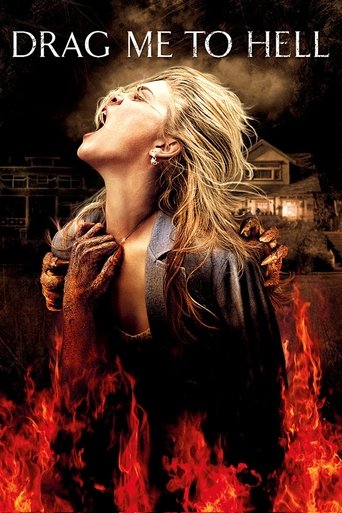
Drag Me to Hell
Sam Raimi · 2009 · Film
Shares a threat that is not human.
90% shared signal
A Nightmare on Elm Street 4: The Dream Master
Renny Harlin · 1988 · Film
Shares relentless shock.
87% shared signal
Hellraiser III: Hell on Earth
Anthony Hickox · 1992 · Film
Shares explicit viscera.
86% shared signal
A Nightmare on Elm Street 3: Dream Warriors
Chuck Russell · 1987 · Film
Shares a threat that is not human.
85% shared signal
Jason Goes to Hell: The Final Friday
Adam Marcus · 1993 · Film
Shares explicit viscera.
84% shared signal
The Monkey
Osgood Perkins · 2025 · Film
Shares relentless shock.
84% shared signal
It Chapter Two
Andy Muschietti · 2019 · Film
Shares dream logic.
83% shared signal
More lists like these: Movies like The Monkey
Questions about Freddy vs. Jason
The things people actually ask about this film, answered — including how it ends.
What happens at the end of Freddy vs. Jason?
Freddy and Jason fight at Camp Crystal Lake until an explosion throws both into the lake. Jason impales Freddy with a severed arm, and Lori beheads Freddy with Jason's machete. The next morning Jason walks out of the lake carrying Freddy's head, which winks and laughs, leaving the winner ambiguous.
Who wins Freddy vs. Jason?
Officially, nobody. Jason survives the fight and walks out of the lake carrying Freddy's severed head, which suggests he won. But Freddy's head winks and laughs in the final shot, suggesting he is not finished either. The film leaves it deliberately open for both fan bases.
Why is Kane Hodder not Jason in Freddy vs. Jason?
New Line cast Ken Kirzinger instead. Ronny Yu wanted a taller, slower Jason, and Kirzinger, at six foot five, was taller than Robert Englund. Hodder had played Jason in the previous four films and was reportedly considered again.
How long did Freddy vs. Jason take to make?
About fifteen years. Talks began in 1987 but stalled over disputes between New Line and Paramount. Many writers and directors came and went, and New Line reportedly spent about $6 million on script development. Ronny Yu signed on in 2002, and the film opened in August 2003.
How successful was Freddy vs. Jason?
Very. Made for $30 million, it opened with $36.4 million and took about $117 million worldwide, including $83 million in the United States. It is the highest-grossing film in the Friday the 13th franchise.
Where was Freddy vs. Jason filmed?
Principal photography took place in Vancouver, British Columbia, from September to December 2002. Ronny Yu directed, with Ken Kirzinger as Jason and Robert Englund as Freddy, and the film was released in the United States on 15 August 2003.
These are ranked against Freddy vs. Jason, not against you.
Build your own tape →