Horror comedy
Horror comedy is horror that is enjoying itself without stopping being horror. The test is simple and most films fail it: the frights have to land as frights. A film that undercuts its own monster to get a laugh is a parody, and a parody needs the horror to <em>fail</em>. Horror comedy needs it to work, and gets its laughs from somewhere else — usually from how people behave while it is happening to them.
21 scored works in the index · how we score · download the data
What makes it horror comedy and not a parody
The distinction is load-bearing and it is about where the joke is aimed.
Parody aims at the genre. Scary Movie and its descendants are funny because they know what a horror film does and keep pointing at it. Nothing in them is frightening, and nothing is supposed to be — the monster is a prop in a joke about monsters.
Horror comedy aims at the people. The threat is real, the gore is real, and the comedy comes from the gap between the situation and the way human beings actually conduct themselves inside it. Shaun goes to the shop. Herbert West takes notes. Tucker and Dale try to help. The horror is not weakened by any of that, which is exactly why it keeps working on a rewatch after the jokes are known.
Our tone axis is where this becomes measurable rather than arguable. It runs from a bleak, unforgiving tone at 0 to gleeful black comedy at 100, and it is scored independently of how frightening a work is. A film can sit near the top of it and still be genuinely hard to watch — which is the whole trick, and the reason the works on this page average 57 points above the index median on it while being no less explicit than the rest of the index.
Where horror comedy came from
It is nearly as old as the genre. The Old Dark House (1932) is James Whale being funny in the same year Universal was building its monster canon, and Abbott and Costello Meet Frankenstein (1948) is the moment the studio openly admitted its creatures were now characters rather than threats. That film is also the cautionary case: it is funny, and the monsters never recover.
The modern form arrives in **1981 with *An American Werewolf in London***, which is the first film to prove you can be funny and frightening in the same scene without either cancelling the other. John Landis cuts from a genuine joke to Rick Baker's transformation — the work that won the first Academy Award for Best Makeup — and neither registers as a tonal mistake.
Then the splatter decade. Re-Animator (1985), The Return of the Living Dead (1985) and Evil Dead II (1987) invent what people now call splatstick: slapstick timing applied to arterial spray, with the gore so excessive it becomes choreography. **Peter Jackson's *Braindead*** (1992) is the end of that argument — the goriest film ever made is also one of the funniest, and the two facts are the same fact.
The revival is Shaun of the Dead (2004), which did something the splatstick films did not: it made the comedy character-driven rather than physical, and it took the zombies completely seriously. Everything since is downstream of it — Tucker and Dale vs Evil, What We Do in the Shadows, One Cut of the Dead, Ready or Not.
What the scores say about horror comedy
Averaged across the 21 horror comedy works in the index and compared with the median of all 320. This is a measurement of the subgenre, not of any one work in it.
- Tone 079, 57 above the index median of 022 — so horror comedy leans gleeful black comedy relative to horror as a whole.
- Era Bias 047, 23 below the index median of 070 — so horror comedy leans analog-era texture relative to horror as a whole.
- Pace of Fear 065, 11 above the index median of 054 — so horror comedy leans relentless shock relative to horror as a whole.
- Viscera 064, 8 above the index median of 056 — so horror comedy leans explicit viscera relative to horror as a whole.
The 21 best horror comedy works we have scored
Ordered by how archetypal each one is — how close it sits to the subgenre’s own centre of gravity across all six axes. The top of this list is what horror comedy looks like when it is being itself; the bottom is where the subgenre stops behaving. The score column is tone, the axis that most distinguishes it.
| # | Title | Year | By | Medium | Tone |
|---|---|---|---|---|---|
| 1 |  Shaun of the Dead | 2004 | Edgar Wright | Film | 080 |
| 2 | Seed of Chucky | 2004 | Don Mancini | Film | 086 |
| 3 |  Slither | 2006 | James Gunn | Film | 076 |
| 4 |  One Cut of the Dead | 2017 | Shinichiro Ueda | Film | 084 |
| 5 | 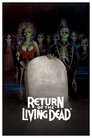 The Return of the Living Dead | 1985 | Dan O'Bannon | Film | 082 |
| 6 |  The Cabin in the Woods | 2011 | Drew Goddard | Film | 072 |
| 7 | 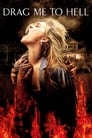 Drag Me to Hell | 2009 | Sam Raimi | Film | 066 |
| 8 |  Re-Animator | 1985 | Stuart Gordon | Film | 092 |
| 9 |  Gremlins | 1984 | Joe Dante | Film | 070 |
| 10 |  Braindead | 1992 | Peter Jackson | Film | 090 |
| 11 |  Tucker and Dale vs Evil | 2010 | Eli Craig | Film | 084 |
| 12 |  Housebound | 2014 | Gerard Johnstone | Film | 074 |
| 13 |  What We Do in the Shadows | 2014 | Taika Waititi | Film | 086 |
| 14 |  Dawn of the Dead | 1978 | George A. Romero | Film | 058 |
| 15 | Scream 3 | 2000 | Wes Craven | Film | 074 |
| 16 |  Ready or Not | 2019 | Matt Bettinelli-Olpin | Film | 070 |
| 17 | 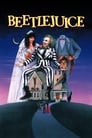 Beetlejuice | 1988 | Tim Burton | Film | 082 |
| 18 | 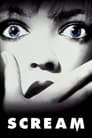 Scream | 1996 | Wes Craven | Film | 072 |
| 19 | Happy Death Day | 2017 | Christopher Landon | Film | 086 |
| 20 | Army of Darkness | 1993 | Sam Raimi | Film | 094 |
| 21 |  Evil Dead II | 1987 | Sam Raimi | Film | 088 |
What is not horror comedy
A horror film with a funny character is not a horror comedy. The tone has to be structural. Plenty of serious horror has a comic relief part, and our scoring puts those films where they belong — low on tone, because the work as a whole is not having a good time.
A parody is not a horror comedy, for the reason above: it needs the horror to fail.
A comedy with a monster in it is not a horror comedy either, and this is the commoner mistake in the other direction. If nothing in it is trying to frighten anybody, there is no horror for the comedy to be in tension with, and what you have is a comedy with a creature budget.
Being gleeful is not the same as being light. Braindead is at the top of our tone axis and near the ceiling of viscera at the same time, and Tucker and Dale vs Evil is a film about people being killed in front of their friends. The works on this page are not the gentle end of the index — several of them are among the most explicit things we hold.
Questions about horror comedy
What is horror comedy?
Horror that is enjoying itself without stopping being horror. The frights have to land as frights: the comedy comes from how people behave inside a situation that is genuinely dangerous, not from undercutting the danger. That is what separates it from parody, which needs the horror to fail in order to be funny.
What is the difference between horror comedy and horror parody?
Where the joke is aimed. A parody aims at the genre — it is funny because it knows what a horror film does and keeps pointing at it, and nothing in it is meant to frighten you. A horror comedy aims at the people: the monster is real and the gore is real, and the laughs come from the gap between the situation and the way human beings actually conduct themselves inside it.
What was the first horror comedy?
There is no clean first. The Old Dark House (1932) is already doing it, and Abbott and Costello Meet Frankenstein (1948) is where a studio admits its monsters have become characters. The modern form — funny and frightening in the same scene, with neither cancelling the other — is usually dated to An American Werewolf in London (1981).
What is splatstick?
Slapstick timing applied to splatter. Re-Animator (1985), Evil Dead II (1987) and Braindead (1992) are the canon: the gore is so far past plausible that it stops reading as injury and starts reading as choreography. It is the one corner of horror where more blood makes a film funnier rather than harder to watch.
Are horror comedies actually scary?
Several of these are, and the numbers say so independently of the laughs. Tone and viscera are scored separately here, so a film can sit near the top of the tone axis and still be among the most explicit things in the index — which is exactly what Braindead and Evil Dead II do. If you want the ones that are frightening first, work from the bleakest end instead; if you want both at once, this page is the list.
Want horror matched to you rather than to a subgenre?
Build your tape →