Film · 2017
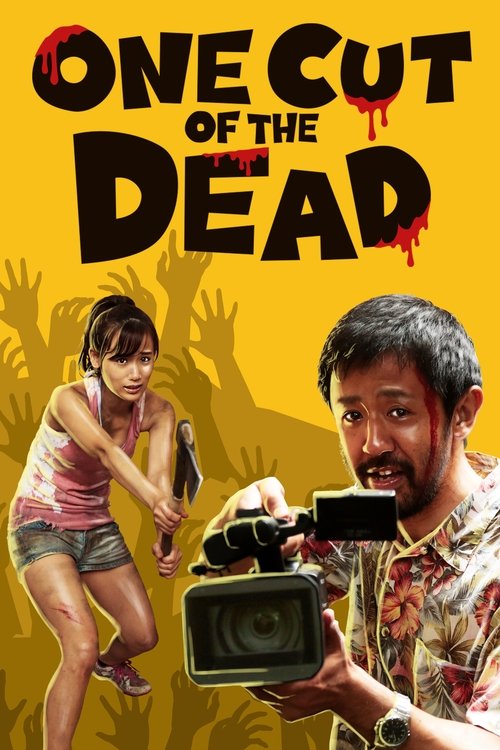
One Cut of the Dead
Shinichiro Ueda
A one-take zombie film about making a one-take zombie film. It earns the trick twice.
37Mild to sit through, out of 100 — mostly how much it shows
- PaceBuilds, then strikes62
- ThreatMostly supernatural25
- GoreShows some of it54
- ToneHas a sense of humour84
- RealityTilts unreal40
Era bias 76 · Modern. Texture rather than fear, so it is not part of the grade. All six scores →
The funniest horror movies ever made →
On VHSCREAM’s six-axis scale, One Cut of the Dead (2017) is most extreme on the tone axis: 84 out of 100, where 0 is a bleak, unforgiving tone and 100 is gleeful black comedy. 97% of the 320 horror works we have scored come in lower on that axis. How we score →
One Cut of the Dead is a 2017 Japanese horror comedy directed by Shinichiro Ueda, which opens with a thirty-nine-minute single take of a zombie film and then rewinds to show how that take was made. We score it 084 on tone and 054 on viscera — a film that earns its central trick twice, which almost nothing does.
Scored and reviewed by VHSCREAM on · how we score
How scary is One Cut of the Dead, actually?
Almost not at all. This is the least frightening film on our horror comedy list after What We Do in the Shadows, and it is not competing.
Tone 084 is near the gleeful end. Threat 025 is on the supernatural side but entirely notional — the zombies are actors in makeup for most of the film's running time, and the film tells you so. Reality anchor 040 is grounded: the second and third acts are a workplace comedy.
Viscera 054 is where the only discomfort lives, and it is mild. There is a running gag about a blood pump that does not work, which is funnier than it is unpleasant.
If you want to know whether it will frighten somebody who does not watch horror: no, and it is one of the better films to use as an argument that the genre contains more than one thing.
Who should skip One Cut of the Dead
Skip it if you will not sit through a deliberately flawed first act. Thirty-nine minutes is a long setup and the film does not signal that it is one.
Skip it if you want horror. There is no fear in this film by design — it is a comedy about filmmaking with zombies in it, and our numbers say so.
Skip it if you dislike subtitles, since the dialogue density in the third act is high and the jokes are verbal as often as physical.
One Cut of the Dead on six axes of fear
Every work in the index is scored on six continuous axes of fear. This is what One Cut of the Dead looks like as a vector — and what each ten-point band looks like across everything else we hold.
Where that puts it: joint #8 funniest
Draft score — awaiting human review. About these scores
Disagree with a number? Say so on the axis itself. Nobody has confirmed this vector yet, and a score you challenge goes to the top of the queue to be re-scored by a human. Votes do not move the numbers — they decide what gets looked at first. How the scoring works →
Scored against the published rubric. This vector is a draft awaiting review — the method is public so you can argue with it.
Where to find it
Streaming on Philo · AMC Plus · AMC+ +2 ↗Physical copies on eBay ↗Availability from JustWatch via TMDB. We earn nothing from these links.
Nothing loads from YouTube until you press play.
One Cut of the Dead: the review
The first thirty-nine minutes are not very good, and that is the plan.
One Cut of the Dead opens on a low-budget zombie film being shot in a derelict water-filtration plant, presented as one continuous take. The performances are stiff, the dialogue lands oddly, there are strange pauses, a boom mic drifts into frame, and an actor stares into the lens for slightly too long. If you walk out at the forty-minute mark you have seen a mediocre one-take zombie film with an aggressive director in it.
Then the film restarts, a month earlier, and spends its second act on pre-production: the director Higurashi being hired to shoot a live one-take special for a new zombie channel, the casting, the budget, the script. The third act runs the shoot itself, in real time, from behind the camera — and every oddity in the first thirty-nine minutes acquires a cause. The pause was an actor forgetting a line. The stare was a performer who had been knocked unconscious. The strange blocking was a crew member improvising around an injury. The boom mic was a boom mic.
It is the most satisfying structural joke in modern horror because the payoff is not a revelation, it is an explanation — the film hands you a flawed object and then makes you love every flaw in it. By the time the third act reaches a moment you half-remember from the first, the effect is closer to a farce than to horror, and the laughs come from recognition rather than from gags.
Our tone score of 084 reflects a film that is affectionate about everybody in it, including the terrible director. Viscera 054 is mid: there is blood, it is clearly fake, and a running joke concerns how hard it is to pump. Era bias 076 is high — this is modern digital filmmaking about modern digital filmmaking.
What the film is not is frightening. It has no interest in being. It is a film about how hard it is to make a film, wearing a zombie costume.
The ending of One Cut of the Dead explained
The ending, in full. Open it when you have seen it.
The short answer: the shoot nearly collapses in its final minutes when the camera crane breaks, and the crew improvise a replacement by building a human pyramid so that Mao can stand on Takayuki's shoulders and hold the camera for the closing shot. The broadcast is completed and is a success, Higurashi and his daughter Mao are reconciled, and the credits play over genuine behind-the-scenes footage of the real film being made.
What is the human pyramid at the end of One Cut of the Dead?
The film's final problem and its best solution. The crane needed for the last shot of the fictional film breaks, and with the broadcast live there is no option but to fake the movement physically — so cast and crew stack themselves into a pyramid and lift the camera operator into position. It is the moment the film's subject and its plot become the same thing: everybody who has been sabotaging the shoot by accident now holds it up on purpose.
Why does the credits sequence show real behind-the-scenes footage?
Because the film is making an argument about its own production. One Cut of the Dead was itself made on a tiny budget by a crew of students and unknowns, and ending on footage of them at work collapses the distance between the film and the film inside it. The final gesture is not a joke — it is a statement that the third act was true.
Is the first thirty-nine minutes supposed to be bad?
Not bad so much as explicably flawed. Every mistake is deliberate and every one is paid off, which is why the opening rewards a rewatch far more than a first viewing. The risk the film takes is real: a viewer who gives up during the opening take never finds out that it is a setup.
What happens between Higurashi and Mao?
They are reconciled by the shoot. Higurashi is an uncompromising, widely disliked director and Mao is his estranged daughter; the production forces them together and the final sequence resolves it without a speech about it. The closing image of the two of them, with the camera, is the film's only sentimental moment and it is earned.
If One Cut of the Dead is your kind of fear
The eight works closest to One Cut of the Dead in the index on the five axes that describe fear, the same medium first — not by genre label, and not by what other people watched.
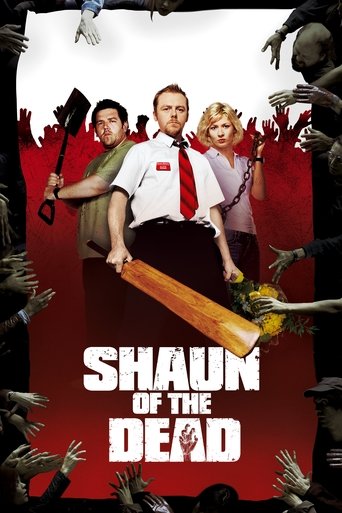
Shaun of the Dead
Edgar Wright · 2004 · Film
Shares gleeful black comedy.
91% shared signal
Friday the 13th Part VI: Jason Lives
Tom McLoughlin · 1986 · Film
Shares a threat that is not human.
86% shared signal
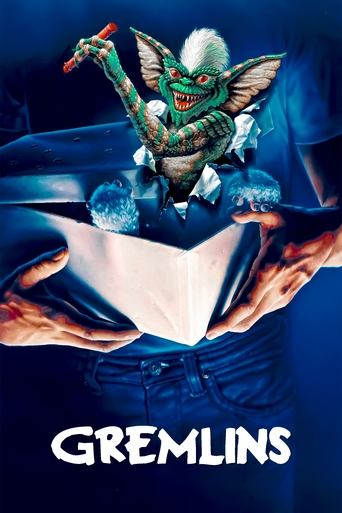
Gremlins
Joe Dante · 1984 · Film
Shares a threat that is not human.
84% shared signal
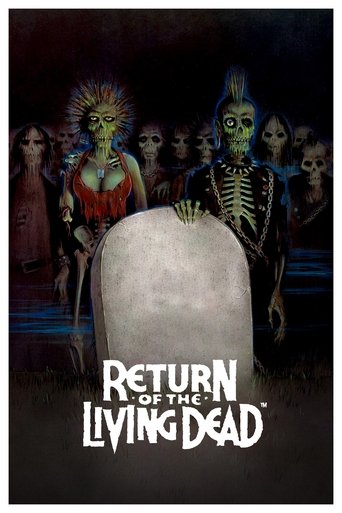
The Return of the Living Dead
Dan O'Bannon · 1985 · Film
Shares gleeful black comedy.
84% shared signal
M3gan
Gerard Johnstone · 2023 · Film
82% shared signal
Friday the 13th Part VIII: Jason Takes Manhattan
Rob Hedden · 1989 · Film
80% shared signal
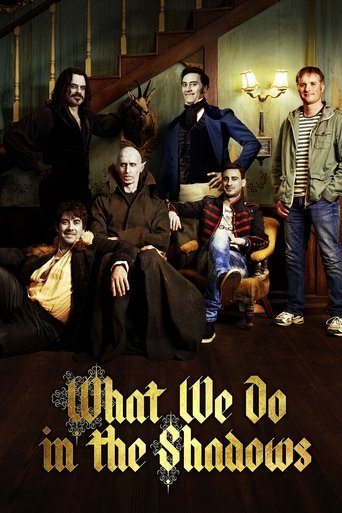
What We Do in the Shadows
Taika Waititi · 2014 · Film
80% shared signal
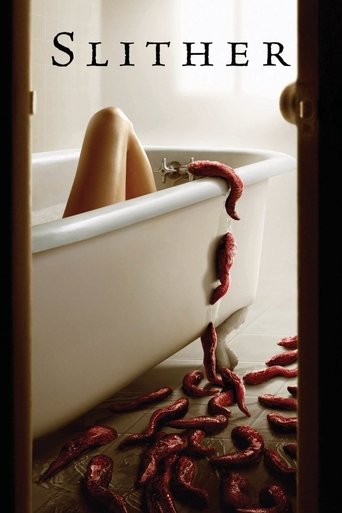
Slither
James Gunn · 2006 · Film
79% shared signal
Questions about One Cut of the Dead
The things people actually ask about this film, answered — including how it ends.
What happens at the end of One Cut of the Dead?
The camera crane breaks during the live broadcast, so the crew build a human pyramid to lift the camera operator into position for the final shot. The broadcast succeeds, the director and his daughter are reconciled, and the credits run over real behind-the-scenes footage of the actual film being made.
Why is the first part of One Cut of the Dead so strange?
Because every flaw in it is a setup. The pauses, the stares, the visible boom mic and the odd blocking are all explained by the third act, which shows the same thirty-nine minutes from behind the camera. The opening is a flawed object the film then teaches you to love.
Is One Cut of the Dead actually one take?
The opening thirty-nine minutes are presented as a continuous take, and the film's remaining acts are shot conventionally. The whole film is not one take — the conceit applies to the film within the film.
Is One Cut of the Dead scary?
No, and it is not trying to be. We score it 084 on tone and 054 on viscera, and its second and third acts are a workplace comedy about a film crew. It is one of the best things in this index to show somebody who thinks they do not like horror.
What is the Japanese title of One Cut of the Dead?
Kamera o Tomeruna!, which translates roughly as "Don't Stop the Camera!" — a more accurate description of the film's actual subject than the English title, which describes only the first act.
These are ranked against One Cut of the Dead, not against you.
Build your own tape →