Film · 2006
Slither
James Gunn
Small-town body horror played for laughs, and the laughs do not soften it.
51Strong to sit through, out of 100 — mostly how much it shows
- PaceJolts you often68
- ThreatMostly supernatural15
- GoreExplicit84
- ToneHas a sense of humour76
- RealityTilts unreal50
Era bias 58 · Neither era. Texture rather than fear, so it is not part of the grade. All six scores →
The most supernatural horror movies ever made →
On VHSCREAM’s six-axis scale, Slither (2006) is most extreme on the threat axis: 15 out of 100, where 0 is a threat that is not human and 100 is human monsters. 12% of the 320 horror works we have scored come in lower on that axis. How we score →
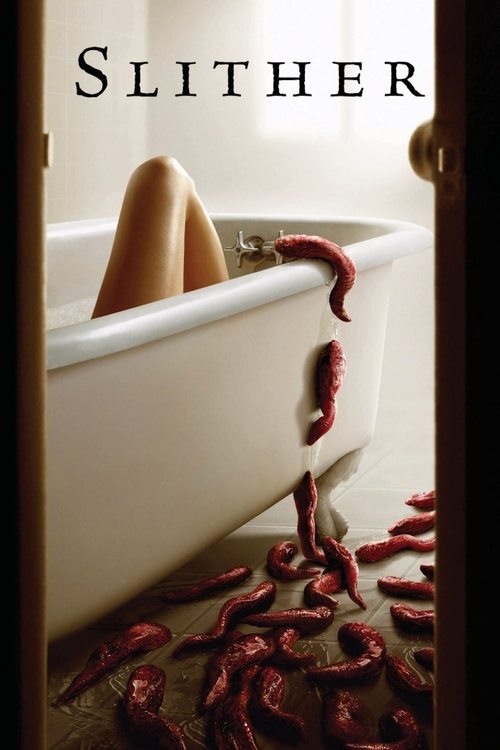
Slither is a 2006 horror comedy written and directed by James Gunn, in which a meteorite deposits a parasitic intelligence in a small South Carolina town and it begins assembling itself a body out of the residents. We score it 084 on viscera against 076 on tone — body horror played for laughs, and the laughs do not soften any of it.
Scored and reviewed by VHSCREAM on · how we score
How scary is Slither, actually?
More than its comic reputation implies, specifically on one axis.
Tone 076 keeps the film cheerful, and pace 068 keeps it moving, so there is very little dread available. Threat 015 is near the supernatural floor — the organism is alien and unreasonable, and no human in the film is a danger to anybody.
Viscera 084 is the number to take seriously. This is a genuinely explicit film: the Brenda sequence in the barn, the bathtub, the slug entries and the final creature design are all practical, extended and extremely wet. It sits above most of the straight horror in this index on that axis, and the jokes do not function as a buffer.
The other quiet discomfort is what the film does with Grant. He is pitiable throughout, and the film keeps asking you to feel for a thing that is eating the town. That is more unsettling on reflection than anything in it is in the moment.
Who should skip Slither
Skip it if body horror is difficult for you. At 084 on viscera this is among the more explicit things we hold, and the infection imagery is the whole film.
Skip it if you need originality. Every element here is borrowed from an earlier creature feature and the film is open about that.
Skip it if the mixture of small-town comedy and parasitic body horror sounds tonally unpleasant rather than appealing — the film commits to both completely and does not modulate.
Slither on six axes of fear
Every work in the index is scored on six continuous axes of fear. This is what Slither looks like as a vector — and what each ten-point band looks like across everything else we hold.
Where that puts it: joint #15 funniest
Draft score — awaiting human review. About these scores
Disagree with a number? Say so on the axis itself. Nobody has confirmed this vector yet, and a score you challenge goes to the top of the queue to be re-scored by a human. Votes do not move the numbers — they decide what gets looked at first. How the scoring works →
Scored against the published rubric. This vector is a draft awaiting review — the method is public so you can argue with it.
Where to find it
Rent or buy from Amazon Video · Apple TV Store · Google Play Movies +2 ↗Physical copies on eBay ↗Availability from JustWatch via TMDB. We earn nothing from these links.
Nothing loads from YouTube until you press play.
Slither: the review
Slither is a 1980s creature feature made twenty years late by somebody who had clearly watched The Thing, Night of the Creeps and Brain Damage more times than was healthy, and it is far better than that description suggests.
The infection works in two stages, which is the film's cleverest structural idea. Grant Grant — a wealthy, unhappy, unloved man played by Michael Rooker — is infected first and becomes the organism's host, mutating steadily into something enormous and squidlike while retaining Grant's memories and, devastatingly, Grant's feelings about his wife. The second stage is the slugs: thousands of them, each capable of entering a person through the mouth and adding that person's mind to a single shared consciousness. By the third act the town is a hive with Grant's grievances at the centre of it.
What elevates it is that the organism is lonely. The film's most effective scene is not a kill but a conversation: Grant, barely human, explaining to Starla what he wants, which is to be loved by her and to not be alone, and which he intends to achieve by absorbing every living thing in the county. The horror and the pathos are the same material.
Gunn's dialogue is the other asset — the sheriff, Bill Pardy, is a genuinely funny creation and the townspeople talk like people rather than like victims. The comedy is character comedy, which is why it does not undercut the body horror.
Our viscera score of 084 is well above the index median and earned: the practical effects are wet, abundant and often extremely unpleasant, and the barn sequence with Brenda is among the nastier images we hold. Era bias 058 is mid — a 2006 film doing a 1986 film, which our scoring registers as roughly contemporary texture with analog affection.
Its weakness is familiarity. Almost every beat exists in an earlier film, and Slither is content to be the best-executed version rather than a new one.
The ending of Slither explained
The ending, in full. Open it when you have seen it.
The short answer: Grant, now enormous, has absorbed most of the town into a single consciousness and corners Starla in a barn. Bill and Starla destroy him — Starla cuts into him and Bill detonates a propane tank — and because every infected person is part of one mind, killing the central body kills the hive. The surviving handful walk out. A final shot shows another meteorite falling.
How is Grant killed at the end of Slither?
By explosion, after an emotional confrontation rather than a fight. Starla finally tells him what he wants to hear and then cuts into him; Bill Pardy shoots a propane tank, and the central body is destroyed. Because the organism has consolidated every infected mind into Grant, destroying him collapses the whole hive at once — the people absorbed into it do not survive, which the film is quiet but clear about.
What are the slugs in Slither?
The organism's method of recruitment. Each slug enters a host through the mouth and adds that host's consciousness to the shared mind, which is why characters absorbed early can be heard speaking through others later. The slugs are not individuals; they are limbs of one thing, and the horror is the arithmetic.
Does anybody survive Slither?
Very few. Starla, Bill and Kylie get out, and the film is unsentimental about the fact that almost everybody else in the town has been consumed and dies with the host. The tone stays comic to the last scene, which is part of why the body count lands oddly.
What does the final shot of Slither mean?
A second meteorite falls, somewhere else. It is the standard creature-feature coda — the threat was never unique and nothing has been learned — and it is played straight rather than as a joke, which is the one moment the film drops its register entirely.
If Slither is your kind of fear
The eight works closest to Slither in the index on the five axes that describe fear, the same medium first — not by genre label, and not by what other people watched.
The Monkey
Osgood Perkins · 2025 · Film
Shares a threat that is not human.
93% shared signal
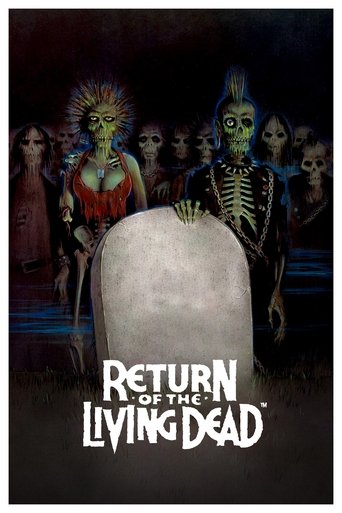
The Return of the Living Dead
Dan O'Bannon · 1985 · Film
Shares gleeful black comedy.
93% shared signal
An American Werewolf in London
John Landis · 1981 · Film
Shares explicit viscera.
85% shared signal
Final Destination 2
David R. Ellis · 2003 · Film
Shares relentless shock.
85% shared signal
Dog Soldiers
Neil Marshall · 2002 · Film
Shares explicit viscera.
84% shared signal
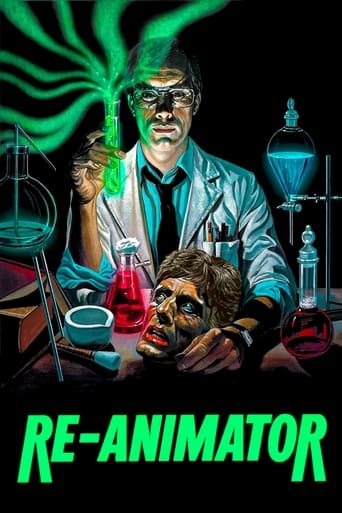
Re-Animator
Stuart Gordon · 1985 · Film
Shares gleeful black comedy.
84% shared signal
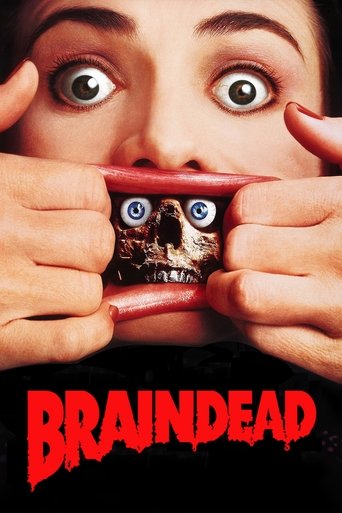
Braindead
Peter Jackson · 1992 · Film
Shares a threat that is not human.
84% shared signal
Freddy vs. Jason
Ronny Yu · 2003 · Film
Shares relentless shock.
83% shared signal
More lists like these: Movies like The Monkey
Questions about Slither
The things people actually ask about this film, answered — including how it ends.
What happens at the end of Slither?
Grant, having absorbed most of the town into one consciousness, corners Starla in a barn. She cuts into him and Bill Pardy detonates a propane tank, destroying the central body and collapsing the entire hive with it. A final shot shows another meteorite falling elsewhere.
What is the creature in Slither?
A parasitic alien intelligence that arrives by meteorite, takes a single host, and then uses slugs to absorb other people into one shared mind. It is explicitly lonely, and its plan is to consume everything so that it will not be alone — which is the film's best idea.
Is Slither connected to Night of the Creeps or The Thing?
Not formally, but it is openly in their lineage, and Gunn has never pretended otherwise. The two-stage infection, the small-town setting and the practical creature work are all drawn from the 1980s creature features it is affectionate about.
How gory is Slither?
Very. We score it 084 on viscera, above the index median and above most straight horror we hold. The barn sequence and the final creature design are explicit practical effects shown at length.
Is Slither a comedy or a horror film?
Both, and the balance is unusual: 076 on tone with 084 on viscera. The comedy is in the dialogue and the characters, and the horror is in the body — which is why neither cancels the other.
These are ranked against Slither, not against you.
Build your own tape →