
Film · 1985
The Return of the Living Dead
Dan O'Bannon
Punks, Trioxin and the first zombies that wanted brains. Nobody survives it.
46Strong to sit through, out of 100 — mostly how much it shows
- PaceJolts you often72
- ThreatMostly supernatural18
- GoreExplicit76
- ToneHas a sense of humour82
- RealityTilts unreal48
Era bias 14 · Analog to the bone. Texture rather than fear, so it is not part of the grade. All six scores →
The most supernatural horror movies ever made →
On VHSCREAM’s six-axis scale, The Return of the Living Dead (1985) is most extreme on the threat axis: 18 out of 100, where 0 is a threat that is not human and 100 is human monsters. 16% of the 320 horror works we have scored come in lower on that axis. How we score →
The Return of the Living Dead is a 1985 horror comedy written and directed by Dan O'Bannon, in which two medical-supply workers puncture a military canister and reanimate a Kentucky graveyard. We score it 082 on tone — gleeful, punk, and openly delighted with itself — against 076 on viscera, which is where the delight stops being comfortable.
Scored and reviewed by VHSCREAM on · how we score
How scary is The Return of the Living Dead, actually?
Less than its reputation and more than its tone score suggests.
Tone 082 puts it close to the gleeful end of our scale, and the film is genuinely funny for most of its length. Pace 072 means it moves: there is very little dread, and almost no quiet.
The fear that survives all that is situational. These zombies cannot be killed, which removes the one reassurance the subgenre normally offers, and the film is rigorous about it — every plan fails, every authority is useless, and the ending kills everybody. If what frightens you is futility rather than shock, this is a more effective film than its soundtrack implies.
At 076 on viscera it is explicit, though less relentlessly than Braindead or Evil Dead II. The practical corpse work — particularly the Tarman and the half-corpse — is excellent and extremely wet, and both are more upsetting than the body count.
Who should skip The Return of the Living Dead
Skip it if you want the Romero register. This is a comedy with a punk soundtrack, and viewers coming from Dawn of the Dead expecting satire delivered straight tend to find the tone grating.
Skip it if a total downer ending will ruin a film for you. Nobody survives and the last beat is the outbreak spreading.
Skip it if you dislike 1980s practical gore. At 076 on viscera the corpse effects are front and centre, and the Tarman sequence in particular is designed to be looked at rather than glimpsed.
The Return of the Living Dead on six axes of fear
Every work in the index is scored on six continuous axes of fear. This is what The Return of the Living Dead looks like as a vector — and what each ten-point band looks like across everything else we hold.
Where that puts it: joint #10 funniest
Draft score — awaiting human review. About these scores
Disagree with a number? Say so on the axis itself. Nobody has confirmed this vector yet, and a score you challenge goes to the top of the queue to be re-scored by a human. Votes do not move the numbers — they decide what gets looked at first. How the scoring works →
Scored against the published rubric. This vector is a draft awaiting review — the method is public so you can argue with it.
Where to find it
Streaming on fuboTV · MGM+ · Philo +4 ↗Physical copies on eBay ↗Availability from JustWatch via TMDB. We earn nothing from these links.
Nothing loads from YouTube until you press play.
The Return of the Living Dead: the review
This is the film that gave zombies their line. Before 1985 the undead of Romero's films ate people indiscriminately and said nothing; The Return of the Living Dead invented the specific hunger for brains, the specific word, and the specific gravelly delivery that the next forty years of parody would run on. It is a strange legacy for a film this nihilistic.
The setup is pure farce. Frank shows Freddy a sealed military drum in the basement of Uneeda Medical Supply, bangs it to prove how solid it is, and releases Trioxin 2-4-5 into the air. The dead in the cemetery across the road stand up. So does the half-corpse in the freight room, and the cadaver dog, and eventually everybody the film has introduced. Meanwhile a group of punks — Trash, Suicide, Spider, Casey — are drinking in the graveyard, which is where the two halves of the film meet.
What distinguishes it from the Romero tradition it is legally forbidden to be a sequel to is the rules. These zombies cannot be stopped. Destroying the brain does nothing. Dismemberment does nothing; the parts keep moving. They are fast, they can talk, they can plan, and they can use a police radio to call for more paramedics. O'Bannon's script takes the cheerful position that there is no survival strategy at all, and then spends ninety minutes proving it while the soundtrack plays deathrock.
The tone is the achievement. Linnea Quigley's Trash delivers a monologue about how she wants to die and then does exactly that, and the film treats it as both a joke and a genuine piece of character writing. The half-corpse strapped to a table, interrogated about why it eats brains, gives an answer — it hurts to be dead — that is the single most frightening line in the film and arrives in the middle of a comedy.
Our threat score of 018 marks how thoroughly supernatural this is: there is no human villain, no motive to appeal to, and the gas is treated as an inexplicable force rather than a biological agent. The era bias of 014 is the other number worth noting. This is 1985 doing 1985 at full strength — the lighting, the practical corpses, the synth and punk soundtrack — and it has aged into something closer to a document than a dated film.
The ending of The Return of the Living Dead explained
The ending, in full. Open it when you have seen it.
The short answer: nothing works. Frank, aware he is turning, immolates himself in a crematorium; the smoke carries Trioxin into a rain cloud, which falls on the surrounding area and raises more dead. Colonel Glover is telephoned, gives an order, and a nuclear missile destroys the town. The final shots show rain beginning to fall somewhere else, and the cycle starting again.
Does anybody survive The Return of the Living Dead?
No. Every named character is dead, turned or vaporised by the end, including the two people the film most encourages you to root for. The last voices are on a radio, and the last image is weather. It is one of the most complete downer endings in 1980s horror and it is played at a comic tempo throughout.
Why doesn't the nuclear strike stop the outbreak?
Because the nuke does exactly what the crematorium did, at scale. Burning Trioxin-contaminated tissue puts the chemical into the atmosphere, and what goes up comes down as rain on whatever is downwind. The military solution is the mechanism of transmission. That joke is the entire point of the ending and it is set up an hour earlier by Frank's suicide.
What happens to Frank and Freddy?
Both turn. Frank chooses the oven once he understands what he is becoming; Freddy, already dead and hungry, spends the last act pursuing his girlfriend Tina while still able to talk to her, which is the film's cruellest sustained sequence. Neither is cured, because there is nothing to cure with.
Why do the zombies in this film say "brains"?
Because this film invented it. The hunger is specific here for a stated reason — the half-corpse explains that eating brains relieves the pain of being dead — and that single piece of invented mythology escaped the film entirely and became the default joke about zombies everywhere else.
If The Return of the Living Dead is your kind of fear
The eight works closest to The Return of the Living Dead in the index on the five axes that describe fear, the same medium first — not by genre label, and not by what other people watched.
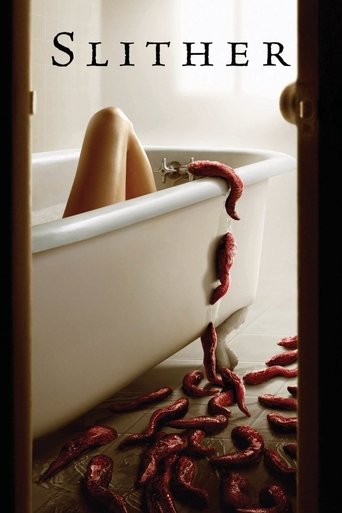
Slither
James Gunn · 2006 · Film
Shares a threat that is not human.
93% shared signal
The Monkey
Osgood Perkins · 2025 · Film
Shares gleeful black comedy.
91% shared signal
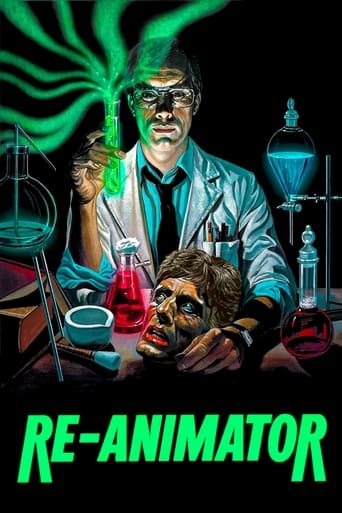
Re-Animator
Stuart Gordon · 1985 · Film
Shares explicit viscera.
86% shared signal
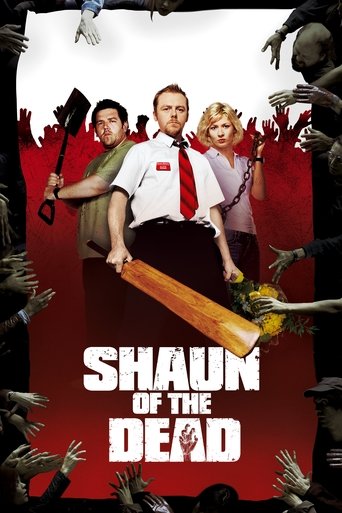
Shaun of the Dead
Edgar Wright · 2004 · Film
Shares a threat that is not human.
85% shared signal
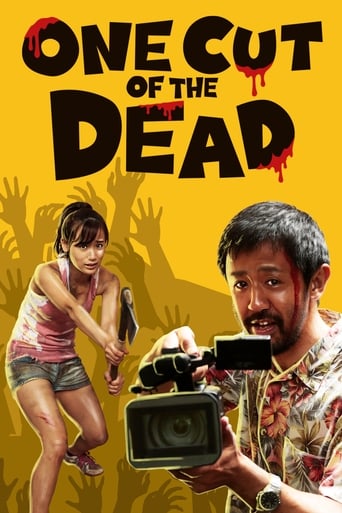
One Cut of the Dead
Shinichiro Ueda · 2017 · Film
Shares gleeful black comedy.
84% shared signal
Final Destination 2
David R. Ellis · 2003 · Film
Shares relentless shock.
83% shared signal
Dog Soldiers
Neil Marshall · 2002 · Film
Shares explicit viscera.
83% shared signal
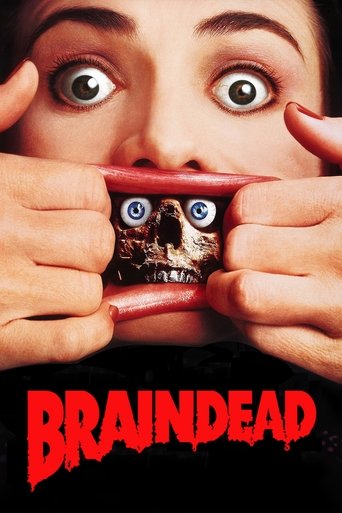
Braindead
Peter Jackson · 1992 · Film
Shares relentless shock.
83% shared signal
More lists like these: Movies like The Monkey
Questions about The Return of the Living Dead
The things people actually ask about this film, answered — including how it ends.
What happens at the end of The Return of the Living Dead?
Everybody dies. Frank immolates himself, which puts Trioxin into a rain cloud and raises more dead; the military nukes the town; and the closing shots show rain falling somewhere else as the cycle begins again. The nuclear strike is the mechanism of transmission, not the solution.
Is The Return of the Living Dead a sequel to Night of the Living Dead?
Not legally and not in continuity, though it came out of the same rights dispute. It treats Romero's film as a real event inside its own fiction — a character explains that the 1968 film was based on a true story the army covered up — which is a joke and a workaround at once.
Why can't these zombies be killed?
The film is explicit that nothing works: destroying the brain does not stop them and dismemberment only produces smaller moving parts. That is the deliberate break from the Romero rules, and it is what makes the plot unwinnable from about the thirty-minute mark.
Did The Return of the Living Dead invent zombies eating brains?
Yes. The specific hunger, the word, and the reason behind it — a half-corpse explains that it relieves the pain of being dead — all originate here, and all of it escaped into the wider culture as the default joke about zombies.
Is The Return of the Living Dead scary or funny?
Mostly funny, with a genuinely bleak spine. We score it 082 on tone, near the gleeful end, but the rules make the situation hopeless from early on and the ending kills everyone. The comedy is real and so is the futility.
These are ranked against The Return of the Living Dead, not against you.
Build your own tape →