Film · 2004
Seed of Chucky
Killer dolls, a lost child and Jennifer Tilly playing herself. Pure camp.
41Strong to sit through, out of 100 — mostly how much it shows
- PaceBuilds, then strikes62
- ThreatHuman and not50
- GoreExplicit72
- ToneGleefully funny86
- RealityDream logic70
Era bias 60 · Neither era. Texture rather than fear, so it is not part of the grade. All six scores →
The funniest horror movies ever made →
Part of a series: Chucky movies in order →
On VHSCREAM’s six-axis scale, Seed of Chucky (2004) is most extreme on the tone axis: 86 out of 100, where 0 is a bleak, unforgiving tone and 100 is gleeful black comedy. 98% of the 320 horror works we have scored come in lower on that axis. How we score →
Seed of Chucky is a 2004 American-British-Romanian comedy horror film directed by Don Mancini, his first as director. Chucky and Tiffany's child tracks down their dolls on the set of a Jennifer Tilly film and brings them back to life, and the family turns on Hollywood. We score it 086 on tone and 072 on viscera, the series at its campiest.
Scored and reviewed by VHSCREAM on · how we score
How scary is Seed of Chucky, actually?
Scored against the published rubric, here is what the numbers mean.
The threat at 050 sits in the middle — 184 works score lower. Human killers' souls in voodoo-animated dolls, with a voodoo pregnancy and soul-transfer plot on top.
Viscera 072 is explicit — 222 works score lower. A killing with a wire, a man's fall into sulfuric acid, a disembowelling, an axe killing and a dismemberment, all played big.
Tone 086 is gleeful — 313 works score lower. A family sitcom and a Hollywood satire in which almost every death is a gag.
Pace 062 is on the shock side, with 206 works slower. A farce's rhythm, with killings arriving as set-piece punchlines.
Era bias 060 reads modern — 137 works score lower. A 2004 film shot on Romanian soundstages, with a glossy, deliberately artificial look and animatronic dolls.
Reality anchor 070 leans surreal — 245 works score lower. Living dolls, a pregnancy that advances by voodoo, and a star playing herself.
On jump scares: almost none. The film wants laughs, not starts.
Who should skip Seed of Chucky
Skip it if you want any fear at all. This is a camp comedy with gore, and it is not trying to frighten you.
Skip it if crude sex humour puts you off. A turkey baster, a voodoo pregnancy and an extended Hollywood seduction plot are central to the story.
Skip it if you need the series to stay consistent. Its tone is far from the earlier films and from the darker entries that followed it.
Content notes: non-consensual insemination, a forced pregnancy, a disembowelling, a death in acid, an axe killing and dismemberment, child abuse by a ventriloquist, and a woman beaten to death.
Watch it if you want an openly queer, unapologetically camp entry in a mainstream horror franchise, you like Jennifer Tilly sending herself up, and you can take your gore as a punchline.
Seed of Chucky on six axes of fear
Every work in the index is scored on six continuous axes of fear. This is what Seed of Chucky looks like as a vector — and what each ten-point band looks like across everything else we hold.
Where that puts it: joint #5 funniest
Draft score — awaiting human review. About these scores
Disagree with a number? Say so on the axis itself. Nobody has confirmed this vector yet, and a score you challenge goes to the top of the queue to be re-scored by a human. Votes do not move the numbers — they decide what gets looked at first. How the scoring works →
Scored against the published rubric. This vector is a draft awaiting review — the method is public so you can argue with it.
Seed of Chucky: the review
Seed of Chucky is the strangest film in the Chucky series and, depending on what you want from it, either the worst or the bravest. We lean towards the second, with reservations.
It took six years to get made. Mancini began writing it in October 1998 as Son of Chucky, and what he wrote was a film about a gender-nonconforming child of two killer dolls, inspired by the 1953 film Glen or Glenda. Mancini, who is gay, wanted to explore LGBT themes inside a horror franchise, and to push the series further into comedy than Bride of Chucky had gone. Universal turned the script down as too gay. Focus Features picked it up after the success of Cabin Fever in 2003, and it was released through its Rogue Pictures label in November 2004, with Mancini directing for the first time.
The family plot is the film
Six years after the last film, the doll child of Chucky and Tiffany is being held by Psychs, an abusive British ventriloquist who uses them as a stage act. Billy Boyd voices the child with a fragile, wounded sweetness, and the opening establishes that this doll, unlike either parent, is gentle, and is frightened by its own nightmares about killing. When a television preview shows animatronic Chucky and Tiffany dolls on the set of a Jennifer Tilly film called Chucky Goes Psycho, the child escapes to Hollywood, finds them in a prop room and brings both back to life with the Heart of Damballa.
The comedy that follows is a domestic farce. Chucky cannot believe he has a child; Tiffany is delighted. Finding the child has no genitals, Chucky names them Glen, and Tiffany names them Glenda, and the argument over which name is right is the film's argument about identity in miniature. Tiffany tries to make Chucky give up killing for the child's sake, and Chucky pretends to agree. It is a sitcom marriage with a body count, and the film knows it.
Jennifer Tilly plays herself, and it is the best joke
The film's boldest move is casting Jennifer Tilly as both Tiffany's voice and a fictionalised Jennifer Tilly, a working actress desperate for a role in the rapper Redman's directorial debut, playing a version of her own public image with total commitment. Redman plays himself. John Waters plays a paparazzo, Pete Peters, who dies when Glen accidentally causes him to fall into sulfuric acid. Jason Flemyng turns up as himself, dressed as Santa.
Tiffany's plan is to put the dolls' souls into Redman and Jennifer, and to give the child a body as well. She knocks the two out and inseminates Jennifer with a turkey baster, a scene that is exactly as tasteless as it sounds and seems to be the reason Universal lost its nerve. When Redman fires Jennifer for being pregnant, Tiffany disembowels him in front of the child. The deaths are big, wet and played for laughs, with Tony Gardner's company handling all the animatronics and makeup effects. Gardner also appears as himself.
Mancini directs like a fan
Shot almost entirely at Castel Studios in Romania, mostly on soundstages to evoke older horror films, the film has a deliberately artificial, theatrical look. Mancini has cited Brian De Palma and Dario Argento as influences, and the film wears them openly in its staging. Pino Donaggio wrote the score. The effect is a film far more self-conscious about its own artifice than any earlier entry.
The second half finds the theme it has been circling. Glen and Glenda turn out to be two personalities in one body: Glen a pacifist, Glenda a psychopath. Chucky, meanwhile, decides he likes being a doll and no longer wants to be human, and it is that, not any murder, that finally breaks the family apart. The killings that follow are the family's fault lines made literal. Jennifer's assistant Joan, who tries to help, is killed by the child, and that killing is how the film reveals that Glen and Glenda are two people sharing one body. Stan, the chauffeur who is lovesick for Jennifer, dies stepping in front of a knife Chucky throws at her. Neither death is a joke, and they are the two moments where the film briefly stops winking.
Where it falls down
It is not scary at all, and much of it is not funny either. The jokes at Jennifer Tilly's expense are meant as self-parody and often land as cruelty. The middle drags in Jennifer Tilly's house, and the soul-swapping plan is so complicated that the film has to keep restating it. On release the reviews were poor: around a third approval on Rotten Tomatoes, a C+ CinemaScore, and two stars from Roger Ebert. It made about $24.8 million worldwide, under half of what Bride of Chucky had taken.
Later critics have been kinder, praising the performances and its themes of sexuality and self-acceptance, and calling it ahead of its time. Out magazine has called it a campy cult classic. Both readings are true. It is a messy film made with conviction, and the studio that first turned it down is the best evidence of how few people would have made it in 2004.
If you want a horror comedy with real gore and real affection for its monsters, Braindead; for a meta-horror joke at the expense of the genre itself, The Cabin in the Woods. The wider shelf is our horror comedy page.
The ending of Seed of Chucky explained
The ending, in full. Open it when you have seen it.
The short answer: Jennifer Tilly gives birth to twins, a boy and a girl, conceived through Tiffany's voodoo. Chucky announces he likes being a doll, Tiffany decides to leave him, and in the struggle that follows Jennifer's chauffeur Stan is killed by a knife meant for her. At the hospital, Tiffany drugs Jennifer and starts to move into her body; Chucky kills Tiffany's doll with an axe; and Glen picks up the axe and dismembers and beheads his father. Five years later, Jennifer is raising the twins, who carry Glen's and Glenda's souls, but Jennifer herself is now Tiffany, and she beats a nanny to death. At a birthday party, Glen opens a present to find Chucky's severed arm, which springs up and grabs him.
Who are Glen and Glenda in Seed of Chucky?
They are the child of Chucky and Tiffany, a living doll voiced by Billy Boyd, with no defined gender. Chucky names the child Glen and Tiffany names them Glenda, after the 1953 film Glen or Glenda. Late in the film it turns out Glen and Glenda are two separate personalities in one body: Glen gentle, Glenda murderous.
What happens to Tiffany at the end of Seed of Chucky?
Her doll body is killed by Chucky with an axe while she is in the middle of transferring her soul into Jennifer Tilly. The final scene reveals the transfer worked. Five years later, the woman raising the twins is Jennifer Tilly in body and Tiffany in soul, and she beats a nanny to death in a rage.
How does Chucky die in Seed of Chucky?
His own child kills him. After Chucky axes Tiffany's doll body in the hospital, Glen, the gentle personality rather than Glenda, takes the axe and dismembers and beheads him, then breaks down crying. The film's final shot undercuts it: Chucky's severed arm is still alive in a birthday present.
What happens to Glen and Glenda at the end?
Jennifer Tilly gives birth to twins, a boy and a girl, and their souls are transferred into the two babies, one each. Five years later they are children living with Jennifer, who now carries Tiffany's soul. Glen opens a present on their birthday and Chucky's severed arm grabs him.
If Seed of Chucky is your kind of fear
The eight works closest to Seed of Chucky in the index on the five axes that describe fear, the same medium first — not by genre label, and not by what other people watched.
Bride of Chucky
Ronny Yu · 1998 · Film
Shares gleeful black comedy.
92% shared signal
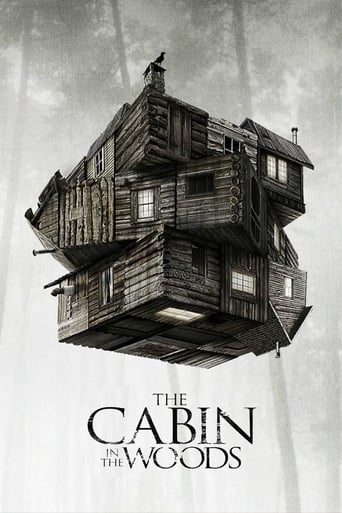
The Cabin in the Woods
Drew Goddard · 2011 · Film
Shares explicit viscera.
90% shared signal
Jason X
James Isaac · 2002 · Film
Shares dream logic.
80% shared signal
Sinners
Ryan Coogler · 2025 · Film
Shares explicit viscera.
77% shared signal
Freddy vs. Jason
Ronny Yu · 2003 · Film
Shares dream logic.
77% shared signal
Freddy's Dead: The Final Nightmare
Rachel Talalay · 1991 · Film
Shares gleeful black comedy.
77% shared signal
The Return of the Living Dead
Dan O'Bannon · 1985 · Film
77% shared signal
Hellraiser III: Hell on Earth
Anthony Hickox · 1992 · Film
77% shared signal
More lists like these: Movies like Sinners
Questions about Seed of Chucky
The things people actually ask about this film, answered — including how it ends.
What happens at the end of Seed of Chucky?
Jennifer Tilly gives birth to twins, and Glen and Glenda's souls go into them. Chucky kills Tiffany's doll with an axe and Glen kills Chucky. Five years later Jennifer, who now carries Tiffany's soul, kills a nanny, and Glen opens a present containing Chucky's severed arm, which grabs him.
Is Jennifer Tilly Tiffany at the end of Seed of Chucky?
Yes. Tiffany starts transferring her soul into Jennifer at the hospital before Chucky kills her doll body. The final scene, five years later, shows the transfer worked: the woman raising the twins is Jennifer Tilly on the outside and Tiffany on the inside.
Why is the child called Glen or Glenda?
Because the doll has no defined gender. Chucky names the child Glen and Tiffany names them Glenda. The joke and the theme both come from the 1953 film Glen or Glenda, which inspired Don Mancini's script. Glen and Glenda later turn out to be two personalities.
Who directed Seed of Chucky?
Don Mancini, the creator of Chucky, who had written every film in the series up to that point. Seed of Chucky was his debut as a director, and he went on to write and direct the series' next entries as well.
Why did Universal not make Seed of Chucky?
According to the film's history, Universal rejected Don Mancini's script as too gay. Focus Features approved it after the success of Cabin Fever in 2003, and released it through its Rogue Pictures label in November 2004.
Is Seed of Chucky a horror film or a comedy?
Both, weighted heavily to comedy. We score it 086 on tone, deep into gleeful territory. Mancini deliberately pushed the series further towards comedy than Bride of Chucky had, and the result is a camp Hollywood satire with killer dolls and plenty of gore.
These are ranked against Seed of Chucky, not against you.
Build your own tape →