Film · 1988
A Nightmare on Elm Street 4: The Dream Master
Renny Harlin
Every friend he takes leaves her something. Freddy has never met a final girl like this.
51Strong to sit through, out of 100 — mostly how bleak it is
- PaceJolts you often70
- ThreatMostly supernatural22
- GoreShows some of it58
- ToneGrim, with air60
- RealityPure nightmare logic90
Era bias 20 · Analog-leaning. Texture rather than fear, so it is not part of the grade. All six scores →
The most surreal horror movies ever made →
Part of a series: Nightmare on Elm Street movies in order →
On VHSCREAM’s six-axis scale, A Nightmare on Elm Street 4: The Dream Master (1988) is most extreme on the reality-anchor axis: 90 out of 100, where 0 is grounded realism and 100 is dream logic. 97% of the 320 horror works we have scored come in lower on that axis. How we score →
A Nightmare on Elm Street 4: The Dream Master is a 1988 American fantasy slasher film directed by Renny Harlin. Freddy Krueger returns to finish off the last Elm Street children, and a shy girl named Alice absorbs the strengths of each friend he kills until she can face him alone. We score it 090 on reality anchor and 020 on era bias.
Scored and reviewed by VHSCREAM on · how we score
How scary is A Nightmare on Elm Street 4: The Dream Master, actually?
Scored against the published rubric, here is what the numbers mean.
The threat at 022 is on the supernatural side — 75 works score lower. Freddy is a dream demon carrying the souls of his victims inside his body, and he is undone by a nursery rhyme.
Viscera 058 is in the middle — 163 works score lower. Bodies burned, suffocated, crushed and dragged into a waterbed, staged as inventive effects rather than gore.
Tone 060 leans gleeful — 286 works score lower. Freddy jokes through every kill, the soundtrack is pop, and the heroine wins cleanly.
Pace 070 is on the shock side, with 265 works slower. It moves from one dream set-piece to the next, with little time spent awake.
Era bias 020 reads analog — 82 works score lower. 35mm gloss, latex and animatronic effects, and a 1988 high school with a 1988 soundtrack.
Reality anchor 090 is surreal — 309 works score lower. Time loops, a girl turned into an insect, and souls bursting out of a man's chest.
On jump scares: several, delivered as punchlines as often as frights.
Who should skip A Nightmare on Elm Street 4: The Dream Master
Skip it if you want Freddy frightening. He is at his most comic here, with a joke for nearly every kill.
Skip it if you loved the Dream Warriors kids. The survivors of the previous film are killed off early and quickly.
Skip it if insects are a hard limit. The cockroach transformation is the film's most squirm-inducing sequence.
Content notes: teenagers killed in their sleep, a girl burned to death, suffocation, a body transformation into an insect, a car crash with serious injury, surgery and bleeding, and a parent drugging her child.
Watch it if you want one of the slickest and most purely entertaining films of the Englund era, you like a final girl built up from her friends, and you can enjoy Freddy as a showman.
A Nightmare on Elm Street 4: The Dream Master on six axes of fear
Every work in the index is scored on six continuous axes of fear. This is what A Nightmare on Elm Street 4: The Dream Master looks like as a vector — and what each ten-point band looks like across everything else we hold.
Where that puts it: joint #4 surreal
Draft score — awaiting human review. About these scores
Disagree with a number? Say so on the axis itself. Nobody has confirmed this vector yet, and a score you challenge goes to the top of the queue to be re-scored by a human. Votes do not move the numbers — they decide what gets looked at first. How the scoring works →
Scored against the published rubric. This vector is a draft awaiting review — the method is public so you can argue with it.
A Nightmare on Elm Street 4: The Dream Master: the review
The Dream Master is the moment the series stopped being a horror franchise that happened to be popular and became a pop franchise that happened to be horror, and it is a lot of fun watching the switch happen.
It was made in a hurry. Wes Craven pitched a fourth film and the producers, Sara Risher and Robert Shaye, turned it down for the "Dream Master" concept. Brian Helgeland reportedly wrote his script in nine days because New Line needed one urgently. Tom McLoughlin declined to direct because he wanted creative control, and shooting had started before anyone had replaced him. Then the 1988 Writers Guild strike arrived and forced a good deal of improvisation on set. The director who did take the job, Renny Harlin, had made two low-budget features before it. On paper this should be a wreck. In practice it is one of the best-looking films in the series.
A relay race instead of a siege
The structure is clever and simple. The film opens with the survivors of Dream Warriors: Kristen, Kincaid and Joey, out of hospital and back at school. Kristen is popular now and keeps dragging the other two into her dreams; they want her to stop, in case she brings Freddy back. Then Freddy comes back anyway, in a junkyard, and kills Kincaid and Joey in quick succession. Kristen, drugged with sleeping pills by her mother, is taunted into pulling a friend into her dream for help. She pulls in Alice Johnson, and before Freddy throws Kristen into his boiler, she passes her power to Alice.
From there the film becomes a relay. Each time Freddy kills one of Alice's friends, Alice takes on something of that friend's ability and personality. It is a slasher in which the final girl is assembled from the victims, and Lisa Wilcox, who won the part over more than 600 actresses after deliberately toning down her appearance, makes the change from wallflower to fighter believable without speeches.
Harlin makes it look expensive
At $6.5 million this was New Line's most expensive release at the time, and Harlin spends it on images. Debbie, played by Brooke Theiss, is turned into a cockroach and crushed in a roach motel. Sheila is suffocated by Freddy in a way that makes her death look like an asthma attack. Joey is dragged into his own waterbed by Freddy disguised as a Playboy model. Rick is killed in a martial arts dojo by an invisible Freddy. The time-loop sequence, in which Alice and Dan keep repeating the same moments, is Robert Englund's favourite in the series, and it is the eeriest stretch of a film that otherwise moves too fast to frighten.
Steven Fierberg's photography gives it a glossy, music-video sheen that the earlier films did not have, and Craig Safan's score sits under a pop soundtrack that includes The Fat Boys' "Are You Ready for Freddy" over the end credits. That song is the film in miniature: likeable, of its moment, and not remotely scary.
The marketing tells you where Freddy now lived. The soundtrack album, released by Chrysalis, carried Blondie, Divinyls and Go West, and Sinéad O'Connor turns up twice in the film itself. When Jive Records put out "A Nightmare on My Street", a single that reached No. 15 on the Billboard Hot 100, and prepared a Freddy-like video for MTV, New Line sued and won a preliminary injunction; the video was never released. A studio does not go to court over a character unless he has become a brand, and by 1988 Freddy was one. Critics split along the same line. Kevin Thomas of the Los Angeles Times called it the best film in the series and singled out Wilcox, while the Los Angeles Daily News found the plot derivative and the effects outstanding. Both were right. Even the sets were recycled: the junkyard, built at a Los Angeles landfill, was carried over from Dream Warriors.
Where it falls down
Freddy is the problem. By this film he is a stand-up act with knives, and the script hands him a one-liner for every kill. The menace of A Nightmare on Elm Street depended on not knowing what he would do next; here you know exactly, because the joke has been set up. The film's audience at the time clearly did not mind, since it was the franchise's top grosser until Freddy vs. Jason, but it makes the deaths into sketches.
The early cull of the Dream Warriors survivors also stings. Kincaid and Joey are killed off before the film has really started, and Tuesday Knight, replacing Patricia Arquette as Kristen, is given very little to do before she is gone. It treats the previous film's heroes as a warm-up act, which is efficient and a little heartless.
And the mythology wobbles. The plot offers no real mechanism for Freddy's resurrection; asked by James Cameron how Freddy came back, Harlin reportedly answered that "a dog pisses fire". That is about the level of rigour on offer.
Still, it moved the series forward with energy and a real heroine. It opened to about $12.9 million, the largest opening for an independent release at the time, and it won Best Special Effects at Sitges. Robert Englund, enjoying himself throughout, even turns up a second time in different make-up as a nurse, and New Line's own Robert Shaye has an uncredited cameo as Alice's teacher.
For the series in release order, see the Nightmare on Elm Street movies in order. For a horror film of the same year that also plays the afterlife for comedy, Beetlejuice.
The ending of A Nightmare on Elm Street 4: The Dream Master explained
The ending, in full. Open it when you have seen it.
The short answer: after Freddy has killed Kristen, Kincaid, Joey, Sheila, Rick and Debbie, Alice faces him alone, using the abilities she has absorbed from her dead friends. She remembers a nursery rhyme, "The Dream Master", which tells you to show evil its own reflection, and forces Freddy to look at himself. The souls of his victims, trapped inside his body, revolt and tear their way out, freeing her friends and leaving Freddy a hollow husk. Dan survives his injuries. Months later, on a date with Dan by a fountain, Alice glimpses Freddy's reflection in the water and chooses to ignore it.
What happens at the end of The Dream Master?
Alice uses the combined powers of her dead friends against Freddy and, guided by a nursery rhyme, makes him confront his own reflection. The souls he has absorbed rebel and break out of him, releasing her friends and leaving him an empty husk. The epilogue shows Alice and Dan on a date, with Freddy's reflection briefly in a fountain.
How does Alice become the Dream Master?
Kristen gives her the power. Before Freddy throws Kristen into his boiler, she passes her ability to pull people into dreams on to Alice. After that, every time Freddy kills one of Alice's friends, Alice takes on that friend's abilities and personality. By the end she has enough of them to fight him alone.
How does Kristen die in Dream Master?
Her mother has been drugging her with sleeping pills. In a dream, Freddy taunts her into bringing a friend in for help, and she summons Alice. Freddy throws Kristen into his boiler, and before she dies she transfers her power to Alice. Alice and her brother Rick find Kristen's bedroom on fire with her body inside.
How does Freddy come back in Dream Master?
The film resurrects him in the junkyard where Kincaid wakes in a dream, and the plot gives no real mechanism for it. Asked during filming by James Cameron how Freddy was being resurrected, Harlin reportedly replied that "a dog pisses fire", which tells you how seriously the film takes the question.
Does Dan die in Dream Master?
No. Dan is badly injured when Alice, trying to ram Freddy in a dream, crashes her car into a tree in reality. In a later dream he is hurt again, and his surgeons wake him as he begins bleeding out. He survives the film and is with Alice on a date in the final scene.
If A Nightmare on Elm Street 4: The Dream Master is your kind of fear
The eight works closest to A Nightmare on Elm Street 4: The Dream Master in the index on the five axes that describe fear, the same medium first — not by genre label, and not by what other people watched.
A Nightmare on Elm Street 3: Dream Warriors
Chuck Russell · 1987 · Film
Shares dream logic.
92% shared signal
Freddy's Dead: The Final Nightmare
Rachel Talalay · 1991 · Film
Shares a threat that is not human.
89% shared signal
Freddy vs. Jason
Ronny Yu · 2003 · Film
Shares relentless shock.
87% shared signal
Jason X
James Isaac · 2002 · Film
Shares dream logic.
87% shared signal
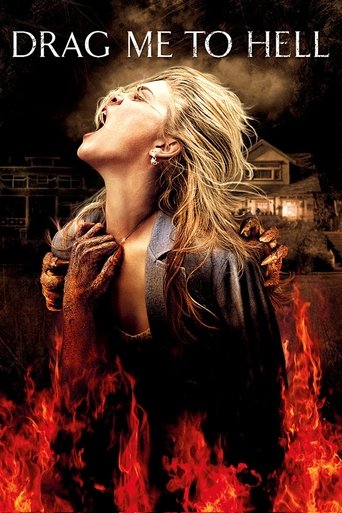
Drag Me to Hell
Sam Raimi · 2009 · Film
Shares a threat that is not human.
86% shared signal
Phantasm
Don Coscarelli · 1979 · Film
84% shared signal

Suspiria (OST)
Goblin · 1977 · Record
86% shared signal

Profondo Rosso
Goblin · 1975 · Record
85% shared signal
Questions about A Nightmare on Elm Street 4: The Dream Master
The things people actually ask about this film, answered — including how it ends.
What happens at the end of A Nightmare on Elm Street 4: The Dream Master?
Alice faces Freddy alone using the powers she absorbed from her dead friends. Recalling a nursery rhyme about showing evil its reflection, she makes Freddy see himself, and the trapped souls inside him tear their way out, freeing her friends and leaving him a husk. Months later she sees his reflection in a fountain and ignores it.
Who dies in The Dream Master?
Kincaid, Joey, Kristen, Sheila, Rick and Debbie are all killed by Freddy. Kincaid dies in a junkyard dream, Joey in his waterbed, Kristen in Freddy's boiler, Sheila of what looks like an asthma attack, Rick in a dojo and Debbie as a cockroach. Alice and Dan survive.
Why is Kristen played by a different actress in Dream Master?
Patricia Arquette, who played Kristen in Dream Warriors, declined to return. Tuesday Knight was cast in the role, and she also contributed the film's opening song, "Nightmare". Kristen dies early in the film, after passing her dream power to Alice Johnson.
Who directed A Nightmare on Elm Street 4?
Renny Harlin, who had made only two low-budget features before it. Shooting had already started without a director after Tom McLoughlin declined. Brian Helgeland's script was reportedly written in nine days, and the 1988 Writers Guild strike forced a lot of improvisation during filming.
How successful was The Dream Master?
Very. It cost $6.5 million and grossed about $49.4 million in the United States, the franchise's top earner until Freddy vs. Jason in 2003. Its opening of about $12.9 million was then the largest for an independent release, and it won Best Special Effects at the Sitges festival.
Is The Dream Master scary?
Not very. We score it 060 on tone, toward the gleeful end, and 090 on reality anchor. The deaths are inventive and the time-loop sequence is genuinely unsettling, but Freddy plays most kills for laughs and the soundtrack is closer to a party than a nightmare.
These are ranked against A Nightmare on Elm Street 4: The Dream Master, not against you.
Build your own tape →