
Record · 1977
Suspiria (OST)
Prog-rock incantation. Bells, whispers, and that four-note curse.
Most extreme on REALITY ANCHOR — dream logic at 090
The most surreal horror albums ever recorded →
On VHSCREAM’s six-axis scale, Suspiria (OST) (1977) is most extreme on the reality-anchor axis: 90 out of 100, where 0 is grounded realism and 100 is dream logic. 92% of the 105 horror works we have scored come in lower on that axis. How we score →
Suspiria (OST) is Goblin's 1977 score for Dario Argento's Suspiria, written with Argento himself and recorded before the film was shot. We score it 090 on reality anchor — joint-sixth of 105 works — and 012 on era bias.
Scored and reviewed by VHSCREAM on · how we score
Suspiria (OST): the review
Suspiria (OST) is the most recognisable horror score after Halloween and it is by some distance the strangest.
The title theme is built from a celesta figure — a music-box melody, the same lullaby instinct Goblin had used on Profondo Rosso two years earlier — surrounded by things that have no business being there: a bouzouki, tabla, a Moog bass doing something arrhythmic, and, underneath all of it, voices. The voices are the record. Hissing, muttering, breathing, whispering in no identifiable language, and at the end of each phrase a word that resolves into "witch". It was achieved by close-miking the band whispering and screaming into the track, and it is why the theme is unlistenable in the dark at any age.
Argento's working method on this film is the thing that makes the score matter. He had Goblin compose and record it before production, and then played it on set at high volume while shooting, so that the cast performed to it. The score is not laid over the film; the film was made inside the score.
It is a horror record rather than a score
Across its length the album does things a score is not supposed to do. "Witch" is a full composition with a structure. "Sighs" is almost ambient. "Markos" is a wall of treated breathing and distorted organ with no melodic content at all. "Black Forest" and "Blind Concert" are closer to krautrock than to film music. There is no underscoring in the conventional sense — no cues designed to sit under dialogue — because Argento did not want any.
The colour and the volume
The film is shot in Technicolor's last three-strip printing and the score is mixed to match: saturated, airless, with the high end pushed until it is unpleasant. Both decisions are the same decision. Suspiria does not have atmosphere, it has pressure, and the record applies it just as effectively without the images.
Where it is less good than its reputation
Several tracks are variations on the title theme and the album sags in the middle. The prog material has dated harder than the Profondo Rosso equivalent. And the whispered-voice trick, which is extraordinary once, is used on roughly half the record.
For Goblin's better record as music, Profondo Rosso; for the film, Suspiria; for the same abandonment of melody for texture, Heresy.
The ending of Suspiria (OST) explained
Total spoilers from here. Everything above this line is spoiler-free.
The short answer: the record resolves the way the film does, by returning to the title theme and then stopping. Suspiria (OST) is not structured as a journey — it is a set of variations on and departures from one celesta figure, and the closing position on the original Cinevox sequence brings that figure back. As with Profondo Rosso, the reissue history is a thicket: the album has been released with different running orders, with bonus cues, with alternate takes, and in expanded editions that run considerably longer than the 1977 original, so "the last track" depends on which pressing you have. The original Italian sequence is the one to hear first. What matters structurally is that nothing in the record develops out of the theme and nothing concludes it — the final gesture is the same whispering that opened it.
What is the whispering on the Suspiria theme?
Goblin, close-miked. The voices are the band members hissing, muttering, breathing and eventually screaming into the microphone, treated and layered under the celesta melody. There is no language — the syllables are deliberately not words — with one exception: the hissed phrase that resolves into "witch" at the end of a cycle, which is the only intelligible thing in the piece and which arrives after you have stopped expecting to understand any of it.
What instruments are on Suspiria (OST)?
A celesta for the title figure, bouzouki, tabla, Moog and other early synthesisers, electric guitar, bass, drums, Hammond organ, and the band's own voices used as a percussion and texture source. The bouzouki and tabla are the choices nobody else would have made, and they are most of why the record does not sound like anything before or after it.
Why did Argento play the score on set?
Because he had it. Goblin wrote and recorded the music before shooting began, working from the script with Argento, and he then had it played at volume during takes so that the performers were acting to it. Jessica Harper has described the experience. The result is that the film's rhythm and the record's are the same rhythm, which is why the score fits so exactly and why it works alone.
Is the 1977 score connected to the 2018 Suspiria?
No. Luca Guadagnino's 2018 remake is scored by Thom Yorke and shares nothing with Goblin's work — it is piano-led, sung, mournful and almost entirely without the original's aggression. Both are good records. They are not the same proposition, and Yorke's is the only remake score in modern horror that justified itself by refusing to compete.
Which edition of Suspiria (OST) should I buy?
Start with the 1977 Cinevox sequence, which is short and shaped. The expanded reissues add alternate takes, extended cues and material that was not on the original album, and they are more complete and considerably less effective as a listen. If you only want the thing itself, the title theme and "Witch" are the two tracks that matter.
Is Suspiria (OST) scary on its own?
More than almost any score in the index. We put it at 090 on reality anchor, near the ceiling, because nothing about it behaves like music — the voices, the detuned celesta and the arrhythmic bass give a listener nothing to orient against. It is also only around forty minutes, which makes it one of the more efficient pieces of dread we hold.
How scary is Suspiria (OST), actually?
Scored against the published rubric, here is what the numbers mean.
Reality anchor 090 is near the ceiling — only 5 works score higher. Nothing in it keeps time reliably, the voices are not language, and the central melody is deliberately slightly out of tune with its surroundings.
Era bias 012 is deep analog — only 21 works score lower. 1977, tape, a celesta, a Hammond, early Moogs, a bouzouki and a band shouting into a microphone.
Viscera 060 is above the median — 73 works score lower. There is nothing described, but the record is physical in a way few scores are: breath, saliva, close-miked throats and a high end pushed past comfort.
Tone 040 is lower than the film's reputation suggests — 88 works score lower. Long stretches of it are a prog band playing, and there are grooves on this record.
Pace 060 is on the shock side — 81 works are slower. The title theme has a pulse and most of the album moves.
The threat at 015 is deep into the supernatural — only 11 works score lower. It is a score about witches and it has no human register at all.
On shocks: two or three, and the first scream under the celesta is the one that gets people.
Suspiria (OST) on six axes of fear
Every work in the index is scored on six continuous axes of fear. This is what Suspiria (OST) looks like as a vector.
Where that puts it: #1 supernatural · #4 surreal
Disagree with a number? Say so on the axis itself. Nobody has confirmed this vector yet, and a score you challenge goes to the top of the queue to be re-scored by a human. Votes do not move the numbers — they decide what gets looked at first. How the scoring works →
Scored against the published rubric. This vector is a draft awaiting review — the method is public so you can argue with it.
Who should skip Suspiria (OST)
Skip it if the whispering will be too much. It recurs across half the record and it is the element most listeners find genuinely intolerable.
Skip it if you want conventional film music. There is almost no underscoring here — Argento did not want cues that sit politely under dialogue, and the album behaves like a rock record.
Skip it if a treble-heavy 1977 Italian mix will hurt. The high end is deliberately unpleasant and headphones make it worse.
Content notes: instrumental, apart from non-linguistic vocal texture and the whispered word "witch". The record is attached to a film containing graphic murders.
Listen to it if you want the strangest famous horror score ever recorded, you can take forty minutes of a celesta and a bouzouki being used against you, and you want to hear the record a film was built inside rather than laid on top of.
If Suspiria (OST) is your kind of fear
The eight works closest to Suspiria (OST) in the index, ranked by distance across all six axes — not by genre label, and not by what other people watched.

Profondo Rosso
Goblin · 1975 · Record
Shares analog-era texture.
90% shared signal
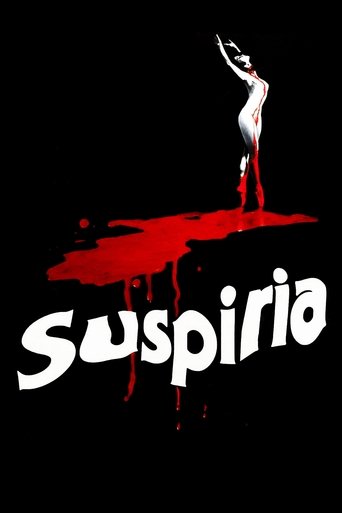
Suspiria
Dario Argento · 1977 · Film
Shares dream logic.
89% shared signal
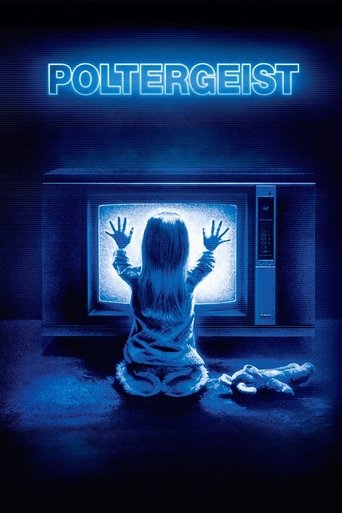
Poltergeist
Tobe Hooper · 1982 · Film
Shares a supernatural threat.
81% shared signal
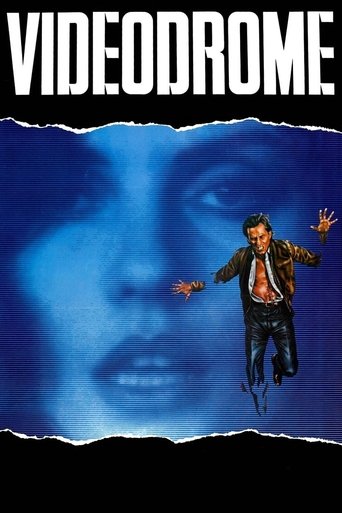
Videodrome
David Cronenberg · 1983 · Film
Shares dream logic.
78% shared signal

Books of Blood
Clive Barker · 1984 · Book
Shares analog-era texture.
78% shared signal
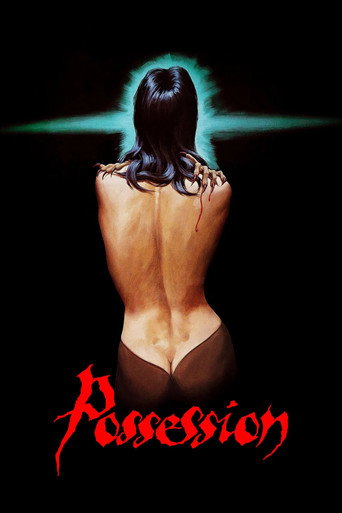
Possession
Andrzej Zulawski · 1981 · Film
76% shared signal
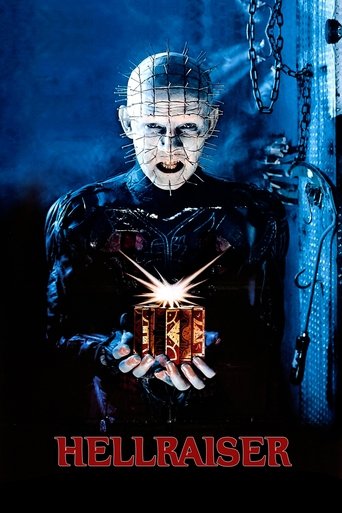
Hellraiser
Clive Barker · 1987 · Film
75% shared signal
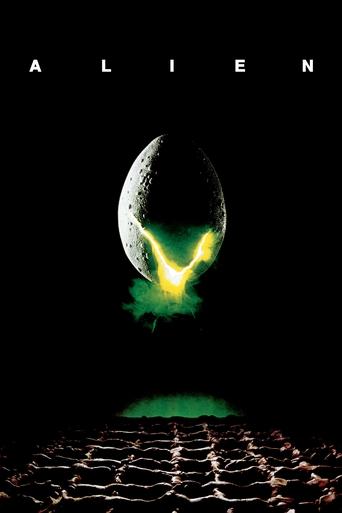
Alien
Ridley Scott · 1979 · Film
Shares a supernatural threat.
73% shared signal
Suspiria (OST) in another form
The index links works across media, so an adaptation sits beside its source and a score beside the film it haunts.
Questions about Suspiria (OST)
The things people actually ask about this record, answered.
How does Suspiria (OST) end?
By returning to the title theme rather than resolving anything — the album is variations on one celesta figure and closes by bringing it back. The exact final track depends on the pressing, since the reissues all sequence it differently; the 1977 Cinevox original is the one to hear.
What is the whispering in the Suspiria theme?
Goblin themselves, close-miked, hissing and muttering in deliberately non-linguistic syllables, with one exception: the phrase that resolves into "witch" at the end of a cycle. It is the only intelligible thing in the piece and it arrives after you have given up expecting any.
What instruments are used on Suspiria (OST)?
Celesta for the main figure, plus bouzouki, tabla, Moog and other early synthesisers, guitar, bass, drums, Hammond organ, and the band's voices as texture. The bouzouki and tabla are the unusual choices and most of why it sounds like nothing else.
Why did Dario Argento play the score during filming?
Because Goblin recorded it before production, working from the script. Argento then played it loudly on set so the cast performed to it, which is why the film and the record share a rhythm and why the score works so well on its own.
Is the Suspiria remake score by Thom Yorke related to this one?
No. Yorke's 2018 score for Guadagnino's remake shares nothing with Goblin — it is piano-led, sung and mournful rather than aggressive. It is the rare remake score that succeeded by declining to compete with the original.
Is Suspiria (OST) frightening without the film?
Very. We score it 090 on reality anchor, near the top of our index, because nothing in it behaves like ordinary music — the detuned celesta, the arrhythmic bass and the non-linguistic voices leave a listener nothing to hold onto.
These are ranked against Suspiria (OST), not against you.
Build your own tape →