
Record · 2018
Hereditary (OST)
Colin Stetson
Saxophone multiphonics as a nervous system giving out.
Most extreme on TONE — a bleak, unforgiving tone at 006
On VHSCREAM’s six-axis scale, Hereditary (OST) (2018) is most extreme on the tone axis: 6 out of 100, where 0 is a bleak, unforgiving tone and 100 is gleeful black comedy. 7% of the 105 horror works we have scored come in lower on that axis. How we score →
Hereditary (OST) is Colin Stetson's 2018 score for Ari Aster's film, played almost entirely on bass saxophone and clarinets, with no synthesisers anywhere on it. We score it 006 on tone — 7 works score lower — and 090 on era bias.
Scored and reviewed by VHSCREAM on · how we score
Hereditary (OST): the review
Hereditary (OST) is the best horror score of the last ten years and the single most useful fact about it is that there are no synthesisers on it.
Stetson is a saxophonist — bass saxophone principally, plus clarinets — who had come out of Bon Iver, Arcade Fire and Tom Waits sessions and a run of solo records built on a technique almost nobody else has: circular breathing, so that he never stops, with contact microphones taped to the instrument's keys and a throat microphone picking up his own vocalising into the horn. The result is that one man playing one instrument live, in one take, produces what sounds like a percussion track, a bass part, a drone and a lead simultaneously. Nothing is overdubbed into a grid. The clicking you hear is keys.
Aster's brief was reportedly for something that would not sound like a horror score, and what Stetson delivered sounds like no score at all: it is organic, wet, breathing, and permanently on the edge of becoming a voice. The main title is a slow groaning figure that most first-time listeners assume is electronic and which is a human being with no air left.
It is scoring grief rather than the occult
The film's first hour is a family after a funeral and Stetson scores that register rather than the cult material: low, slow, close, and physically uncomfortable without ever becoming loud. When the film's supernatural machinery finally declares itself, the score barely changes, which is the correct decision — the horror in Hereditary was always the family, and the music has known that from the first cue.
The best cues
The main title is the one everybody knows. "Reborn" is the clearest demonstration of the technique, with the key noise functioning as a drum pattern. "Charlie" is the quietest and the saddest thing on the record. And the material around the film's last movement is where the throat microphone comes forward and the saxophone stops sounding like an instrument.
Where it is less effective
Divorced from the film it is a difficult listen — repetitive, low, and without the images several cues are textures rather than pieces. It is also short, and the album is sequenced as a cue list. And the thing that makes it extraordinary is partly a technical fact about how it was made, which is not audible as such to most listeners.
For the vocabulary it is working inside, Threnody for the Victims of Hiroshima; for the other modern score built on an acoustic ensemble playing wrong, Under the Skin (OST); for the film, Hereditary.
The ending of Hereditary (OST) explained
Total spoilers from here. Everything above this line is spoiler-free.
The short answer: the score ends where the film does, in the treehouse, and it is the one point at which Stetson lets something resolve. Hereditary's last sequence is a coronation — the thing the entire film has been engineering finally happens, and it is presented as a celebration rather than as a catastrophe — and Stetson scores it with the most consonant, sustained, almost hymnal material on the record. After ninety minutes of groaning low saxophone and key noise, the final cue opens out into something that is recognisably choral and recognisably triumphant, which is horrifying precisely because it is beautiful: the music has switched sides. On album the running order follows the film and the closing material is that same sequence, so the record's shape and the film's are identical. Nothing in it is a release for the audience. It is a release for the cult.
Is there a synthesiser on Hereditary (OST)?
No. The score is bass saxophone, clarinets and Stetson's own voice, with contact microphones on the instrument's keys and a throat microphone on the player. What sounds like a synth pad is circular-breathed saxophone; what sounds like percussion is key mechanism; what sounds like a processed voice is Stetson vocalising into the horn while playing it. The absence of synthesis is the record's central fact.
What is circular breathing?
A technique in which the player pushes air out of the cheeks while inhaling through the nose, so that the sound never stops. Stetson's solo work is built on it, and on Hereditary it is what allows a single live take to function as a continuous drone with a rhythm and a melody happening on top. It is physically very demanding and almost nobody plays this way at this length.
Who is Colin Stetson?
An American saxophonist and composer, best known for his New History Warfare solo records and for session and touring work with Bon Iver, Arcade Fire, Tom Waits and others. Hereditary was his first major film score; he has since scored Color Out of Space and The Menu, and his solo catalogue is the place to hear the technique without the horror.
What is the main theme of Hereditary?
The main title: a slow, groaning, descending bass saxophone figure over key noise, which most listeners assume is electronic. It plays over the film's opening pull into the miniature house, and it is doing the film's structural work in advance — the sound of something being operated rather than lived.
Why does the end of the score sound triumphant?
Because the film's ending is a victory for the people who arranged it. The last sequence is Paimon's coronation, staged as a ceremony, and Stetson scores it as one — consonant, sustained, choral, and genuinely beautiful after ninety minutes of discomfort. The effect on an audience is nausea rather than relief, and it is the best single decision on the record.
Is Hereditary (OST) listenable on its own?
In parts, and less so than its reputation suggests. The main title and "Charlie" work as music; several other cues are textures that need the images. It is also short and sequenced as a cue list rather than as an album. Stetson's own records — particularly New History Warfare Vol. 2 — are the better listen if what interests you is the technique.
How scary is Hereditary (OST), actually?
Scored against the published rubric, here is what the numbers mean.
Tone 006 is bleak — 7 works score lower. There is no consolation anywhere on the record, and the one beautiful passage on it is beautiful on behalf of the antagonists.
Era bias 090 reads modern — 96 works score lower, which is worth stating given that it is entirely acoustic: the contact and throat microphones, the close recording and the mastering are all contemporary, and nothing about this record could have been made in 1978.
Viscera 052 is just above the median — 59 works score lower. The record is unusually bodily for a score with no depicted content: breath, saliva, throat noise and mechanism are all audible.
Pace 034 is on the dread side — 50 works are slower. Nothing hurries and the cues are built on sustain rather than on movement.
The threat at 028 is on the supernatural side — 33 works score lower, although the score is attached to a film whose cruelty is entirely domestic until the last act.
Reality anchor 066 leans towards dream logic — 74 works score lower. The record keeps a pitch centre and almost nothing else, and the sources are deliberately unidentifiable.
On shocks: two or three, and the film's famous ones are silence rather than score.
Hereditary (OST) on six axes of fear
Every work in the index is scored on six continuous axes of fear. This is what Hereditary (OST) looks like as a vector.
Where that puts it: #5 bleakest · #5 supernatural
Disagree with a number? Say so on the axis itself. Nobody has confirmed this vector yet, and a score you challenge goes to the top of the queue to be re-scored by a human. Votes do not move the numbers — they decide what gets looked at first. How the scoring works →
Scored against the published rubric. This vector is a draft awaiting review — the method is public so you can argue with it.
Who should skip Hereditary (OST)
Skip it if low frequencies are uncomfortable for you. The bass saxophone sits in a register that is physically unpleasant at volume, which is deliberate.
Skip it if you have not seen the film. More than most records here, several cues are textures rather than pieces without the images.
Skip it if breath and mouth noise bother you. The throat microphone and the contact mics mean you are hearing a person's body throughout.
Content notes: instrumental, with no lyrics or depicted content. The record is attached to a film containing a child's death, a decapitation, suicide and self-harm.
Listen to it if you want the best horror score of its decade, you are curious how one man and a bass saxophone produced something most people assume is electronic, and you want to hear a score change sides in its final cue.
If Hereditary (OST) is your kind of fear
The eight works closest to Hereditary (OST) in the index, ranked by distance across all six axes — not by genre label, and not by what other people watched.
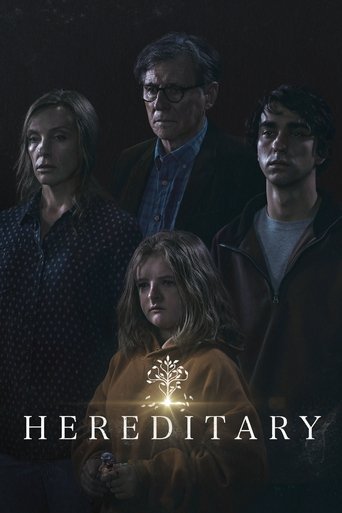
Hereditary
Ari Aster · 2018 · Film
Shares a bleak, unforgiving tone.
88% shared signal
Channel Zero: Candle Cove
Nick Antosca · 2016 · Television
Shares modern craft.
88% shared signal
The Witch
Robert Eggers · 2015 · Film
Shares a supernatural threat.
85% shared signal

It Follows (OST)
Disasterpeace · 2014 · Record
Shares modern craft.
83% shared signal
The Fisherman
John Langan · 2016 · Book
Shares a bleak, unforgiving tone.
83% shared signal
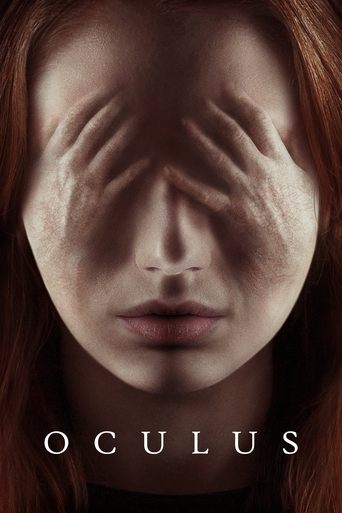
Oculus
Mike Flanagan · 2013 · Film
Shares a supernatural threat.
83% shared signal

Abyss
Chelsea Wolfe · 2015 · Record
83% shared signal
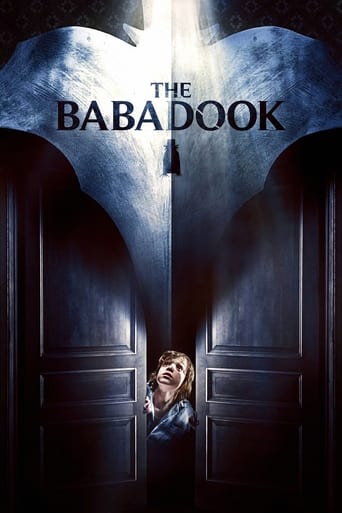
The Babadook
Jennifer Kent · 2014 · Film
82% shared signal
Hereditary (OST) in another form
The index links works across media, so an adaptation sits beside its source and a score beside the film it haunts.
Questions about Hereditary (OST)
The things people actually ask about this record, answered.
How does Hereditary (OST) end?
With the coronation sequence, and it is the only consonant material on the record — sustained, almost choral, and genuinely beautiful after ninety minutes of discomfort. It is horrifying because the music has switched sides: the ending is a release for the cult, not for the audience.
Is there a synthesiser on the Hereditary score?
No. It is bass saxophone, clarinets and Colin Stetson's own voice, with contact microphones on the keys and a throat microphone on the player. The pads are circular-breathed saxophone, the percussion is key mechanism, and the vocal textures are him singing into the horn.
What is circular breathing?
Pushing air out of the cheeks while inhaling through the nose, so the sound never stops. It is what lets a single live saxophone take function as a continuous drone with rhythm and melody on top, and Stetson's whole solo catalogue is built on it.
Who is Colin Stetson?
An American saxophonist and composer known for the New History Warfare records and for work with Bon Iver, Arcade Fire and Tom Waits. Hereditary was his first major film score, and he has since scored Color Out of Space and The Menu.
What is the Hereditary main theme?
A slow, groaning, descending bass saxophone figure over audible key noise, which almost every first-time listener takes for electronics. It plays over the opening move into the miniature house and establishes the film's idea of people being operated rather than living.
Can I listen to Hereditary (OST) on its own?
In parts. The main title and "Charlie" work as music; several cues are textures that need the images, and the album is sequenced as a cue list. If the technique is what interests you, Stetson's New History Warfare Vol. 2 is the better record.
These are ranked against Hereditary (OST), not against you.
Build your own tape →