Film · 2024
Nosferatu
She called him when she was a child, and he has been coming ever since.
70Hard going to sit through, out of 100 — mostly how bleak it is
- PaceSlow burn26
- ThreatSomething not human14
- GoreShows some of it62
- ToneNo relief at all8
- RealityTilts unreal52
Era bias 68 · Modern. Texture rather than fear, so it is not part of the grade. All six scores →
The bleakest horror movies ever made →
On VHSCREAM’s six-axis scale, Nosferatu (2024) is most extreme on the tone axis: 8 out of 100, where 0 is a bleak, unforgiving tone and 100 is gleeful black comedy. 7% of the 320 horror works we have scored come in lower on that axis. How we score →
Nosferatu is a 2024 film written and directed by Robert Eggers, his version of the 1922 Murnau film and through it of Dracula. A young woman in a German port city reached out for something in her loneliness as a child, and it answered, and it has spent the years since coming for her. We score it 008 on tone and 014 on the threat axis, deep in the supernatural end of the scale.
Scored and reviewed by VHSCREAM on · how we score
How scary is Nosferatu, actually?
Scored against the published rubric, here is what the numbers mean for a viewer.
Tone 008 is near the floor of the index. 22 works score lower. A city dies of plague, a family dies in a bedroom, the protagonist's only available victory costs her life, and the film declines to find anything redemptive in it.
The threat at 014 is deep in the supernatural end. 28 works score lower. Orlok has no negotiable interest, no human motive and no body you can arrest. The humans in the film are obstructive rather than dangerous, and the plague is weather.
Pace 026 is dread. 249 works are faster. Long formal compositions, candlelight, a middle act of documents and carriages, and perhaps five sudden events in two hours.
Viscera 062 is moderate and distributed. 127 works score higher. Feeding shown in close detail, plague bodies, rats in quantity, and a death in a bedroom — unpleasant rather than explicit.
Era bias 068 is middling, which is low for 2024. 163 works score higher. Shot on film, lit largely by practical flame, graded cold and blue, with an orchestral score and no digital gloss anywhere — the same reading we give The Lighthouse at 074.
Reality anchor 052 sits just past the midpoint. A port, a ship's manifest, a counting house, a plague — all solid — and one covenant that works by no stated rule.
On jump scares: two or three, and the film's method is a shape in a doorway that has been there for a while.
Who should skip Nosferatu
Skip it if you want the romantic Dracula. Orlok is a corpse that breathes wetly, and the film is uninterested in making him attractive at any point.
Skip it if formality reads as slowness to you. We score it 026 on pace. The middle act is a procession of rooms and documents, beautifully made, and it does not hurry.
Skip it if the plague material is too close. The second half is a city dying of a contagion the authorities will not name, in detail, including children.
Content notes: plague deaths including children, a family's death in one room, rats in large numbers, sexual coercion inside a supernatural covenant, a stillbirth implied, and the death of the protagonist.
Watch it if you want the only frightening Dracula on film, a vampire conceived as an epidemiology, and an ending in which the woman decides.
Nosferatu on six axes of fear
Every work in the index is scored on six continuous axes of fear. This is what Nosferatu looks like as a vector — and what each ten-point band looks like across everything else we hold.
Where that puts it: joint #9 bleakest
Draft score — awaiting human review. About these scores
Disagree with a number? Say so on the axis itself. Nobody has confirmed this vector yet, and a score you challenge goes to the top of the queue to be re-scored by a human. Votes do not move the numbers — they decide what gets looked at first. How the scoring works →
Scored against the published rubric. This vector is a draft awaiting review — the method is public so you can argue with it.
Nosferatu: the review
The one adaptation that remembers the thing is a plague
Every screen Dracula since the 1950s has been a seducer in a good coat. Eggers goes back past all of that to Murnau and further, to the idea the vampire was built out of: something that arrives with rats, that empties a town, that is less a person than an epidemiology. Bill Skarsgård's Orlok is a corpse with a moustache and an accent out of the ground, breathing like a man with fluid in his lungs, and he is almost never beautiful.
That decision governs the whole film. The second half is a city dying — crosses on doors, carts, lime pits, a burgomaster insisting on order — and the horror is distributed rather than focused. It is the most convincing plague in horror cinema since Between Two Fires did it on the page.
Ellen
Lily-Rose Depp has the film and plays it as a physical performance rather than a psychological one — seizures, trances, a body that goes somewhere else mid-sentence — and the script gives her the thing no previous Dracula adaptation has: agency at both ends. She called him. As a lonely child she reached out for anything and something took the invitation, and the film is honest that the appetite was hers before it was his.
Which turns the usual story inside out. This is not a woman being hunted; it is a woman managing a thing she is bound to, in a household of men who will not believe her, and then using the only leverage she has.
Where it strains
Thomas Hutter is a passenger. The Harding family material is beautifully designed and dramatically thin. Willem Dafoe's Von Franz is enormous fun and exists to explain the plot. And the film's formality, which is its strength for ninety minutes, makes the middle act feel like a procession — carriages, documents, candles, another carriage.
There is also an argument that Eggers' Orlok is too physical: the design is extraordinary and the film puts it in full light often enough that the mystery thins.
It is still the best-looking horror film of its year and the only Dracula on screen that is frightening rather than romantic.
The ending of Nosferatu explained
The ending, in full. Open it when you have seen it.
The short answer: Ellen sends everybody away, lets Orlok into her room and gives herself to him willingly — on the condition, which she has worked out, that he stay with her until the sun comes up. He feeds until dawn and the light destroys him. She dies in the same bed. The plague on Wisborg lifts with him. The final image is Orlok's corpse across her body, and the film holds it long enough for it to read as both a deathbed and an obscenity.
Here is how the film gets there.
What did Ellen do as a child?
She was lonely, and she reached out — prayed, called, invited — for something to come and be with her. Orlok answered. The film establishes this in its opening and returns to it late, and it changes the terms of the whole story: the bond is a covenant she entered, not an attack she suffered. Her shame about it is the emotional engine of the film.
What does Orlok want?
Her, specifically, and the film is plain that the rest is incidental. Thomas's business trip, the purchase of the house across from the Hutters, the ship, the rats, the dying city — all of it is transport. The plague is not a weapon aimed at Wisborg; it is what travels with him.
Why does the sunrise kill him?
Because he stays. The vampire's rule in this film is the old one — he must be in the ground by dawn — and Ellen's one piece of leverage is that she can make him want to stay past it. She is not rescued and she does not trick him in a clever set piece: she gives him exactly what he came for, for longer than he can afford.
Does Ellen die?
Yes. The film is not ambiguous about it and does not treat it as a tragedy to be softened. She chose the only exchange available — her life for the city's — and the closing shot refuses to make it beautiful.
What happens to Thomas, Anna and Friedrich?
Thomas survives, having been useless for most of the film, which is deliberate. Anna Harding and her children die of the plague; Friedrich, undone by it, dies with them in a scene that is the film's most upsetting and has no vampire in it at all. Knock, Orlok's servant, is killed. Von Franz survives to be right about everything too late.
Is it faithful to the 1922 film?
Closely in shape and not in meaning. The names, the voyage, the land agent, the wife who ends it — all from Murnau. What Eggers adds is the childhood invitation, which gives Ellen a will of her own and makes the ending an act rather than a sacrifice performed on her.
If Nosferatu is your kind of fear
The eight works closest to Nosferatu in the index on the five axes that describe fear, the same medium first — not by genre label, and not by what other people watched.
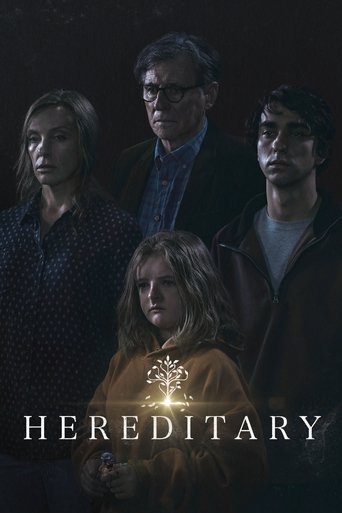
Hereditary
Ari Aster · 2018 · Film
Shares a bleak, unforgiving tone.
91% shared signal
The Dark and the Wicked
Bryan Bertino · 2020 · Film
Shares a threat that is not human.
91% shared signal
The Blackcoat's Daughter
Oz Perkins · 2015 · Film
Shares slow-burn dread.
89% shared signal
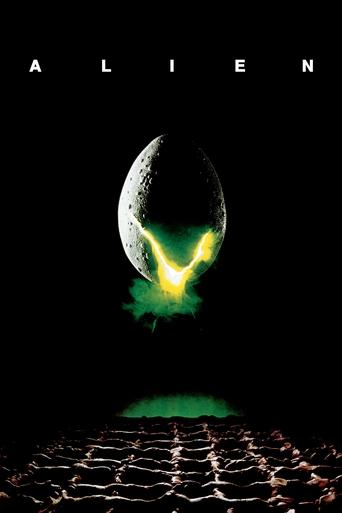
Alien
Ridley Scott · 1979 · Film
Shares a threat that is not human.
88% shared signal
The Exorcist
William Peter Blatty · 1971 · Book
Shares a bleak, unforgiving tone.
88% shared signal
Pet Sematary
Stephen King · 1983 · Book
Shares slow-burn dread.
87% shared signal
'salem's Lot
Stephen King · 1975 · Book
87% shared signal

Hereditary (OST)
Colin Stetson · 2018 · Record
86% shared signal
More lists like these: Movies like Hereditary · Movies like Alien
Questions about Nosferatu
The things people actually ask about this film, answered — including how it ends.
How does Nosferatu (2024) end?
Ellen sends the household away, invites Orlok in and gives herself to him on the condition that he stays until dawn. He feeds too long, the sunrise destroys him, and she dies in the same bed. The plague lifts with him, and the film ends holding the image of his corpse across her body.
What did Ellen do as a child in Nosferatu?
She was lonely and reached out for anything to come to her, and Orlok answered. The film opens on it and returns to it late, which changes the story: the bond is a covenant she entered rather than an attack she suffered, and her shame about it drives everything she does.
What does Orlok want in Nosferatu?
Ellen, and nothing else. The land purchase, the voyage, the rats and the dying city are transport rather than strategy — the plague is simply what travels with him, which is why we score the threat at 014, deep in the supernatural end.
Why does the sunrise kill Orlok?
Because Ellen makes him stay past it. The rule is the old one, that he must be underground by dawn, and her only leverage is that she can give him exactly what he came for for longer than he can afford. It is a decision rather than a trick.
Is Nosferatu (2024) faithful to the 1922 film?
In shape, yes — the names, the voyage, the land agent, the wife who ends it. What Eggers adds is the childhood invitation, which gives Ellen a will of her own and turns the ending from a sacrifice performed on her into something she does.
Why does Nosferatu score low on era bias for a 2024 film?
Because we score the texture a work has. It is shot on film, lit largely by flame, graded cold and scored for orchestra, with no digital gloss — the same reading that puts The Lighthouse at 074 rather than up with its release year.
What should I watch after Nosferatu?
Dracula for the novel it is arguing with, Let the Right One In for the other great modern vampire film, and vampire horror for everything here with its numbers.
These are ranked against Nosferatu, not against you.
Build your own tape →