
Film · 2019
The Lighthouse
Two men, one rock, and a slow collapse of the difference between them.
Most extreme on REALITY ANCHOR — dream logic at 084
On VHSCREAM’s six-axis scale, The Lighthouse (2019) is most extreme on the reality-anchor axis: 84 out of 100, where 0 is grounded realism and 100 is dream logic. 86% of the 105 horror works we have scored come in lower on that axis. How we score →
The Lighthouse is a 2019 film written and directed by Robert Eggers, shot in black and white in a near-square 1.19:1 frame. Two lighthouse keepers are stranded on a rock off New England in the 1890s and come apart. We score it 084 on reality anchor — 90 works score lower — and 042 on tone, which makes it one of the least bleak films in the index.
Scored and reviewed by VHSCREAM on · how we score
The Lighthouse: the review
The second-best thing about The Lighthouse is that it is a comedy. Not a horror film with jokes in it — a two-hander about a man being driven mad by his colleague's farting, drinking and talking, which happens to end in a Promethean death. Dafoe's Thomas Wake is a sustained bit: the sea-dog monologue, the beard, the grace before dinner, the demand that his lobster be praised. Pattinson plays the straight man badly on purpose, which is the only correct choice.
The best thing about it is the frame. Eggers and Jarin Blaschke shot on 35mm in 1.19:1 — the aspect ratio of early sound cinema — with orthochromatic filtration that makes skies black and skin blotched, and the result is that the image is always too tight. There is nowhere for a second person to stand. Two men in a 1.19:1 frame are always nearly touching, and the film never relieves it.
The horror is about work, not the sea
Everything frightening here comes out of labour and rank. Wake has the logbook, the light and the authority to withhold both. Winslow has the coal, the cistern, the lamp oil and the shovel. The film is at its most tense during chores, because the chores are where the power is, and the mermaid and the gull are embellishments on an argument about a rota.
That reading is not a stretch — Eggers has described wanting a film about two men who hate each other and cannot leave, and it is built on the Smalls Lighthouse incident of 1801, in which one Welsh keeper died and the other kept the body on the gallery for weeks rather than be accused of murder.
Where it divides people
It is deliberately archaic, and if the diction defeats you there is no second gear. The last twenty minutes drop realism in favour of image — the tentacle, the light, the gulls — and a portion of the audience that enjoyed the two-hander will not follow. And it is less frightening than it is dreadful and funny, which disappoints anybody expecting The Witch on a rock.
What it is, unambiguously, is the best-shot film in the index.
The ending of The Lighthouse explained
Total spoilers from here. Everything above this line is spoiler-free.
The short answer: Winslow kills Wake, takes the key, climbs the tower and looks directly into the light. Whatever he sees blinds him; he falls the length of the stairs and ends on the rocks, alive, with gulls eating his liver as he laughs. The film declines to show what is in the lens.
What is in the light?
The film never tells you, and this is its one real withholding. The shot is Winslow's face, the lens mechanism, and a sound. The readings it supports are that the light is simply a light and the madness is entirely his; that it is a revelation of the kind Wake has been hoarding, which is why he would not share the duty; and that it is nothing, and the joke is that two men destroyed each other over an empty secret. Eggers has been happy to leave all three standing.
Who is Winslow really?
Thomas Howard. The name he gives is stolen: he worked as a timberman in Canada, let a foreman named Ephraim Winslow die — or killed him — and took his identity. He confesses this when drunk, which is also the moment Wake starts calling him Thomas, and from there the two men share a name. That is the film's cleanest structural joke and its bleakest: the two of them may be one man, or two interchangeable ones, and the film does not need to decide.
What happens to Wake?
Winslow beats him, buries him alive in a shallow grave, and Wake climbs out. The final confrontation ends with Winslow striking him down with an axe and taking the key. By then neither man's account of events is reliable and the film has stopped distinguishing between what happened and what Winslow believes happened.
What does the ending mean?
The last image is Prometheus: a man who stole fire from above, chained to a rock, having his liver eaten by birds. The film has been signalling it — the seabird that must not be killed, the light that is not his, the punishment that is specific and endless. Read that way the ending is not ambiguous at all. It is the oldest story about reaching for something that is not yours, told by two filthy men in a square frame.
How scary is The Lighthouse, actually?
Scored against the published rubric, here is what the numbers mean.
Reality anchor 084 is the signature. 90 works score lower, which puts this among the most dream-logic films we have scored. Time loses its shape, the relief boat never comes, and the last act abandons continuity entirely.
Tone 042 is the surprise, and it is the honest number. 91 works score lower — meaning this is one of the least bleak films in the index, which contradicts almost every description of it. The film is extremely funny. Both performances are comic performances. It ends badly for everybody and spends most of its runtime being a two-man farce.
Viscera 044 is exactly the median film — 51 works score lower. There is a beating, an axe, a gull, and a great deal of mud. Nothing lingers.
Pace 034 is patient, with 50 works slower. The film has very little plot and a lot of chores.
Era bias 074 reads as modern craft despite the 1890s setting and the 1.19:1 frame, because the film is doing a precise, digital-era imitation of early cinema rather than being of it.
On jump scares: effectively none. The fear is cumulative, social, and mostly about being trapped with somebody.
The Lighthouse on six axes of fear
Every work in the index is scored on six continuous axes of fear. This is what The Lighthouse looks like as a vector.
Where that puts it: #5 surreal
Disagree with a number? Say so on the axis itself. Nobody has confirmed this vector yet, and a score you challenge goes to the top of the queue to be re-scored by a human. Votes do not move the numbers — they decide what gets looked at first. How the scoring works →
Scored against the published rubric. This vector is a draft awaiting review — the method is public so you can argue with it.
Who should skip The Lighthouse
Skip it if the diction will defeat you. Dafoe's dialogue is built from nineteenth-century maritime sources and delivered without concession. Subtitles help.
Skip it if you need a plot. Two men do chores and hate each other for a hundred minutes. That is the film, and the people who find it interminable have described it accurately.
Skip it if a sudden shift into pure image annoys you. The last twenty minutes stop explaining themselves.
Content notes: extreme animal cruelty toward a seabird, a beating, a live burial, masturbation, drowning, drunkenness throughout, and a sustained depiction of two men psychologically abusing each other.
Watch it if you want the most beautiful black-and-white photography of the last twenty years, you can take an archaic two-hander, and you would enjoy a horror film that is also a comedy about a bad colleague.
Where to find it
Streaming on HBO Max ↗Physical copies on eBay ↗Availability from JustWatch via TMDB. We earn nothing from these links.
Nothing loads from YouTube until you press play.
If The Lighthouse is your kind of fear
The eight works closest to The Lighthouse in the index, ranked by distance across all six axes — not by genre label, and not by what other people watched.
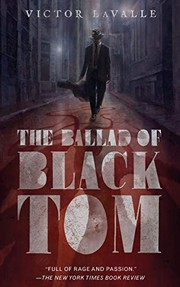
The Ballad of Black Tom
Victor Lavalle · 2016 · Book
Shares modern craft.
86% shared signal
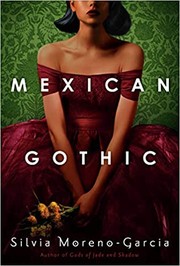
Mexican Gothic
Silvia Moreno-Garcia · 2020 · Book
Shares modern craft.
81% shared signal

It Follows (OST)
Disasterpeace · 2014 · Record
79% shared signal
Twin Peaks: The Return
David Lynch · 2017 · Television
Shares dream logic.
79% shared signal
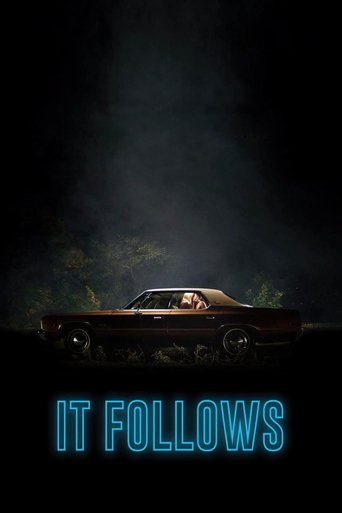
It Follows
David Robert Mitchell · 2014 · Film
78% shared signal

Abyss
Chelsea Wolfe · 2015 · Record
Shares dream logic.
78% shared signal

Under the Skin (OST)
Mica Levi · 2013 · Record
78% shared signal
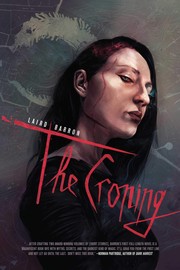
The Croning
Laird Barron · 2012 · Book
77% shared signal
See the full list of movies like The Lighthouse →
Questions about The Lighthouse
The things people actually ask about this film, answered.
What happens at the end of The Lighthouse?
Winslow kills Wake with an axe, takes the key to the lantern room, and looks directly into the light. He is blinded, falls down the stairs, and ends on the rocks being eaten alive by gulls while laughing. The film never shows what is inside the lens.
What is in the light in The Lighthouse?
The film does not say. It shows Winslow's face and a sound. The readings it supports are that the light is simply a light and the madness is his alone, that it is a revelation Wake was hoarding, or that it is nothing at all and the joke is that two men destroyed each other over an empty secret.
Why is Winslow called Thomas at the end?
Because that is his real name. He is Thomas Howard, a Canadian timberman who let — or caused — a foreman named Ephraim Winslow to die and took his identity. Once he confesses, Wake starts using the real name, and the two men share it for the rest of the film.
Is The Lighthouse a horror film or a comedy?
Both, and our scoring says so. At 042 on tone it is one of the least bleak films in our index, because both lead performances are comic performances and most of the runtime is a two-man farce about an unbearable colleague. The dread is real and so are the jokes.
Is The Lighthouse based on a true story?
It draws on the Smalls Lighthouse incident of 1801, in which one of two Welsh keepers died and the survivor kept the body on the gallery for weeks rather than risk a murder charge. The Prometheus structure and both characters are invented.
Why is The Lighthouse shot in a square frame?
It uses 1.19:1, the aspect ratio of early sound cinema, with orthochromatic filtration that renders skies black. The practical effect is that two men can never be far apart in frame — the image is always too tight for both of them, which does most of the film's work on the audience.
These are ranked against The Lighthouse, not against you.
Build your own tape →