
Book · 2016
The Ballad of Black Tom
Victor Lavalle
Lovecraft answered on his own ground, and beaten there.
Most extreme on ERA BIAS — modern craft at 084
On VHSCREAM’s six-axis scale, The Ballad of Black Tom (2016) is most extreme on the era-bias axis: 84 out of 100, where 0 is analog-era texture and 100 is modern craft. 77% of the 105 horror works we have scored come in lower on that axis. How we score →
The Ballad of Black Tom is a 2016 novella by Victor LaValle, which retells H. P. Lovecraft's "The Horror at Red Hook" from the point of view of a Black man in 1924 Harlem. A hustler who runs errands for occultists finds out what the people paying him actually intend. We score it 070 on reality anchor — 78 works score lower — and 024 on tone.
Scored and reviewed by VHSCREAM on · how we score
The Ballad of Black Tom: the review
The Ballad of Black Tom is the most effective answer anyone has written to Lovecraft, and it works because LaValle took the position that the racism is not a flaw in the cosmic horror. It is the mechanism.
"The Horror at Red Hook" is the ugliest thing Lovecraft published — a 1925 story in which an Irish detective uncovers a cult among the immigrant population of Brooklyn, and in which the horror is explicitly that the neighbourhood is full of people who are not white. LaValle's dedication to the novella reads, famously, "For H. P. Lovecraft, with all my conflicted feelings," and the book is exactly that: an act of simultaneous admiration and demolition.
Charles Thomas Tester — Tommy — is a hustler in Harlem who plays guitar badly on purpose, because a man carrying a guitar case is read as a musician rather than a courier. He delivers occult materials for money, carefully: when he carries a dangerous book to a woman in Queens he removes one page first, because he is not stupid. He is supporting his father Otis, a former labourer whose hands are ruined. The novella's first half is a portrait of competence under constant low-grade danger, and the best material in it is the ordinary business of moving through 1924 New York while Black — the subway, the neighbourhood lines, the policemen, the knowledge of exactly which streets are survivable after dark.
The structural switch is the whole argument
Part one is Tommy's. Part two hands the narration to Malone, the Irish detective who is the hero of Lovecraft's original, and the effect is devastating: the same events, told by a man who sees Harlem the way Lovecraft saw it, and who is sincerely puzzled by Black Tom. LaValle does not caricature him. He lets him be intelligent, well-meaning, and completely unable to see what he is part of.
The line everybody quotes is the thesis
Tommy, by the end, tells Malone what indifference would be worth — that a universe that simply did not care about him would be a relief next to one that has organised itself around hating him. That is the novella's reversal of cosmic horror in a sentence: the Great Old Ones' indifference is not the terror, it is the improvement.
Where it is slight
It is a novella and the back half is compressed — the Red Hook material and the cult's logistics go by fast, Suydam's own motives are sketched rather than built, and the ending arrives about ten pages sooner than it has earned. Readers who have not read "The Horror at Red Hook" will miss roughly a third of what the book is doing.
For the same American horror built on who gets believed, Candyman and Get Out; for the same cosmology used for an entirely different argument, The Fisherman.
The ending of The Ballad of Black Tom explained
Total spoilers from here. Everything above this line is spoiler-free.
The short answer: the event that makes Black Tom is not supernatural. Police and a private investigator come to the Tester apartment in Harlem looking for Tommy, and Mr Howard — the brutal detective working alongside Malone — shoots Tommy's father Otis dead in his own living room while Otis is holding a guitar. Nothing happens to Howard. That is the turn. Tommy, who until then has been carefully managing a dangerous life, stops managing it: he goes to Robert Suydam, the wealthy Flushing occultist who has been trying to recruit him, and he does not join the project — he takes it. He kills Suydam and assumes the work himself, becoming Black Tom, the herald of the Sleeping King. The Red Hook operation proceeds under him. Malone, in part two, finally confronts him and is not killed; Black Tom lets him live specifically so that there is someone to carry the message back, and tells him what is coming and why the indifference of the universe would have been a mercy. Malone does not recover from it. The novella ends with Black Tom at work and the reader in no doubt that he is right about everything except what it has cost him.
Who is Black Tom?
Charles Thomas Tester, after his father's murder. The name is what the authorities and the cult call him once he has taken over Suydam's project, and the novella is precise that he is not possessed, deceived or corrupted — he has made a decision. He is the same competent, careful, funny man from part one, applied to a different objective. LaValle's refusal to make him a victim of the supernatural is the book's most pointed choice.
What does Robert Suydam want?
To wake the Sleeping King. Suydam is a wealthy, elderly white Flushing resident with an inherited house, a vast occult library and a programme: he gathers people the city has discarded — immigrants, the poor, the Black residents of Harlem and Red Hook — and preaches to them that the existing order is temporary and that what sleeps beneath the ocean will remake it. He is not lying, and he is also using them. He is killed by Tommy, and the project continues without him.
Who is Detective Malone?
The protagonist of Lovecraft's original story, kept almost intact: an Irish-born New York police detective with a literary education and an interest in the occult, who investigates the Red Hook cult. LaValle gives him part two of the novella and treats him seriously — he is perceptive, personally decent, and institutionally part of the thing that killed Otis Tester. The novella's cruellest effect is that Malone cannot see the connection and the reader cannot miss it.
Why does Otis Tester die?
Because a police raid comes to the apartment and Mr Howard shoots him. Otis is an old man holding a guitar in his own front room; there is no confrontation, no threat and no consequence for Howard. LaValle stages it with no drama at all, which is the point — it is a routine event, it is the hinge of the whole book, and everything Tommy becomes follows from the fact that nothing followed from it.
What is the Supreme Alphabet?
A real system of letter-based interpretation associated with the Five-Percent Nation, which LaValle uses as a counterweight to the novella's occultism — a Black American esoteric tradition set beside Suydam's inherited European one. Its presence is part of the book's argument that the people Lovecraft's story treated as an undifferentiated threatening mass had their own cosmologies, libraries and systems.
Do I need to read "The Horror at Red Hook" first?
It helps considerably. The novella is legible without it, but Malone, Suydam, Red Hook and the shape of the investigation are all taken directly from Lovecraft's 1925 story, and a reader who knows how that story treats its immigrant characters gets the full force of what LaValle has done to it. The original is short and is in the public domain.
How scary is The Ballad of Black Tom, actually?
Scored against the published rubric, here is what the numbers mean.
Reality anchor 070 leans towards dream logic — 78 works score lower. The Sleeping King, the Red Hook geography and the final sequences abandon a literal account, though the 1924 New York around them is rendered precisely.
Tone 024 is bleak — 67 works score lower. An innocent man is shot in his living room with no consequence, and the novella's resolution is a protagonist who has given up on anything except the end of the world.
The threat at 060 leans human — 78 works score lower, which is the correct reading and the whole point: the supernatural is in the book, and the thing that destroys Tommy Tester's life is a policeman.
Era bias 084 reads modern — 81 works score lower. It is a 2016 book about 1924, and its argument, its register and its prose are entirely contemporary.
Viscera 050 is mid-scale — 57 works score lower. A shooting, a killing in Flushing, several bodies in Red Hook, and one properly grotesque transformation.
Pace 036 is on the dread side — 53 works are slower. It is a novella and the first half is deliberately unhurried.
On shocks: two, and the one that matters is a gunshot in a living room.
The Ballad of Black Tom on six axes of fear
Every work in the index is scored on six continuous axes of fear. This is what The Ballad of Black Tom looks like as a vector.
Where that puts it: #5 surreal
Disagree with a number? Say so on the axis itself. Nobody has confirmed this vector yet, and a score you challenge goes to the top of the queue to be re-scored by a human. Votes do not move the numbers — they decide what gets looked at first. How the scoring works →
Scored against the published rubric. This vector is a draft awaiting review — the method is public so you can argue with it.
Who should skip The Ballad of Black Tom
Skip it if you want Lovecraft's cosmology played straight. This book's position is that the racism in the source is the engine rather than an embarrassment, and it is not interested in separating them.
Skip it if racial violence is a hard limit. A police killing of an unarmed Black man in his own home is the central event.
Skip it if novellas feel unfinished to you. The back half is compressed and several threads — Suydam's motives especially — are sketched rather than developed.
Content notes: the police killing of an unarmed Black man in his home, period racial violence and segregation depicted throughout, racist language quoted from and reproduced in the Lovecraftian frame, a murder, several deaths in a tenement, and body horror in the final sequences.
Read it if you want the best thing anyone has written back at Lovecraft, you can take a novella that assumes you know the story it is answering, and you want to read the sentence about indifference being a relief.
Where to start with horror books →
Where to find it
Buy from an indie bookshop ↗Out-of-print copies on eBay ↗We earn nothing from these links.
If The Ballad of Black Tom is your kind of fear
The eight works closest to The Ballad of Black Tom in the index, ranked by distance across all six axes — not by genre label, and not by what other people watched.
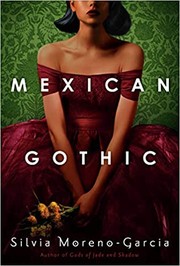
Mexican Gothic
Silvia Moreno-Garcia · 2020 · Book
Shares modern craft.
91% shared signal

The Lighthouse
Robert Eggers · 2019 · Film
Shares dream logic.
86% shared signal

It Follows (OST)
Disasterpeace · 2014 · Record
Shares a bleak, unforgiving tone.
85% shared signal
Midnight Mass
Mike Flanagan · 2021 · Television
Shares modern craft.
85% shared signal

Midsommar
Ari Aster · 2019 · Film
Shares a bleak, unforgiving tone.
84% shared signal
It Follows
David Robert Mitchell · 2014 · Film
82% shared signal

Abyss
Chelsea Wolfe · 2015 · Record
Shares dream logic.
81% shared signal
The Babadook
Jennifer Kent · 2014 · Film
80% shared signal
Questions about The Ballad of Black Tom
The things people actually ask about this book, answered.
What happens at the end of The Ballad of Black Tom?
After Mr Howard shoots his father dead in their apartment, Tommy Tester goes to Robert Suydam, kills him, takes over his project and becomes Black Tom, herald of the Sleeping King. He spares Detective Malone so that someone can carry the message, and tells him the universe's indifference would have been a mercy.
Who is Black Tom in the novella?
Charles Thomas Tester, after his father's murder by police. He is not possessed or corrupted — he makes a decision. LaValle keeps him the same careful, competent man from the first half of the book and simply changes what he is working towards.
What does Robert Suydam want in The Ballad of Black Tom?
To wake the Sleeping King. He recruits the people New York has discarded, preaching that the existing order is temporary and that what sleeps under the ocean will replace it. He is telling the truth and also using them, and Tommy kills him and continues the work.
How does The Ballad of Black Tom relate to Lovecraft?
It retells "The Horror at Red Hook", Lovecraft's most overtly racist story, from the perspective of a Black New Yorker, keeping Malone, Suydam and Red Hook. LaValle's dedication reads "For H. P. Lovecraft, with all my conflicted feelings," and the book's argument is that the bigotry in the source is the mechanism rather than a blemish.
Do I need to read "The Horror at Red Hook" first?
Not strictly, but it roughly doubles the effect. Malone, Suydam and the investigation come straight from the 1925 story, and knowing how that story treats its immigrant characters is what makes LaValle's inversion land. The original is short and in the public domain.
Is The Ballad of Black Tom scary?
It is more angry than frightening, and the frightening part is deliberate: we score it 060 on the threat axis, towards the human end, because the event that destroys the protagonist's life is a police shooting rather than anything cosmic. The Sleeping King is the relief.
These are ranked against The Ballad of Black Tom, not against you.
Build your own tape →