
On VHSCREAM’s six-axis scale, The Elementals (1981) is most extreme on the era-bias axis: 16 out of 100, where 0 is analog-era texture and 100 is modern craft. 27% of the 105 horror works we have scored come in lower on that axis. How we score →
The Elementals is a 1981 novel by Michael McDowell, set on the Alabama Gulf coast. Three Victorian houses stand on a spit of sand at the end of a peninsula, and the third one has been abandoned for decades and is being swallowed by a dune. We score it 016 on era bias — only 28 works score lower — and 020 on pace.
Scored and reviewed by VHSCREAM on · how we score
The Elementals: the review
The Elementals is the best Southern gothic in the genre and the most frightening thing in it is a house filling up with sand.
McDowell's premise is pure place. Beldame is reachable only at low tide, has no telephone, no mains power worth speaking of and no neighbours, and consists of three identical houses facing a beach. Two of them belong to the Savage and McCray families, who have summered there for generations. The third belongs to nobody, has been empty for as long as anyone can remember, and the dune that is consuming it has already filled the ground floor and is rising through the second. McDowell understands exactly what he has: a house you can walk into through an upstairs window, with rooms below you that are full.
The families are the other achievement. McDowell writes Alabama money with a precision that has nothing to do with Gothic convention — Big Barbara McCray's drinking, Luker's New York condescension, Dauphin Savage's weakness, Leigh's practicality, the thirteen-year-old India photographing everything — and the dialogue is funny, specific and vicious. The novel opens on a funeral at which the dead woman's sister-in-law stabs the corpse in the chest with a kitchen knife, because that is the family custom, and nobody present thinks it is unusual.
Odessa Red is the book's centre of gravity
The Savages' long-serving Black housekeeper is the only person at Beldame who knows what the third house contains and the only one with any idea what to do about it, and the novel's handling of her is better than its 1981 context would predict — she is competent, respected within the limits the period allows, and the one adult whose judgement the book treats as reliable. Her relationship with India is the warmest thing in it.
The elementals are never explained and that is the correct choice
They take the shapes of the dead, they are bound to the third house, they can be seen only by some people, and they are not after anything that can be negotiated over. McDowell gives you three or four extraordinary images — something at a window, a figure on the stairs of a house with no stairs left above the sand, a bath, a hand — and no cosmology at all.
Where it is weaker
The middle section is slack and the families spend a long time drinking and bickering before anything happens. Lawton McCray, the political husband, is a caricature. And the final act moves much faster than the two hundred pages that precede it, which some readers find abrupt rather than shocking.
For the same unexplained family debt arriving two generations late, Ghost Story; for the same house that should not be entered, The Haunting of Hill House; for the same Gulf-coast heat and inherited rot, The Only Good Indians.
The ending of The Elementals explained
Total spoilers from here. Everything above this line is spoiler-free.
The short answer: the elementals in the third house take Dauphin Savage, appearing to him as his own dead mother, Marian — the woman whose funeral opens the book. Lawton McCray, who has come to Beldame intending to sell the land and who tries to burn the houses, is killed. Odessa Red is killed too. India and Luker manage to destroy the manifestation wearing Marian Savage's shape and burn the third house down. India, Luker, Leigh and Big Barbara get off the peninsula alive and go back to something like ordinary life. Beldame itself is sold to the oil companies and is finally destroyed by a hurricane, so the houses are gone. The novel's last note is the one that matters: India is now the one who can see the elementals, and she understands that the thing attached to the Savage family has not been ended by the loss of the place. Leigh's twin children are the next generation, and they are the next arrangement.
What is in the third house at Beldame?
Entities the novel calls elementals, and declines to describe further. They are bound to the house, they take the appearance of the dead — most often people the living characters loved — and they cannot be bargained with, frightened off or reasoned about. McDowell never supplies an origin, a rule set or a name beyond the title. What he supplies instead is a geography: a house whose lower floors are packed solid with sand, and things that are in there.
Who dies in The Elementals?
Three people. Dauphin Savage, taken by a manifestation in the shape of his mother Marian. Lawton McCray, killed while trying to burn Beldame down for his own reasons. And Odessa Red, the housekeeper, who is the only character in the book who understood what they were dealing with. Big Barbara, Luker, Leigh and India survive and leave.
Why does the Savage family stab the body at the funeral?
It is presented, flatly and without explanation, as a family custom: Marian Savage's corpse is stabbed in the chest with a kitchen knife by her sister-in-law before the coffin is closed. McDowell opens the novel with it and never justifies it, and the reader is left to work out that this is a family with a very old reason to make certain its dead are dead. It is the best first chapter in the subgenre.
What happens to Beldame?
It is burned in part, abandoned, sold to oil interests, and then destroyed by a hurricane, so that by the end of the novel the place does not exist. The deliberate point of this is that destroying the location does not end anything — the elementals were attached to the Savages rather than to the sand, and the book's closing pages hand the inheritance to Leigh's twins.
Who can see the elementals?
Not everyone, and the novel never establishes the rule. India can, Odessa can, Dauphin eventually can; Big Barbara and Lawton largely cannot. By the end India is the one carrying the ability, which is what converts the ending from a survival into a sentence: she is the member of the family who will be able to watch it happen to the next one.
How scary is The Elementals, actually?
Scored against the published rubric, here is what the numbers mean.
Era bias 016 is deep analog — only 28 works score lower. A 1981 novel of a place with no telephone, a tide table, film cameras and a car that has to be timed against the water.
Pace 020 is very slow — only 22 works are slower. Two hundred pages of heat, drinking and family talk precede almost all of the incident.
Viscera 034 is low — 40 works score lower. A corpse stabbed at a funeral, three deaths, a fire. The novel's horror is almost entirely architectural.
Tone 030 is bleak — 77 works score lower. Three characters die including the only competent one, and the ending's survival is explicitly temporary.
Reality anchor 054 is just above the midpoint. The Alabama coast is rendered with total realism and the third house obeys nothing.
The threat at 025 is on the supernatural side — 24 works score lower. Lawton's greed is the only human malice in the book, and the elementals are not even hostile in a way that can be described.
On shocks: three or four, and the best of them is a figure standing where a staircase used to be.
The Elementals on six axes of fear
Every work in the index is scored on six continuous axes of fear. This is what The Elementals looks like as a vector.
Where that puts it: #5 supernatural · #7 slow burn · #8 without gore
Disagree with a number? Say so on the axis itself. Nobody has confirmed this vector yet, and a score you challenge goes to the top of the queue to be re-scored by a human. Votes do not move the numbers — they decide what gets looked at first. How the scoring works →
Scored against the published rubric. This vector is a draft awaiting review — the method is public so you can argue with it.
Who should skip The Elementals
Skip it if slowness is the problem. At 020 on pace this is among the slowest books we hold and its first two-thirds are almost entirely conversation.
Skip it if period racial dynamics will trouble you. The novel is set and written in a South where a Black housekeeper's competence is acknowledged inside limits the book does not challenge, and it is of 1981 throughout.
Skip it if alcoholism in detail is difficult. Big Barbara's drinking is a sustained thread and the withdrawal sequences are unsparing.
Content notes: a corpse mutilated at a funeral, three deaths including a character taken by something wearing his mother's face, a death by fire, sustained depiction of alcoholism and withdrawal, a child in prolonged danger, and period racial attitudes presented without comment.
Read it if you want the best Southern gothic horror novel there is, you can take two hundred slow pages of family talk, and you want one of the genre's great images: a Victorian house with its ground floor full of sand and something walking around inside it.
Where to start with horror books →
Where to find it
Buy from an indie bookshop ↗Out-of-print copies on eBay ↗We earn nothing from these links.
If The Elementals is your kind of fear
The eight works closest to The Elementals in the index, ranked by distance across all six axes — not by genre label, and not by what other people watched.
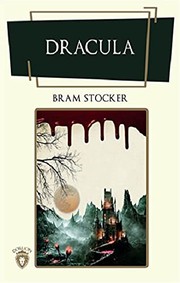
Dracula
Bram Stoker · 1897 · Book
Shares analog-era texture.
91% shared signal
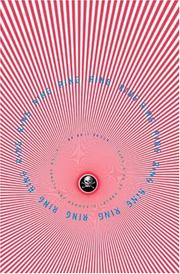
Ring
Koji Suzuki · 1991 · Book
Shares slow-burn dread.
88% shared signal

The Fog (OST)
John Carpenter · 1980 · Record
Shares a supernatural threat.
88% shared signal
Ghost Story
Peter Straub · 1979 · Book
Shares a bleak, unforgiving tone.
88% shared signal
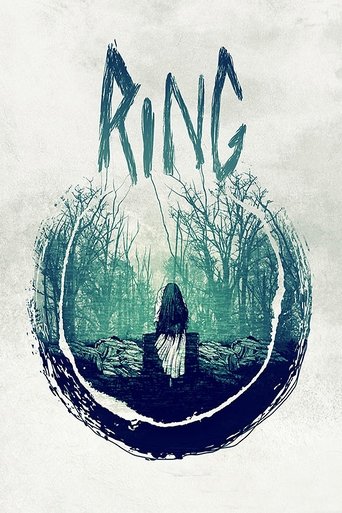
Ringu
Hideo Nakata · 1998 · Film
Shares slow-burn dread.
84% shared signal
Ghostwatch
BBC · 1992 · Television
Shares analog-era texture.
82% shared signal
Rosemary's Baby
Roman Polanski · 1968 · Film
Shares a bleak, unforgiving tone.
82% shared signal
The Shining
Stephen King · 1977 · Book
82% shared signal
Questions about The Elementals
The things people actually ask about this book, answered.
What happens at the end of The Elementals?
The elementals take Dauphin Savage in the shape of his dead mother, and kill Lawton McCray and Odessa Red. India and Luker destroy the Marian manifestation and burn the third house. The survivors leave, Beldame is later lost to a hurricane, and India understands the family's problem has simply moved on.
What is in the third house in The Elementals?
Entities the novel calls elementals and never explains. They are bound to the house, they appear in the shapes of the dead, and they cannot be negotiated with. McDowell gives no origin and no rules — only a house whose lower floors are packed with sand and something inside it.
Who dies in The Elementals?
Dauphin Savage, taken by something wearing his mother Marian's face; Lawton McCray, killed while trying to burn the houses; and Odessa Red, the housekeeper, who was the only person who understood what Beldame contained. Four of the family survive.
Why is the body stabbed at the funeral in The Elementals?
The novel presents it as an old Savage family custom and refuses to explain it. Marian's corpse is stabbed in the chest with a kitchen knife before the coffin is closed, and nobody present finds it strange — which tells you, before anything else happens, that this family has reason to make sure its dead stay dead.
Is The Elementals scary?
Very, and almost without incident. We score it 020 on pace and 034 on viscera: the fear is a house being eaten by a dune, figures seen at windows and on staircases that are no longer there, and the fact that only some people can see them.
Is The Elementals a good starting point for Michael McDowell?
Yes. It is his best-regarded novel and the one Valancourt's reissues brought back into print, and it is self-contained. McDowell went on to write for the screen, including Beetlejuice, and the dark comic register in his dialogue here is recognisably the same writer.
These are ranked against The Elementals, not against you.
Build your own tape →