
Film · 2002
The Ring
Gore Verbinski
The American one, and better than it is given credit for.
Most extreme on TONE — a bleak, unforgiving tone at 014
On VHSCREAM’s six-axis scale, The Ring (2002) is most extreme on the tone axis: 14 out of 100, where 0 is a bleak, unforgiving tone and 100 is gleeful black comedy. 29% of the 105 horror works we have scored come in lower on that axis. How we score →
The Ring is a 2002 horror film directed by Gore Verbinski, remaking Hideo Nakata's Ringu. A journalist investigates a videotape that kills whoever watches it seven days later. We score it 014 on tone — 30 works score lower — and 020 on the threat axis, well into the supernatural.
Scored and reviewed by VHSCREAM on · how we score
The Ring: the review
The Ring is the rare American remake that is not a betrayal, and the reason is that Verbinski and Ehren Kruger rebuilt the film rather than translating it.
The thing to understand is that it is a different genre from Ringu. Nakata made a cold procedural that withholds almost everything; Verbinski made a designed, saturated, art-directed nightmare. Everything in the frame is green-grey and wet: Seattle in permanent rain, a horse ranch on a fogged island, a lighthouse, a well under a cabin floor. Bojan Bazelli shot it so that the whole film looks like a bad transfer, and Hans Zimmer's score is all held strings and clatter. It is a film about a videotape that has made itself look like one.
Naomi Watts is the other difference. Rachel Keller is a bad mother who is good at her job, and Watts plays the investigation as professional competence under rising panic rather than as heroism. She does not scream. She takes notes.
The tape is better than it had any right to be
Verbinski's version of the cursed footage is longer, stranger and more composed than the original's: a chair dragging itself, a mirror, a centipede under a door, a ladder, a nail through a finger, a burning tree, a horse's eye, a ring of light seen from inside a well. It reads as a ransom note assembled by something that has never had to communicate before, and the film's best single gesture is Rachel pulling a fly off the surface of the screen and holding it in her hand.
Samara is explained and that is the trade
The 2002 film gives you a backstory, a ranch, an adoption, a psychiatric tape, drowned horses and a mother on a cliff edge. It is good material — the videotaped interview in the hospital is the most frightening scene in the film — and it is also the thing the Japanese version refuses to do. You get motivation and lose unknowability. Which you prefer is a question about what frightens you rather than about which film is better.
Where it is weak
The horse on the ferry is a misfire. Noah is thinly written and Martin Henderson can do nothing with him. Aidan is the standard uncanny-child of the period and speaks entirely in warnings. And the digital decayed-corpse reveal in the well has aged much worse than anything practical in the film.
For the original's colder treatment, Ringu; for Koji Suzuki's novel, which is more procedural again, Ring; for the same cursed-media premise built on film instead of tape, Sinister.
The ending of The Ring explained
Total spoilers from here. Everything above this line is spoiler-free.
The short answer: Rachel finds Samara's body in a well beneath the floor of cabin four at Shelter Mountain and holds her remains, and the body is recovered and given a burial. She believes this ends it. The next morning Noah dies in his loft, killed by Samara coming out of his television. Rachel works out the only difference between them: she made a copy of the tape and showed it to Noah. The curse is not satisfied by burial, it is satisfied by propagation. The film ends with her helping her son Aidan — who has already watched it — to copy the tape, and with Aidan asking what will happen to the person they show it to. She does not answer.
Who is Samara Morgan?
The adopted daughter of Anna and Richard Morgan, horse breeders on Moesko Island. She had an involuntary psychic ability that projected images into the minds of people near her and drove the ranch's horses to drown themselves. Anna took her to a psychiatric hospital, where she was filmed and found untreatable, and then brought her home, suffocated her with a bin bag and dropped her down the well. Samara did not die for seven days.
How does the seven days work in The Ring?
Watching the tape starts a clock. The phone rings immediately afterwards and a child's voice says "seven days". Over that week the victim's perception degrades — nosebleeds, distorted photographs, lost time — and on the seventh day Samara arrives and kills them, leaving the face frozen in an expression the coroner cannot explain. The only exit the film establishes is to copy the tape and show it to another person inside the week.
Why doesn't burying Samara's body stop the curse?
Because Samara is not a wronged spirit looking for rest, and Rachel's assumption that she is comes from every other ghost story. The film lets her act on it, grants her a day of relief, and then kills Noah to prove it wrong. Samara's own line, delivered through the psychiatric tape, is the key: she never sleeps. There is nothing to appease.
What is on the tape in The Ring?
Roughly a minute of unnarrated images: a ring of light, a mirror reflecting a woman combing her hair, a chair that moves on its own, a centipede emerging from under a door, a ladder, a finger pierced by a nail, a burning tree, a horse's eye, flies, and a well in a field seen at the end. The film later establishes that these are Samara's own projections rather than a recording, which is why nothing in them resolves into a scene.
What does the ending of The Ring mean?
That survival requires condemning somebody. Rachel is alive for one reason — she copied the tape — and the only way to save her son is to do it again deliberately. The last shot is a mother teaching a child how to pass on a death sentence, and Aidan's question about the next viewer is the film handing the problem to the audience, who have just watched the tape twice.
How scary is The Ring, actually?
Scored against the published rubric, here is what the numbers mean.
Tone 014 is bleak — 30 works score lower. Nothing is resolved, the curse is intact, and the protagonist's solution is to murder a stranger by proxy.
The threat at 020 is well into the supernatural — only 18 works score lower. Anna Morgan's filicide is the only human killing in the film, and it happened thirty years before it starts.
Viscera 032 is low — 37 works score lower. A drowned horse, a nail through a finger, a decomposed body and one distorted face. No injury is dwelt on.
Pace 032 is slow — 49 works are slower. It is an investigation, and the deadline is the only thing driving it.
Era bias 048 is almost exactly the midpoint, which is the right reading for a 2002 film that has deliberately made itself look like a degraded VHS transfer.
Reality anchor 060 leans towards dream logic — 66 works score lower, almost entirely because of the tape's imagery and the well sequence.
On jump scares: several, and the best one is a chair.
The Ring on six axes of fear
Every work in the index is scored on six continuous axes of fear. This is what The Ring looks like as a vector.
Disagree with a number? Say so on the axis itself. Nobody has confirmed this vector yet, and a score you challenge goes to the top of the queue to be re-scored by a human. Votes do not move the numbers — they decide what gets looked at first. How the scoring works →
Scored against the published rubric. This vector is a draft awaiting review — the method is public so you can argue with it.
Who should skip The Ring
Skip it if a child being killed by a parent is a hard limit. Samara's drowning is shown, and the woman who did it is given a sympathetic hearing.
Skip it if animal death is a hard limit. A horse destroys itself against a ferry railing on screen, and the ranch's herd is established as having drowned.
Skip it if you need a resolution. The curse is never broken; the ending is the protagonist choosing to spread it.
Content notes: the murder of a child by her adoptive mother, a suicide by drowning, graphic animal death, a child placed under a death sentence, a decomposed body held on screen, and a protagonist knowingly condemning an unnamed person.
Watch it if you want the best American remake of a Japanese horror film, you like a procedural investigation with a deadline, and you want to see a 2002 studio film commit completely to a single colour and a single texture.
Where to find it
Streaming on fuboTV · Paramount Plus Premium · Paramount Plus Essential +3 ↗Physical copies on eBay ↗Availability from JustWatch via TMDB. We earn nothing from these links.
Nothing loads from YouTube until you press play.
If The Ring is your kind of fear
The eight works closest to The Ring in the index, ranked by distance across all six axes — not by genre label, and not by what other people watched.
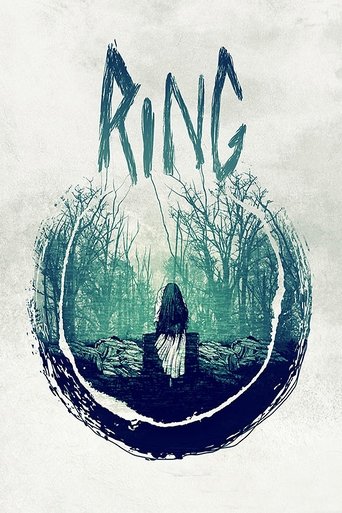
Ringu
Hideo Nakata · 1998 · Film
Shares a bleak, unforgiving tone.
90% shared signal
Ring
Koji Suzuki · 1991 · Book
Shares a supernatural threat.
89% shared signal
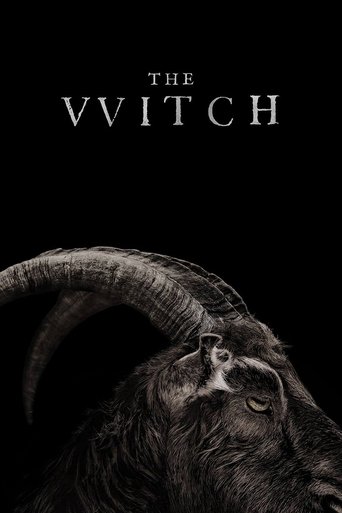
The Witch
Robert Eggers · 2015 · Film
Shares slow-burn dread.
81% shared signal
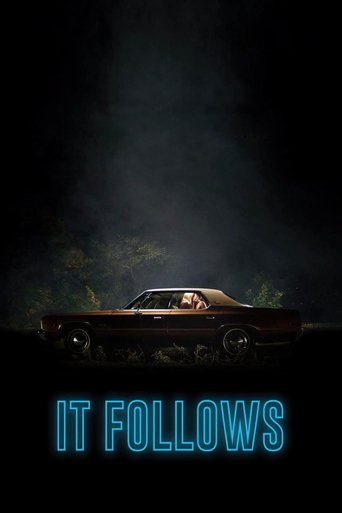
It Follows
David Robert Mitchell · 2014 · Film
Shares restraint over gore.
81% shared signal
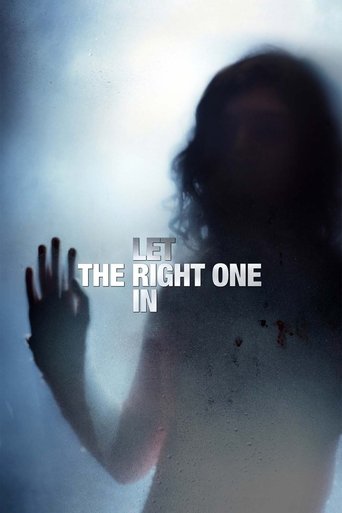
Let the Right One In
Tomas Alfredson · 2008 · Film
Shares a bleak, unforgiving tone.
81% shared signal
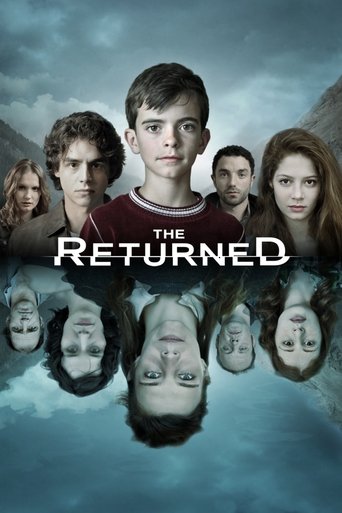
Les Revenants
Canal+ · 2012 · Television
Shares a supernatural threat.
81% shared signal
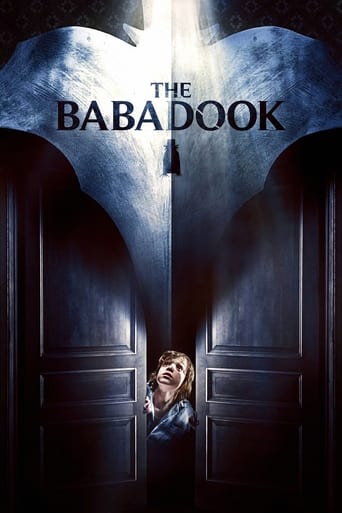
The Babadook
Jennifer Kent · 2014 · Film
Shares slow-burn dread.
81% shared signal
The Elementals
Michael McDowell · 1981 · Book
80% shared signal
See the full list of movies like The Ring →
Questions about The Ring
The things people actually ask about this film, answered.
What happens at the end of The Ring?
Rachel recovers Samara's body from the well and believes the curse is lifted, then Noah is killed the next morning. She realises she survived only because she copied the tape and showed it to him, and the film ends with her helping her son copy it too.
Who is Samara in The Ring?
The adopted daughter of horse breeders on Moesko Island, with an uncontrollable psychic ability that projected images into other people and drove the ranch's horses to drown themselves. Her mother suffocated her and threw her down a well, where she survived for seven days.
How does the curse in The Ring work?
Watching the tape triggers a phone call and a voice saying "seven days". The viewer's perception degrades over the week and Samara kills them on the seventh day. The only known escape is to copy the tape and show it to someone else before the deadline.
Why doesn't finding the body stop the curse in The Ring?
Because Samara is not a spirit seeking rest. Rachel imports that assumption from other ghost stories and the film kills Noah to disprove it. Samara's recorded line — that she never sleeps — is the film's statement that there is nothing to appease.
Is The Ring scarier than Ringu?
Different. We score Ringu at 022 on viscera and The Ring at 032, and the American film is more designed, more explained and more saturated. Viewers who want a reveal and a backstory prefer The Ring; viewers who want withholding prefer Ringu.
Is The Ring gory?
No. We score it 032 on viscera, low for our index. There is a nail wound, a decomposed body, a dead horse and one distorted face; the film's discomfort is almost entirely atmospheric and visual.
These are ranked against The Ring, not against you.
Build your own tape →