
Book · 2014
Bird Box
Josh Malerman
Do not look. Everything else in the book follows from that one rule.
63Hard going to sit through, out of 100 — mostly how bleak it is
- PaceBuilds, then strikes44
- ThreatMostly supernatural15
- GoreHolds back34
- ToneNo relief at all12
- RealityDream logic66
Era bias 86 · Thoroughly modern. Texture rather than fear, so it is not part of the grade. All six scores →
The bleakest horror novels ever written →
On VHSCREAM’s six-axis scale, Bird Box (2014) is most extreme on the tone axis: 12 out of 100, where 0 is a bleak, unforgiving tone and 100 is gleeful black comedy. 19% of the 320 horror works we have scored come in lower on that axis. How we score →
Bird Box is a 2014 novel by Josh Malerman. Something has arrived, and seeing it makes a person violent and then suicidal within minutes. Malorie rows two blindfolded children down a river toward a place she has only heard described on a recording. We score it 015 on threat — near the floor of the supernatural end — and 066 on reality anchor.
Scored and reviewed by VHSCREAM on · how we score
How scary is Bird Box, actually?
Scored against the published rubric, here is what the numbers mean for a reader.
Threat 015 is near the floor of the supernatural end. Only 38 works score lower. The creatures have no stated motive, no form and no negotiable interest. The only human threat is one man with a theory.
Reality anchor 066 is above the midpoint despite the plain setting. 231 works score lower. Houses, a river, a well, a dog — and a rule about perception that the novel never grounds in anything.
Viscera 034 is restrained for a book with this body count. 234 works score higher. The deaths are frequent and mostly discovered rather than witnessed, which is a consequence of a narrator who cannot look at anything.
Pace 044 is a shade on the dread side. 188 works are faster. The river chapters push and the house chapters accumulate, and the alternation keeps it moving more than the material would on its own.
Tone 012 is bleak. 60 works score lower. Almost everyone in the house dies, the children are raised in sensory deprivation, and the ending's consolation is the refusal of a worse option.
Era bias 086 is modern. 54 works score higher. Contemporary suburb, contemporary prose, a recording on an answering machine.
On jump scares: a few, and all of them are sounds, which is the point.
Who should skip Bird Box
Skip it if you need to know what the monster is. You will not find out here and the novel treats the wish to find out as the fatal error.
Skip it if children raised in deprivation is hard to read. Boy and Girl are trained from birth for a sightless world, are not given names, and the novel is honest that this is a kind of harm.
Skip it if flat prose will bother you. Malerman writes in short declaratives and uses one-line paragraphs for weight constantly.
Content notes: multiple suicides and self-mutilation including eye injury, childbirth without medical help, the death of a newborn, animal death, the deliberate blinding of adults and the proposal to blind children, and sustained psychological coercion.
Read it if you want the cleanest horror premise of the last fifteen years, you value a novel that holds its nerve and never shows you anything, and an argument between frightened adults about whether the rule is real sounds more frightening than a creature would be.
Bird Box on six axes of fear
Every work in the index is scored on six continuous axes of fear. This is what Bird Box looks like as a vector — and what each ten-point band looks like across everything else we hold.
Where that puts it: joint #4 supernatural
Draft score — awaiting human review. About these scores
Disagree with a number? Say so on the axis itself. Nobody has confirmed this vector yet, and a score you challenge goes to the top of the queue to be re-scored by a human. Votes do not move the numbers — they decide what gets looked at first. How the scoring works →
Scored against the published rubric. This vector is a draft awaiting review — the method is public so you can argue with it.
Where to start with horror books →
Where to find it
Buy from an indie bookshop ↗Out-of-print copies on eBay ↗We earn nothing from these links.
Bird Box: the review
A premise that disciplines the whole novel
The rule is simple and it does all the work: do not look. Everything follows. Windows are painted over and blanketed. Movement outside happens by rope and by feel. Water is fetched with eyes shut. A dog cannot be used as a guide because a dog will look. Birds in a box by the door will react to something approaching, which is where the title comes from, and is the single best piece of practical invention in the book.
Malerman alternates between the house, where a group of strangers works out how to live blind indoors, and the river, where Malorie and the two children travel four years later. The structure is the novel's other good decision: we know from the first chapter that most of the people in the house do not make it, so the house chapters are not suspenseful about survival. They are suspenseful about which argument finally breaks the group.
The house is the real novel
What happens in it is a long negotiation about epistemology conducted by frightened adults with no information. Tom believes in adaptation and training children to live with the rule. Don believes the creatures may not exist and that they are all slowly going mad from the blindfolds and the dark. Gary arrives with a notebook and a position: that the creatures are harmless and the madness is in the looking away.
Malerman is excellent at how reasonable Don sounds. The novel's most frightening passages are not attacks; they are conversations in which somebody constructs a plausible case for taking the blankets down, in a house where being wrong once is fatal for everyone.
What it refuses to do
There is no explanation. Not a hinted one, not a scientific one, not a mythology. We never learn what the creatures look like, where they came from, how many there are or what they want, and the two characters who try hardest to find out are the two the book treats most harshly. That refusal is why it belongs on the cosmic shelf rather than with the monster novels: the threat has no motive and no shape, and knowledge is specifically the thing that kills you.
Where it strains
The prose is plain to the point of flatness and Malerman leans on short declarative paragraphs for emphasis far too often. The children are written as functions — Boy and Girl, trained, obedient — and the choice to withhold their names is thematically defensible and dramatically costly. Gary is a thin villain in a novel whose other antagonism is beautifully argued. And the river sections, intercut for pace, are thinner than the house sections every single time.
Still: among modern horror premises this is the cleanest, and the decision to hold the line on never showing anything is harder than it looks.
The ending of Bird Box explained
The ending, in full. Open it when you have seen it.
The short answer: Malorie and the children reach the end of the river and find a community living at a school for the blind. Its residents have deliberately blinded themselves, which removes the risk entirely. Malorie is offered the same and the novel ends with her choosing to keep her sight and her children's, taking the harder arrangement over the safe one.
Here is how the novel gets there.
What are the creatures?
Never explained, and the novel is absolute about it. We get no description, no count, no origin. What we get is behaviour: they are present, a human mind cannot process the sight of one, and the result is violence followed within minutes by self-destruction. Even the question of whether they intend any of this is left open.
What happens to Tom?
Tom is the person in the house who believes the situation can be adapted to, and he dies for it — undone by Gary, whose thesis is the opposite. The novel's refusal to let the reasonable, practical, kind character's approach succeed is its hardest structural choice.
What is Gary doing?
Gary believes the creatures are harmless and that the madness is caused by the avoidance rather than the sight. He arrives with a notebook arguing it and acts on it inside a house of people who cannot afford him to be wrong. He is the novel's only human antagonist and the reason the house falls.
Why are the children trained to listen?
Because Malorie raised them for a world without sight. Their hearing is drilled from infancy, which is both a survival adaptation and, the novel is clear, an act of upbringing she is not sure is forgivable. The river journey depends on it entirely.
What is at the end of the river?
A former school for the blind, and a community that has solved the problem by removing the organ. They are not presented as mad or sinister. They are presented as people who did the arithmetic. Malorie's refusal is the novel's last word on the subject: the safe version of this life costs more than she will pay.
Is the book different from the film?
Yes, substantially. The 2018 Netflix adaptation changes the house group, several deaths, and the ending's framing, and it allows more glimpses of effect than the novel permits. The book never shows you anything.
If Bird Box is your kind of fear
The eight works closest to Bird Box in the index on the five axes that describe fear, the same medium first — not by genre label, and not by what other people watched.
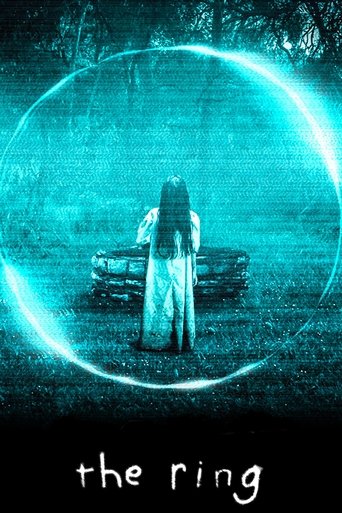
The Ring
Gore Verbinski · 2002 · Film
Shares a bleak, unforgiving tone.
91% shared signal
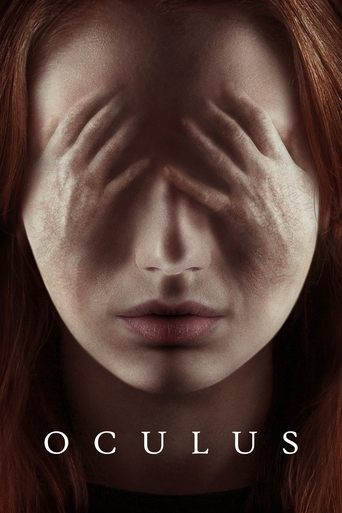
Oculus
Mike Flanagan · 2013 · Film
Shares a threat that is not human.
91% shared signal
The Grudge
Takashi Shimizu · 2004 · Film
Shares a bleak, unforgiving tone.
89% shared signal
Paranormal Activity: The Ghost Dimension
Gregory Plotkin · 2015 · Film
Shares a threat that is not human.
88% shared signal
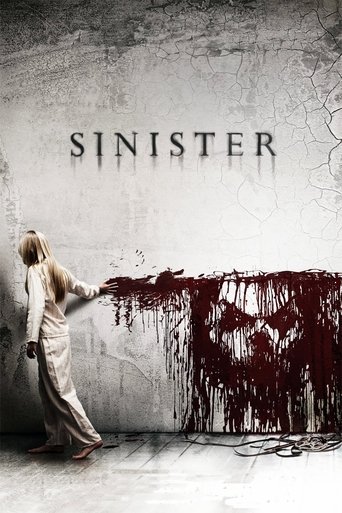
Sinister
Scott Derrickson · 2012 · Film
88% shared signal
1408
Mikael Hafstrom · 2007 · Film
87% shared signal
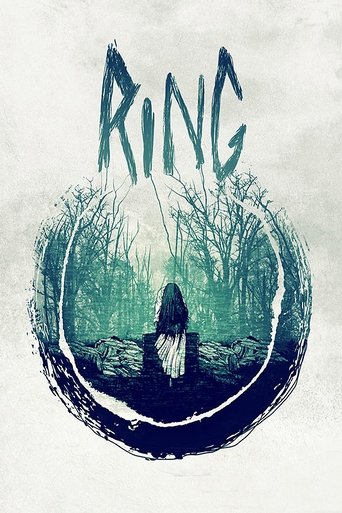
Ringu
Hideo Nakata · 1998 · Film
85% shared signal
Halloween III: Season of the Witch
Tommy Lee Wallace · 1982 · Film
85% shared signal
More lists like these: Movies like The Ring · Movies like Sinister
Questions about Bird Box
The things people actually ask about this book, answered — including how it ends.
How does Bird Box end?
Malorie and the children reach a community living in a former school for the blind, whose residents have deliberately blinded themselves to remove the danger. She is offered the same and refuses, choosing to keep her sight and the children's and accept the harder life.
What are the creatures in Bird Box?
Never explained. The novel gives no description, no origin and no count — only the effect, which is that seeing one causes violence and then suicide within minutes. Whether they intend any of it is left open.
Why do they use birds in a box?
Because the birds react to something approaching, which gives a warning to people who cannot look. It is the novel's best piece of practical invention and the source of the title.
Is Bird Box the same as the Netflix film?
No. The 2018 film changes the house group, several deaths and the framing of the ending, and shows more than the novel permits. The book never shows you anything at all.
Is Bird Box cosmic horror?
By the definition this site uses, yes. The threat has no motive, no form and no interest in humanity, and knowledge of it is specifically what destroys you — which is the test what cosmic horror is sets out. We score the threat 015, near the floor of the supernatural end.
What should I read after Bird Box?
Annihilation for a far better written novel about a thing that will not explain itself, 28 Days Later for the survival-logistics end of the same idea, and A Quiet Place for the other great one-rule premise.
These are ranked against Bird Box, not against you.
Build your own tape →