
Book · 2014
Annihilation
Jeff Vandermeer
A biologist takes field notes on a coastline that is not behaving like a place.
59Strong to sit through, out of 100 — mostly how bleak it is
- PaceSlow burn18
- ThreatMostly supernatural20
- GoreShows some of it38
- ToneNo relief at all12
- RealityPure nightmare logic86
Era bias 86 · Thoroughly modern. Texture rather than fear, so it is not part of the grade. All six scores →
The bleakest horror novels ever written →
On VHSCREAM’s six-axis scale, Annihilation (2014) is most extreme on the tone axis: 12 out of 100, where 0 is a bleak, unforgiving tone and 100 is gleeful black comedy. 19% of the 320 horror works we have scored come in lower on that axis. How we score →
Annihilation is a 2014 novel by Jeff VanderMeer, the first of the Southern Reach trilogy. A biologist joins the twelfth expedition into Area X, a stretch of coast that has been sealed off for thirty years and is not behaving like a place. She finds a structure going down that the others insist on calling a tower. We score it 086 on reality anchor and 020 on threat.
Scored and reviewed by VHSCREAM on · how we score
How scary is Annihilation, actually?
Scored against the published rubric, here is what the numbers mean for a reader.
Reality anchor 086 is the signature. Only 18 works score higher. Biology stops being reliable on page one and never resumes. The novel is scrupulously realistic about everything except what is actually happening.
Threat 020 is deep in the supernatural end. 245 works score higher. Area X has no motive, the Crawler is not hunting anybody, and the expedition is destroyed by a process rather than by an enemy. This is the purest case of cosmic indifference in the print shelf.
Era bias 086 is modern. 54 works score higher. Clean contemporary prose, contemporary science, no antiquarian framing — which is precisely how it escapes the Lovecraft pastiche it would otherwise be.
Viscera 038 is moderate and mostly biological. 230 works score higher. There is a body split open and a transformation described in detail, and the register stays clinical, which makes the worst images land harder.
Tone 012 is bleak. 60 works score lower. Everyone on the expedition is lost, the husband's fate is worse than death, and the narrator's survival consists of ceasing to be herself.
Pace 018 is dread. 277 works are faster. A journal structure, long digressions into the narrator's past, and perhaps four moments of incident in the whole book.
On jump scares: none. The novel has no interest in startling and considerable interest in disorienting.
Who should skip Annihilation
Skip it if you need explanations. Area X is not explained here or in the sequels, and the novel treats the demand for explanation as the mistake the Southern Reach keeps making.
Skip it if an unnamed, affectless narrator will keep you out. The biologist is deliberately cold, names nobody including herself, and withholds her own feelings about her marriage for most of the book.
Skip it if you came from the film. The 2018 adaptation shares the premise, the tower and the lighthouse and almost nothing else — different ending, different tone, different cast of ideas. Both are good; they are not interchangeable.
Content notes: terminal illness and bereavement, bodily transformation described in detail, a suicide, a drowning, self-harm under hypnotic suggestion, and animal death.
Read it if you want the best cosmic horror novel since Lovecraft and a far better written one, you can take a plot that refuses to close, and a narrator who finds her own disintegration scientifically interesting sounds like the right kind of unsettling.
Annihilation on six axes of fear
Every work in the index is scored on six continuous axes of fear. This is what Annihilation looks like as a vector — and what each ten-point band looks like across everything else we hold.
Where that puts it: #3 surreal · joint #8 supernatural · joint #10 slow burn
Draft score — awaiting human review. About these scores
Disagree with a number? Say so on the axis itself. Nobody has confirmed this vector yet, and a score you challenge goes to the top of the queue to be re-scored by a human. Votes do not move the numbers — they decide what gets looked at first. How the scoring works →
Scored against the published rubric. This vector is a draft awaiting review — the method is public so you can argue with it.
Where to start with horror books →
Where to find it
Buy from an indie bookshop ↗Out-of-print copies on eBay ↗We earn nothing from these links.
Annihilation: the review
The best cosmic horror novel of the century, and it is a field journal
The narrator is a biologist and the book is her notebook, which does more work than any other decision in it. She does not describe Area X as frightening; she describes it as an ecosystem, in the register of someone who has spent her life watching tide pools and is now watching something she cannot classify and will not pretend to. The restraint is total. When she finds words growing out of a wall in living matter, her first instinct is to take a sample.
That voice is also the novel's argument. Area X cannot be reported because the vocabulary available to the people entering it belongs to a world where places have causes. The biologist's prose keeps reaching for metaphor and keeps noting that the metaphor is wrong, and after two hundred pages that becomes genuinely disorienting in a way no amount of described monstrosity would manage.
The tower, the lighthouse, the brightness
The structure is a staircase descending into the earth, and the words written along its wall in some fruiting body — Where lies the strangling fruit that came from the hand of the sinner... — are the single best image in modern horror. They are being written as the expedition reads them.
The lighthouse holds the other half: a pile of journals, decades deep, from expeditions nobody was told about. This is the moment the novel's scale lands. Not a monster, not a conspiracy exactly, just the accumulated paper of dozens of groups sent in and rendered into material, stacked where somebody left it.
And in the biologist herself, the brightness — an infection, a conversion, a change she records with the same care she records everything else and declines to be frightened by. VanderMeer's refusal to make her transformation tragic is the most radical thing in the book.
What makes it cosmic rather than merely weird
It passes the test this index uses: the threat has no motive. Area X is not hostile. It is not communicating. The Crawler is not guarding anything. What is happening is a process, enormous and indifferent, in which the expedition is raw material, and the horror is that the biologist is the only person in the novel who finds that interesting rather than unbearable.
She is also, pointedly, not in it for survival. She went because her husband came back from the eleventh expedition as something that looked like him, sat in their kitchen, and died of cancer in weeks. Her grief is the engine and the novel never says so out loud.
Where it strains
The other three women are functions — the psychologist, the surveyor, the anthropologist — and only the psychologist gets interiority. The hypnosis mechanic explains a great deal rather conveniently. And the novel's last act turns on a confrontation it has deliberately underpowered, which readers wanting resolution will find thin. The trilogy's second volume is a different kind of book and many readers stop after this one, which is a reasonable decision.
The ending of Annihilation explained
The ending, in full. Open it when you have seen it.
The short answer: the biologist descends to the Crawler, survives contact with it, discovers that her husband's journal is in the lighthouse pile, and chooses not to leave. The novel ends with her heading north along the coast to look for him, already changing into whatever Area X makes of people.
Here is how the novel gets there.
What is Area X?
Never explained, and the refusal is the book. A coastal zone, sealed for thirty years behind a border nobody can locate from inside, in which biology does not hold: things duplicate, things hybridise, a dolphin has a human eye. It is not described as an invasion or a disaster. It is described as a process already well advanced.
What is the Crawler?
The thing at the bottom of the tower, writing the wall. It is enormous, it emits a light that is painful to be near, and it is in some sense the lighthouse keeper — the last man left when Area X arrived, now a component of it. The biologist gets close enough to be read by it and is not killed.
What is the brightness?
Her own transformation. Having inhaled spores from the tower wall early on, she becomes immune to the psychologist's hypnosis and begins changing: her body heals strangely, she burns, she stops needing what she needed. She records this in the same flat scientific voice she uses for everything, which is why it is frightening.
What happened to her husband?
He went in with the eleventh expedition, came back without knowing how, was gentle and wrong, and died of cancer with the rest of his party. The lighthouse journals reveal that the thing that returned was a copy and that the real man did something else entirely — which is why she stays.
Does the novel resolve?
No, deliberately. Nothing is defeated, nothing is explained and the biologist does not come home. She writes her account, leaves it in the pile with the others, and walks north. The ending is an acceptance rather than an escape, and the two sequels do not undo it.
If Annihilation is your kind of fear
The eight works closest to Annihilation in the index on the five axes that describe fear, the same medium first — not by genre label, and not by what other people watched.
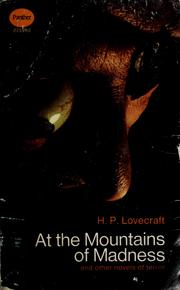
At the Mountains of Madness
H. P. Lovecraft · 1936 · Book
Shares a bleak, unforgiving tone.
89% shared signal
The King in Yellow
Robert W. Chambers · 1895 · Book
Shares dream logic.
87% shared signal
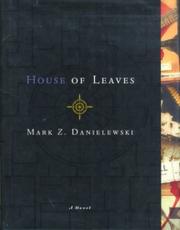
House of Leaves
Mark Z. Danielewski · 2000 · Book
Shares slow-burn dread.
87% shared signal

Channel Zero: Candle Cove
Nick Antosca · 2016 · Television
Shares a threat that is not human.
93% shared signal
Gemini Home Entertainment
Remy Abode · 2019 · Web series
Shares modern craft.
91% shared signal
Under the Skin
Jonathan Glazer · 2013 · Film
Shares a bleak, unforgiving tone.
87% shared signal

Abyss
Chelsea Wolfe · 2015 · Record
Shares slow-burn dread.
86% shared signal

Heresy
Lustmord · 1990 · Record
Shares dream logic.
86% shared signal
More lists like these: Books like House of Leaves
Questions about Annihilation
The things people actually ask about this book, answered — including how it ends.
How does Annihilation end?
The biologist descends to the Crawler and survives being read by it, finds her husband's journal among decades of others in the lighthouse, and decides not to return. The final pages have her walking north along the coast to look for him, already transforming.
What is Area X in Annihilation?
A sealed coastal zone where biology no longer holds — organisms duplicate, hybridise and carry parts that belong to other species. The novel never explains its origin or purpose, and treats the expectation of an explanation as the error its characters keep making.
What is the Crawler?
The entity at the base of the tower, endlessly writing a sentence along the wall in living matter. It appears to be what became of the last lighthouse keeper when Area X arrived. It is not guarding anything and does not attack.
Is Annihilation the same as the film?
No. The 2018 Alex Garland film keeps the premise, the tower and the lighthouse and changes the ending, the tone and most of the ideas. Neither replaces the other.
Is Annihilation scary?
Disorienting rather than frightening. We score it 020 on threat, deep in the supernatural end, and 018 on pace, which makes it one of the more patient things in this index. If malice is what frightens you, this has none; what cosmic horror is explains why that is worse.
What should I read after Annihilation?
The Fisherman for grief and cosmic scale in the same book, At the Mountains of Madness for the novella it is answering, and The Croning for cosmic horror that does have something like malice in it.
These are ranked against Annihilation, not against you.
Build your own tape →