
Book · 2000
House of Leaves
Mark Z. Danielewski
A book about a house bigger inside than out, typeset to disorient you.
Most extreme on REALITY ANCHOR — dream logic at 090
The most surreal horror novels ever written →
On VHSCREAM’s six-axis scale, House of Leaves (2000) is most extreme on the reality-anchor axis: 90 out of 100, where 0 is grounded realism and 100 is dream logic. 92% of the 105 horror works we have scored come in lower on that axis. How we score →
House of Leaves is a 2000 novel by Mark Z. Danielewski, presented as a dead man's academic study of a documentary that does not exist. A family moves into a Virginia house whose interior is a quarter of an inch larger than its exterior. We score it 090 on reality anchor — joint-sixth of 105 works — and 015 on pace, which makes it the fifteenth-slowest thing we hold.
Scored and reviewed by VHSCREAM on · how we score
House of Leaves: the review
House of Leaves is the most frightening book of the last fifty years and the fear is almost entirely architectural.
The surface story — the Navidson Record — is a straightforward haunted-house narrative told brilliantly. Will Navidson, a photojournalist with a Pulitzer and a guilty conscience, moves to Ash Tree Lane with his partner Karen Green and two children, intending to film a family settling down. Instead the house produces a closet that was not there, then a hallway in the living-room wall, then a cold lightless interior with no measurable limit: a spiral staircase that takes minutes or days to descend, rooms that are not there when you return, a growl with no source, and dimensions that change while you are inside them. Four expeditions go in. The third ends in murder and suicide. The fifth nearly ends the book.
That alone would be a great novel. What makes it an event is the apparatus.
The book is a physical object doing work
Zampanò, the blind author of the study, is dead before page one. His manuscript is edited by Johnny Truant, a Los Angeles tattoo-shop apprentice with no qualifications and a disintegrating mind, whose footnotes start as housekeeping and become the second novel in the book. Beneath him sit the publisher's footnotes. Beneath those, in Appendix II-E, sit letters from Johnny's mother Pelafina, written from a psychiatric institution, which rearrange everything above them.
And the typography is not decoration. Text crowds into a corner when a corridor narrows, runs upside down and backwards when a character is disoriented, drops to one word per page during a fall, and leaves whole leaves blank where the house is empty. Every instance of the word house is printed in blue. The Minotaur material is struck through in red by someone who did not want it read. Reading the book requires you to turn it, and turning a book while frightened is a sensation the form has not often produced.
Why it works as horror rather than as a puzzle
Because the house has no mythology. There is no history, no curse, no previous owner, no entity with a motive. Zampanò's study generates hundreds of pages of citation — much of it to books and scholars that do not exist — and explains nothing, because explanation is what the house declines to provide. The footnotes are the horror: an apparatus that enormous, failing that completely.
Where it will lose readers
The middle three hundred pages include a long exegesis on echo, a labyrinth chapter that must be navigated rather than read, and an index to a book that resists indexing. Johnny's sections are deliberately unreliable and occasionally tiresome. If you need a resolution, the book has no intention of giving you one.
For the same impossible interior at feature length, Skinamarink; for the novel it is in open conversation with, The Haunting of Hill House; for the same documentary-apparatus framing, The Blair Witch Project.
The ending of House of Leaves explained
Total spoilers from here. Everything above this line is spoiler-free.
The short answer: Navidson goes into the house alone for Exploration #5 and is lost for weeks, filming until his equipment fails, burning the last book he has for light one page at a time. Karen — who has refused to enter the house all novel — walks into the hallway after him, and the house gives them both back; the structure closes and the family leaves Ash Tree Lane. Navidson survives with injuries and the footage becomes the film Zampanò is studying. Johnny Truant's thread does not resolve: his mind fails, he leaves Los Angeles, and his last pages are a disintegrating account of a journey he may not have taken. Zampanò is dead in his apartment with claw marks on the floor and no animal. The house is never explained.
What is the house in House of Leaves?
Nothing the book will name. Measurable facts only: the interior is a quarter of an inch longer than the exterior; the hallway appears in a load-bearing wall and leads to a lightless space of unbounded dimension; the space reconfigures, is uniformly cold, contains no dust and no source of the growl; and it responds to the emotional state of whoever is inside. Zampanò's study considers and discards dozens of readings. The strongest internal evidence is that the house is reactive rather than malicious — it gives people the shape of their own fear and then lets the shape go on for as long as they stay.
Who is Zampanò?
A blind old man who died alone in a Los Angeles apartment leaving behind a vast critical study, written in longhand and on scraps, of a documentary nobody can find. He is blind and he is writing about a film: the book makes that contradiction impossible to resolve and never offers a way around it. The floor of his apartment has four long gouges in it.
Who is Johnny Truant?
The book's editor, narrator of the footnotes, and its most unstable element. He is in his twenties, works at a tattoo parlour, uses heavily, and begins to deteriorate as he transcribes. His mother Pelafina spent his childhood in the Three Attic Whalestoe Institute and her letters — printed as an appendix — contain a cipher, repeated apologies, and an account of an incident she may have committed against him. Whether Johnny invented Zampanò, or Zampanò's manuscript is destroying Johnny, is the book's central undecidable.
Is the Navidson Record a real film?
No, in two senses. It does not exist outside the novel, and the novel also quietly refuses to confirm it exists inside the novel: Karen Green's interview compilation cites real public figures discussing a film they cannot have seen, the academic citations around it are largely fabricated, and no copy is ever produced. The book treats a film nobody has seen as a settled historical object and lets the reader notice.
What does the Minotaur material mean?
Zampanò wrote a long passage reading the house as a labyrinth and its occupant as the Minotaur — a deformed child hidden by a father's shame rather than a monster — and then struck every word of it through in red. The struck text is still legible. It is the only place the book offers a sympathetic account of what is inside, and it has been suppressed by the one person with the authority to suppress it.
How scary is House of Leaves, actually?
Scored against the published rubric, here is what the numbers mean.
Reality anchor 090 is near the ceiling — only 5 works score higher. The house is not merely strange; the document describing it is unreliable, and its editor is unreliable about that.
Pace 015 is the fifteenth-slowest thing we hold — only 14 works are slower. Hundreds of pages are footnotes and criticism, and the book is designed to be re-read rather than finished.
Tone 016 is bleak — 40 works score lower. A murder-suicide, a dead child's photograph used as a motive, a mother institutionalised, and an editor who ends the book worse than he began it.
Viscera 020 is low — 16 works score lower. Two deaths in the house and some self-inflicted injury. The book is almost entirely bloodless.
Era bias 062 leans modern — 56 works score lower. It is a book about video, academic apparatus and 1990s media, and it was published in 2000.
The threat at 030 is on the supernatural side — 35 works score lower. One human being kills in the novel; the thing that produces the conditions for it is not human and not described.
On shocks: almost none. The book has perhaps three moments designed to startle, and two of them are typographical.
House of Leaves on six axes of fear
Every work in the index is scored on six continuous axes of fear. This is what House of Leaves looks like as a vector.
Where that puts it: #1 surreal · #4 without gore · #5 slow burn · #7 supernatural · #9 bleakest
Disagree with a number? Say so on the axis itself. Nobody has confirmed this vector yet, and a score you challenge goes to the top of the queue to be re-scored by a human. Votes do not move the numbers — they decide what gets looked at first. How the scoring works →
Scored against the published rubric. This vector is a draft awaiting review — the method is public so you can argue with it.
Who should skip House of Leaves
Skip it if you need a resolution. The house is never explained, Johnny's story does not end, and the appendices raise more than they settle.
Skip it if experimental form reads to you as evasion. Footnotes on footnotes, fabricated citations, blank pages, mirrored text and an index: all of it is deliberate and a large minority of readers find it insufferable.
Skip it if parental abuse is a hard limit. The Whalestoe letters describe a mother's institutionalisation and allude to her having harmed her son.
Content notes: a murder and a suicide, a child's death in a photograph, severe parental abuse and institutionalisation, self-harm, sustained psychological deterioration, and a sexual-violence incident recounted in a footnote.
Read it if you want the most frightening book of its generation, you can read four hundred pages of apparatus for the pleasure of the apparatus, and you want a haunted house that refuses, absolutely, to be a metaphor for anything you can pin down.
Where to start with horror books →
Where to find it
Buy from an indie bookshop ↗Out-of-print copies on eBay ↗We earn nothing from these links.
If House of Leaves is your kind of fear
The eight works closest to House of Leaves in the index, ranked by distance across all six axes — not by genre label, and not by what other people watched.

Selected Ambient Works Volume II
Aphex Twin · 1994 · Record
Shares dream logic.
86% shared signal
Time Machines
Coil · 1998 · Record
Shares slow-burn dread.
86% shared signal

Abyss
Chelsea Wolfe · 2015 · Record
Shares a bleak, unforgiving tone.
84% shared signal

Heresy
Lustmord · 1990 · Record
Shares restraint over gore.
84% shared signal

Under the Skin (OST)
Mica Levi · 2013 · Record
Shares dream logic.
84% shared signal
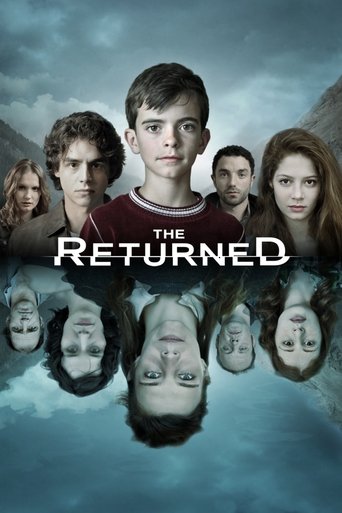
Les Revenants
Canal+ · 2012 · Television
Shares a supernatural threat.
82% shared signal
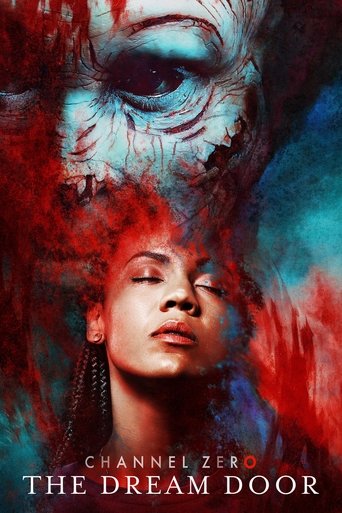
Channel Zero: Candle Cove
Nick Antosca · 2016 · Television
Shares a bleak, unforgiving tone.
81% shared signal
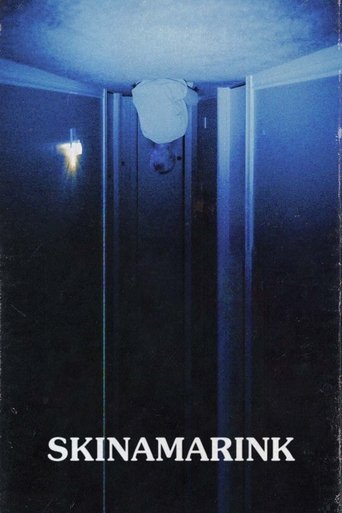
Skinamarink
Kyle Edward Ball · 2022 · Film
Shares slow-burn dread.
79% shared signal
See the full list of books like House of Leaves →
Questions about House of Leaves
The things people actually ask about this book, answered.
What happens at the end of House of Leaves?
Navidson is lost in the house during a fifth, solo exploration and Karen walks in after him; the house releases them both and the family leaves. Johnny Truant's thread never resolves — he deteriorates and vanishes. Zampanò is already dead, with four gouges in his floor and no animal to explain them.
What is the house in House of Leaves?
Never explained. The interior is a quarter of an inch larger than the exterior, a hallway appears in a load-bearing wall, and beyond it is a lightless space with no fixed dimensions, a cold with no source and a growl with no origin. It reconfigures around whoever is inside.
Who is Johnny Truant in House of Leaves?
The young man who finds Zampanò's manuscript and annotates it in footnotes, and who falls apart while doing so. His mother's letters from a psychiatric institution form an appendix that reframes him, and the novel never settles whether he is editing the book or writing it.
Do I have to read the footnotes and appendices?
Yes. The footnotes are a second narrative and the appendices contain material that changes the first, especially The Whalestoe Letters. Skipping them leaves a competent haunted-house novella; reading them is what the book is.
Is House of Leaves actually scary?
Very. We score it 090 on reality anchor, near the top of our index, with the fear coming from unmeasurable space and an unreliable document rather than from incident. It is slow — 015 on pace — and the dread accumulates over hundreds of pages.
Is House of Leaves gory?
Barely. We score it 020 on viscera, low for our index. There is a murder, a suicide and some self-harm, none of it dwelt on. The book's discomfort is spatial and psychological rather than physical.
These are ranked against House of Leaves, not against you.
Build your own tape →