
On VHSCREAM’s six-axis scale, The Turn of the Screw (1898) is most extreme on the era-bias axis: 2 out of 100, where 0 is analog-era texture and 100 is modern craft. 0% of the 105 horror works we have scored come in lower on that axis. How we score →
The Turn of the Screw is an 1898 novella by Henry James, presented as a dead governess's manuscript read aloud at a Christmas gathering. A young woman takes charge of two orphaned children at a remote country house and becomes convinced that two dead servants are working on them. We score it 050 on the threat axis — exactly the midpoint of our scale — and 008 on pace, which makes it the eighth-slowest thing we hold.
Scored and reviewed by VHSCREAM on · how we score
The Turn of the Screw: the review
The Turn of the Screw is the first great unreliable-narrator horror story and the argument about it has now run for over a century without resolving, which is the correct outcome.
The set-up is almost a joke about the genre. A frame narrator at a fireside; a second man, Douglas, who has a manuscript; a dead governess who wrote it; a house, Bly, with a tower and a lake; two beautiful, unnervingly well-behaved children; a housekeeper who will agree with almost anything; and an employer in Harley Street whose single instruction is that he must never be troubled about any of it. The governess is twenty, the daughter of a country parson, in love with her employer from one interview, and completely alone with a situation she has been forbidden to report.
What she sees is a man on the tower and a woman at the lake, and what she concludes is that these are Peter Quint, the master's dead valet, and Miss Jessel, her own dead predecessor, and that they have come back for Miles and Flora. From that point the novella's horror is produced almost entirely by sentence structure: James's clauses double back, qualify themselves and bury the verb, so that the reader is placed in exactly the governess's condition of knowing something terrible without being able to say what.
Nothing in it is stated and everything is implied
Miles has been expelled from school and nobody will say why; the headmaster's letter is not quoted. The governess asks the children direct questions and they answer in ways that are either innocent or obscene depending on what you have already decided. Mrs Grose's testimony about Quint — that he was "too free" with Miles, that Miss Jessel was involved with him and left under a cloud — is the only concrete material in the book, and it is hearsay from a woman who cannot read.
The two readings
The apparitionist reading: the ghosts are real, the governess is a heroine, and Miles dies at the moment he is released. The hallucinatory reading, which Edmund Wilson made famous in 1934: there are no ghosts, the governess is a sexually repressed young woman projecting onto two children, and she kills Miles by terrifying him. The text supports both, and its single best piece of evidence — that she describes Quint accurately before being told what he looked like — can be read either as proof or as Mrs Grose being led.
Where it is hard going
The prose is late James and some sentences need two passes. The frame is never returned to, so the ending arrives without a landing. And readers who want a position will not get one.
For the twentieth-century novel that took this ambiguity and built a house out of it, The Haunting of Hill House; for the Victorian ghost novel that answered it with total certainty, Dracula; for the modern series that works the same seam of a family's unreliable memory, The Haunting of Hill House.
The ending of The Turn of the Screw explained
Total spoilers from here. Everything above this line is spoiler-free.
The short answer: after a confrontation at the lake in which Flora denies seeing anything and turns on her violently, the governess has Flora sent away with Mrs Grose and keeps Miles at Bly alone. Over dinner and then in the schoolroom she presses him: about the letter he stole from her desk, and about what he actually did at school. He admits, finally, that he "said things" to boys he liked, who repeated them. Then she sees Quint at the window. She holds Miles so he cannot turn and look, demanding the name; Miles cries out "Peter Quint — you devil!" and asks where he is. She tells him it no longer matters, that she has him. And in her arms his heart has stopped. The last line is hers: she holds him, and he is dispossessed, and he is dead.
Are the ghosts real in The Turn of the Screw?
The novella is constructed so that this cannot be settled, and most of the best criticism of it is about why. In favour of the ghosts: the governess describes Quint's appearance in detail before Mrs Grose names him; Miles's expulsion and his dying words both imply he knows who Quint is; Flora's behaviour at the lake changes abruptly. Against: no apparition is ever witnessed by anyone else, Mrs Grose sees nothing at the lake, the children's answers are only sinister if you have already decided they are, and the governess's own account shows her becoming more certain as her evidence gets thinner.
What happens to Miles at the end?
He dies in the governess's arms, in the schoolroom, immediately after naming Quint. James gives no cause. Under the apparitionist reading the dispossession itself kills him, or Quint takes him rather than lose him. Under the hallucinatory reading the governess has held a frightened, ill child against his will through a sustained interrogation and he has died of it — and her phrasing, that she held him and that his heart had stopped, is as close as the text comes to admitting a hand in it.
Who are Peter Quint and Miss Jessel?
Quint was the master's valet at Bly, described by Mrs Grose as a handsome, insolent man who wore his employer's clothes, drank, and was "too free" with everyone including Miles; he died after a fall on an icy road coming back from the village. Miss Jessel was the previous governess, who Mrs Grose says was involved with Quint, left Bly, and died shortly afterwards — the cause is never given, and Mrs Grose's silence about it is the novella's heaviest insinuation.
Why was Miles expelled from school?
Never stated, which is the whole point. The headmaster's letter says only that he cannot be taken back. Under pressure Miles says he "said things" to a few boys he liked and that they repeated them to others. Whether that means obscenity learned from Quint, ordinary schoolboy swearing, or something sexual that the Victorian text cannot print, James leaves entirely to the reader — and your answer will decide which of the two readings you hold.
What does the title mean?
It comes from the frame: a previous story about a ghost appearing to a child, and Douglas's remark that a second child would give the thing another turn of the screw. It names the novella's method, which is incremental pressure — each chapter tightens by one notch and nothing is ever released. It is also, read unkindly, a description of what the governess does to Miles.
Is The Turn of the Screw a reliable narrative?
No, and James removed every mechanism that could make it one. The governess's manuscript reaches us third-hand, decades late, read aloud by a man who was in love with her; the frame narrator never returns to comment; the only corroborating witness cannot read and agrees with whatever she is told; and the children are never permitted to speak outside the governess's transcription. Every safeguard a Victorian ghost story would normally supply has been deliberately taken out.
How scary is The Turn of the Screw, actually?
Scored against the published rubric, here is what the numbers mean.
The threat at 050 is exactly the midpoint of the scale, which is the only honest score available: the novella is built so that the antagonist is either two dead servants or a living woman, and it will not choose.
Pace 008 is the eighth-slowest thing we hold — only 7 works are slower. It is short, and almost nothing in it is an event.
Viscera 006 is at the floor — only 1 work scores lower. One child's death, with no cause given and no injury of any kind.
Era bias 002 is as analog as our scale goes — 102 works read more modern. An 1898 novella about a house with a tower, a lake and no technology at all.
Tone 020 is bleak — 54 works score lower. A ten-year-old dies, his sister is sent away damaged, nothing is learned and the frame never comes back to reassure anyone.
Reality anchor 066 leans towards dream logic — 74 works score lower, because the reader cannot establish which of the reported events happened.
On shocks: none. The novella's method is pressure, and its most frightening image is a man standing on a tower doing nothing.
The Turn of the Screw on six axes of fear
Every work in the index is scored on six continuous axes of fear. This is what The Turn of the Screw looks like as a vector.
Where that puts it: #1 without gore · #1 slow burn · #6 surreal
Disagree with a number? Say so on the axis itself. Nobody has confirmed this vector yet, and a score you challenge goes to the top of the queue to be re-scored by a human. Votes do not move the numbers — they decide what gets looked at first. How the scoring works →
Scored against the published rubric. This vector is a draft awaiting review — the method is public so you can argue with it.
Who should skip The Turn of the Screw
Skip it if late Henry James prose defeats you. The sentences are long, heavily subordinated and deliberately evasive, and this is the hardest reading in our index for its length.
Skip it if you need the ambiguity resolved. It is not resolved, it is not resolvable, and a hundred and twenty years of criticism has failed to settle it.
Skip it if implied harm to children is a hard limit. The entire novella is insinuation about what was done to Miles and Flora, and it ends with a child dead in an adult's arms.
Content notes: the death of a child, sustained interrogation of a child by an adult, heavily implied sexual abuse of children that is never stated, an adult's fixation on children's innocence, and a narrator whose deterioration is the structure of the book.
Read it if you want the story that invented the unreliable horror narrator, you can take 1898 prose that fights you, and you want to spend a hundred pages unable to decide whether you are reading about a haunting or watching one being manufactured.
Where to start with horror books →
Where to find it
Buy from an indie bookshop ↗Out-of-print copies on eBay ↗We earn nothing from these links.
If The Turn of the Screw is your kind of fear
The eight works closest to The Turn of the Screw in the index, ranked by distance across all six axes — not by genre label, and not by what other people watched.

The Haunting of Hill House
Shirley Jackson · 1959 · Book
Shares restraint over gore.
91% shared signal
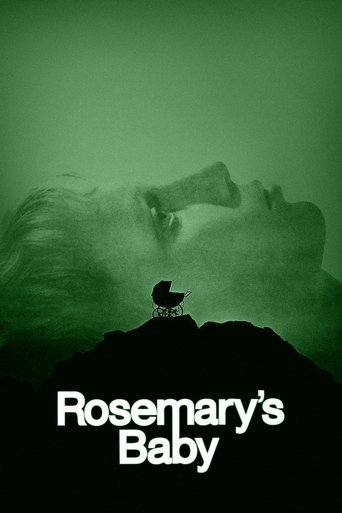
Rosemary's Baby
Roman Polanski · 1968 · Film
Shares analog-era texture.
87% shared signal
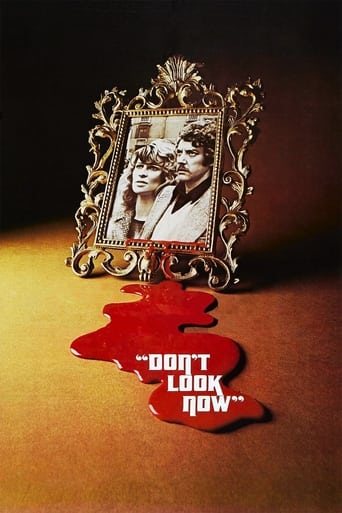
Don't Look Now
Nicolas Roeg · 1973 · Film
Shares slow-burn dread.
82% shared signal

Frankenstein
Mary Shelley · 1818 · Book
Shares a bleak, unforgiving tone.
82% shared signal
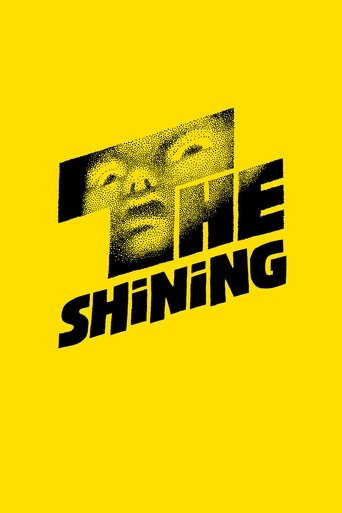
The Shining
Stanley Kubrick · 1980 · Film
Shares analog-era texture.
81% shared signal

The Fog (OST)
John Carpenter · 1980 · Record
Shares restraint over gore.
76% shared signal
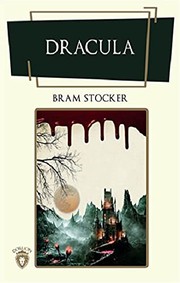
Dracula
Bram Stoker · 1897 · Book
Shares slow-burn dread.
76% shared signal
The Elementals
Michael McDowell · 1981 · Book
Shares a bleak, unforgiving tone.
76% shared signal
Questions about The Turn of the Screw
The things people actually ask about this book, answered.
What happens at the end of The Turn of the Screw?
The governess sends Flora away and keeps Miles alone at Bly. She presses him about the stolen letter and his expulsion until he admits he "said things" at school, then sees Quint at the window and holds Miles so he cannot look. Miles names Quint, calls him a devil, and dies in her arms.
Are the ghosts real in The Turn of the Screw?
The novella refuses to say. She describes Quint before being told his appearance and Miles names him as he dies; against that, nobody else ever sees anything, Mrs Grose sees nothing at the lake, and the governess grows more certain as her evidence thins. Both readings are complete.
What kills Miles at the end of The Turn of the Screw?
James gives no cause. Either the dispossession itself kills him, or Quint takes him rather than lose him, or the governess has held a frightened child through a long interrogation until his heart failed. Her own phrasing leaves the last reading open.
Who are Peter Quint and Miss Jessel?
Quint was the master's valet, described as handsome, insolent and "too free" with Miles, who died after a fall on an icy road. Miss Jessel was the previous governess, said to have been involved with him, who left Bly and died soon after. The cause of her death is never given.
Why was Miles expelled from school?
It is never stated. The headmaster's letter says only that he cannot return, and Miles admits he "said things" to boys he liked who repeated them. Whether that is obscenity learned from Quint or ordinary schoolboy talk is the hinge the whole novella turns on.
Is The Turn of the Screw scary?
In a very particular way. We score it 008 on pace and 006 on viscera — among the slowest and least explicit works we hold — and its fear is a figure standing still on a tower, plus the growing suspicion that the person describing him is the danger.
These are ranked against The Turn of the Screw, not against you.
Build your own tape →