
Record · 1968
Rosemary's Baby (OST)
Krzysztof Komeda
A lullaby, hummed by the actress, in exactly the wrong place.
40Strong to sit through, out of 100 — mostly how bleak it is
- PacePure slow burn12
- ThreatHuman and not44
- GoreShows almost nothing10
- ToneBleak30
- RealityTilts unreal52
Era bias 6 · Analog to the bone. Texture rather than fear, so it is not part of the grade. All six scores →
On VHSCREAM’s six-axis scale, Rosemary's Baby (OST) (1968) is most extreme on the viscera axis: 10 out of 100, where 0 is restraint over gore and 100 is explicit viscera. 2% of the 320 horror works we have scored come in lower on that axis. How we score →
Rosemary's Baby is Krzysztof Komeda's 1968 score for Roman Polanski, and it opens with a wordless lullaby hummed by Mia Farrow over an aerial shot of New York. We score it 012 on pace and 010 on viscera, which makes it one of the gentlest records in this index — and that gentleness is the entire mechanism.
Scored and reviewed by VHSCREAM on · how we score
How scary is Rosemary's Baby (OST), actually?
Scored against the published rubric, here is what the numbers mean for a listener.
Pace 012 is the signature and it is deep in dread. Only 12 works are slower. A waltz, brushed drums, long unresolved chords. There is no cue on this record that could be described as urgent.
Viscera 010 is near the floor of the index. Only 8 works score lower. Nothing here illustrates harm. The most explicit event in the film is scored with woozy free jazz rather than with violence.
Threat 044 is just below the midpoint, and the film agrees. 145 works score higher. There is a devil in this story and the people who arrange everything are neighbours, a husband and a doctor — which is why neither end of our axis fits it cleanly.
Era bias 006 is deep in the analog end. 303 works score higher. 1968, tape, a jazz rhythm section in a room, a celesta.
Tone 030 is bleak, and higher than most of this shelf. 194 works score lower. The music itself is warm. The score is only bleak in retrospect, which is the mechanism rather than a contradiction.
Reality anchor 052 sits almost on the midpoint. The jazz cues for the dream sequences push toward the uncanny and everything else is a melody you could hum in a lift.
On jump scares: none. There is not a single sting on the record.
Who should skip Rosemary's Baby (OST)
Skip it if you want horror music to sound like horror music. This is a lullaby and a jazz quartet. A listener expecting dissonance will find none anywhere on it.
Skip it if short albums with alternates annoy you. The record is brief and padded with variations on the main theme.
Skip it if the film's subject is a problem. The score accompanies a story about a woman's body being used without her consent, and the lullaby's final appearance is scored to her accepting it.
Content notes: nothing in the recording. The score accompanies a drugged rape, a coerced pregnancy and a conspiracy against a vulnerable woman.
Listen to it if you want the best demonstration in this index that fear is contextual, you have any interest in European jazz, and a pretty tune doing more damage than a cluster chord sounds like the right kind of horror.
Rosemary's Baby (OST) on six axes of fear
Every work in the index is scored on six continuous axes of fear. This is what Rosemary's Baby (OST) looks like as a vector — and what each ten-point band looks like across everything else we hold.
Where that puts it: #7 slow burn
Draft score — awaiting human review. About these scores
Disagree with a number? Say so on the axis itself. Nobody has confirmed this vector yet, and a score you challenge goes to the top of the queue to be re-scored by a human. Votes do not move the numbers — they decide what gets looked at first. How the scoring works →
Scored against the published rubric. This vector is a draft awaiting review — the method is public so you can argue with it.
Rosemary's Baby (OST): the review
The most frightening thing here is a woman humming
"Sleep Safe and Warm" is a lullaby in waltz time, hummed rather than sung, by the actress playing the woman the film is about. There is nothing dissonant in it. No cluster, no drone, no bells. It is pretty, and it is in the wrong place, and that is the only trick the score needs.
Komeda was a Polish jazz pianist and composer, Polanski's collaborator from their student films onward, and he brings an idiom nobody else was bringing to American horror in 1968: modal jazz harmony, a rhythm section, a celesta, flutes, and a willingness to let a cue sit on an unresolved chord for a long time without making a point of it. The result sounds less like a horror score than like something playing in a smart apartment two floors down, which is precisely where the horror in this film lives.
What it does with the lullaby
The theme returns throughout, and the film's method is to let it curdle by association rather than by orchestration. By the second appearance you have met the neighbours. By the fourth you know what the tannis root is for. The notes do not change; what changes is what you know, and Komeda's refusal to signal that with instrumentation is the most disciplined choice on this record.
Then the last cue plays it again, over the final scene, and it is the same lullaby, and it is now a lullaby for the thing in the crib. It is one of the cruellest endings in film music and nobody plays a dissonant chord to achieve it.
The jazz cues
The rest of the album is looser and less discussed, and worth hearing: brushed drums, double bass, a woozy flute line for the dream sequences, and a few passages of outright free playing for the conception scene that have more in common with Polish jazz records of the period than with anything Hollywood was doing. Some of it is slack. All of it belongs to the same world as the Castevets' dinner parties.
Where it strains
It is short, the album pads with alternates, and the dream-sequence material is the weakest writing on it — a composer reaching for the uncanny with the tools of a nightclub and not quite arriving. And Komeda had no opportunity to revise or re-record any of it: he suffered a head injury in late 1968 and died in April 1969, at thirty-seven. This is effectively his last work.
The ending of Rosemary's Baby (OST) explained
The ending, in full. Open it when you have seen it.
How it resolves: the lullaby, unchanged, over the final scene. Rosemary crosses the room to the crib and the score plays the same wordless waltz that opened the film, now accompanying her acceptance. Nothing in the music darkens. The horror is entirely in what the melody has become by virtue of what you now know, and it is the single best argument on this shelf that fear is contextual rather than acoustic.
What is "Sleep Safe and Warm"?
The film's main theme: a wordless lullaby in waltz time, hummed by Mia Farrow herself, used over the opening titles and again at the close. Komeda wrote it as a straightforwardly pretty melody, which is why it works.
Did Mia Farrow really sing it?
Yes. The vocal on the main title is the actress, humming, unaccompanied by lyrics. Using the performer rather than a session singer ties the melody to the character before the film has told you anything about her.
Who was Krzysztof Komeda?
A Polish jazz pianist and composer, trained as a doctor, central to the Polish jazz scene of the late fifties and sixties, and Polanski's regular collaborator from his student shorts through Knife in the Water and Cul-de-sac. He is as significant in European jazz as in film.
Is this his last score?
Effectively. Komeda sustained a head injury in late 1968 and died in April 1969 at the age of thirty-seven. Rosemary's Baby is the work he is best known for outside Poland and the last of consequence he completed.
Why does a gentle score belong in a horror index?
Because the measurement says so and because the film proves it. We score it 010 on viscera and 012 on pace — among the softest figures here — and it is one of the most effective scores in the genre. The lullaby demonstrates that the sound of fear is not a property of the notes.
If Rosemary's Baby (OST) is your kind of fear
The eight works closest to Rosemary's Baby (OST) in the index on the five axes that describe fear, the same medium first — not by genre label, and not by what other people watched.
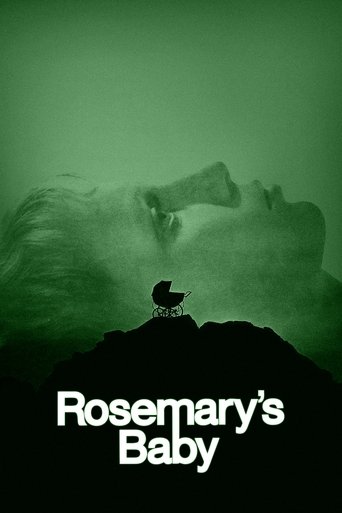
Rosemary's Baby
Roman Polanski · 1968 · Film
Shares restraint over gore.
95% shared signal

The Haunting of Hill House
Shirley Jackson · 1959 · Book
Shares slow-burn dread.
93% shared signal
The Haunting of Bly Manor
Mike Flanagan · 2020 · Television
Shares a bleak, unforgiving tone.
90% shared signal
The Turn of the Screw
Henry James · 1898 · Book
Shares restraint over gore.
89% shared signal
The Others
Alejandro Amenábar · 2001 · Film
Shares slow-burn dread.
87% shared signal
Les Revenants
Canal+ · 2012 · Television
Shares a bleak, unforgiving tone.
86% shared signal
It Follows
David Robert Mitchell · 2014 · Film
84% shared signal
Presence
Steven Soderbergh · 2025 · Film
83% shared signal
Rosemary's Baby (OST) in another form
The index links works across media, so an adaptation sits beside its source and a score beside the film it haunts.
More lists like these: Movies like Rosemary's Baby · Movies like It Follows
Questions about Rosemary's Baby (OST)
The things people actually ask about this record, answered — including how it ends.
What is the song in Rosemary's Baby?
"Sleep Safe and Warm", a wordless lullaby in waltz time written by Krzysztof Komeda and hummed by Mia Farrow over the opening and closing titles. There are no lyrics, and it is deliberately, straightforwardly pretty.
Did Mia Farrow sing the Rosemary's Baby theme?
Yes — the humming on the main title is Farrow herself rather than a session singer, which attaches the melody to the character before the film has told you anything about her.
Who composed the Rosemary's Baby score?
Krzysztof Komeda, a Polish jazz pianist and composer who had worked with Polanski since his student films. He died in April 1969 at thirty-seven, which makes this effectively his final work.
Why does the lullaby play at the end?
Unchanged, over Rosemary crossing the room to the crib. Nothing in the music darkens; what has changed is everything the audience now knows. It is the clearest case on this shelf of a melody being made frightening by context alone.
Is the Rosemary's Baby score scary?
Not acoustically. We score it 010 on viscera and 012 on pace, among the gentlest figures in this index, and it is one of the most effective scores in the genre. The film is where the lullaby turns.
What should I listen to after it?
Candyman for beauty used against a horror film with the same nerve, The Fog for restraint of a colder kind, and horror movie soundtracks for every score here with its numbers.
These are ranked against Rosemary's Baby (OST), not against you.
Build your own tape →