
Record · 1980
The Fog (OST)
Fewer notes than Halloween and twice the sea mist.
Most extreme on ERA BIAS — analog-era texture at 008
On VHSCREAM’s six-axis scale, The Fog (OST) (1980) is most extreme on the era-bias axis: 8 out of 100, where 0 is analog-era texture and 100 is modern craft. 9% of the 105 horror works we have scored come in lower on that axis. How we score →
The Fog (OST) is John Carpenter's 1980 score for his own film, written with Alan Howarth and built almost entirely out of sustained synthesiser tone rather than pulse. We score it 008 on era bias — only 9 works score lower — and 018 on viscera, which makes it one of the least explicit things we hold.
Scored and reviewed by VHSCREAM on · how we score
The Fog (OST): the review
The Fog (OST) is John Carpenter's best score and almost nobody knows it, because it does not have a hook.
Where Halloween (OST) is a mechanism — a piano figure in 5/4 that will not resolve — The Fog is weather. The main title is a slow, wide, descending synthesiser line over a bed of sustained low tone, with a bell in it, and nothing in the piece is in a hurry. There is no stalking pulse. There is no ostinato you could tap. The record's method is accumulation: pads that swell and recede, a repeated three-note descent that functions as a tide coming in, and long passages where almost nothing changes.
That makes it a far better album and a far worse theme, which is exactly the trade. Halloween is the piece of music everybody can hum; The Fog is the one you can listen to.
It is a sea record
Carpenter is scoring water and weather rather than a person, and the instrumentation follows: the bell from Antonio Bay's church, a foghorn figure, pads that behave like something rolling in from a long way off, and a persistent low frequency that sits under the whole record like a swell. The film's ghosts are drowned sailors and the score sounds drowned — reverberant, slow, with everything slightly too far away.
Alan Howarth's arrival matters
This is the first of Carpenter's collaborations with Howarth, who would go on to co-score Escape from New York, Christine, Big Trouble in Little China and most of the Halloween sequels. Howarth brought a far deeper technical facility with the instruments than Carpenter had, and the difference is audible: the pads are richer, the stereo field is wider, and the record holds up as a listen in a way the 1978 score does not quite.
Where it is less effective
It is monotonous by design and that will read as dull to a lot of listeners. There is no melodic development on the record at all. And its reissue situation is among the worst in this medium — the original 1984 Varèse release was incomplete, later expanded editions run to twice the length with cues that were cut, and the sequencing differs across all of them.
For Carpenter's famous one, Halloween (OST); for the same drowned-ambient register taken to an extreme, Heresy; for the film, Halloween is Carpenter's own earlier work in the index.
The ending of The Fog (OST) explained
Total spoilers from here. Everything above this line is spoiler-free.
The short answer: the record ends by receding, which is the only ending it could have. The Fog's structure is tidal — the main title's descending figure returns throughout, swelling and withdrawing — and the score's final movement brings the low tone and the bell back and lets them decay rather than cutting them. In the film, the fog comes back in the last shot and takes Father Malone, and Carpenter plays the main title under it; the film ends on the sound rather than resolving it. On record, the answer depends on which edition you own: the original 1984 Varèse Sarabande album was an incomplete selection, and the expanded reissues run considerably longer with restored and unused cues in a different order. No sequence concludes in any harmonic sense. The record stops the way weather stops.
How is The Fog different from the Halloween score?
Completely, in method. Halloween is a rhythmic mechanism: a piano ostinato in 5/4, a pulse, something approaching at a walking pace. The Fog has no pulse. It is sustained tone, slow descending figures, bells and low frequency, scored to a weather system rather than to a man. Halloween is the better theme and The Fog is the better record.
What instruments are on The Fog (OST)?
Analogue synthesisers, played and programmed by Carpenter with Alan Howarth, plus bell and foghorn timbres and a persistent sub-bass bed. There is no acoustic ensemble and no piano doing the work the way it does on Halloween. The sound is deliberately reverberant, as though everything is being heard across water.
Who is Alan Howarth?
A synthesiser player and sound designer who co-scored this and much of Carpenter's subsequent work, including Escape from New York, Christine, Big Trouble in Little China and the Halloween sequels. He was technically far more fluent with the instruments than Carpenter, and The Fog is where that shows up first — the pads are richer and the record is better produced than anything Carpenter had made alone.
Which edition of The Fog soundtrack is best?
The expanded reissues are more complete and the original 1984 Varèse Sarabande album is better sequenced as a listen. If you want the score as music, start with a shorter sequence; if you want everything Carpenter and Howarth recorded for the film, including unused cues, the expanded editions are the only option. No two releases agree on running order.
Is The Fog (OST) scary?
It is oppressive rather than frightening, which is a different and more sustainable effect. We score it 018 on viscera and 030 on pace: it is slow, almost bodiless, and the fear in it is the sense of something very large approaching from off-stage. It works far better at low volume in the dark than loud, which is the opposite of the Halloween record.
Is this the 1980 film or the 2005 remake?
The 1980 original, written and directed by Carpenter. The 2005 remake has a different score by Graeme Revell and no relationship to this record. If a release is credited to anyone other than Carpenter and Howarth, it is not this.
How scary is The Fog (OST), actually?
Scored against the published rubric, here is what the numbers mean.
Era bias 008 is deep analog — only 9 works score lower. 1980 analogue synthesisers, tape, outboard reverb and no digital anything.
Viscera 018 is very low — 11 works score lower. There is nothing bodily in the record at all; it is air, water and low frequency.
Pace 030 is slow — 42 works are slower. Nothing on it hurries, and the tidal structure is the whole design.
Tone 026 is bleak — 70 works score lower. It is a score about drowned men coming back for a debt and it has no warmth in it anywhere.
The threat at 020 is well into the supernatural — only 18 works score lower. The record has no human register: it is scoring weather and the dead inside it.
Reality anchor 050 is exactly the midpoint. It keeps time and sits in a key, and it has no fixed ground underneath it.
On shocks: almost none. There are perhaps two stings on the whole record and they are the weakest things on it.
The Fog (OST) on six axes of fear
Every work in the index is scored on six continuous axes of fear. This is what The Fog (OST) looks like as a vector.
Where that puts it: #3 supernatural
Disagree with a number? Say so on the axis itself. Nobody has confirmed this vector yet, and a score you challenge goes to the top of the queue to be re-scored by a human. Votes do not move the numbers — they decide what gets looked at first. How the scoring works →
Scored against the published rubric. This vector is a draft awaiting review — the method is public so you can argue with it.
Who should skip The Fog (OST)
Skip it if you want a theme. There is no hook on this record and no melodic development; listeners who come for a Halloween equivalent will find it shapeless.
Skip it if monotony is the problem. The score is deliberately repetitive across its length and several cues are near-identical.
Skip it if you need a definitive edition. The release history is a mess and no two versions have the same contents or order.
Content notes: instrumental, with no lyrics or depicted content. The record is attached to a film containing several murders and a mass drowning in its backstory.
Listen to it if you want John Carpenter's best record rather than his most famous, you prefer sustained tone to a pulse, and you want forty minutes of something very large arriving slowly from off the coast.
If The Fog (OST) is your kind of fear
The eight works closest to The Fog (OST) in the index, ranked by distance across all six axes — not by genre label, and not by what other people watched.
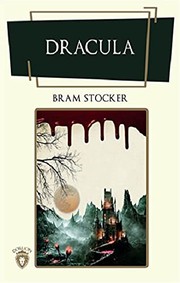
Dracula
Bram Stoker · 1897 · Book
Shares analog-era texture.
89% shared signal
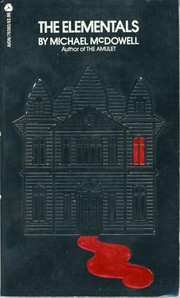
The Elementals
Michael McDowell · 1981 · Book
Shares a supernatural threat.
88% shared signal
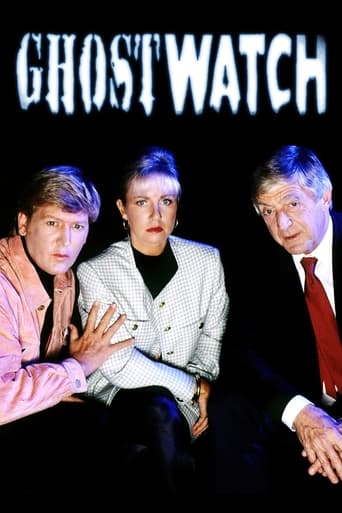
Ghostwatch
BBC · 1992 · Television
Shares restraint over gore.
85% shared signal
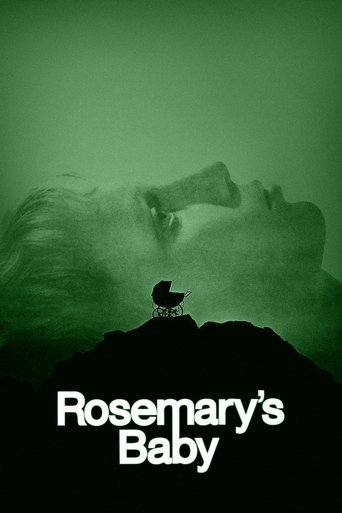
Rosemary's Baby
Roman Polanski · 1968 · Film
Shares a bleak, unforgiving tone.
84% shared signal
Ring
Koji Suzuki · 1991 · Book
Shares slow-burn dread.
84% shared signal
Ringu
Hideo Nakata · 1998 · Film
Shares a supernatural threat.
83% shared signal

The Haunting of Hill House
Shirley Jackson · 1959 · Book
Shares analog-era texture.
81% shared signal
Ghost Story
Peter Straub · 1979 · Book
Shares a bleak, unforgiving tone.
80% shared signal
Questions about The Fog (OST)
The things people actually ask about this record, answered.
How does The Fog (OST) end?
By receding rather than resolving. The record's structure is tidal — the descending main figure swells and withdraws throughout — and it closes by bringing the bell and the low tone back and letting them decay. In the film the fog returns in the last shot and the cue plays under it.
How is The Fog score different from Halloween?
Entirely in method. Halloween is a rhythmic mechanism — a 5/4 piano ostinato, a pulse, something walking towards you. The Fog has no pulse at all: sustained tone, slow descending lines, bells and sub-bass, scored to weather. Halloween has the better theme; The Fog is the better album.
What instruments are on The Fog soundtrack?
Analogue synthesisers played and programmed by Carpenter with Alan Howarth, plus bell and foghorn timbres over a constant low bed. No acoustic ensemble, and everything is heavily reverberant so that it sounds as though it is arriving across water.
Who is Alan Howarth?
The synthesiser player and sound designer who co-scored this and much of Carpenter's later work, including Escape from New York, Christine and the Halloween sequels. He was technically more fluent than Carpenter, and the richer production on The Fog is where that first shows.
Which version of The Fog soundtrack should I buy?
The original 1984 Varèse Sarabande album is the better-shaped listen; the expanded reissues are complete but much longer and differently ordered. No two releases agree, so pick by whether you want the score as music or as a document.
Is The Fog (OST) frightening?
Oppressive rather than startling. We score it 030 on pace and 020 on the threat axis — slow, almost bodiless, and entirely non-human. It works best quietly in the dark, which is the opposite of how the Halloween record wants to be played.
These are ranked against The Fog (OST), not against you.
Build your own tape →