
Record · 1978
Halloween (OST)
Piano in 5/4 and almost nothing else. Thirty seconds and you are tense.
Most extreme on ERA BIAS — analog-era texture at 008
On VHSCREAM’s six-axis scale, Halloween (OST) (1978) is most extreme on the era-bias axis: 8 out of 100, where 0 is analog-era texture and 100 is modern craft. 9% of the 105 horror works we have scored come in lower on that axis. How we score →
Halloween (OST) is John Carpenter's 1978 score for his own film, written and recorded in about three days on a tiny budget after a test screening with no music fell flat. We score it 060 on the threat axis — 78 works score lower — and 022 on reality anchor, which makes it one of the most grounded things we hold.
Scored and reviewed by VHSCREAM on · how we score
Halloween (OST): the review
Halloween (OST) is the most efficient piece of music in horror and almost everything people believe about it is slightly wrong.
The famous theme is a piano figure in 5/4 — not 4/4, which is why it feels like it is tripping over itself and why nobody can clap along to it. Carpenter has said the rhythmic idea came from his father, a music professor, drumming a 5/4 pattern for him on a bongo when he was a boy. The whole piece is one right hand repeating a two-chord ostinato in B minor against that limp in the metre. There is no melody in any meaningful sense. There is a pattern that will not resolve.
He recorded it with Dan Wyman at Sound Arts in Los Angeles in a few days, on a budget reported at around twenty-five thousand dollars, after an early screening without music convinced him the film was not frightening. That is the real story of this score: Halloween did not work, and then it did, and the only variable was the music.
"Laurie's Theme" is the better piece
The theme everybody knows is a mechanism. "Laurie's Theme" — the slower, sadder, bell-like figure attached to Jamie Lee Curtis's character — is the composition, and it is where the record's loneliness lives. It also does the thing good horror scoring is supposed to do and almost never does: it makes you fond of somebody.
The stalking cues are the innovation
"The Shape Stalks", "Myers' House", "The Haunted House": short, repetitive, built on a single synth pulse and a held low note, with no development and no resolution. They work because they do not go anywhere. Carpenter is a self-taught composer working with four hands and a small rack, and the limitation produced the sound — if he could have afforded an orchestra, this would be a worse film.
Where it is thin
It is a very small record. Several cues are the same two ideas at different tempos, there is no harmonic interest anywhere, and heard as an album rather than as a score it is repetitive by the twenty-minute mark. The reissue history is also crowded, with later editions, re-recordings by Carpenter with his son and Daniel Davies, and the 2018 sequel score all circulating under similar names.
For the Carpenter score that is better music and less famous, The Fog (OST); for the film, Halloween; for the synth lineage this founded, It Follows (OST) and Dangerous Days.
The ending of Halloween (OST) explained
Total spoilers from here. Everything above this line is spoiler-free.
The short answer: the score does not end, it stops — and that is the point of it. The Halloween main title's ostinato is built to be unresolvable: a two-chord figure in 5/4 that never arrives at a tonic and never completes a phrase, so the only way out of it is to cut the tape. In the film, that is exactly what happens: Michael's body is gone from the lawn, Loomis looks out of the window, and Carpenter plays the stalking pulse over a montage of empty rooms with his breathing on top of it, and the film ends in the middle of the cue. The album follows the same logic. The original 1978 release is a short sequence of cues that return to the main title and halt, and later expanded editions add alternates and unused material without changing the fact that there is no resolution written into any of it.
Why is the Halloween theme in 5/4?
Because Carpenter's father, a music professor, taught him the pattern on a bongo drum when he was a child, and he built the piece on it. The practical effect is that the figure has five beats where the ear expects four, so it limps — you cannot settle into it, you cannot anticipate the next downbeat, and it feels like something that is slightly faster than you are.
What did Carpenter record Halloween on?
Period synthesisers and a piano, with Dan Wyman engineering and programming at Sound Arts in Los Angeles. The main title's figure is piano; the pads, pulses and low end are analogue synthesisers of the era. He has given the budget for the recording as a very small fraction of the film's, and the whole score was written and tracked in roughly three days.
Did Halloween test badly without music?
Yes, and it is the reason the score exists in this form. Carpenter has described a screening of the unscored cut for a young studio executive who was not frightened by it. He wrote the music afterwards, specifically to make the film work, and the second screening did. It is the clearest case in the genre of a score rescuing a film.
What is "Laurie's Theme"?
The slower, more melodic cue attached to Laurie Strode — a gentle, bell-toned figure that is the only warm thing on the record. It is the better piece of writing on the album and it does the work the main title cannot: it gives the audience somebody to be worried about rather than something to be worried by.
Which Halloween soundtrack should I buy?
The 1978 original score, under Carpenter's name, is the one. Be careful: there are expanded editions with alternates, there is a 1998 re-recording, there is Alan Howarth's work on the sequels, and there are Carpenter's own 2018 and 2021 scores with Cody Carpenter and Daniel Davies, all with near-identical titles. The 2018 record is good and is a different thing.
Is the Halloween theme actually frightening?
It is now so familiar that most listeners cannot hear it cold, which is a real problem with assessing it. What still works is the metre: even people who have heard it a thousand times cannot tap along to it, and that is the mechanism doing its job. We score the record 022 on reality anchor — among the most grounded things we hold — because there is nothing supernatural or unmoored in its sound at all. It is a man walking.
How scary is Halloween (OST), actually?
Scored against the published rubric, here is what the numbers mean.
The threat at 060 leans human — 78 works score lower, which is the correct reading: there is nothing uncanny in this score's sound. It is a pulse, approaching, at a walking speed.
Reality anchor 022 is near the grounded floor — 9 works score lower. Everything in it keeps time, sits in a key, and behaves like music, which is unusual in this medium and in this index.
Era bias 008 is deep analog — only 9 works score lower. 1978 analogue synthesisers, a piano and tape.
Viscera 020 is very low — 16 works score lower. There is nothing bodily in it. The record's whole method is restraint and repetition.
Pace 048 is just under the midpoint. The theme sits at a deliberate walking tempo, which is the single most imitated decision in it.
Tone 032 is bleak — 83 works score lower. "Laurie's Theme" is the only consolation on the record and it is a lonely piece of music.
On shocks: a handful, and all of them are stings in the stalking cues rather than anything in the main title.
Halloween (OST) on six axes of fear
Every work in the index is scored on six continuous axes of fear. This is what Halloween (OST) looks like as a vector.
Disagree with a number? Say so on the axis itself. Nobody has confirmed this vector yet, and a score you challenge goes to the top of the queue to be re-scored by a human. Votes do not move the numbers — they decide what gets looked at first. How the scoring works →
Scored against the published rubric. This vector is a draft awaiting review — the method is public so you can argue with it.
Who should skip Halloween (OST)
Skip it if familiarity has killed it for you. This is the most-heard piece of horror music in existence and a great many listeners can no longer hear it at all.
Skip it if repetition is the problem. As an album it is short and it is very repetitive, with several cues being the same two ideas at different speeds.
Skip it if you want the 2018 version. Carpenter's recent scores with Cody Carpenter and Daniel Davies are fuller, louder and more produced, and they are a separate listen.
Content notes: instrumental, with no lyrics or depicted content. The record is attached to a film containing multiple murders.
Listen to it if you want the most efficient horror score ever written, you are curious how 5/4 does the work, and you want to hear the record that proved a film can be rescued entirely by its music.
If Halloween (OST) is your kind of fear
The eight works closest to Halloween (OST) in the index, ranked by distance across all six axes — not by genre label, and not by what other people watched.
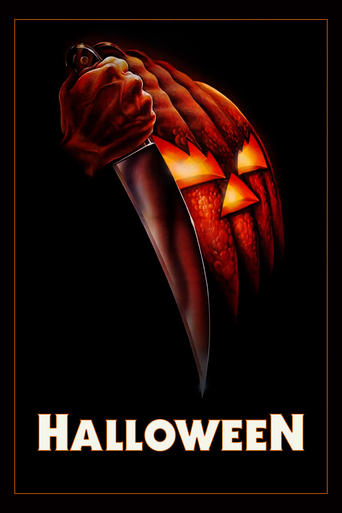
Halloween
John Carpenter · 1978 · Film
Shares analog-era texture.
97% shared signal
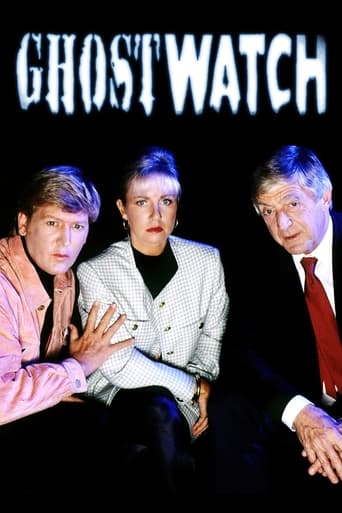
Ghostwatch
BBC · 1992 · Television
Shares restraint over gore.
84% shared signal
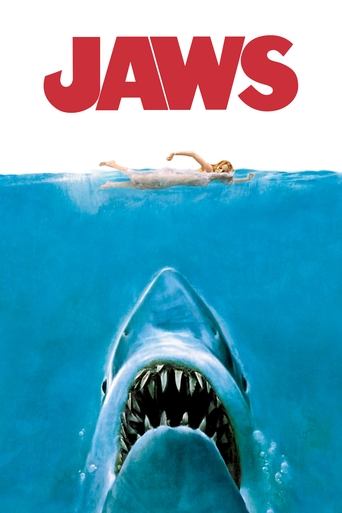
Jaws
Steven Spielberg · 1975 · Film
Shares grounded realism.
81% shared signal
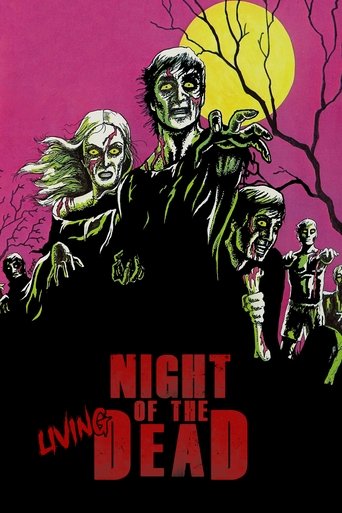
Night of the Living Dead
George A. Romero · 1968 · Film
Shares a bleak, unforgiving tone.
79% shared signal
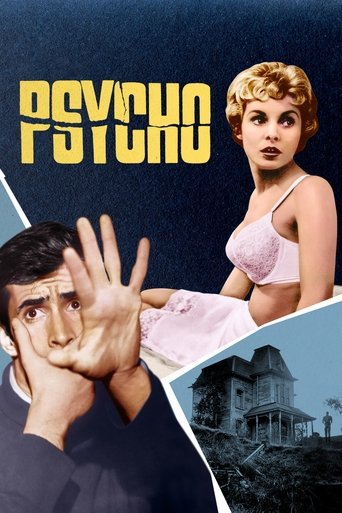
Psycho
Alfred Hitchcock · 1960 · Film
Shares analog-era texture.
79% shared signal
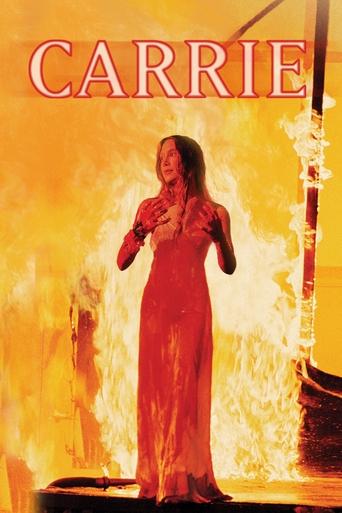
Carrie
Brian De Palma · 1976 · Film
Shares a bleak, unforgiving tone.
76% shared signal
Dracula
Bram Stoker · 1897 · Book
Shares restraint over gore.
75% shared signal
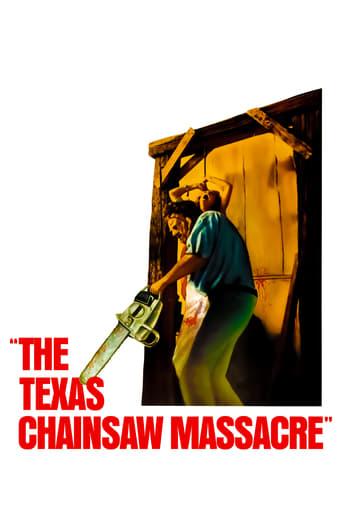
The Texas Chain Saw Massacre
Tobe Hooper · 1974 · Film
Shares grounded realism.
75% shared signal
Halloween (OST) in another form
The index links works across media, so an adaptation sits beside its source and a score beside the film it haunts.
Questions about Halloween (OST)
The things people actually ask about this record, answered.
How does the Halloween score end?
It does not resolve — it stops. The main title is a two-chord ostinato in 5/4 that never reaches a tonic or completes a phrase, so the only available ending is a cut. The film does exactly that, ending mid-cue over empty rooms and Michael's breathing.
Why is the Halloween theme in 5/4?
Because Carpenter's father, a music professor, taught him the pattern on a bongo as a child. Five beats where the ear expects four is why the figure limps, why you cannot clap along to it, and why it feels faster than you are.
What synthesisers did Carpenter use on Halloween?
Period analogue synthesisers plus piano, engineered and programmed by Dan Wyman at Sound Arts in Los Angeles. The main figure is piano; the pads and pulses are the synths. The whole score was written and recorded in about three days.
Did Halloween really test badly without music?
Yes. Carpenter has described screening the unscored cut to a young executive who was not frightened by it, and writing the score specifically to fix that. The second screening worked, which makes this the clearest case of a score saving a film.
What is Laurie's Theme in Halloween?
The slower, bell-toned cue attached to Laurie Strode, and the best piece of writing on the record. It is the only warmth on the album and it does what the main title cannot — it gives you somebody to worry about rather than something to fear.
Which Halloween soundtrack album should I get?
The 1978 original under John Carpenter's name. There are expanded editions, a 1998 re-recording, Alan Howarth's sequel work and Carpenter's own 2018 and 2021 scores, all with similar titles. The 2018 record is good and is a different listen.
These are ranked against Halloween (OST), not against you.
Build your own tape →