
Record · 1975
Jaws (OST)
John Williams
Two notes a semitone apart, accelerating. The only score here doing a special effect.
49Strong to sit through, out of 100 — mostly how bleak it is
- PaceJolts you often74
- ThreatMostly supernatural32
- GoreHolds back28
- ToneGrim, with air48
- RealityCould happen14
Era bias 10 · Analog to the bone. Texture rather than fear, so it is not part of the grade. All six scores →
On VHSCREAM’s six-axis scale, Jaws (OST) (1975) is most extreme on the reality-anchor axis: 14 out of 100, where 0 is grounded realism and 100 is dream logic. 3% of the 320 horror works we have scored come in lower on that axis. How we score →
Jaws is John Williams's 1975 score for Steven Spielberg, built on two alternating notes a semitone apart, low in the orchestra, accelerating. It won the Academy Award and it is the only piece of music in this index that functions as a special effect. We score it 074 on pace, the fastest thing on our record shelf, and 048 on tone.
Scored and reviewed by VHSCREAM on · how we score
How scary is Jaws (OST), actually?
Scored against the published rubric, here is what the numbers mean for a listener.
Pace 074 is the signature and the highest on our record shelf. 295 works are slower. The ostinato is an accelerating pulse and the adventure cues are brisk; nothing on this record accumulates, everything arrives.
Tone 048 sits almost exactly on the midpoint, and that is the honest reading. 267 works score lower. Half of this album is menace and half is the open sea in sunshine, and it ends in a major key.
Threat 032 leans supernatural, which is a limitation of our axis rather than a claim about sharks. 183 works score higher. The threat is an animal: not a person, not a ghost. Our scale runs from supernatural to human and an animal belongs at neither end, so it lands below the midpoint by default.
Era bias 010 is deep in the analog end. 279 works score higher. A 1975 orchestral recording, on tape, with no electronics anywhere in it.
Viscera 028 is restrained. 258 works score higher. The score never illustrates an injury; it illustrates an approach, which is why it keeps working after the attacks stop being surprising.
Reality anchor 014 is near the grounded floor. Only 11 works score lower. There is nothing uncanny in the writing at all. It is a sea, a boat and an animal.
On jump scares: one false one, deliberately — the severed head is scored as silence, not as a sting.
Who should skip Jaws (OST)
Skip it if you want unrelieved dread. This is the least frightening record in this index and about half of it is adventure music.
Skip it if parody has ruined it. Fifty years of jokes have worn the ostinato thin, and some listeners can no longer hear it as anything but a punchline.
Skip it if you need a record to hold one mood. It alternates between menace and brass-band open water every few minutes.
Content notes: none in the recording itself. The score accompanies attacks on swimmers, including a child.
Listen to it if you want to hear the only piece of music in this index that was doing a mechanical effect's job, you like Golden-Age nautical writing, and two notes being more frightening than an orchestra sounds like an idea worth forty minutes.
Jaws (OST) on six axes of fear
Every work in the index is scored on six continuous axes of fear. This is what Jaws (OST) looks like as a vector — and what each ten-point band looks like across everything else we hold.
Draft score — awaiting human review. About these scores
Disagree with a number? Say so on the axis itself. Nobody has confirmed this vector yet, and a score you challenge goes to the top of the queue to be re-scored by a human. Votes do not move the numbers — they decide what gets looked at first. How the scoring works →
Scored against the published rubric. This vector is a draft awaiting review — the method is public so you can argue with it.
Jaws (OST): the review
Two notes, and the reason they work
The figure is an alternation of two adjacent pitches in the bass register — tubas, double basses, cellos — repeated, with the gap between repetitions closing. It is not a theme in any conventional sense and Spielberg reportedly laughed when Williams first played it on a piano, assuming a joke.
The reason it works is mechanical rather than melodic. A semitone is the smallest interval the ear accepts as two separate notes, so the figure has nowhere to go: it cannot resolve, because resolution requires distance. And the acceleration does the rest, because a pulse that speeds up is the sound of something closing, and every listener's body already knows that. Williams built an approach siren out of the least musical interval available.
What the score then does with it is the part people forget. The figure is withheld. It is absent during several attacks and present when nothing is there, and by the last third of the film the audience has been trained to hear the shark in the orchestra rather than see it in the water, which is just as well, because the shark did not work.
The other half of the album
Jaws is not a horror score throughout and the record makes that plain. "Out to Sea", "The Shark Cage Fugue" and "Promenade" are adventure music — nautical, brassy, closer to Korngold than to anything else in this index — and they are why we score the tone at 048, essentially on the midpoint. The film is a monster picture for an hour and a boys' adventure for the last forty minutes, and the score goes with it.
That makes this the strangest entry on our record shelf. It is in the index because of a horror device, and it is one of the few things here you could play at a party.
Where it strains
The ostinato is so effective that it has been used as shorthand ever since, and five decades of parody have worn it. Several album cues are functional. And the adventure material, good as it is, means the record has no sustained mood: it swings between menace and swashbuckling every few minutes, which is correct for the film and awkward as a listen.
What it did
Spielberg has said more than once that the score is responsible for half the film's effect, and he is not being modest on somebody else's behalf — the mechanical shark was unreliable, the film was reshaped around its absence, and what replaced it was two notes. No other score in this index is doing a special effect's job.
The ending of Jaws (OST) explained
The ending, in full. Open it when you have seen it.
How it resolves: with the shark destroyed, Williams gives the final cue a genuine major-key release — a broad, warm, almost pastoral close over two men paddling back to shore. It is the only unambiguously happy ending on our record shelf, and it is earned by the preceding two hours of a pulse that would not stop.
What are the two notes in Jaws?
Two adjacent pitches a semitone apart, low in the orchestra, alternating and accelerating. The semitone is the narrowest interval the ear hears as two notes, so the figure cannot resolve, and the acceleration supplies the sense of approach.
Did Spielberg really laugh at it?
By both their accounts he thought Williams was joking when it was first played on a piano. Williams's position was that the simplicity was the point and that it needed the orchestra and the acceleration to read as menace rather than as a gag.
Is the shark theme in every attack?
No, and the withholding is the score's cleverest feature. The figure is absent from several attacks and present when nothing is in the water. By the final act the audience has learned to locate the shark by ear, which is what allowed the film to work around a mechanical shark that frequently did not.
Did it win awards?
The Academy Award for Best Original Dramatic Score, and a Grammy for the album. It also established the Spielberg–Williams partnership that has run for five decades.
Is the whole album horror music?
No, and this is the main thing to know before listening. Roughly half the record is nautical adventure writing — fugues, brass, open-sea material — and the menace is concentrated in a handful of cues. We score the tone 048 for exactly that reason.
If Jaws (OST) is your kind of fear
The eight works closest to Jaws (OST) in the index on the five axes that describe fear, the same medium first — not by genre label, and not by what other people watched.
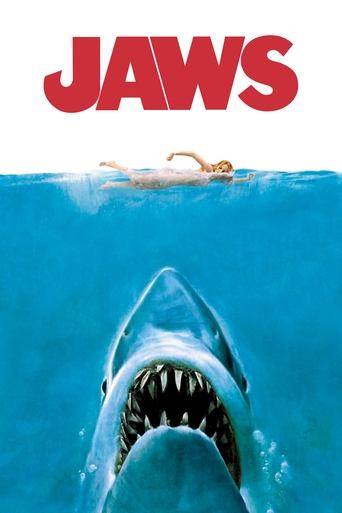
Jaws
Steven Spielberg · 1975 · Film
Shares grounded realism.
89% shared signal
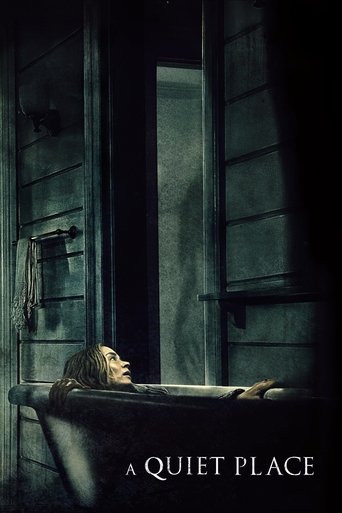
A Quiet Place
John Krasinski · 2018 · Film
Shares restraint over gore.
81% shared signal
Paranormal Activity: The Marked Ones
Christopher Landon · 2014 · Film
Shares a threat that is not human.
76% shared signal
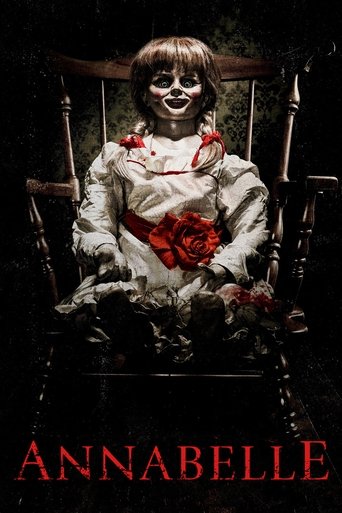
Annabelle
John R. Leonetti · 2014 · Film
Shares relentless shock.
76% shared signal
Aliens
James Cameron · 1986 · Film
Shares relentless shock.
76% shared signal
M3gan
Gerard Johnstone · 2023 · Film
75% shared signal
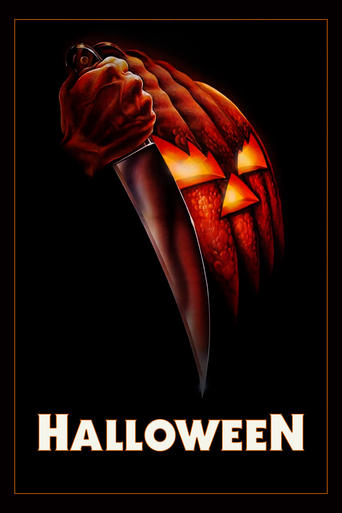
Halloween
John Carpenter · 1978 · Film
Shares grounded realism.
75% shared signal
Friday the 13th Part VIII: Jason Takes Manhattan
Rob Hedden · 1989 · Film
Shares a threat that is not human.
75% shared signal
Jaws (OST) in another form
The index links works across media, so an adaptation sits beside its source and a score beside the film it haunts.
More lists like these: Movies like Jaws · Movies like A Quiet Place · Movies like Halloween
Questions about Jaws (OST)
The things people actually ask about this record, answered — including how it ends.
What are the two notes in the Jaws theme?
Two adjacent pitches a semitone apart, played low by tubas, basses and cellos, alternating and accelerating. The semitone is the smallest gap the ear hears as two separate notes, so the figure cannot resolve, and the acceleration supplies the approach.
Did Steven Spielberg laugh at the Jaws theme?
By both accounts, yes — he assumed Williams was joking when it was first played on a piano. Williams's argument was that it needed the low orchestra and the acceleration to read as menace rather than as a gag, and he was right.
Is the shark theme used in every attack?
No. It is withheld from several attacks and used when nothing is in the water, which trains the audience to locate the shark by ear. That is what let the film work around a mechanical shark that frequently failed.
Is the Jaws score actually scary?
Only in parts. We score it 048 on tone, almost exactly the midpoint, because roughly half the album is nautical adventure music and it ends in a major key. We score it 074 on pace, which is the fastest thing on our record shelf.
Why is the threat score only 032 if the shark is the threat?
Because our threat axis runs from supernatural at 0 to human at 100, and an animal belongs at neither end. A shark is not a ghost and not a murderer, so it falls below the midpoint by default. The number is a limitation of the scale rather than a verdict on the film.
What should I listen to after it?
Halloween for the other score built from a single repeated figure, The Thing for a pulse used for dread instead of approach, and horror movie soundtracks for every score here with its numbers.
These are ranked against Jaws (OST), not against you.
Build your own tape →