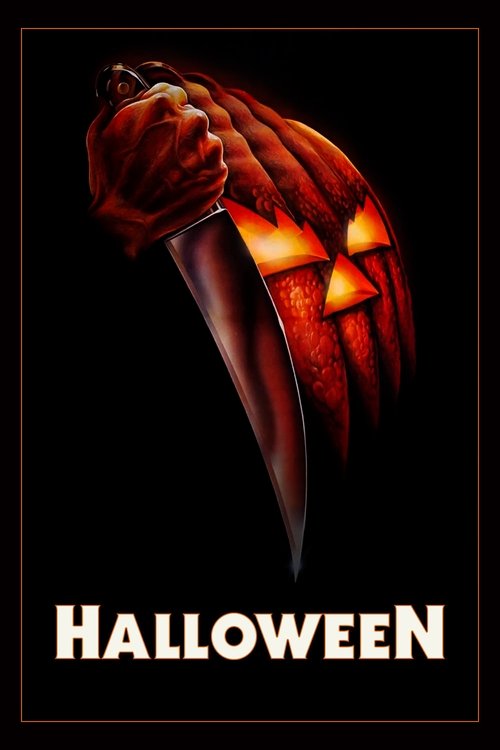
Film · 1978
Halloween
The blueprint. Widescreen suburbia, a white mask, and enormous patience.
Most extreme on ERA BIAS — analog-era texture at 008
On VHSCREAM’s six-axis scale, Halloween (1978) is most extreme on the era-bias axis: 8 out of 100, where 0 is analog-era texture and 100 is modern craft. 9% of the 105 horror works we have scored come in lower on that axis. How we score →
Halloween is a 1978 slasher directed by John Carpenter and co-written with Debra Hill. A man who killed his sister as a child escapes an institution and returns to his home town on Halloween night. We score it 008 on era bias — joint-tenth of 105 works — and 022 on viscera, which makes it one of the least explicit films we hold.
Scored and reviewed by VHSCREAM on · how we score
Halloween: the review
Halloween is the most efficient horror film ever made and almost all of its effects are free.
Carpenter had three hundred thousand dollars and no stars, so he built the film out of things that cost nothing: a Panaglide camera that drifts, anamorphic widescreen with far too much empty space in it, a mask bought for a dollar and ninety-eight cents, and a score he wrote himself in three days because the first cut tested badly without one. The famous piano figure is in 5/4, which is why it never settles.
What the money bought is patience. Michael stands in frames for long stretches doing nothing — behind a hedge, at the end of a street, in a doorway Laurie has already looked at. The film trains the audience to search the background, and then puts him there, in focus, in the middle distance, with no sting on the soundtrack. Nothing in the subsequent forty years of slashers understood that the waiting was the mechanism.
The mask is the whole character
Carpenter's crew modified a Captain Kirk mask — widened the eyes, sprayed it white, teased the hair — and the result works because it is almost expressionless rather than frightening. It reads as a blank, and a blank is where an audience puts its own content. Michael has no dialogue, no motive the film endorses, and his face is seen for two seconds. Dr Loomis insists he is pure evil; the film declines to confirm or deny it.
Jamie Lee Curtis and the other thing people get wrong
Laurie Strode is not a passive victim. She fights, improvises, uses a knitting needle and a coat hanger, and gets her two charges out of the house. The genre's later habit of punishing its women is not in this film. What is in it, and has aged badly, is Loomis's psychiatry — the same problem Psycho has, played straighter.
Where it shows its budget
The Illinois autumn is visibly California. Some of the suburban extras are stiff. And the first act is slow in a way that modern audiences read as nothing happening, which is precisely the thing doing the work.
For the same patience without the franchise, It Follows is the direct inheritance; for the same shape with the opposite attitude, Scream is the film that took it apart.
The ending of Halloween explained
Total spoilers from here. Everything above this line is spoiler-free.
The short answer: Michael is not killed. Laurie stabs him with a knitting needle, a coat hanger and a kitchen knife, and Loomis shoots him six times off a balcony. When Loomis looks down, the body is gone. The film closes on empty rooms — the Doyle house, the Wallace house, the street — over Michael's breathing, which is the only thing left on the soundtrack.
Why does Michael survive being shot six times?
The film offers no explanation and that is the choice. Loomis has spent the film insisting that Michael is not a man but something else, and the ending is the only evidence he ever gets. Carpenter has described it as leaving the question open rather than establishing a rule — the sequels invented the Thorn curse and the family mythology, none of which is in this film.
What do the final shots mean?
The closing montage shows the rooms Michael has been in, all empty, with his breathing over them. It relocates the threat from a person to a place: he is not in a specific room, he is in all of them, in the ordinary suburb the film has spent ninety minutes making unsafe. It is the most imitated ending in the genre and almost nobody matches its restraint.
Who is Michael Myers to Laurie?
In this film, nobody. They are not related. Laurie is simply the girl who dropped a key at his house that morning, and the film's logic is that his attention is arbitrary — which is far worse than a reason. The sibling relationship is invented by Halloween II in 1981 and has been retconned in and out ever since.
Why does Michael kill his sister at the start?
The film never says. The prologue is a single long Panaglide shot from his point of view: a six-year-old picks up a knife and kills his teenage sister, then stands in the drive while his parents remove the mask. No motive, no provocation, no trauma offered. Loomis's "pure evil" is a man failing to explain it, not the film explaining it.
How scary is Halloween, actually?
Scored against the published rubric, here is what the numbers mean.
Era bias 008 is deep analog — only 9 works score lower. Anamorphic 1978 Panavision, a synthesiser score recorded in days, and an autumn palette that is entirely practical.
Viscera 022 is very low — 21 works score lower. There is almost no blood in Halloween. Five deaths, most of them off-frame or bloodless, and the film that founded the slasher is one of the least explicit in the index.
Pace 052 sits just on the shock side, with 71 works slower — which misrepresents the structure. The first hour is almost entirely dread; the last thirty minutes are the chase.
The threat at 062 leans human. 83 works score lower. Michael is a man in a mask until the final minute, at which point the film quietly stops insisting on it.
Tone 030 is less bleak than the genre it created — 77 works score lower. Laurie lives, the children live, and the film is not interested in punishing anybody.
Reality anchor 020 is grounded — only 6 works score lower. One suburb, one night, one man walking.
On jump scares: three, and all of them earned — the closet, the shape sitting up, the hand.
Halloween on six axes of fear
Every work in the index is scored on six continuous axes of fear. This is what Halloween looks like as a vector.
Where that puts it: #8 analog era · #8 grounded · #10 without gore · #15 human monsters
Disagree with a number? Say so on the axis itself. Nobody has confirmed this vector yet, and a score you challenge goes to the top of the queue to be re-scored by a human. Votes do not move the numbers — they decide what gets looked at first. How the scoring works →
Scored against the published rubric. This vector is a draft awaiting review — the method is public so you can argue with it.
Who should skip Halloween
Skip it if a slow first hour will lose you. The film's method is making you watch empty frames until one of them is not empty, and viewers who need incident find the first half inert.
Skip it if you came for the body count. At 022 on viscera this is a nearly bloodless film, and almost everything the franchise is known for arrived later.
Skip it if the psychiatry will irritate you. Loomis explains Michael repeatedly and none of it holds up.
Content notes: the murder of a teenager by a child, four further murders, a child in prolonged danger, strangulation, and a corpse arranged as a display.
Watch it if you want the film every slasher is a copy of, you appreciate widescreen used as a hiding place, and you want to understand why a mask with no expression is more frightening than one with teeth.
Where to find it
Streaming on fuboTV · Philo · AMC Plus +5 ↗Physical copies on eBay ↗Availability from JustWatch via TMDB. We earn nothing from these links.
Nothing loads from YouTube until you press play.
If Halloween is your kind of fear
The eight works closest to Halloween in the index, ranked by distance across all six axes — not by genre label, and not by what other people watched.

Halloween (OST)
John Carpenter · 1978 · Record
Shares analog-era texture.
97% shared signal
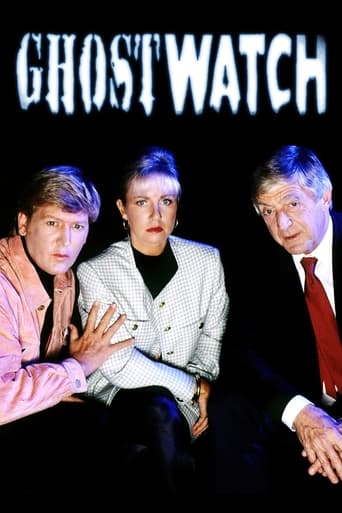
Ghostwatch
BBC · 1992 · Television
Shares restraint over gore.
81% shared signal
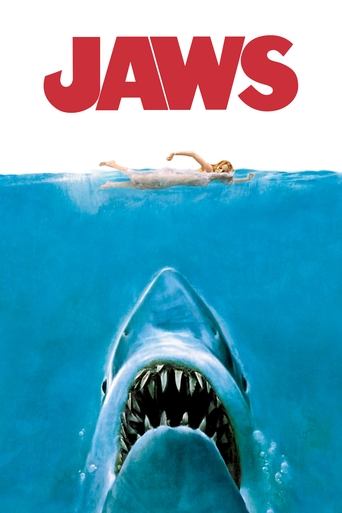
Jaws
Steven Spielberg · 1975 · Film
Shares grounded realism.
81% shared signal
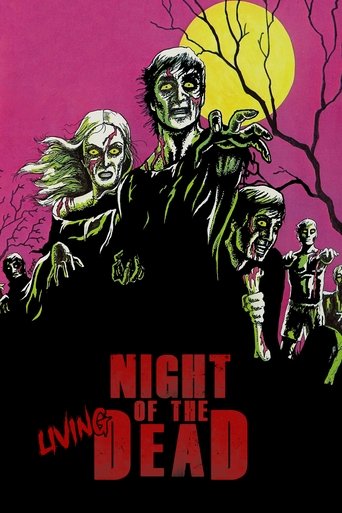
Night of the Living Dead
George A. Romero · 1968 · Film
Shares a bleak, unforgiving tone.
81% shared signal
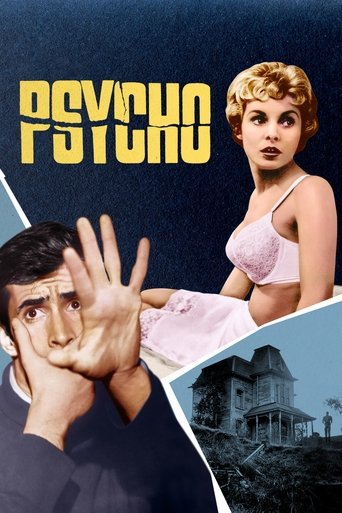
Psycho
Alfred Hitchcock · 1960 · Film
Shares analog-era texture.
79% shared signal
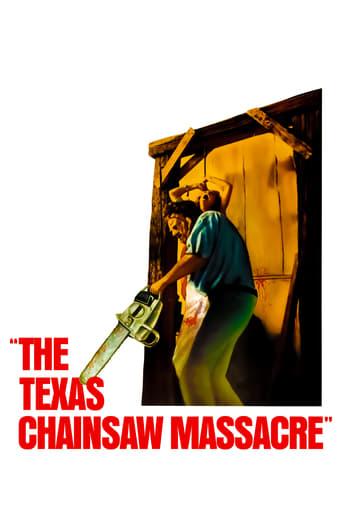
The Texas Chain Saw Massacre
Tobe Hooper · 1974 · Film
Shares grounded realism.
77% shared signal
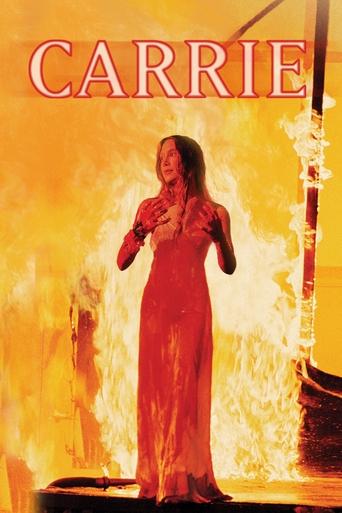
Carrie
Brian De Palma · 1976 · Film
Shares a bleak, unforgiving tone.
76% shared signal

Frankenstein
Mary Shelley · 1818 · Book
Shares restraint over gore.
73% shared signal
Halloween in another form
The index links works across media, so an adaptation sits beside its source and a score beside the film it haunts.
See the full list of movies like Halloween →
Questions about Halloween
The things people actually ask about this film, answered.
What happens at the end of Halloween?
Laurie stabs Michael three times and Loomis shoots him six times off a balcony, but when Loomis looks down the body has gone. The film ends on a montage of empty rooms and the street, over the sound of Michael breathing — the threat relocated from a person to a place.
Why doesn't Michael die at the end of Halloween?
The film gives no reason, deliberately. Loomis has argued all film that Michael is not a man, and the disappearance is the only evidence he gets. Carpenter left it as an open question rather than a rule; the curses and mythology all arrive in later sequels.
Is Laurie Strode Michael's sister in Halloween?
Not in the 1978 film. They are unrelated, and Michael's attention is arbitrary — she is the girl who dropped a key at his house that morning. The sibling connection was invented for Halloween II in 1981 and has been added and removed by later films since.
How gory is Halloween?
Barely at all. We score it 022 on viscera, lower than most of our index. There are five deaths, most of them off-frame or bloodless, which makes the film that founded the slasher one of the least explicit things we hold.
What mask does Michael Myers wear?
A Captain Kirk mask bought for under two dollars, modified by widening the eye holes, spraying it white and teasing the hair. It works because it is close to expressionless rather than frightening — a blank that the audience fills in.
Why does Michael Myers kill his sister?
The film never explains it. The prologue is one long point-of-view shot in which a six-year-old takes a knife and kills his teenage sister, with no motive offered. Loomis's talk of pure evil is a man failing to account for it rather than the film accounting for it.
These are ranked against Halloween, not against you.
Build your own tape →