Film · 1998
Halloween H20: 20 Years Later
Twenty years hiding under a new name, and Laurie Strode is finished with running.
58Strong to sit through, out of 100 — mostly how bleak it is
- PaceBuilds, then strikes60
- ThreatMostly people74
- GoreShows some of it46
- ToneGrim, with air36
- RealityGrounded18
Era bias 46 · Neither era. Texture rather than fear, so it is not part of the grade. All six scores →
The most grounded horror movies ever made →
Part of a series: Halloween movies in order →
On VHSCREAM’s six-axis scale, Halloween H20: 20 Years Later (1998) is most extreme on the reality-anchor axis: 18 out of 100, where 0 is grounded realism and 100 is dream logic. 7% of the 320 horror works we have scored come in lower on that axis. How we score →
Halloween H20: 20 Years Later is a 1998 American slasher film directed by Steve Miner. Laurie Strode, living under a false name as headmistress of a California boarding school, is found by her brother Michael on the twentieth anniversary of his first rampage. We score it 018 on reality anchor and 074 on threat.
Scored and reviewed by VHSCREAM on · how we score
How scary is Halloween H20: 20 Years Later, actually?
Scored against the published rubric, here is what the numbers mean.
The threat at 074 is on the human side — 237 works score lower. No curse, no cult, no telepathy: a brother with a knife who will not stay down, and a sister who decides to stop him.
Viscera 046 sits below the middle — 118 works score lower. A slit throat, a body falling through a table, a decapitation at the end; the film moves quickly past its kills rather than dwelling.
Tone 036 leans bleak — 232 works score lower. Twenty years of trauma and a dead partner, but a catharsis at the end that the series had never allowed before.
Pace 060 is on the shock side, with 193 works slower. A tight, fast slasher with a long showdown in its last third.
Era bias 046 sits in the middle — 125 works score lower. Shot on film in 1998, but with glossy late-nineties lighting, a teen cast and a Scream-era sound.
Reality anchor 018 is grounded — 22 works score lower. Michael's survival of the 1978 night is the one stretch; everything else could happen.
On jump scares: several, many of them nineties stingers backed by borrowed Scream music.
Who should skip Halloween H20: 20 Years Later
Skip it if you need the series to stay continuous. It discards three films to make its story work.
Skip it if glossy late-nineties teen horror grates on you. The cast, the music and the look are very much of 1998.
Skip it if you want the ending to hold. The next film undoes it in its first scene.
Content notes: a throat slashed, teenagers stabbed, alcoholism, recurring nightmares and parental trauma, an accidental shooting, and a decapitation.
Watch it if you want Jamie Lee Curtis back as Laurie Strode, you like the final girl turning hunter, and you want a sequel that goes straight back to the 1978 night and its survivor.
Halloween H20: 20 Years Later on six axes of fear
Every work in the index is scored on six continuous axes of fear. This is what Halloween H20: 20 Years Later looks like as a vector — and what each ten-point band looks like across everything else we hold.
Draft score — awaiting human review. About these scores
Disagree with a number? Say so on the axis itself. Nobody has confirmed this vector yet, and a score you challenge goes to the top of the queue to be re-scored by a human. Votes do not move the numbers — they decide what gets looked at first. How the scoring works →
Scored against the published rubric. This vector is a draft awaiting review — the method is public so you can argue with it.
Halloween H20: 20 Years Later: the review
Halloween H20 is the sequel that finally makes Laurie Strode its subject again, and that one decision is worth more than the three films it throws away.
It throws them away cleanly. H20 is a sequel to Halloween and Halloween II and ignores the rest: no Jamie Lloyd, no Thorn, no Man in Black. Laurie, it turns out, faked her own death and has spent twenty years hiding in Summer Glen, California, as "Keri Tate", the headmistress of Hillcrest Academy. She has a teenage son, John, now the age she was in 1978, a relationship with the school's guidance counsellor, a drinking problem and nightmares that have never stopped. Kevin Williamson, fresh from Scream, supplied the story and uncredited rewrites, and you can feel his hand in the cold open: a woman coming home to a broken-into house, a teenager next door, and a killer close by.
Jamie Lee Curtis is the reason
Curtis wanted the film made and wanted the original crew back; Carpenter was considered and asked for a fee and a three-picture deal that Dimension refused, and Steve Miner was hired instead. What Miner gets right is to put Curtis at the centre and let her play a woman damaged in ways a slasher survivor usually is not allowed to be. Laurie is overprotective to the point of smothering, drinks, and has never stopped having nightmares about her brother. The film also carries a ghost. Donald Pleasence had died before the film was made, and his absence is acknowledged twice: a sound-alike, Tom Kane, voices the speech Loomis gave Sheriff Brackett inside the Myers house in the original, because Pleasence's recording could not be separated from the old soundtrack, and the closing credits carry an in-memoriam tribute, with his name misspelled. Curtis has since said she regrets not insisting that Debra Hill produce the film, and it is easy to see why she cared. After three sequels that treated Laurie as a dead name in a file, this is a film that hangs everything on her performance rather than on Michael's, and twenty years later the 2018 trilogy would make exactly the same bet.
When she tells Will the truth about who she is, the series finally treats the trauma of surviving one of these films as a subject in its own right.
The supporting cast is a who's-who of late-nineties youth: Josh Hartnett in his film debut as John, Michelle Williams as his girlfriend Molly, Joseph Gordon-Levitt as the neighbour's son who does not make it past the opening, and LL Cool J as the school's security guard. Janet Leigh, the star of Psycho, plays Laurie's secretary Norma, and the film gives her a little tribute: a cue from Bernard Herrmann's score as she walks to a car of the same model her character drove in Hitchcock's film.
Short, and a showdown
The film runs fast. Michael kills Marion Chambers and two teenagers in Illinois, Laurie's file goes missing, and he drives west. Most of the school leaves for a trip to Yosemite, the phones go down, and four teenagers who skipped the trip are left on a near-empty campus with a killer and a headmistress who knows exactly what he is. One small scene on the way says more about this Michael than any of the Thorn films managed. He gets a flat tyre, pulls into a highway rest area, and takes the car of a woman and her young daughter — and leaves them unharmed, stranded by the road. He is not killing for the sake of it. He is going somewhere, and everything in the way is either useful or irrelevant, which is far closer to the Shape of 1978 than the cult-controlled figure of 1995.
The arrival at Hillcrest is handled with patience. The security guard, Ronny, walks out to look at a strange truck at the gate and in doing so lets Michael onto the grounds, and the film lets the empty campus — corridors, a dining hall, a lit party room — fill up slowly with threat. Once Laurie sees him, the film changes shape. She gets her son out, and then she goes back in with an axe.
That turn — the final girl choosing to hunt the killer instead of running — is the best idea in the film, and the 2018 trilogy later built its whole premise on it. The cafeteria fight, the balcony fall and the coroner's van are a payoff twenty years in the making, and Curtis plays them as relief rather than triumph.
Where it falls down
It is too slick for its own good. The score is a patchwork: John Ottman's original was supplemented with cues lifted from Marco Beltrami's Scream scores after Bob Weinstein demanded changes, and a Creed song plays over a party and the end credits. The middle stretch is generic stalk-and-slash. The teenagers are pleasant and thin. And the ending's finality was compromised before the film was released: a contractual clause meant Michael could not be killed off, and the paramedic twist that the next film used was already in the plan.
It was still, until 2018, the highest-grossing film in the franchise — $75 million worldwide — and the consensus that it was the best of the sequels while falling well short of the original is about right.
The Halloween movies in order guide explains how H20 starts a timeline of its own. For the Williamson slasher it borrows its tone from, Scream; for the night Laurie has been running from, Halloween (1978).
The ending of Halloween H20: 20 Years Later explained
The ending, in full. Open it when you have seen it.
The short answer: Laurie stabs Michael several times and pushes him off a balcony through a cafeteria table, and Ronny, the security guard, stops her finishing the job. Police arrive and load Michael's body into a coroner's van, but Laurie is sure he is not dead. She takes an axe and hijacks the van. When Michael breaks out of the body bag, she brakes hard, throwing him through the windshield and down an embankment, then rams the van into him and pins him against a fallen tree. She stares at him for a moment as he reaches towards her, then cuts off his head with the axe. As sirens approach, Laurie breathes out in relief.
Does Laurie kill Michael at the end of Halloween H20: 20 Years Later?
In this film, yes: she decapitates the man in the mask with an axe after pinning him with the van. The sequel, Halloween: Resurrection, reveals that the man was a paramedic Michael had rendered mute and swapped clothes with, so Laurie killed the wrong person. Kevin Williamson devised that explanation during production, and its first shot was filmed the day after H20 wrapped.
Does Halloween H20: 20 Years Later ignore the other sequels?
It ignores Halloween 4, 5 and The Curse of Michael Myers. It is a sequel to the 1978 film and Halloween II, keeping the hospital explosion and the sister relationship, and it explains Laurie's absence by having her fake her death and change her name. Williamson's original outline kept the earlier sequels and mentioned Jamie, but that was dropped.
Who dies in Halloween H20: 20 Years Later?
Marion Chambers, Loomis's former colleague, and her teenage neighbour Jimmy and his friend Tony, in the opening. At Hillcrest, Michael kills Charlie and his girlfriend Sarah, and then Will Brennan, Laurie's partner, in front of her. Ronny is shot by mistake by Will but survives. Laurie, John and Molly live.
Why does Laurie go back for Michael in Halloween H20: 20 Years Later?
Because she realises he will never stop. Laurie, John and Molly reach her truck, and instead of driving away she turns back with an axe to face him. The film presents it as the end of twenty years of hiding, and it is the moment the character changes from victim to hunter.
If Halloween H20: 20 Years Later is your kind of fear
The eight works closest to Halloween H20: 20 Years Later in the index on the five axes that describe fear, the same medium first — not by genre label, and not by what other people watched.
Halloween: Resurrection
Rick Rosenthal · 2002 · Film
Shares grounded realism.
90% shared signal
Halloween
David Gordon Green · 2018 · Film
Shares human monsters.
88% shared signal
The Black Phone
Scott Derrickson · 2021 · Film
Shares human monsters.
88% shared signal
Halloween II
Rick Rosenthal · 1981 · Film
Shares grounded realism.
87% shared signal
Friday the 13th Part 2
Steve Miner · 1981 · Film
87% shared signal
Friday the 13th Part III
Steve Miner · 1982 · Film
86% shared signal
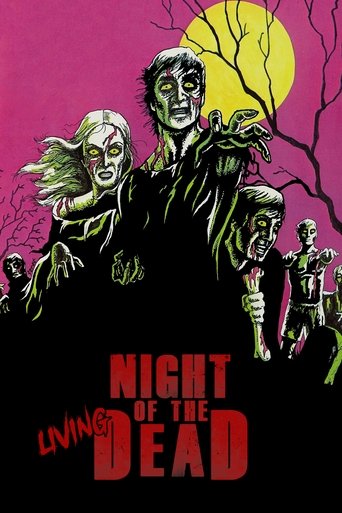
Night of the Living Dead
George A. Romero · 1968 · Film
86% shared signal
Halloween 4: The Return of Michael Myers
Dwight H. Little · 1988 · Film
85% shared signal
Questions about Halloween H20: 20 Years Later
The things people actually ask about this film, answered — including how it ends.
What happens at the end of Halloween H20: 20 Years Later?
Laurie hijacks the coroner's van carrying Michael's body. When he breaks out of the body bag, she brakes so he flies through the windshield, rams him against a fallen tree, and cuts off his head with an axe. The next film reveals the dead man was a paramedic in Michael's clothes.
Is Halloween H20 a sequel to Halloween 4, 5 and 6?
No. It follows Halloween (1978) and Halloween II (1981) only, and ignores the three films in between, including Jamie Lloyd and the Curse of Thorn. Laurie is explained as having faked her death and taken the name Keri Tate.
Who directed Halloween H20: 20 Years Later?
Steve Miner. John Carpenter was considered and agreed to direct, but asked for a large fee and a three-picture deal, which Dimension Films declined. Kevin Williamson, writer of Scream, provided the story and uncredited rewrites, and Jamie Lee Curtis returned as Laurie Strode.
Is Janet Leigh in Halloween H20?
Yes. The star of Psycho plays Norma Watson, Laurie's secretary at Hillcrest Academy. The film pays tribute to Psycho when Norma walks to her car, the same model her character drove in Hitchcock's film, to a cue echoing Bernard Herrmann's score.
Who plays Laurie's son in Halloween H20?
Josh Hartnett, in his film debut, as John Tate. Michelle Williams plays his girlfriend Molly, and the two survive with Laurie. Adam Hann-Byrd and Jodi Lyn O'Keefe play their friends Charlie and Sarah, and Joseph Gordon-Levitt appears in the opening as the neighbour Jimmy.
How much did Halloween H20 make?
About $75 million worldwide against a $17 million budget, with a $16.2 million opening weekend. Until Halloween (2018), it was the highest-grossing film in the franchise, and it sold more tickets than the previous three films combined.
These are ranked against Halloween H20: 20 Years Later, not against you.
Build your own tape →