Film · 1981
Halloween II (1981)
Same night, a deserted hospital, and far more blood than the first film ever dared.
68Hard going to sit through, out of 100 — mostly how bleak it is
- PaceBuilds, then strikes58
- ThreatMostly people66
- GoreShows some of it52
- ToneBleak18
- RealityGrounded24
Era bias 10 · Analog to the bone. Texture rather than fear, so it is not part of the grade. All six scores →
The bleakest horror movies ever made →
Part of a series: Halloween movies in order →
On VHSCREAM’s six-axis scale, Halloween II (1981) is most extreme on the tone axis: 18 out of 100, where 0 is a bleak, unforgiving tone and 100 is gleeful black comedy. 37% of the 320 horror works we have scored come in lower on that axis. How we score →
Halloween II is a 1981 American slasher film directed by Rick Rosenthal and written and produced by John Carpenter and Debra Hill. It picks up the same night as the original, with Michael Myers following a wounded Laurie Strode to Haddonfield Memorial Hospital. We score it 010 on era bias and 018 on tone.
Scored and reviewed by VHSCREAM on · how we score
How scary is Halloween II, actually?
Scored against the published rubric, here is what the numbers mean.
The threat at 066 is on the human side of the middle — 219 works score lower. Michael is a man with a knife and now a motive, but he walks through a glass door and gets up after being shot down, and Loomis's Samhain clues hint at something more.
Viscera 052 is a big step up from the original — 134 works score lower. A scalding in a therapy tub, a woman drained through an IV line, a scalpel to the throat and a man burning, much of it added by Carpenter after the rough cut.
Tone 018 is bleak — 119 works score lower. Almost every adult in the hospital dies, Loomis immolates himself, and the survivor leaves in shock.
Pace 058 is on the shock side of the middle, with 176 works slower. Long stalking walks through empty corridors, punctuated by sudden kills.
Era bias 010 reads analog — 29 works score lower. 1981 film stock, Dean Cundey's dark corridors, practical effects and no phones that work.
Reality anchor 024 is grounded — 45 works score lower. A hospital, a night, a killer who is very hard to stop; the occult talk never becomes anything on screen.
On jump scares: a few, mostly the figure appearing in a doorway or the back of the frame, in Carpenter's style rather than as stingers.
Who should skip Halloween II
Skip it if you loved the original for its restraint. This sequel shows what the first film withheld, and much of the gore was added specifically to be looked at.
Skip it if the sister twist bothers you. It is the hinge of the plot, and it turns Michael from a force into a man finishing a family errand.
Skip it if you need characters who behave sensibly. People wander into dark rooms alone, and the film depends on it.
Content notes: a woman scalded to death, exsanguination through an IV line, throat slashing with a scalpel, a teenager struck by a police car that bursts into flames, needles, and a self-immolation.
Watch it if you want the original's night continued in a deserted hospital, you like late-night slasher atmosphere with practical effects, and you want to see where the Strode-Myers family story began.
Halloween II on six axes of fear
Every work in the index is scored on six continuous axes of fear. This is what Halloween II looks like as a vector — and what each ten-point band looks like across everything else we hold.
Where that puts it: joint #14 analog era
Draft score — awaiting human review. About these scores
Disagree with a number? Say so on the axis itself. Nobody has confirmed this vector yet, and a score you challenge goes to the top of the queue to be re-scored by a human. Votes do not move the numbers — they decide what gets looked at first. How the scoring works →
Scored against the published rubric. This vector is a draft awaiting review — the method is public so you can argue with it.
Halloween II: the review
Halloween II is the sequel that taught the franchise its worst habit, and it is still better made than most of what that habit produced.
It begins the second the first film ends. Loomis has shot Michael off the balcony, the body is gone, and Laurie Strode is carried out to an ambulance. Everything that follows happens across the same night, which is a smart constraint and the one decision in the film that is entirely its own. The rest is a bigger budget — $2.5 million against the original's $320,000 — spent on a hospital, more victims and a great deal more blood.
A hospital at night is a good stage
Most of the film was shot at Morningside Hospital in Los Angeles, and Dean Cundey, who photographed the original, came back to light it. That matters more than anything in the script. The corridors are long and underpopulated, the staff are few, and Michael has cut the phones and slashed every tyre in the car park before the night shift realises anything is wrong. Rosenthal, making his first feature, copies Carpenter's grammar faithfully: the drifting point-of-view camera, the figure standing in the back of a deep frame, the long walk that ends in a closed door.
When the film is just a building and a man in a mask moving through it, it holds. The best passage has Laurie hiding from someone she cannot see while the staff around her disappear one at a time. Jamie Lee Curtis spends much of the film in a hospital bed or a corridor, but she plays fear as physical exhaustion, and it reads.
Outside, Donald Pleasence carries the other half of the film, and it is the half that has aged worse. Loomis spends the night in the streets with Sheriff Brackett, certain and shouting, and the sharpest moment out there is a mistake: a teenager, Ben Tramer, is wearing a mask like Michael's, and the chase ends with the boy struck by a police car that veers into a van and bursts into flames. It is a nasty, effective beat about panic in a town that now knows what a mask can mean, and the film does nothing with it. Brackett learns that his daughter Annie is among the dead, blames Loomis and walks off the search, and the night loses its one adult who can tell Loomis no. The film uses the Chordettes' "Mr. Sandman", a sweet song laid over a sour night, and H20 later borrowed it for its own opening — the kind of touch this sequel could have used more of.
Carpenter wanted it bloodier, and got it
The film's reputation as a splatter sequel is not Rosenthal's doing. By the article's account, Carpenter judged the rough cut too tame and shot additional material himself, including the murder of Alice, the teenager next door, and the close-ups of Michael burning at the end. Rosenthal has said the extra gore was not his choice.
You can feel the seam. The original was frightening because it showed so little; this one shows a nurse scalded to death in a therapy tub, a head nurse drained of blood through an IV line, a needle and a scalpel used at length. It was the year of Friday the 13th and its imitators, and one contemporary critic noted that Carpenter and Hill seemed to be picking up tricks from the films that had copied them. That is exactly what happened. The deaths are staged well and they are not why anyone returns to this film.
The sister twist
The plot's big addition is that Laurie is Michael's younger sister, put up for adoption after their parents died, with the records sealed. Loomis learns it from Marion Chambers in a car on the way back to Smith's Grove, and it retroactively gives Michael a reason to come after Laurie.
Carpenter has said the twist was invented because he did not think there was much story left, and later called it silly. He was right, and it did not matter: the next three sequels, and Rob Zombie's remake, are all built on it. The 2018 film had to have a character dismiss it out loud, as something people made up, to clear the ground. Halloween II turned a man without motive into a man with a family errand, and the series spent forty years living with that.
Where it falls down
The script leans hard on what Roger Ebert called the Idiot Plot — people walk into dark rooms alone because the film needs them to. Jimmy the paramedic slips in a pool of blood and knocks himself out, which is as convenient as it sounds. The hospital staff are written as a roster of victims, two of them defined almost entirely by their libidos. And the occult business Loomis turns up at the school — a drawing of a sister with a knife through it, references to Samhain — is gestured at and dropped, which leaves Michael's survival unexplained in a way the first film did not need to explain at all.
The ending, though, is genuinely good. Loomis filling an operating theatre with gas and lighting it, and Michael walking out of the fire before he falls, is the image that should have closed the franchise.
The four timelines this film feeds into are untangled at Halloween movies in order. For the summer-camp slasher that shared its year and its appetite for practical gore, Friday the 13th; for a hospital-and-siege night with a far better script, go back to Halloween (1978) and watch them back to back.
The ending of Halloween II explained
The ending, in full. Open it when you have seen it.
The short answer: Loomis, Marion Chambers and Marshal Gummell reach the hospital in time to let Laurie back inside and lock Michael out, but Michael walks straight through the glass door. Loomis shoots him down; when Gummell checks his pulse, Michael revives and slits his throat with a scalpel. In an operating room Loomis gives Laurie Gummell's gun and is stabbed. Laurie shoots Michael in both eyes, blinding him. Loomis tells her to get out, fills the room with gas and ignites it, engulfing himself and Michael. Michael walks out of the fire burning, then collapses. The next morning Laurie is transferred to another hospital, alive and traumatised, while Michael's body is still burning.
Does Michael Myers die at the end of Halloween II (1981)?
That was the intention. Halloween II was meant to finish Michael and Laurie's story, and in a 1982 interview Carpenter said flatly that the Shape was dead and so was Loomis. The franchise later retconned both. Halloween 4 has Michael in a ten-year coma and Loomis scarred but alive, H20 also builds on this explosion, while the 2018 film ignores this sequel altogether.
Is Laurie Strode Michael's sister in Halloween II (1981)?
Yes, in this film. Marion Chambers tells Loomis that Laurie is Michael's younger sister, put up for adoption after their parents died with the records sealed. Laurie also dreams of learning she was adopted and of visiting a young Michael at the sanitarium. The twist was not planned for the first film, and the 2018 sequel discards it.
Does Jimmy die in Halloween II (1981)?
The theatrical cut leaves it open. Jimmy slips in Mrs. Alves's blood and suffers a concussion, then passes out at the wheel of a car in the car park, and the film does not return to him. The television cut, which has aired since the early 1980s, adds an ending with Jimmy alive in the ambulance beside Laurie, holding her hand.
How does Michael find Laurie at the hospital in Halloween II (1981)?
From the news. Michael hears a broadcast giving Laurie's location at Haddonfield Memorial. Carpenter shot an extra scene to make this explicit — a boy walking down the street with a radio playing the news bumps into Michael — because the edit had left the connection unclear.
If Halloween II is your kind of fear
The eight works closest to Halloween II in the index on the five axes that describe fear, the same medium first — not by genre label, and not by what other people watched.
Halloween
David Gordon Green · 2018 · Film
Shares a bleak, unforgiving tone.
92% shared signal
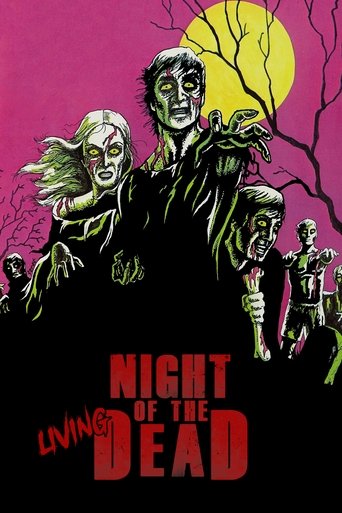
Night of the Living Dead
George A. Romero · 1968 · Film
Shares grounded realism.
92% shared signal
Halloween 4: The Return of Michael Myers
Dwight H. Little · 1988 · Film
Shares a bleak, unforgiving tone.
91% shared signal
Halloween H20: 20 Years Later
Steve Miner · 1998 · Film
Shares grounded realism.
87% shared signal
Halloween 5: The Revenge of Michael Myers
Dominique Othenin-Girard · 1989 · Film
86% shared signal
Friday the 13th Part 2
Steve Miner · 1981 · Film
86% shared signal
The Black Phone
Scott Derrickson · 2021 · Film
86% shared signal
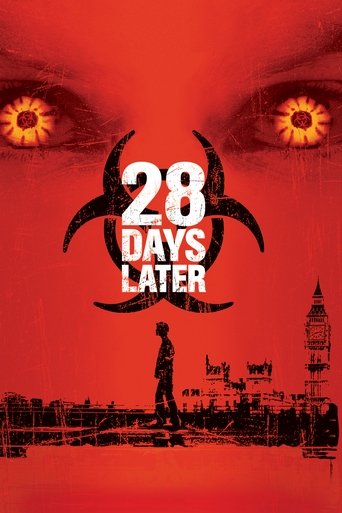
28 Days Later
Danny Boyle · 2002 · Film
85% shared signal
Halloween II in another form
The index links works across media, so an adaptation sits beside its source and a score beside the film it haunts.
More lists like these: Movies like 28 Days Later
Questions about Halloween II
The things people actually ask about this film, answered — including how it ends.
What happens at the end of Halloween II (1981)?
Laurie shoots Michael in both eyes in an operating room. Loomis, already stabbed, tells her to get out, fills the room with gas and ignites it, engulfing himself and Michael. Michael walks out burning and collapses. The next morning Laurie is moved to another hospital, alive but traumatised, while Michael's body still burns.
Is Halloween II (1981) a direct sequel to Halloween?
Yes. It begins on the same night, October 31, 1978, moments after the first film's ending, with Loomis searching Haddonfield for Michael and Laurie taken to Haddonfield Memorial Hospital. Jamie Lee Curtis and Donald Pleasence reprise their roles, and Carpenter and Hill wrote and produced it.
Who directed Halloween II (1981)?
Rick Rosenthal, in his feature debut. Carpenter declined to direct, approached Tommy Lee Wallace first, and then chose Rosenthal on the strength of a short film he made at the American Film Institute. Carpenter later shot additional scenes himself, including extra gore Rosenthal has said he did not want.
How gory is Halloween II (1981)?
Much gorier than the original. We score it 052 on viscera. The deaths include a nurse scalded in a therapy tub, a woman drained of blood through an IV, and a throat cut with a scalpel. It is sometimes described as a splatter film rather than a slasher because of it.
Where was Halloween II (1981) filmed?
Mostly at Morningside Hospital in Los Angeles, with scenes at Pasadena Community Hospital, over six weeks from April 6 to May 18, 1981. Rosenthal recalled the Pasadena shoot as difficult because aircraft from a nearby airport kept interrupting filming.
Who plays Michael Myers in Halloween II (1981)?
The stunt performer Dick Warlock, credited as The Shape, as Nick Castle was in the original. Castle was beginning a career as a director. Warlock has said he wore the same mask Castle used in the first film, and he had far more screen time to fill.
These are ranked against Halloween II, not against you.
Build your own tape →