Film · 2018
Halloween (2018)
Forty years on, Laurie Strode has been waiting, armed, for him to come home.
67Hard going to sit through, out of 100 — mostly how bleak it is
- PaceBuilds, then strikes54
- ThreatMostly people74
- GoreShows some of it58
- ToneBleak22
- RealityGrounded18
Era bias 86 · Thoroughly modern. Texture rather than fear, so it is not part of the grade. All six scores →
The most grounded horror movies ever made →
Part of a series: Halloween movies in order →
On VHSCREAM’s six-axis scale, Halloween (2018) is most extreme on the reality-anchor axis: 18 out of 100, where 0 is grounded realism and 100 is dream logic. 7% of the 320 horror works we have scored come in lower on that axis. How we score →
Halloween is a 2018 American slasher film directed by David Gordon Green, who co-wrote it with Jeff Fradley and Danny McBride. A direct sequel to the 1978 film alone, it brings an escaped Michael Myers back to Haddonfield forty years on, where Laurie Strode has spent her life preparing for him. We score it 086 on era bias and 018 on reality anchor.
Scored and reviewed by VHSCREAM on · how we score
How scary is Halloween, actually?
Scored against the published rubric, here is what the numbers mean.
The threat at 074 is on the human side — 237 works score lower. Michael is a man with a knife and no motive the film will name, and the writers deliberately stripped out the curse, the cult and the family errand.
Viscera 058 is above the middle — 163 works score lower. Stabbings, a strangling, a man shot through the cheek and a woman thrown from a balcony; shown clearly but not dwelt on, as McBride intended.
Tone 022 is bleak — 149 works score lower. Forty years of trauma, a family torn apart and a long body count, with relief only in a few jokes and a hard-won survival.
Pace 054 sits just over the middle, with 160 works slower. Carpenter-style stalking in long takes, then a fast and violent final act.
Era bias 086 reads modern — 240 works score lower. A 2018 true-crime podcast, smartphones and a clean modern look, even with the deliberate 1978 callbacks.
Reality anchor 018 is grounded — 22 works score lower. A bus crash, an escape, a fortified house and a man who is hard to kill; nothing supernatural is claimed.
On jump scares: a few, mostly earned, and the film prefers a figure in the background of a suburban shot.
Who should skip Halloween
Skip it if you love the sequels. It erases all of them, the sister twist included.
Skip it if subplots that go nowhere frustrate you. The podcasters, the teenage romance and Sartain's twist all pull focus from the Strode women.
Skip it if you want Michael explained. This film deliberately refuses to give him a reason.
Content notes: stabbings, strangulation, a man shot in the face, teenagers killed, alcoholism, inherited trauma, a family separated by the state, and a house set on fire.
Watch it if you want Jamie Lee Curtis back as Laurie Strode on her own terms, you want the cleanest entry point into the modern films, and you like a slasher that honours Carpenter without copying him scene for scene.
Halloween on six axes of fear
Every work in the index is scored on six continuous axes of fear. This is what Halloween looks like as a vector — and what each ten-point band looks like across everything else we hold.
Draft score — awaiting human review. About these scores
Disagree with a number? Say so on the axis itself. Nobody has confirmed this vector yet, and a score you challenge goes to the top of the queue to be re-scored by a human. Votes do not move the numbers — they decide what gets looked at first. How the scoring works →
Scored against the published rubric. This vector is a draft awaiting review — the method is public so you can argue with it.
Halloween: the review
David Gordon Green's Halloween is a sequel that works by forgetting, and what it chooses to forget is almost everything.
It is a direct sequel to Carpenter's film and ignores the rest. Halloween II, the sister twist, Jamie Lloyd, the Curse of Thorn, H20, the decapitated paramedic, the internet reality show, Rob Zombie's two films: all of it is gone. The writers felt that giving Michael a family motive had made him less frightening, so they discarded it, and they put the discarding in the script. When a friend tells Laurie's granddaughter Allyson he heard Michael was Laurie's brother, she answers that it was something people made up. Forty years of continuity are dismissed in a line.
Getting there took a while. After Rob Zombie's second film, Dimension's next attempt never came together and the studio lost the rights; Blumhouse picked them up with Carpenter involved, and Carpenter, who disagreed with the remake's portrayal of Michael, wanted the new film to be more frightening than the sequels had been. Green and McBride, already fans, pitched their version to Blumhouse and Carpenter, and the writing team went through eighty drafts in eight months, rewriting until the last week of filming. Early drafts gave Laurie her daughter Jamie Lloyd from the fourth and fifth films; that became Karen, over the objections of Danielle Harris, who had played Jamie. Another draft reimagined the 1978 ending with Laurie shooting the Shape off the balcony after he murders Loomis. Green backed away from rewriting the original, which was the right instinct.
Laurie Strode, armed
What replaces them is the best idea in the film: the final girl of 1978 has spent four decades waiting for him to come back. Jamie Lee Curtis's Laurie lives in a heavily fortified house she rarely leaves, with a safe room built for the night he returns. She drinks heavily. The state took her daughter Karen away from her when Karen was twelve. Karen, played by Judy Greer, wants her mother to move on, and she dismisses Laurie's warnings when Michael escapes. Allyson, played by Andi Matichak, is caught between them.
Will Patton's Deputy Hawkins, the officer who arrested Michael in 1978, gives the film a second survivor of that night, and a quieter one: a man who, the moment he has Michael at his mercy again, tries to finish what he started. The film gives him that chance and then takes it away.
Curtis has said she agreed to return as soon as she read how Green and McBride connected the dots, and it shows. She plays Laurie as a woman who has been proved right far too late to enjoy it — harsh, paranoid, wounded, and far more capable than anyone around her. The film is about trauma passed down three generations of women, and it has something to say about what the first night did to the survivor that the survivor herself would recognise.
Like John did it
Green and McBride were fans, and their stated aim, according to Nick Castle, was to make the film the way Carpenter had. It is neighbourhood-centric, it puts Michael in the backgrounds of suburban shots, and it is full of what Castle called clever ways to introduce a kind of déjà vu of the first one without copying it — the best of them a body missing from where it fell. McBride said the aim was tension and dread rather than graphic violence, and for most of the film that holds. Carpenter himself scored it, weighing up whether to write something new, update and amplify the old score, or combine the two.
James Jude Courtney plays the Shape, older and frighteningly patient, in a mask weathered to look forty years older. Castle, the original Michael, appears briefly as a reflection in a window and supplied the breathing.
The film was made for $10 million and took $259.9 million worldwide, at the time the highest-grossing slasher film ever in unadjusted dollars, passing Scream. It made a trilogy inevitable. Critics mostly agreed with the audience: the film holds 79 per cent on Rotten Tomatoes, and Variety's Peter Debruge called it fan service disguised as a horror movie and meant that it works as both. That is fair. It is a film that knows exactly which parts of 1978 its audience loves, gives them back, and adds one new idea strong enough to carry a sequel.
Where it falls down
The subplots. Two true-crime podcasters open the film by showing Michael his own mask at the hospital, a promising frame that is dropped when they are killed. Allyson's high-school drama, with a cheating boyfriend and his friend, eats screen time the Strode women needed. And the third act turns on a twist that almost wrecks the film: Dr. Sartain, Michael's psychiatrist and a former student of Loomis, reveals that he arranged Michael's escape so he could study him in the wild, then attacks the deputy who has just subdued Michael. It is a lurch into a different, sillier movie, and Michael ends it by killing Sartain within minutes.
The ending recovers. The showdown in Laurie's house is everything the trilogy's premise promised, and the image of three generations of Strode women setting the trap and lighting the fire together is a better finish than the series had managed in decades.
The Halloween movies in order guide sets out how this film starts the 2018 trilogy timeline. For the night it is a sequel to, Halloween (1978); for a modern slasher about a family surviving one long night, Ready or Not.
The ending of Halloween explained
The ending, in full. Open it when you have seen it.
The short answer: Michael reaches Laurie's fortified house, kills the officers outside and strangles Ray, Karen's husband. He stabs Laurie and pushes her off a balcony, but when he goes to look at where she fell, the body is gone — a reversal of the end of the 1978 film. Karen shoots him in the cheek, and with Karen and Allyson's help Laurie traps him inside the safe room. The three women set the house on fire. Laurie says goodbye to Michael and faints, and her family takes her to the hospital. The last shot is the burning basement with no sign of Michael. After the credits, his breathing can be heard.
Is Michael dead at the end of Halloween (2018)?
No. The final shot shows the burning basement with Michael nowhere in sight, and the post-credits scene plays his breathing, which tells you he survived. Halloween Kills picks up the same night, with Michael escaping the fire and killing the firefighters who arrive to put it out.
Is Laurie Michael's sister in Halloween (2018)?
No. This film ignores every sequel, including Halloween II, where the sibling twist was introduced. The writers felt a family motive made Michael less frightening, and Allyson dismisses the idea in dialogue as something people made up. In this timeline Laurie was simply the girl he chose in 1978.
Why does Dr. Sartain help Michael in Halloween (2018)?
He is obsessed. Sartain, a former student of Dr. Loomis and Michael's psychiatrist for years, reveals that he arranged Michael's escape during the transfer so he could study him in the wild. He stabs Deputy Hawkins to stop him killing Michael, and drives towards Laurie's house with Michael and Allyson in the back seat. Michael wakes and kills him.
What is the twist with the balcony at the end of Halloween (2018)?
It mirrors the 1978 ending in reverse. In Carpenter's film, Loomis shoots Michael off a balcony and finds the body gone. Here Michael pushes Laurie off a balcony, looks down, and finds she has disappeared. It is the moment the film announces that Laurie is now the one hunting him.
If Halloween is your kind of fear
The eight works closest to Halloween in the index on the five axes that describe fear, the same medium first — not by genre label, and not by what other people watched.
Halloween II
Rick Rosenthal · 1981 · Film
Shares a bleak, unforgiving tone.
92% shared signal
Friday the 13th Part 2
Steve Miner · 1981 · Film
Shares grounded realism.
90% shared signal
Friday the 13th
Sean S. Cunningham · 1980 · Film
Shares human monsters.
89% shared signal
Halloween Ends
David Gordon Green · 2022 · Film
Shares grounded realism.
89% shared signal
Halloween H20: 20 Years Later
Steve Miner · 1998 · Film
Shares human monsters.
88% shared signal
Friday the 13th: The Final Chapter
Joseph Zito · 1984 · Film
Shares a bleak, unforgiving tone.
88% shared signal
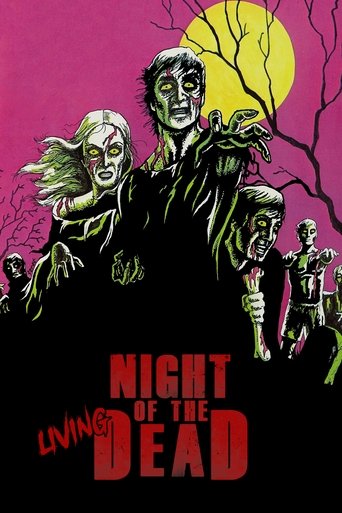
Night of the Living Dead
George A. Romero · 1968 · Film
87% shared signal
Friday the 13th Part III
Steve Miner · 1982 · Film
87% shared signal
Halloween in another form
The index links works across media, so an adaptation sits beside its source and a score beside the film it haunts.
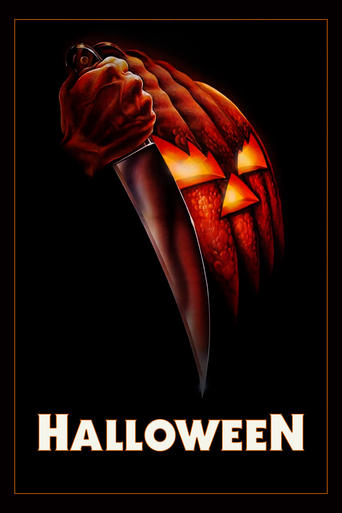
Halloween
John Carpenter · 1978 · Film

Halloween (OST)
John Carpenter · 1978 · Record
Halloween
Rob Zombie · 2007 · Film
Questions about Halloween
The things people actually ask about this film, answered — including how it ends.
What happens at the end of Halloween (2018)?
Laurie, Karen and Allyson trap Michael in the safe room of Laurie's fortified house and set it on fire. Laurie faints, and her family takes her to the hospital. The final shot shows the burning basement with no sign of Michael, and his breathing after the credits reveals that he survived.
Is Halloween (2018) a sequel to all the other Halloween films?
No. It is a direct sequel to the 1978 film only, and ignores every other entry, including Halloween II, H20, Resurrection and the Rob Zombie remakes. That is why Laurie is not Michael's sister in it. It starts the 2018 trilogy, followed by Halloween Kills and Halloween Ends.
Who plays Michael Myers in Halloween (2018)?
James Jude Courtney, in nearly every scene. Nick Castle, who played Michael in the 1978 film, returns briefly as Michael's reflection in a window and supplied the character's breathing sounds. The mask was built from a life cast of Courtney's face and aged to look forty years older.
Did John Carpenter work on Halloween (2018)?
Yes. He was involved when Blumhouse obtained the rights and made a deal to compose the score, as he had for the original, Halloween II and Halloween III. David Gordon Green and Danny McBride pitched their version to Blumhouse and Carpenter, and it was accepted as a sequel to the original.
How much did Halloween (2018) make?
About $259.9 million worldwide on a $10 million budget, including a $76.2 million opening weekend in North America. At the time it was the highest-grossing slasher film in unadjusted dollars, overtaking Scream, and the highest-grossing film in the franchise.
Where was Halloween (2018) filmed?
In Charleston, South Carolina, from January to February 2018, with reshoots there that June after the first test screening. It premiered at the Toronto International Film Festival on September 8, 2018, and opened in North America on October 19.
These are ranked against Halloween, not against you.
Build your own tape →