Film · 1977
The Hills Have Eyes
A suburban family stranded in the desert, and a second family watching from the rocks.
75Hard going to sit through, out of 100 — mostly how bleak it is
- PaceBuilds, then strikes64
- ThreatPeople, entirely92
- GoreShows some of it56
- ToneNo relief at all10
- RealityGrounded16
Era bias 4 · Analog to the bone. Texture rather than fear, so it is not part of the grade. All six scores →
Horror movies where the monster is a person →
On VHSCREAM’s six-axis scale, The Hills Have Eyes (1977) is most extreme on the threat axis: 92 out of 100, where 0 is a threat that is not human and 100 is human monsters. 89% of the 320 horror works we have scored come in lower on that axis. How we score →
The Hills Have Eyes is a 1977 American survival horror film written and directed by Wes Craven. A suburban family towing a trailer to Los Angeles is stranded in the desert and hunted by a family of cannibals living in the hills. We score it 092 on the threat axis and 010 on tone.
Scored and reviewed by VHSCREAM on · how we score
How scary is The Hills Have Eyes, actually?
Scored against the published rubric, here is what the numbers mean.
The threat at 092 is on the human end — 284 works score lower. A clan of desert cannibals and, by the end, a family of suburbanites who learn to kill them. Nothing supernatural happens.
Viscera 056 is on the explicit side of the middle — 160 works score lower. A crucifixion and burning, shootings, a rape, a mutilated dog and a stabbing, but the X-rating cuts and 16 mm murk keep much of it partial.
Tone 010 is bleak — 40 works score lower. Half the family is dead by morning, a baby is stolen, and the ending is the survivors committing the same violence.
Pace 064 is on the shock side — 228 works score lower. A slow first act, then a single night of chaotic attacks and a sustained final hunt.
Era bias 004 reads analog — 6 works score lower. Grainy 16 mm film, natural desert light and a mid-1970s exploitation budget.
Reality anchor 016 is grounded — 17 works score lower. Everything in it could happen on an empty road.
On jump scares: very few. The fear is in the siege and the night, not in sudden shocks.
Who should skip The Hills Have Eyes
Skip it if sexual violence is a hard limit. Brenda is raped during the attack on the trailer, and it is part of the film's most brutal sequence.
Skip it if harm to animals upsets you. One of the family's dogs is mutilated, and another character is made to eat her.
Skip it if you need a clean, readable image. It was shot cheaply on 16 mm, and the night scenes are often murky.
Content notes: rape, a man crucified and burned alive, the shooting of two women, the abduction of a baby, cannibalism, a mutilated dog, a stabbing and child murder described in backstory.
Watch it if you want one of the key American survival horror films of the 1970s, you can take its brutality, and you are interested in what Wes Craven did before Freddy Krueger.
The Hills Have Eyes on six axes of fear
Every work in the index is scored on six continuous axes of fear. This is what The Hills Have Eyes looks like as a vector — and what each ten-point band looks like across everything else we hold.
Where that puts it: joint #3 analog era · joint #15 grounded
Draft score — awaiting human review. About these scores
Disagree with a number? Say so on the axis itself. Nobody has confirmed this vector yet, and a score you challenge goes to the top of the queue to be re-scored by a human. Votes do not move the numbers — they decide what gets looked at first. How the scoring works →
Scored against the published rubric. This vector is a draft awaiting review — the method is public so you can argue with it.
The Hills Have Eyes: the review
The Hills Have Eyes is an ugly, cheap, furious film, and all three of those are why it still works.
Wes Craven wrote it, directed it and cut it himself, shooting on 16 mm in the Mojave Desert around Victorville, California, in October 1976, for somewhere between $350,000 and $700,000. It looks it. The light is flat, the sound is rough, and the desert is not photographed as a landscape so much as an absence: rocks, scrub, a road and a trailer. Craven was working from the old Scottish legend of the cannibal Sawney Bean, which he took as a story about how quickly civilised people can become savage, and he was working very obviously in the shadow of The Texas Chain Saw Massacre. The result is a film about two families, and the argument is that they are not as different as the first one thinks.
Two families
The Carters are Bob and Ethel, their teenage children Bobby and Brenda, their married daughter Lynne, her husband Doug and the baby Katy, plus two dogs called Beauty and Beast. They are on vacation, towing a trailer to Los Angeles, a comfortable family who assume the world works the way the suburbs do. When they are stranded, Bob walks back to Fred's Oasis for help, and Fred tells him the story of his son.
That son is Jupiter. As a child he killed livestock and murdered his sister; Fred attacked him with a tire iron and left him for dead in the desert. Jupiter survived and built a family of his own with a woman called Mama: Mars, Pluto, Mercury and Ruby. They live in the hills, they watch the road, and they eat what comes down it.
The second family is the reason the film is remembered. Michael Berryman's Pluto is the face people remember, and James Whitworth's Papa Jupiter is a grotesque patriarch who is a mirror of Bob Carter in all the ways that matter: both are fathers who believe in discipline, both think the world owes their family a living. Janus Blythe's Ruby is the one member of the hill clan who sympathises with the strangers, and the film treats her as a bridge between the two.
The night in the trailer
The centrepiece is a single night, and it is one of the most brutal sequences of its decade. Jupiter kills Fred, captures Bob, crucifies him and sets him on fire as a distraction. While the family runs to save him, Mars and Pluto go into the trailer. Pluto rapes Brenda. Mars shoots Lynne and Ethel when they return. Pluto takes the baby. By morning Lynne is dead, Ethel dies of her wounds, Bob is dead, and the survivors are a teenage boy and girl, a man without a weapon, and a dog.
Craven shoots it plainly, as confusion rather than spectacle. It is not gory in the modern sense; the MPAA's original X rating forced cuts, and much of the violence is quick, blurred or off-centre. What makes it hard to watch is that it is chaotic and humiliating, and the film refuses to make any of it exciting.
The turn
The last act is the one the film is built for. The surviving Carters stop being victims. Brenda and Bobby rig a series of booby traps for Papa Jupiter, and Doug, with Ruby's help, goes into the hills after Katy. The violence that follows is as savage as anything the cannibals did, and the film does not let you enjoy it. That is the Sawney Bean idea made literal: it only takes one night for the suburban family to start behaving like the people in the hills.
Two threads keep the film from being only a siege. The first is Ruby. Janus Blythe plays her as the hill family's misfit, and her punishment for sympathising with the Carters is one of the film's cruellest scenes: Mama chains her outside the cave and forces her to eat the Carters' dead dog, Beauty. Her decision to help Doug at the end is the film's only sign that anybody in the hills could be different. The second is Beast, the surviving dog, who becomes a weapon in his own right. He pushes Mercury, played by producer Peter Locke under a pseudonym, off a hilltop to his death, and he is the one who mauls Pluto. It is not subtle, but it gives the Carters' fight-back a feral energy that suits a film about people becoming animals.
It was a hit on its own terms, earning around $25 million against its tiny budget, and Craven came back to it with The Hills Have Eyes Part II in 1985 and produced Alexandre Aja's remake in 2006.
Where it falls down
The acting is uneven, and the Carters' bickering in the first act is so broadly written that you have to accept them as types. The cannibal family, outside Pluto and Ruby, are crude cartoons, and the dialogue Craven gives them is often more silly than threatening. The middle stretches of night-time action are hard to follow on 16 mm, which is partly atmosphere and partly just murk. And Beast, the dog, carries an implausibly large share of the heroism.
For the film Craven was answering, The Texas Chain Saw Massacre, and the rest of the franchise at Texas Chainsaw in order. For where Wes Craven went next with a family under siege, though a supernatural one, A Nightmare on Elm Street.
The ending of The Hills Have Eyes explained
The ending, in full. Open it when you have seen it.
The short answer: the Carters fight back. Brenda and Bobby overpower Papa Jupiter with a series of booby traps and shoot him. Beast, the surviving dog, mauls Pluto. Doug, helped by Ruby, who has turned against her own family, finds baby Katy and stabs Mars to death in the hills. Of the cannibal clan, Mercury, Mars, Pluto and Papa Jupiter are dead; of the Carters, Bob, Ethel and Lynne are dead, and Brenda, Bobby, Doug and Katy survive. The film ends on that act of violence by the survivors. An alternative epilogue, on the DVD and some television prints, shows Ruby joining them, with Brenda reaching out a hand to her.
Who survives The Hills Have Eyes (1977)?
Of the Carters, Brenda, Bobby, Doug and baby Katy, along with the German Shepherd Beast. Bob, Ethel and Lynne are killed, as is the other dog, Beauty, and Fred, the gas station owner. Of the hill family, Ruby survives and helps the Carters; the film's summary does not record what becomes of Mama.
Who is Papa Jupiter?
Fred's son. As a child he killed livestock and murdered his own sister, and Fred hit him with a tire iron and left him to die in the desert. He survived, took up with a woman known as Mama, and raised a family of cannibals in the hills: Mars, Pluto, Mercury and Ruby. He kills Fred, crucifies and burns Bob Carter, and is killed by Brenda and Bobby at the end.
What happens to the dogs in The Hills Have Eyes?
Beauty runs off into the hills early in the film and is found mutilated, and Mama later forces Ruby to eat her as punishment. Beast survives and becomes one of the family's most effective weapons: he pushes Mercury off a hilltop to his death and mauls Pluto in the final act.
What is the alternative ending of The Hills Have Eyes?
An epilogue included on the DVD and in some television prints shows Ruby joining the survivors after the killing, with Brenda extending a hand to her. It softens the original ending, which closes on the survivors' violence rather than on any reconciliation between the two families.
Is The Hills Have Eyes based on a true story?
Not directly. Wes Craven drew on the legend of Sawney Bean, the alleged head of a Scottish cannibal clan, which Craven saw as a story about how civilised people could become savage. He also cited The Texas Chain Saw Massacre and The Grapes of Wrath as influences.
If The Hills Have Eyes is your kind of fear
The eight works closest to The Hills Have Eyes in the index on the five axes that describe fear, the same medium first — not by genre label, and not by what other people watched.
Hush
Mike Flanagan · 2016 · Film
Shares human monsters.
89% shared signal
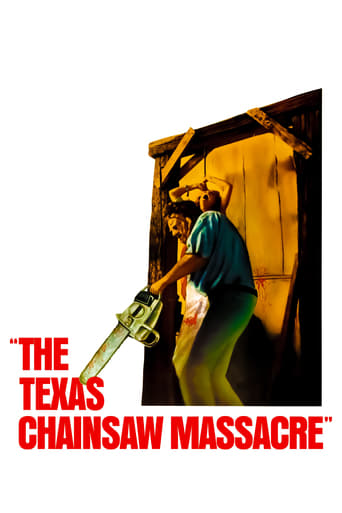
The Texas Chain Saw Massacre
Tobe Hooper · 1974 · Film
Shares a bleak, unforgiving tone.
88% shared signal
The Texas Chainsaw Massacre
Marcus Nispel · 2003 · Film
Shares grounded realism.
88% shared signal
Halloween
Rob Zombie · 2007 · Film
Shares a bleak, unforgiving tone.
88% shared signal
Leatherface: The Texas Chainsaw Massacre III
Jeff Burr · 1990 · Film
Shares human monsters.
87% shared signal
Leatherface
Julien Maury and Alexandre Bustillo · 2017 · Film
Shares grounded realism.
86% shared signal
Spiral: From the Book of Saw
Darren Lynn Bousman · 2021 · Film
86% shared signal
The Strangers
Bryan Bertino · 2008 · Film
86% shared signal
Questions about The Hills Have Eyes
The things people actually ask about this film, answered — including how it ends.
What happens at the end of The Hills Have Eyes (1977)?
The surviving Carters turn on the cannibals. Brenda and Bobby trap Papa Jupiter and shoot him, the dog Beast mauls Pluto, and Doug, helped by Ruby, rescues baby Katy and stabs Mars to death. The film ends on that violence. An alternative epilogue shows Ruby joining the survivors.
Who is Pluto in The Hills Have Eyes?
One of Papa Jupiter's sons, played by Michael Berryman, and the film's most recognisable face. Pluto signals Papa Jupiter to set Bob on fire as a distraction, rapes Brenda and abducts baby Katy, and he is mauled by the Carters' dog Beast in the final act.
Where was The Hills Have Eyes (1977) filmed?
In and around Victorville, California, in the Mojave Desert. Principal photography began in October 1976, and Wes Craven shot on 16 mm film on a budget estimated at between $350,000 and $700,000. The film premiered in Tucson, Arizona, on July 22, 1977.
Was The Hills Have Eyes rated X?
Initially, yes. The MPAA gave it an X rating for its violence, and material was cut to secure a release. The cuts are one reason some of the violence in the finished film is brief or partial rather than lingering.
Is there a remake of The Hills Have Eyes?
Yes. Alexandre Aja directed a remake in 2006, produced by Wes Craven, and it was followed by The Hills Have Eyes 2 in 2007. Craven himself directed an original sequel, The Hills Have Eyes Part II, in 1985.
How gory is The Hills Have Eyes (1977)?
Less than its reputation. We score it 056 on viscera. The crucifixion and burning, the shootings in the trailer and the final stabbing are violent, but cuts for the rating and the grainy 16 mm night photography mean much of it is partly obscured.
These are ranked against The Hills Have Eyes, not against you.
Build your own tape →