Film · 2016
Hush
A deaf writer alone in the woods, a man at the window, and eighty minutes of problem-solving.
64Hard going to sit through, out of 100 — mostly how bleak it is
- PaceBuilds, then strikes58
- ThreatPeople, entirely96
- GoreShows some of it52
- ToneBleak26
- RealityCould happen12
Era bias 82 · Modern. Texture rather than fear, so it is not part of the grade. All six scores →
Horror movies where the monster is a person →
On VHSCREAM’s six-axis scale, Hush (2016) is most extreme on the threat axis: 96 out of 100, where 0 is a threat that is not human and 100 is human monsters. 95% of the 320 horror works we have scored come in lower on that axis. How we score →
Hush is a 2016 home-invasion thriller directed by Mike Flanagan and written with Kate Siegel, who stars as Maddie, a deaf and mute novelist living alone in a wood. A man with a crossbow kills somebody on her porch and she does not hear it. We score it 096 on the threat axis and 012 on reality anchor. It runs eighty-one minutes and does not waste one of them.
Scored and reviewed by VHSCREAM on · how we score
How scary is Hush, actually?
Scored against the published rubric, here is what the numbers mean for a viewer.
The threat at 096 is close to the human ceiling. 1 work scores higher. One man, no mask after twenty minutes, no supernatural element and no motive he will name. He is patient, articulate and ordinary, which is the version of this axis that frightens people longest.
Reality anchor 012 is near the floor of the index. Only 5 works score lower. A house, a wood, a crossbow, a laptop. Nothing in it is impossible and the whole film is built out of things you could buy.
Pace 058 is on the shock side. 176 works are slower. Eighty-one minutes with a set piece every eight or nine, and no sequence held for dread the way The Strangers holds them.
Viscera 052 is moderate. 173 works score higher. A crossbow bolt, several stabbings and a throat, filmed functionally rather than for spectacle.
Era bias 082 is modern. 207 works score lower. Clean 2016 digital photography, a contemporary sound mix doing precise work with absence, and a house full of 2016 technology that the plot uses properly.
Tone 026 is bleak with a win in it. 172 works score lower. Three people die and the protagonist survives by becoming extremely good at violence, which the film presents as a cost rather than a triumph.
On jump scares: several, and all of them are geometric rather than acoustic.
Who should skip Hush
Skip it if you want the home invasion done for dread. This is the problem-solving version. For the patient, static, hopeless version watch The Strangers instead.
Skip it if a competent protagonist spoils the fear for you. Maddie wins because she is good at this, and about half the film's running time is her working out how.
Skip it if the opening will be too much. A woman is killed in full view of a window while the person inside cannot hear it, and the film plays the whole thing at a normal volume.
Content notes: home invasion, the killing of two neighbours, stabbing and crossbow injury, strangulation, and extended psychological torment of a disabled woman by a man who explains it as he goes.
Watch it if you want the tightest eighty minutes in modern horror, a killer who is frightening because he is unremarkable, and a protagonist who thinks on camera.
Hush on six axes of fear
Every work in the index is scored on six continuous axes of fear. This is what Hush looks like as a vector — and what each ten-point band looks like across everything else we hold.
Where that puts it: joint #1 human monsters · joint #5 grounded
Draft score — awaiting human review. About these scores
Disagree with a number? Say so on the axis itself. Nobody has confirmed this vector yet, and a score you challenge goes to the top of the queue to be re-scored by a human. Votes do not move the numbers — they decide what gets looked at first. How the scoring works →
Scored against the published rubric. This vector is a draft awaiting review — the method is public so you can argue with it.
Hush: the review
A problem, stated cleanly and then solved
This is the most purely engineered film in Flanagan's filmography and the best argument that a restriction is worth more than a budget. One house, one wood, one woman who cannot hear, one man who works that out in the first act. Everything after that is two people solving each other, and the film's pleasure is identical to its tension: watching a competent person inventory what she has.
The restriction is used properly, which is rarer than it sounds. Maddie's deafness is not a gimmick that generates scares by cheating — Flanagan shows us what she can and cannot perceive, establishes the rules (the smoke alarm's flashing light, the phone's vibration, the fact that she can be approached from any angle), and then never breaks them. When a scare lands it is because the geometry allowed it, not because the sound mix dropped out.
Unmasking him at the twenty-minute mark
The film's single best decision. The man takes his mask off early, and from then on he is not a figure — he is a chatty, slightly bored, entirely ordinary-looking man who is good at this and enjoys talking about it. He narrates. He negotiates. He gives her choices.
That is a harder kind of frightening than a mask, and it is the opposite of what The Strangers does with the same premise eight years earlier. Bertino's film withholds everything and arrives at because you were home. Flanagan shows you the man immediately and arrives somewhere worse: he is not mysterious, he is just a person who would rather be doing this than anything else.
Siegel
Kate Siegel has to carry a film with no dialogue for most of its length and does it without a single sequence of mugging. Maddie thinks visibly — she looks at an object, you watch her decide what it is for, and the film trusts you to follow. The scene where she composes the ending of her novel in her head, rehearsing alternatives in her own narration, is set up in the first ten minutes and paid off in the last ten, and the payoff is the only thematic flourish in an otherwise ruthlessly functional screenplay.
Where it strains
John's arrival is pure plot mechanics and his death is the one beat that exists to raise the stakes rather than because the film needed it. The man's partner-in-the-car detail is dropped. And the last ten minutes tip slightly into an action register — a crawl, a reversal, a final-girl flourish — after an hour of being scrupulously unglamorous about violence.
It is eighty-one minutes and it has no fat on it. That alone puts it ahead of most of what it gets compared to.
The ending of Hush explained
The ending, in full. Open it when you have seen it.
The short answer: Maddie, badly injured, stops running and sets a trap in her own house. She disables him with a corkscrew driven into his throat and finishes him on the floor of her living room as he is strangling her. She survives; the man does not. The police arrive afterwards. The film closes on her at her laptop with the ending of her novel — the problem she could not solve in the first scene — finally decided.
Here is how the film gets there.
Why does the killer take his mask off?
Because the film is not interested in him being a mystery. Once he knows Maddie is deaf he knows he has as much time as he wants, and the mask was only ever for witnesses. What is left is a talkative, unremarkable man who explains his thinking out loud to somebody who cannot hear him — and that is the most unsettling thing in the film.
What happens to Sarah and John?
Sarah, Maddie's neighbour, is killed on the porch in the opening act, in full view of the window, while Maddie works at her desk with her back to it and hears nothing. John, Sarah's partner and a police officer, comes looking for her later and is killed too. Both deaths exist to establish that nobody is coming.
How does Maddie beat him?
By stopping. The turn in the film is her decision to quit running and fight in the house, where she knows the geography and he does not — the corkscrew, the fire extinguisher, the knowledge of which floorboards show from which angle. The killing blow is a corkscrew to the throat while he has his hands around her neck, and she finishes it on the floor rather than cleanly.
What is the significance of her novel?
The first scene has her stuck on an ending. She rehearses options in her own voice, dissatisfied with all of them. The film is the problem she needed: the last shot is her writing, and the implication is not that trauma made her a better novelist but that she has finally seen a character make the only choice available. It is the one literary gesture in the film and it is earned.
Does the deafness change how the scares work?
Yes, and honestly. Flanagan establishes what Maddie can perceive and then plays strictly inside it: her alarm flashes rather than sounds, her phone vibrates, somebody can stand behind her indefinitely. The audience is given information she does not have, which inverts the usual arrangement — most horror withholds from the viewer, and this film withholds from the protagonist.
If Hush is your kind of fear
The eight works closest to Hush in the index on the five axes that describe fear, the same medium first — not by genre label, and not by what other people watched.
The Hills Have Eyes
Wes Craven · 1977 · Film
Shares human monsters.
89% shared signal
Friday the 13th Part 2
Steve Miner · 1981 · Film
Shares grounded realism.
88% shared signal
Friday the 13th
Sean S. Cunningham · 1980 · Film
Shares a bleak, unforgiving tone.
87% shared signal
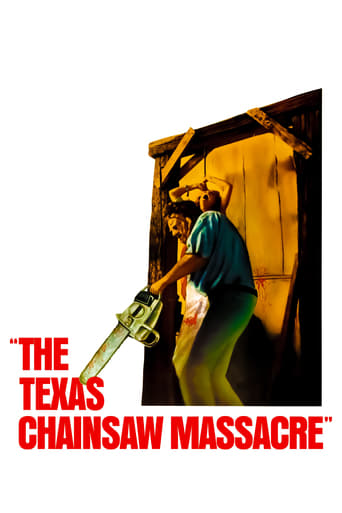
The Texas Chain Saw Massacre
Tobe Hooper · 1974 · Film
Shares human monsters.
87% shared signal
Maxxxine
Ti West · 2024 · Film
Shares grounded realism.
87% shared signal
Friday the 13th: A New Beginning
Danny Steinmann · 1985 · Film
87% shared signal
The Strangers
Bryan Bertino · 2008 · Film
Shares a bleak, unforgiving tone.
86% shared signal
Halloween
David Gordon Green · 2018 · Film
86% shared signal
Questions about Hush
The things people actually ask about this film, answered — including how it ends.
How does Hush end?
Maddie stops running and sets a trap in her own house, where she knows the geography and he does not. She drives a corkscrew into his throat while he is strangling her and finishes him on the living-room floor. She survives, the police arrive, and the last shot is her finally writing the ending of her novel.
Why does the killer in Hush show his face?
Because once he knows Maddie is deaf he has unlimited time and no witnesses, so the mask has no function. What replaces it is worse: a talkative, ordinary man who narrates his decisions to somebody who cannot hear him.
Does Maddie survive Hush?
Yes. She is the only person in the film who does — Sarah and John are both killed, and the man dies on her living-room floor. The film treats her survival as something she built rather than something she was given.
How does Maddie's deafness work in the film?
Honestly, and that is the craft. Flanagan establishes what she can perceive — a flashing smoke alarm, a vibrating phone, nothing behind her — and then plays strictly inside those rules. The audience knows things she does not, which inverts the usual horror arrangement.
Is Hush better than The Strangers?
Different solutions to one premise. The Strangers withholds everything and arrives at a motiveless answer; this shows you the man in twenty minutes and makes him ordinary. We score both at 096 on the threat axis and this one considerably faster, at 058 on pace against 046.
What is the novel in Hush about?
The film never says, and it does not matter — what matters is that she is stuck on its ending in the first scene and has decided it in the last. It is the one thematic flourish in an otherwise purely functional screenplay, and it is set up early enough to earn.
What should I watch after Hush?
The Strangers for the patient version of the same night, Ready or Not for a house and a competent woman played faster, and survival horror for everything here won by somebody working the problem.
These are ranked against Hush, not against you.
Build your own tape →