Film · 2021
The Black Phone
A disconnected phone in a basement, and the boys who used it before you.
60Hard going to sit through, out of 100 — mostly how bleak it is
- PaceBuilds, then strikes62
- ThreatMostly people78
- GoreShows some of it38
- ToneBleak28
- RealityTilts unreal36
Era bias 84 · Modern. Texture rather than fear, so it is not part of the grade. All six scores →
Horror movies where the monster is a person →
On VHSCREAM’s six-axis scale, The Black Phone (2021) is most extreme on the threat axis: 78 out of 100, where 0 is a threat that is not human and 100 is human monsters. 75% of the 320 horror works we have scored come in lower on that axis. How we score →
The Black Phone is a 2021 American film directed by Scott Derrickson, in which a boy held in a soundproofed basement takes advice from the previous five children who died in it. We score it 062 on pace — 92 works in an index of 320 strike harder — and 028 on tone, which is bleak by any ordinary measure and unusually warm for this index, because the boy wins.
Scored and reviewed by VHSCREAM on · how we score
How scary is The Black Phone, actually?
Scored against the published rubric, here is what the numbers mean.
Pace 062 is on the shock side — 92 works strike harder and 21 tie it. The ghosts arrive loudly and the film is happy to use the phone's ring as a stinger.
Threat 078 is well toward the human end, with 74 works further. A man with a van does all the harm; the supernatural only ever helps.
Viscera 038 is below the midpoint — 86 works are more restrained. Most of the violence against children is off-screen or implied, and what is shown is brief.
Tone 028 is on the bleak side of the midpoint, and 188 works in the index are bleaker still. Five children are dead, and the one who lives genuinely wins — which is rarer here than the number suggests.
Reality anchor 036 leans grounded — 227 works go further out. A 1978 suburb, a basement and two supernatural concessions.
On jump scares: seven. This is the most conventional thing about it and the ringing phone earns most of them.
Who should skip The Black Phone
Skip it if harm to children is a line. Five are murdered before the film starts and the sixth is beaten on screen.
Skip it if you need the villain explained. The Grabber has no backstory and the film has decided that is not the story.
Watch it for the structure, for McGraw, and for a basement film that resolves on accumulated competence rather than a last-minute rescue. If you want Derrickson's other film about a man watching recordings of what happened to children, Sinister is the companion; It is the closer match for a 1970s childhood and a predator who talks.
The Black Phone on six axes of fear
Every work in the index is scored on six continuous axes of fear. This is what The Black Phone looks like as a vector — and what each ten-point band looks like across everything else we hold.
Draft score — awaiting human review. About these scores
Disagree with a number? Say so on the axis itself. Nobody has confirmed this vector yet, and a score you challenge goes to the top of the queue to be re-scored by a human. Votes do not move the numbers — they decide what gets looked at first. How the scoring works →
Scored against the published rubric. This vector is a draft awaiting review — the method is public so you can argue with it.
The Black Phone: the review
A horror film about a kidnapping that is also, unusually, about competence — six children solving one problem across four years, in instalments.
Denver, 1978. Boys are disappearing. Finney Blake is thirteen, bullied, good at baseball and bad at saying anything, and he goes into a van with a man in a mask holding black balloons. He wakes in a concrete basement with a filthy mattress, a barred window, a toilet and a black rotary telephone on the wall with its cord cut.
The phone rings anyway. On the other end are Bruce, Billy, Griffin, Vance and Robin, the five boys taken before him, and each has one thing to give him: the floor tile, the cable, the lock combination, the freezer, the dirt. None of them knows the whole plan. Each died having found out one piece of it.
The structure is the achievement
This is a very tidy piece of screenwriting. Every call delivers a tool, every tool was earned by somebody's death, and the final escape uses all of them in sequence — which means the climax is not a lucky break but an accumulation, and the dead boys are not atmosphere, they are the mechanism.
Derrickson shoots the basement in grimy institutional yellows and the outside world in Super-8-flavoured grain, and the period is used rather than worn: nobody has a phone, the police are a non-factor, and a missing child is a flyer on a telegraph pole.
Mason Thames is good and Madeleine McGraw is better — Gwen, Finney's sister, has the psychic dreams and the best scenes in the film, including a row with a detective and a prayer that is funnier and angrier than anything else in it. Ethan Hawke works almost entirely with the lower half of his face and a changeable mask, and he is most frightening when he is being gentle.
Where it frustrates
The Grabber has no interior and the film is not interested in giving him one. That is defensible — it keeps the subject on the children — but it means the antagonist is a device, and the mask does more characterisation than the script.
Gwen's visions are a convenience as often as they are a thread. They deliver information when the plot needs the outside world to catch up, and the rules governing what she can and cannot see are whatever the next scene requires.
The ending of The Black Phone explained
The ending, in full. Open it when you have seen it.
What happens at the end of The Black Phone?
Finney assembles everything the calls gave him. He lifts the floor tile Bruce told him about and digs. He feeds the frozen meat Vance mentioned to the dog outside. He rigs the cable and the window grate Billy died trying to climb, and he fills the handset's receiver with dirt the way Robin showed him.
Max, the Grabber's brother, works out where the basement is and comes down into it. The Grabber kills him. Finney's trap takes the Grabber's leg out from under him, and then the boy comes at him with the weighted receiver and winds the phone cord around his neck.
The Grabber dies in the basement. Finney walks up and out past his body. Gwen's dreams have already put the police on the street, and his father is on the lawn.
How does Finney escape in The Black Phone?
By using five dead boys' instalments as one plan. Bruce tells him about the removable floor tile, and that the Grabber can hear the phone even though he does not believe it works. Billy tells him about the cable behind the wall and the window it reaches — the attempt that killed Billy, and whose leftover grate becomes Finney's trap. Griffin gives him the combination to the lock and explains the rules of Naughty Boy. Vance tells him about the freezer and the frozen meat, which is how the dog outside gets handled. Robin, his friend, tells him to fill the receiver with dirt and swing it, and that he already knows how to fight, because Robin taught him earlier in the film.
Nothing in the escape is luck. Every element was paid for by a child who died a step short of using it.
Who is the Grabber in The Black Phone?
A man with a van, a mask in interchangeable parts, and a brother who lives upstairs and does not ask. The film gives him no name, no history and no stated motive beyond a game he calls Naughty Boy, which he plays by sitting in the basement with a belt and waiting for the child to move.
He is the most deliberately hollow thing in the film. Hawke makes him specific anyway through the mask — the top half for watching, the bottom half for smiling — and through the one trait the script does give him, which is that he cannot stop explaining the rules of a game he intends to cheat at. Griffin's call is what tells Finney the game is rigged: the Grabber waits at the top of the stairs with a belt for anybody who moves.
What is the black phone in The Black Phone?
A disconnected rotary telephone that rings regardless. It is never explained, and it is the only supernatural element the film allows itself besides Gwen's dreams.
What it clearly is, structurally, is a conduit between the children the Grabber has already killed and the one he has not. The boys cannot remember their own names on the line, which is the detail that sells it — they have enough left to pass on one fact each and nothing left to be comforted with.
Does Finney survive The Black Phone?
Yes, and the film ends with him back at school, visibly different — he speaks to the girl he could not speak to, and he is called Finn rather than Finney, which is what Robin called him.
It is the rare abduction film that ends with its subject better off than it found him, and the reason that does not feel cheap is that the film has been scrupulous about the cost. Five boys are still dead. The thing Finney gains is Robin's, handed over on a phone line.
If The Black Phone is your kind of fear
The eight works closest to The Black Phone in the index on the five axes that describe fear, the same medium first — not by genre label, and not by what other people watched.
Halloween H20: 20 Years Later
Steve Miner · 1998 · Film
Shares human monsters.
88% shared signal
Halloween 4: The Return of Michael Myers
Dwight H. Little · 1988 · Film
Shares a bleak, unforgiving tone.
87% shared signal

The Texas Chain Saw Massacre
Tobe Hooper · 1974 · Film
Shares human monsters.
86% shared signal
Halloween II
Rick Rosenthal · 1981 · Film
Shares a bleak, unforgiving tone.
86% shared signal
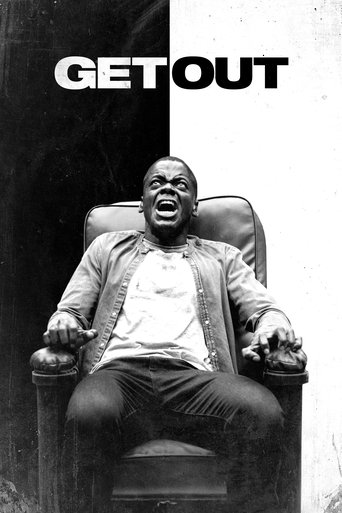
Get Out
Jordan Peele · 2017 · Film
84% shared signal
Friday the 13th Part 2
Steve Miner · 1981 · Film
84% shared signal
Child's Play
Tom Holland · 1988 · Film
84% shared signal

Psycho (OST)
Bernard Herrmann · 1960 · Record
87% shared signal
More lists like these: Movies like Get Out
Questions about The Black Phone
The things people actually ask about this film, answered — including how it ends.
How does Finney escape in The Black Phone?
By combining what five dead boys each told him: the removable floor tile, the cable and window grate, the lock combination, the freezer and the frozen meat for the dog, and filling the phone receiver with dirt to make a weapon. He takes the Grabber's leg out with the rigged grate, beats him with the receiver and strangles him with the cord.
What happens at the end of The Black Phone?
The Grabber kills his brother Max, then goes down in the trap Finney has rigged from the cable and the window grate. Finney beats him with the dirt-loaded receiver and strangles him with the phone cord. He walks out to find police already on the street, sent there by Gwen's dreams.
Who is the Grabber in The Black Phone?
A man with a van and a mask in interchangeable parts, given no name, history or motive beyond a game he calls Naughty Boy. The hollowness is deliberate — the film keeps its attention on the children, and Hawke builds the character out of the mask instead.
What is the black phone?
A disconnected rotary telephone in the basement that rings anyway, never explained. It carries the Grabber's five previous victims to Finney. They cannot remember their own names on the line — enough left to pass on one fact each, and nothing left to be comforted with.
Does Finney survive The Black Phone?
Yes. He kills the Grabber and walks out, and the film ends with him back at school, speaking to someone he could not speak to before and going by Finn — the name his dead friend Robin used for him.
Is The Black Phone very gory?
No. We score it 038 on viscera, below the midpoint of the index. The murders of the five earlier boys happen off screen or in brief glimpses, and the sustained violence is a beating in the last ten minutes rather than anything prolonged.
These are ranked against The Black Phone, not against you.
Build your own tape →