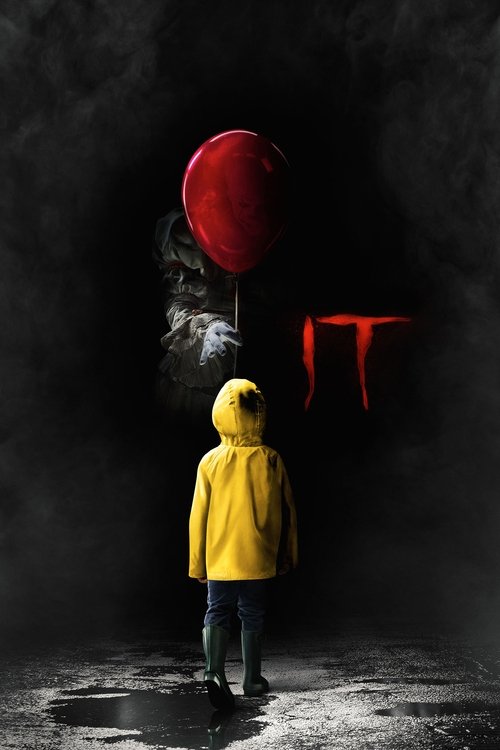
Film · 2017
It
Andy Muschietti
The highest-grossing horror film ever made, and it does not hold back.
Most extreme on ERA BIAS — modern craft at 088
The most modern-feeling horror movies ever made →
On VHSCREAM’s six-axis scale, It (2017) is most extreme on the era-bias axis: 88 out of 100, where 0 is analog-era texture and 100 is modern craft. 87% of the 105 horror works we have scored come in lower on that axis. How we score →
It is a 2017 horror film directed by Andy Muschietti, adapting the 1958 half of Stephen King's 1986 novel. Seven children in Derry, Maine, are hunted by something that takes the shape of whatever frightens them. We score it 014 on the threat axis — only 8 works score lower, the supernatural end of the scale — and 058 on viscera.
Scored and reviewed by VHSCREAM on · how we score
It: the review
It is a very good film about children and a merely adequate film about a monster, and it made seven hundred million dollars on the strength of the first half of that sentence.
The Losers' Club is the achievement. Muschietti casts seven kids who talk over each other, swear constantly, insult each other with real affection and behave like a group rather than an ensemble, and then gives them an hour of screen time in which nothing supernatural happens. The quarry, the bikes, the pharmacy, the garage, the hammock argument: all of it is doing the structural work, because the film's actual subject is that every adult in Derry is either absent, negligent or predatory, and the children have nobody. Beverly's father, Eddie's mother, Mike's grandfather, Bill's parents after Georgie: the town is the horror and Pennywise is its symptom.
Sophia Lillis and Jaeden Martell carry it, and Finn Wolfhard's Richie is the reason the film is funny, which it needs to be.
Bill Skarsgård is doing something interesting and the film keeps overriding him
His Pennywise is genuinely unsettling when still — the misaligned eyes, the drool, the voice that slides up into a child's register, the stillness in the Neibolt hallway. Then the CGI arrives and the film turns him into a bounding, mouth-unhinging creature with a digital smear, which is a far less frightening proposition than a clown standing in a doorway holding a balloon. Every scare in the film works in inverse proportion to how much money was spent on it.
The storm drain is still the best thing in it
The opening is close to perfect: a paper boat, a rainstorm, a brother's voice coming out of a grate, a conversation that is almost tender, and then an arm. It is a two-hander between a six-year-old and a monster, played mostly in close-up, and it establishes the film's entire method before the title card.
Where it is weak
The scares are over-scored and over-cut, with almost every one of them given a bass drop. Mike is badly underwritten — the novel's historian is reduced to a boy with a bolt gun. The Bowers subplot is thin. And the film's structural choice to split the novel means the adult material, which is where King's book is strangest, is absent entirely.
For the same King material filmed in 1980, The Shining; for King's own version of a town that will not help, Pet Sematary; for the other great De Palma-era King adaptation, Carrie.
The ending of It explained
Total spoilers from here. Everything above this line is spoiler-free.
The short answer: Beverly is taken to It's lair under the Derry well and suspended in the air by the deadlights — conscious, catatonic and floating. The remaining six go down, are separated, and are told by Pennywise that it only wants Bill's group to leave. They refuse. Ben kisses Beverly and she wakes. The children then attack it physically and together, and It visibly weakens as they stop being afraid: Bill tells it that it will starve, Beverly drives a fence spike through its head, and it retreats down the shaft and is gone. The group swears a blood oath on Bill's hand to return to Derry if it comes back. The film ends on the words "Chapter One".
What is Pennywise in It?
An ancient non-human intelligence that has lived beneath Derry for longer than the town, wakes roughly every twenty-seven years to feed, and takes whatever shape most frightens its target. The clown is a lure chosen for children, not its real form. The film's one piece of cosmology is a cave painting Ben finds in a history book and the detail that it arrived rather than originated — enough to establish it is not a ghost and not a demon in the Christian sense.
How do the Losers beat It?
By not being afraid of it, together. The film is explicit that It feeds on fear and that fear makes its victims edible — the children it takes are seasoned by terror first. When the seven stand in the same place and refuse to be frightened, It loses its ability to hold shape and takes physical damage from ordinary objects: a bolt gun, a fence post, a baseball bat. The final blow is Bill telling it that it will starve.
What are the deadlights?
The orange lights in Pennywise's mouth and the state they induce. Looking into them removes consciousness while leaving the body alive: the victim floats, eyes open, not dead and not present, which is why the sewer chamber is full of drifting children. Beverly is in the deadlights for the entire final sequence and is woken by a kiss, which the film takes straight from the novel and plays without irony.
Why does It come back every 27 years?
The film states the cycle without explaining it: Mike's reading and Ben's research both establish a pattern of Derry catastrophes — a fire, an explosion, a massacre, a wave of disappearances — spaced at roughly twenty-seven-year intervals, each ending in the town declining to investigate. The implication is a feeding period followed by a long dormancy, and the number is what makes the sequel's 2016 setting possible.
What happens to Georgie?
He is killed in the first five minutes. Pennywise takes his arm off at the shoulder in the storm drain and pulls him in, and his body is never recovered, which is what allows Bill to spend the film insisting he is alive. In the lair Bill finds Georgie's raincoat and a mound of remains, and the one genuinely cruel beat in the film is Pennywise appearing as Georgie to ask Bill why he abandoned him.
How scary is It, actually?
Scored against the published rubric, here is what the numbers mean.
The threat at 014 is near the supernatural floor — only 8 works score lower. Henry Bowers and Beverly's father are both genuinely dangerous humans, but the thing the film is about is neither.
Viscera 058 is above the median — 70 works score lower. A severed arm, a decapitation, a burning, a bitten face and a room of corpses, most of it digital and quick.
Era bias 088 reads modern — 91 works score lower, which is the film's main aesthetic weakness: it is set in 1989 and shot and graded like 2017, with digital creature work in place of the latex the period would have used.
Pace 062 is on the shock side, with 83 works slower. The first act is unhurried; the back half runs a set piece every few minutes.
Tone 040 is unusually high for the subject matter — 88 works score lower. The children win, survive, and are shown to love each other.
Reality anchor 062 leans towards dream logic — 70 works score lower. The house on Neibolt Street has no reliable interior and the lair obeys nothing.
On jump scares: constant, and heavily over-produced. Almost every one arrives with a bass drop.
It on six axes of fear
Every work in the index is scored on six continuous axes of fear. This is what It looks like as a vector.
Where that puts it: #7 modern · #9 supernatural · #12 surreal
Disagree with a number? Say so on the axis itself. Nobody has confirmed this vector yet, and a score you challenge goes to the top of the queue to be re-scored by a human. Votes do not move the numbers — they decide what gets looked at first. How the scoring works →
Scored against the published rubric. This vector is a draft awaiting review — the method is public so you can argue with it.
Who should skip It
Skip it if children in danger is a hard limit. The film kills a six-year-old on screen in its opening scene and puts seven more in sustained peril.
Skip it if child sexual abuse is a hard limit. Beverly's father is written and played unambiguously, and two scenes are extremely uncomfortable.
Skip it if over-scored jump scares irritate you. There are perhaps twenty and nearly all of them are cued.
Content notes: the death and dismemberment of a young child, incestuous abuse of a teenage girl implied throughout, sustained bullying including a knife attack and a near-drowning, animal cruelty, a hate-crime arson recounted in detail, a decapitated head, and a child's grief used repeatedly as a weapon.
Watch it if you want the best child ensemble in modern horror, you can take an over-digital monster, and you want a film that understands that the frightening part of King's novel is the town rather than the clown.
Where to find it
Streaming on HBO Max ↗Physical copies on eBay ↗Availability from JustWatch via TMDB. We earn nothing from these links.
Nothing loads from YouTube until you press play.
If It is your kind of fear
The eight works closest to It in the index, ranked by distance across all six axes — not by genre label, and not by what other people watched.
Talk to Me
Danny & Michael Philippou · 2022 · Film
Shares modern craft.
87% shared signal
Between Two Fires
Christopher Buehlman · 2012 · Book
Shares a supernatural threat.
82% shared signal
Smile
Parker Finn · 2022 · Film
Shares modern craft.
82% shared signal
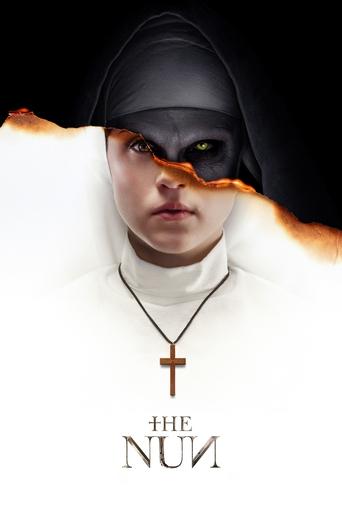
The Nun
Corin Hardy · 2018 · Film
Shares a supernatural threat.
81% shared signal
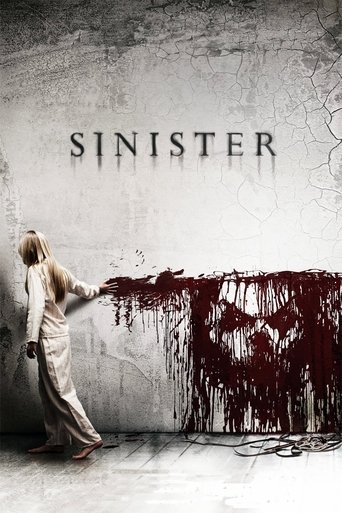
Sinister
Scott Derrickson · 2012 · Film
80% shared signal
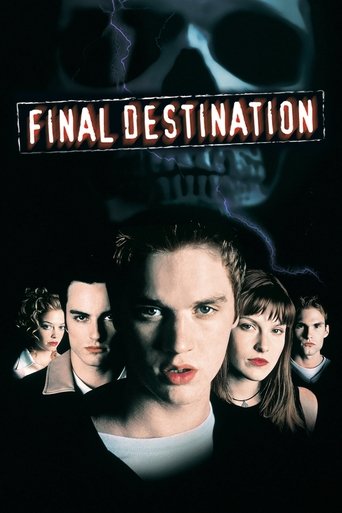
Final Destination
James Wong · 2000 · Film
79% shared signal
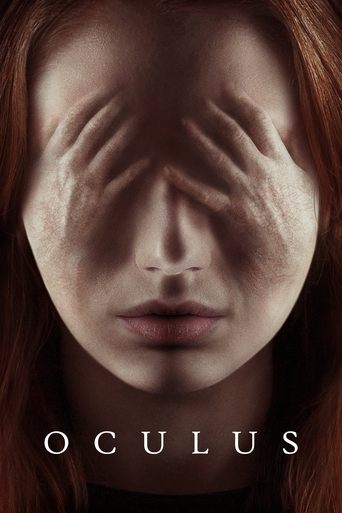
Oculus
Mike Flanagan · 2013 · Film
79% shared signal
Annabelle
John R. Leonetti · 2014 · Film
78% shared signal
See the full list of movies like It →
Questions about It
The things people actually ask about this film, answered.
What happens at the end of It (2017)?
Beverly is held in the deadlights and the other six go into the lair. Ben's kiss wakes her, and the group attacks It together while refusing to be afraid, which weakens it. Beverly spikes its head, Bill tells it that it will starve, and it retreats down the shaft. They swear a blood oath to return.
What is Pennywise?
A non-human intelligence older than Derry that wakes about every twenty-seven years to feed and takes the shape of whatever frightens its target. The clown is a lure aimed at children rather than its real form, and the film deliberately explains almost nothing beyond that.
What are the deadlights in It?
The lights in Pennywise's mouth and the condition they cause. Looking into them empties the victim out — the body floats in the air, eyes open, alive and absent. It is why the lair is full of drifting children, and why Beverly spends the climax suspended.
How do the children defeat It?
Collectively, by refusing to be frightened. It feeds on fear and cannot hold a shape without it, so once the seven stand together it becomes vulnerable to ordinary objects — a bolt gun, a fence post, a bat. Bill's final line, that it will starve, is the actual killing blow.
Is It (2017) faithful to the book?
To half of it. The film adapts only the childhood timeline, moved from 1958 to 1989, and leaves the adult half for the sequel. It keeps the Losers, the shapeshifting, the deadlights and Derry's complicity, and drops the novel's cosmology, the Turtle, and its most-criticised late scene.
How gory is It (2017)?
Moderately. We score it 058 on viscera, above the median for our index. There is a severed arm, a decapitation and a room of bodies, but most injury is digital, fast and bloodless by comparison with the practical-effects films we score higher.
These are ranked against It, not against you.
Build your own tape →