Film · 1985
A Nightmare on Elm Street 2: Freddy's Revenge
Jack Sholder
New family, old house, and Freddy no longer content to stay inside the dream.
60Hard going to sit through, out of 100 — mostly how bleak it is
- PaceBuilds, then strikes58
- ThreatMostly supernatural28
- GoreShows some of it56
- ToneGrim, with air36
- RealityDream logic74
Era bias 16 · Analog-leaning. Texture rather than fear, so it is not part of the grade. All six scores →
The most surreal horror movies ever made →
Part of a series: Nightmare on Elm Street movies in order →
On VHSCREAM’s six-axis scale, A Nightmare on Elm Street 2: Freddy's Revenge (1985) is most extreme on the reality-anchor axis: 74 out of 100, where 0 is grounded realism and 100 is dream logic. 83% of the 320 horror works we have scored come in lower on that axis. How we score →
A Nightmare on Elm Street 2: Freddy's Revenge is a 1985 American supernatural slasher film directed by Jack Sholder and written by David Chaskin. A teenager whose family moves into Nancy Thompson's old house finds Freddy Krueger trying to use his body to kill in the waking world. We score it 016 on era bias and 074 on reality anchor.
Scored and reviewed by VHSCREAM on · how we score
How scary is A Nightmare on Elm Street 2: Freddy's Revenge, actually?
Scored against the published rubric, here is what the numbers mean.
The threat at 028 is on the supernatural side — 106 works score lower. A teenager's hands do some of the killing, but whose will drives it is never in doubt: Freddy's, climbing out of him.
Viscera 056 is in the middle — 160 works score lower. A shower killing, a friend murdered after he falls asleep on watch, and a massacre at a pool party, with the transformation effects doing more work than the blood.
Tone 036 is bleak — 232 works score lower. A boy is terrified of what is inside him, and the one victory the film allows is cancelled in its final minute.
Pace 058 is on the shock side of the middle, with 176 works slower. It builds slowly through the house and the dreams, then turns loud and fast from the pool party on.
Era bias 016 reads analog — 59 works score lower. Film grain, latex transformation effects, a mid-1980s suburb and a school bus.
Reality anchor 074 is surreal — 266 works score lower. The film deliberately lets dream and waking life bleed together, which is exactly what Craven objected to.
On jump scares: a few, and the last one, through Kerry's chest on the bus, is the one people remember.
Who should skip A Nightmare on Elm Street 2: Freddy's Revenge
Skip it if you want the dream rules of the original. Freddy walks through the real world here, and the script never squares that with what came before.
Skip it if a frightening Freddy is the point. He spends much of this film in bright rooms and crowds, and he is less menacing for it.
Skip it if you want a tidy ending. The film's victory is undone in the last scene, and its rules contradict themselves along the way.
Content notes: a man stabbed and killed in a shower, a friend killed while keeping watch, a pool-party massacre, birds bursting into flames, body transformation, possession, and an attack through a teenager's chest.
Watch it if you are working through the series, you are interested in a horror film whose subtext outgrew its makers, or you want an Elm Street sequel that genuinely tried something other than Freddy's dream world.
A Nightmare on Elm Street 2: Freddy's Revenge on six axes of fear
Every work in the index is scored on six continuous axes of fear. This is what A Nightmare on Elm Street 2: Freddy's Revenge looks like as a vector — and what each ten-point band looks like across everything else we hold.
Draft score — awaiting human review. About these scores
Disagree with a number? Say so on the axis itself. Nobody has confirmed this vector yet, and a score you challenge goes to the top of the queue to be re-scored by a human. Votes do not move the numbers — they decide what gets looked at first. How the scoring works →
Scored against the published rubric. This vector is a draft awaiting review — the method is public so you can argue with it.
A Nightmare on Elm Street 2: Freddy's Revenge: the review
Freddy's Revenge is the strangest film in the series, and for a long time it was the one everybody pretended had not happened. It deserves better than that, and it also deserves most of what was said about it.
New Line had a hit with A Nightmare on Elm Street and wanted a second one quickly. Wes Craven declined to come back. His objections, as the record has them, were the script's "possessed parakeet", a Freddy who looked less frightening among bigger teenagers, and the way the new film blurred dream and reality. He was right about all three, and the third is also the reason the film is still discussed. Jack Sholder, who had made Alone in the Dark for the studio, took the job with very little time to prepare, and the film was made for about $3 million.
A sequel that breaks its own rule
The original had one rule, and it was the whole engine: Freddy can only reach you while you sleep, so the fight is about staying awake. David Chaskin's script throws that away almost at once. Jesse Walsh, whose family has moved into Nancy's house on Elm Street five years after the original, is not being hunted in his dreams. He is being recruited. Freddy tells him to kill, and then starts climbing out through him.
That turns the series from a slasher with a dream gimmick into a possession film with a slasher's body count, and it changes what the horror is. Freddy is no longer a place you go when you close your eyes. He is something living inside a boy who cannot tell anyone what is wrong with him. The film's best images all come from that idea: small fires breaking out around the house, the pet birds bursting into flames, Jesse waking with the bladed glove on his own hand, and the transformation at Lisa's pool party, built by Mark Shostrom, in which his body changes as she kisses him. Kevin Yagher's redesigned Freddy is less effective than any of that, partly because the film keeps bringing him into rooms full of light.
It is worth knowing how close the studio came to not caring who was under the make-up at all. New Line first considered putting an unnamed extra in a rubber mask instead of bringing back Robert Englund, and some of that extra's footage survives, hidden in the steam of Schneider's shower death. The studio relented and Englund returned, and the difference shows every time he is allowed to move. Christopher Young's score, meanwhile, takes the film more seriously than the script does, and the end credits play Bing Crosby's "Have You Ever Seen a Dream Walking", which is the one joke in the film that lands exactly.
The subtext was not an accident
It is close to impossible to talk about this film now without talking about what it is about underneath. Jesse goes wandering at night and is found by his gym teacher, Coach Schneider, in a gay bar. Schneider sends him to run laps, and Freddy kills Schneider in the school showers. When Jesse panics after kissing Lisa, he runs to his friend Ron Grady's house and asks to spend the night. The film's climax depends on a girl's love pulling a boy back out of the thing inside him.
For years the writer denied any of that was intended. In 2010 Chaskin said it was deliberate, and that he had wanted to tap into adolescent anxiety at a time when, in his words, homophobia was skyrocketing. Robert Englund has said the film was obviously meant to have a bisexual theme. Sholder and producer Sara Risher said they did not see it during production. Mark Patton, who played Jesse, felt betrayed, said he was typecast afterwards, and left acting; he later told his side in the documentary Scream, Queen! My Nightmare on Elm Street in 2019.
That history makes the film more interesting than it is good. A story about a boy who is terrified of what is growing inside him, made by people who in some cases did not know that was the story, has a nervous energy a cleaner sequel would not.
Where it falls down
The rules are a mess, and the film knows it. Freddy appears in the real world, then cannot hurt Lisa because Jesse is still in there somewhere, then massacres a pool party, then is undone by a kiss. None of it follows from the original and very little of it follows from itself. Lisa, played by Kim Myers, ends up carrying the climax, which is reportedly how Craven wanted the balance shifted, but the script does not give her much more than courage.
Freddy is also simply less frightening here. The original kept him in shadow and in sleep, and this one puts him beside a swimming pool in a crowd. Sholder stages the party massacre as spectacle, and it plays as a man in make-up chasing extras. Critics at the time mostly compared it unfavourably with Craven's film; it holds 49% on Rotten Tomatoes, and People called it a tedious, humorless mess.
And the ending throws away the one thing the film earned. Having let Lisa win, it puts Freddy's arm through a girl's chest on a school bus, because sequels need doors left open.
Even so, it is an Elm Street sequel that genuinely tried to be about something other than Freddy. For the original rule played straight, go back to A Nightmare on Elm Street; for the whole series laid out in release order, start at the Nightmare on Elm Street movies in order.
The ending of A Nightmare on Elm Street 2: Freddy's Revenge explained
The ending, in full. Open it when you have seen it.
The short answer: Freddy has been using Jesse's body to kill. After he murders Coach Schneider and Jesse's friend Ron Grady, and then slaughters several guests at Lisa's pool party, Lisa drives to the abandoned factory where Freddy once worked. She masters her own fear, tells Jesse she loves him, and kisses Freddy. Jesse begins to fight back from inside, Freddy combusts into ash, and Jesse steps out of it. In the last scene, Jesse, Lisa and their friend Kerry ride the school bus. Jesse notices it is echoing his first nightmare and panics. Kerry tells him it is over, Freddy's clawed arm bursts through her chest, and the bus drives off into a field while Freddy laughs.
What happens at the end of Freddy's Revenge?
Lisa confronts Freddy at the abandoned factory, refuses to be afraid of him, tells Jesse she loves him and kisses Freddy. That gives Jesse the strength to resist, and Freddy burns away to ash with Jesse emerging from it. Then the coda on the school bus undoes the victory: Freddy's arm comes through Kerry's chest and the bus heads into a field, exactly as in Jesse's first dream.
Is Jesse possessed by Freddy?
Yes. That is the film's change to the series. Instead of killing teenagers in their sleep, Freddy tells Jesse to kill for him and then begins physically emerging from Jesse's body to do it. Lisa works out that Jesse's fear is what feeds Freddy's strength, which is why the cure is for Jesse to stop being afraid and fight back.
Why can't Freddy kill Lisa?
Because Jesse is still inside him. When Freddy transforms in front of Lisa, he attacks her but cannot harm her, held back by Jesse's influence. Frustrated, he goes outside and kills partygoers instead. That restraint is the clue Lisa uses later: if Jesse can hold Freddy back once, he can be reached again.
Is the bus scene a dream?
The film does not say. It opens with Jesse's nightmare of a school bus that drives off the road into a field, and it ends with the same image, Freddy laughing, after his arm has burst through Kerry's chest. Whether that is a real attack or another nightmare is left open, which is how the series ends most of its films.
Is Freddy's Revenge a gay horror film?
Its writer says it was meant to carry that reading. David Chaskin denied a gay subtext for years, then said in 2010 that it was deliberate. The gay bar, Coach Schneider and Jesse's flight to Ron's house after kissing Lisa are the scenes most often cited. Sholder and Risher said they did not notice it during production.
If A Nightmare on Elm Street 2: Freddy's Revenge is your kind of fear
The eight works closest to A Nightmare on Elm Street 2: Freddy's Revenge in the index on the five axes that describe fear, the same medium first — not by genre label, and not by what other people watched.
A Nightmare on Elm Street
Wes Craven · 1984 · Film
Shares dream logic.
93% shared signal
It Chapter Two
Andy Muschietti · 2019 · Film
Shares a threat that is not human.
90% shared signal
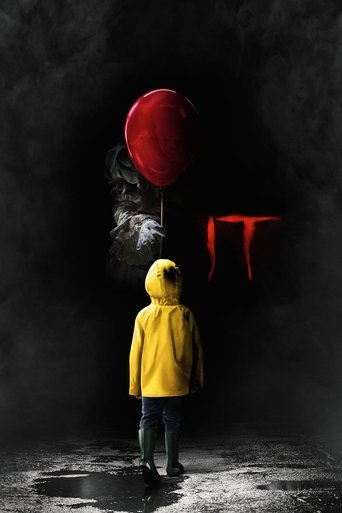
It
Andy Muschietti · 2017 · Film
Shares a threat that is not human.
89% shared signal
Wes Craven's New Nightmare
Wes Craven · 1994 · Film
Shares dream logic.
88% shared signal
Friday the 13th Part VII: The New Blood
John Carl Buechler · 1988 · Film
88% shared signal
A Nightmare on Elm Street 5: The Dream Child
Stephen Hopkins · 1989 · Film
88% shared signal

Profondo Rosso
Goblin · 1975 · Record
95% shared signal

Suspiria (OST)
Goblin · 1977 · Record
88% shared signal
More lists like these: Movies like It
Questions about A Nightmare on Elm Street 2: Freddy's Revenge
The things people actually ask about this film, answered — including how it ends.
What happens at the end of A Nightmare on Elm Street 2: Freddy's Revenge?
Lisa confronts Freddy at the abandoned factory, controls her own fear, tells Jesse she loves him and kisses Freddy. Jesse fights back from inside, Freddy burns to ash and Jesse emerges. On the school bus afterwards, Freddy's arm bursts through Kerry's chest and the bus drives into a field, as in Jesse's first nightmare.
Who plays Jesse in Freddy's Revenge?
Mark Patton plays Jesse Walsh, with Kim Myers as Lisa Webber and Robert Rusler as Ron Grady. Robert Englund returns as Freddy Krueger. Patton later said he felt betrayed by the film's subtext and left acting, and told his story in the 2019 documentary Scream, Queen! My Nightmare on Elm Street.
Why didn't Wes Craven make Freddy's Revenge?
He declined to return as director. He objected to the script's possessed parakeet, to Freddy seeming less menacing among older teenagers, and to the blurring of dream and reality. Jack Sholder, who had made Alone in the Dark for New Line, directed instead with very little time to prepare.
Is Freddy's Revenge connected to the original?
Yes. It is set five years after the 1984 film, and Jesse's family has moved into Nancy Thompson's former house on Elm Street. Jesse and Lisa find Nancy's diary, which describes dreams very like the ones he is now having, and that is what first tells them what they are facing.
How much did Freddy's Revenge make?
It was made for about $3 million and earned around $30 million in the United States after its release on November 1, 1985. Reviews were mixed and many critics compared it unfavourably with the original, but it has since been reassessed and is now widely treated as a cult classic.
How scary is Freddy's Revenge?
Less than the original. We score it 056 on viscera and 058 on pace, and its best scares come from the body-horror transformations rather than from Freddy himself, who spends much of the film in the open. The final bus scene is the one real jolt.
These are ranked against A Nightmare on Elm Street 2: Freddy's Revenge, not against you.
Build your own tape →