Film · 1994
Wes Craven's New Nightmare
The films kept something locked up. Now they have stopped, and it wants Nancy's son.
62Hard going to sit through, out of 100 — mostly how bleak it is
- PaceBuilds, then strikes46
- ThreatMostly supernatural18
- GoreShows some of it52
- ToneBleak26
- RealityDream logic80
Era bias 20 · Analog-leaning. Texture rather than fear, so it is not part of the grade. All six scores →
The most supernatural horror movies ever made →
Part of a series: Nightmare on Elm Street movies in order →
On VHSCREAM’s six-axis scale, Wes Craven's New Nightmare (1994) is most extreme on the threat axis: 18 out of 100, where 0 is a threat that is not human and 100 is human monsters. 16% of the 320 horror works we have scored come in lower on that axis. How we score →
Wes Craven's New Nightmare is a 1994 American meta supernatural horror film written and directed by Wes Craven. Heather Langenkamp, playing herself, finds that an ancient entity in Freddy Krueger's shape has escaped now the films have ended, and that it is coming for her son. We score it 018 on the threat axis and 080 on reality anchor.
Scored and reviewed by VHSCREAM on · how we score
How scary is Wes Craven's New Nightmare, actually?
Scored against the published rubric, here is what the numbers mean.
The threat at 018 is near the supernatural end — 52 works score lower. The killer is an ancient entity wearing Freddy's shape, held back by a story rather than by locks or bones.
Viscera 052 is in the middle — 134 works score lower. A man slashed to death in a car, a throat cut and a babysitter brutally killed, with few deaths and none played for laughs.
Tone 026 is bleak — 172 works score lower. A woman loses her husband and best friend and nearly her child, and the jokes of the later Freddy are gone.
Pace 046 is on the dread side of the middle, with 133 works slower. Long stretches of a mother watching her son fail to sleep, then a violent final act.
Era bias 020 reads analog — 82 works score lower. Shot on film in 1994 with practical effects and real earthquake footage.
Reality anchor 080 is surreal — 280 works score lower. The film collapses the line between a horror franchise and the people who made it, and ends inside a dream realm.
On jump scares: a few, mostly the claws arriving where they should not, used sparingly.
Who should skip Wes Craven's New Nightmare
Skip it if you want the wisecracking Freddy. He is darker, quieter and on screen much less than in the sequels.
Skip it if a child in danger is a hard limit. The film's central fear is a small boy terrorised by Freddy and pulled into his realm.
Skip it if meta-horror leaves you cold. The premise depends on caring about the films as films, and the cast playing themselves.
Content notes: a child in sustained danger, a husband killed in a car, a babysitter killed brutally, earthquake damage, threatening phone calls, and grief.
Watch it if you love the original, you want to see where Scream came from, or you want Freddy frightening again for one last time.
Wes Craven's New Nightmare on six axes of fear
Every work in the index is scored on six continuous axes of fear. This is what Wes Craven's New Nightmare looks like as a vector — and what each ten-point band looks like across everything else we hold.
Draft score — awaiting human review. About these scores
Disagree with a number? Say so on the axis itself. Nobody has confirmed this vector yet, and a score you challenge goes to the top of the queue to be re-scored by a human. Votes do not move the numbers — they decide what gets looked at first. How the scoring works →
Scored against the published rubric. This vector is a draft awaiting review — the method is public so you can argue with it.
Wes Craven's New Nightmare: the review
New Nightmare is the film where Wes Craven took Freddy back from the franchise that had turned him into a comedian, and the way he did it was by making a horror film about the franchise itself.
Craven wanted something more cerebral than the recent sequels, which he felt had become cartoonish. The premise he used here dated back to an idea he had pitched for Dream Warriors and lost. Seven years later, after Freddy's Dead had announced the end of the series, he got to make it, on an $8 million budget, under the working title A Nightmare on Elm Street 7: The Ascension.
The fiction is the cage
The film is set in the real world, or a version of it. Heather Langenkamp, who played Nancy Thompson in A Nightmare on Elm Street, lives in Los Angeles with her husband Chase and their young son Dylan. She has nightmares of Freddy's claws, she is getting threatening calls from a fan who recites Freddy's rhyme, and New Line Cinema, in the person of its real head Robert Shaye, wants her to come back as Nancy for a new film. Robert Englund plays himself. So do John Saxon, Shaye and Craven.
Craven's explanation, delivered by Craven himself, is the film's best idea. He admits to having precognitive nightmares, and tells Heather that an ancient supernatural entity had been kept trapped by the Nightmare films. When the series ended with Freddy's Dead, the entity was set free. It has taken Freddy's form, and it is focusing on Heather, because killing her would let it into the real world. To stop it, she has to play Nancy one more time.
That is a story about why horror stories matter, told as a horror story. Freddy here is not a character but a shape that evil has found convenient, and the films were not merely entertainment but a cage. It is a self-serving idea for a horror director to have, and Craven makes it work by taking it seriously.
The film is full of the series' own people, which is part of the pleasure and part of the argument. Lin Shaye turns up as a nurse. Tuesday Knight and Jsu Garcia, credited here as Nick Corri, appear as themselves, standing silently at a funeral, and Shaye's colleagues Sara Risher and Marianne Maddalena, the film's producer, also play themselves. Craven nearly asked Johnny Depp to make a cameo and was too timid to do it; Depp later said he would have agreed. Some of what Craven planned was stranger still. His original script cast himself as a man so driven by nightmares that he had cut off his eyelids, and a sequence Englund was scripted to play, a homage to The Fly involving a fly and a spider, was never shot for lack of time and money. The finished film is dedicated to Gregg Fonseca, the production designer of the original.
A darker Freddy, and a frightened mother
Freddy was redesigned for the occasion: a long blue-black trenchcoat, a green hat, and a new, more organic glove. He is used sparingly, and the film spends most of its time with Heather watching her son become afraid to sleep. Langenkamp, who won the Fangoria Chainsaw Award for Best Actress, carries it, and the film draws real strength from the fact that she is playing a version of herself who was once a teenage scream queen and is now a mother with no one who believes her.
Craven also lets reality do some of the work. Production overlapped with the 1994 Northridge earthquake, and footage of real earthquake damage went into the film. The deaths are fewer and nastier than in the late sequels. Chase falls asleep at the wheel and is slashed to death by Freddy's claws. Julie, Dylan's babysitter and Heather's best friend, is killed brutally, in a scene that echoes Tina's death in the original. Before either, in the film's opening, Freddy's newly designed glove slashes the throat of a special-effects worker, which is Craven announcing that the joke is over.
The closer Heather comes to accepting the role, the more her life turns into the old film. John Saxon starts calling her Nancy. Her house and street begin to look like Nancy's. The film's last act takes place in Freddy's boiler-room realm, and it is as close to the original's dread as the series came after 1984.
Where it falls down
It is long. At 112 minutes it is a big film for a slasher, and the middle act, in which Dylan ends up in hospital and Heather races between him and home, sags under the weight of setting up the climax. The threatening phone calls from the fan go nowhere much. Owen Gleiberman called the film an empty hall of mirrors, and in its slower stretches you can see what he meant: the conceit is more interesting to think about than some scenes are to watch.
It also underperformed. It opened third, against Pulp Fiction, and grossed $19.8 million worldwide, the lowest in the series. That says more about 1994 than about the film. It has a 76% Rotten Tomatoes score, Roger Ebert gave it three stars, and Robert Englund calls it his favourite Nightmare film.
The direct line from here runs to Scream: Craven said the self-referential approach he developed in this film shaped Scream, which moved the self-awareness from the filmmakers to the audience. For more of his work, see Wes Craven; for the whole series in order, the Nightmare on Elm Street movies in order.
The ending of Wes Craven's New Nightmare explained
The ending, in full. Open it when you have seen it.
The short answer: Heather accepts the role of Nancy. Freddy abducts Dylan into his boiler-room realm, and Heather follows him in. Together, mother and son push Freddy into his own furnace, destroying him and the realm he built. Back in the real world, Heather and Dylan emerge from under his blankets. Heather finds a copy of Wes Craven's screenplay describing everything that has just happened to them, with a note from Wes thanking her for defeating Freddy. The entity is imprisoned in the story again.
What happens at the end of New Nightmare?
Heather follows Freddy into his boiler-room world to rescue Dylan, and the two of them push Freddy into the furnace, destroying him. When they come back, Heather finds Wes Craven's script, which describes the events of the film, with a note thanking her. By playing Nancy one last time, she has trapped the entity in a story again.
What is the entity in New Nightmare?
An ancient supernatural evil that has taken Freddy Krueger's form. Wes Craven explains in the film that the original Nightmare films kept it trapped, and that it was freed when the series ended with Freddy's Dead. It targets Heather Langenkamp because killing her would let it fully into the real world.
Is New Nightmare part of the Nightmare on Elm Street timeline?
No. It stands outside the continuity of the earlier films. It is set in the real world, where the earlier films are films, and its cast play themselves: Heather Langenkamp, Robert Englund, John Saxon, Wes Craven and Robert Shaye. It is the seventh film in the franchise and a meta-sequel to Freddy's Dead.
How does Chase die in New Nightmare?
Heather's husband Chase falls asleep at the wheel while driving home and is slashed to death by Freddy's claws. Earlier, Heather had dreamed of the claws attacking her family and woke during an earthquake to find a cut on Chase's finger that matched the dream.
Is New Nightmare connected to Scream?
Not by story, but by method. Critics often treat it as a prelude to Scream, which Craven directed two years later. In a 2014 interview Craven said the self-referential approach he took here shaped Scream, which he felt improved on it by putting the audience, rather than the filmmakers and actors, at the centre.
If Wes Craven's New Nightmare is your kind of fear
The eight works closest to Wes Craven's New Nightmare in the index on the five axes that describe fear, the same medium first — not by genre label, and not by what other people watched.
A Nightmare on Elm Street 2: Freddy's Revenge
Jack Sholder · 1985 · Film
Shares dream logic.
88% shared signal
Phantasm
Don Coscarelli · 1979 · Film
Shares a threat that is not human.
88% shared signal
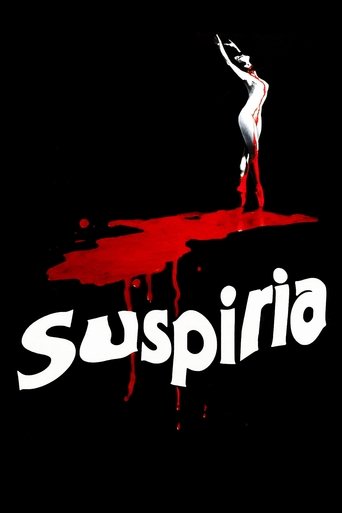
Suspiria
Dario Argento · 1977 · Film
Shares a threat that is not human.
87% shared signal
Halloween III: Season of the Witch
Tommy Lee Wallace · 1982 · Film
Shares a bleak, unforgiving tone.
86% shared signal
1408
Mikael Hafstrom · 2007 · Film
Shares a bleak, unforgiving tone.
85% shared signal
A Nightmare on Elm Street 5: The Dream Child
Stephen Hopkins · 1989 · Film
Shares dream logic.
85% shared signal

Profondo Rosso
Goblin · 1975 · Record
86% shared signal

Suspiria (OST)
Goblin · 1977 · Record
86% shared signal
More lists like these: Movies like Suspiria
Questions about Wes Craven's New Nightmare
The things people actually ask about this film, answered — including how it ends.
What happens at the end of Wes Craven's New Nightmare?
Freddy takes Dylan into his boiler-room realm, and Heather goes after him as Nancy. Mother and son push Freddy into the furnace and destroy him. Back in the real world, Heather finds Wes Craven's script describing everything that just happened, with a note from Wes thanking her for defeating Freddy.
Is Heather Langenkamp playing herself in New Nightmare?
Yes. Langenkamp plays a version of herself, the actress who played Nancy Thompson, and also plays Nancy at the climax. Robert Englund, John Saxon, Wes Craven and New Line's Robert Shaye also play themselves. Langenkamp won the Fangoria Chainsaw Award for Best Actress for the role.
Is New Nightmare canon?
It sits outside the continuity of the earlier films. Its world is our world, where A Nightmare on Elm Street is a film series, and Freddy is the shape of an ancient entity the films had kept trapped. It is a meta-sequel to Freddy's Dead and the seventh film in the franchise.
Why did New Nightmare flop?
It opened to $6.6 million in third place and grossed $19.8 million worldwide, the lowest of the series. The documentary Never Sleep Again suggests opening against Pulp Fiction hurt it. Reviews were better than for most sequels, with 76% on Rotten Tomatoes and three stars from Roger Ebert.
How did New Nightmare influence Scream?
Wes Craven said in a 2014 interview that the self-referential approach he developed here shaped Scream, released two years later. Scream, he said, improved the idea by putting the audience rather than the filmmakers and actors at the centre of the self-reference. Critics often call New Nightmare a prelude to it.
Is New Nightmare scary?
More than most of the sequels. We score it 026 on tone, toward the bleak end, and 046 on pace, toward dread. Freddy is darker and used sparingly, and the film's fear rests on a mother unable to protect her son rather than on jokes.
These are ranked against Wes Craven's New Nightmare, not against you.
Build your own tape →