
On VHSCREAM’s six-axis scale, Profondo Rosso (1975) is most extreme on the era-bias axis: 8 out of 100, where 0 is analog-era texture and 100 is modern craft. 9% of the 105 horror works we have scored come in lower on that axis. How we score →
Profondo Rosso is the 1975 score by the Italian band Goblin for Dario Argento's Deep Red, and the record that invented what a horror soundtrack could be. We score it 080 on reality anchor — 87 works score lower — and 058 on viscera.
Scored and reviewed by VHSCREAM on · how we score
Profondo Rosso: the review
Profondo Rosso is the most important horror score ever recorded and it sounds, at first, like a mistake.
Argento had hired Giorgio Gaslini, a serious jazz composer, and then fell out with him; the replacement he found was a young Roman progressive rock band then called Cherry Five, who had just failed to get an album off the ground. They recorded the score quickly, renamed themselves Goblin, and produced something nobody had attempted: a horror soundtrack that is a rock record. Bass guitar high in the mix, a drum kit playing actual grooves, Hammond organ, Moog, electric piano, and a title theme built on a children's lullaby figure played on a toy-box keyboard over a riff that would not be out of place on a Deep Purple B-side.
It should not frighten anybody. It is one of the most frightening pieces of music in this index, and the reason is the collision: the nursery melody and the rock band are two incompatible registers playing at once, and the listener's ear cannot settle on which one is the threat.
The lullaby is the whole idea
The theme's childlike figure is the film's actual subject — Deep Red's murderer is driven by a childhood event, and the killer plays a recording of that lullaby before killing. Goblin's decision to make the title theme a nursery tune played on something that sounds like a music box, and then to put a fuzz bass under it, is the single most copied gesture in horror scoring. Every subsequent score that frightens an audience with a child's melody — Halloween (OST) excepted, which does something else — is downstream of this.
The rest of the record is a prog album
"Death Dies", "Mad Puppet", "Wild Session" and "Deep Shadows" are not atmosphere cues; they are compositions with structures, solos, key changes and endings. That is the record's other innovation and the one that has aged most interestingly: a 1975 horror film underscored by a band playing live in a room, loudly, rather than by an orchestra or a synthesiser.
Where it is a problem
It is relentless in the film to the point of comedy — Argento drops the full band into scenes that do not need it, and the score is frequently louder than the dialogue. Some of the jazz-rock material is simply of its moment. And the album's many reissues have scrambled the running order so thoroughly that there is no canonical sequence.
For the Goblin score everybody knows, Suspiria (OST); for the film this one scores, Dawn of the Dead carries Goblin's work in Argento's own cut.
The ending of Profondo Rosso explained
Total spoilers from here. Everything above this line is spoiler-free.
The short answer, with a caveat: there is no canonical ending, because there is no canonical running order. Profondo Rosso has been issued and reissued on Cinevox and elsewhere with different sequences, different numbers of tracks, bonus cues, alternate takes and, on some pressings, Gaslini's rejected material included. What every version does is return to the title theme — the record is structured as a set of variations around the lullaby figure, and the closing position on most sequences is either the theme itself or a reprise of it. That is the actual answer to how it resolves: it does not develop towards a conclusion, it circles back to the nursery tune, which is the same thing the film does. If you want a definitive sequence, the 1975 Cinevox original is the one to start from; later editions are more complete and less shaped.
What is the lullaby in Profondo Rosso?
The title theme's central melody — a simple, repetitive, childlike figure played on a toy-piano or music-box timbre, over a rock rhythm section. Inside Deep Red it is diegetic as well as scored: the killer plays a recording of a children's song before each murder, and the melody is tied to the childhood event that produced them. The score's genius is making the nursery tune the thing you learn to fear.
Who are Goblin?
A Roman progressive rock group, previously Cherry Five, who were brought in after Argento fell out with the jazz composer Giorgio Gaslini. The core line-up on this record is Claudio Simonetti on keyboards, Massimo Morante on guitar, Fabio Pignatelli on bass and Walter Martino on drums. They went on to score Suspiria, Dawn of the Dead, Tenebrae and Phenomena, and the band's name is now effectively a genre.
Is Profondo Rosso the same as Deep Red?
Yes. Profondo Rosso is the Italian title of Argento's 1975 film, released in English as Deep Red, and the score carries the Italian title on record. If you are looking for the album under the English name you will find it credited both ways, and some pressings use Deep Red on the sleeve.
Where should I start with Goblin?
Here or with Suspiria. Profondo Rosso is the more musically interesting record — it is a band playing, with real compositions — and Suspiria is the more frightening one. Both are short. After those, Goblin's score for Dawn of the Dead is the odd one out and worth hearing, and Tenebrae is where the sound goes fully electronic.
Is Profondo Rosso scary on its own?
Genuinely, which separates it from most scores. The title theme works without the film: the collision of the lullaby and the rock band produces an unease that does not depend on any image, and the record's reality anchor score of 080 reflects how little it resembles ordinary music. The jazz-rock tracks are a different matter and are closer to period pleasure than to dread.
How scary is Profondo Rosso, actually?
Scored against the published rubric, here is what the numbers mean.
Reality anchor 080 is high — only 16 works score higher. The record's method is incompatible registers played simultaneously, and there is no stable frame to hear it in.
Viscera 058 is above the median — 70 works score lower. Nothing is described, but the sound is physical: fuzz bass, close-miked drums, organ played hard, and an overall mix that is loud rather than atmospheric.
Era bias 008 is deep analog — only 9 works score lower. 1975, a band in a room, tape, a Hammond, an early Moog and no digital anything.
Tone 042 is close to the midpoint — 91 works score lower, which is high for this index: large parts of the record are a prog band enjoying themselves.
Pace 056 is just on the shock side — 76 works are slower. These are songs with grooves, not drones.
The threat at 030 is on the supernatural side — 35 works score lower, although Deep Red has no supernatural element at all and the score is attached to an entirely human killer.
On shocks: several, and most of them are the band coming in at full volume under something quiet.
Profondo Rosso on six axes of fear
Every work in the index is scored on six continuous axes of fear. This is what Profondo Rosso looks like as a vector.
Where that puts it: #7 supernatural · #8 surreal
Disagree with a number? Say so on the axis itself. Nobody has confirmed this vector yet, and a score you challenge goes to the top of the queue to be re-scored by a human. Votes do not move the numbers — they decide what gets looked at first. How the scoring works →
Scored against the published rubric. This vector is a draft awaiting review — the method is public so you can argue with it.
Who should skip Profondo Rosso
Skip it if you want ambient dread. This is a rock record with a horror function, and large sections of it groove.
Skip it if the mix will bother you. 1975 Italian soundtrack production, loud, bass-forward, and frequently louder than it ought to be.
Skip it if you need a definitive version. The reissues are a mess and no two sequences agree.
Content notes: instrumental, with no lyrics or depicted content. The record is attached to a film containing multiple graphic murders.
Listen to it if you want the record that invented horror scoring as we now understand it, you can take a prog band in the middle of a thriller, and you want to hear the lullaby trick being done for the first time.
If Profondo Rosso is your kind of fear
The eight works closest to Profondo Rosso in the index, ranked by distance across all six axes — not by genre label, and not by what other people watched.

Suspiria (OST)
Goblin · 1977 · Record
Shares analog-era texture.
90% shared signal
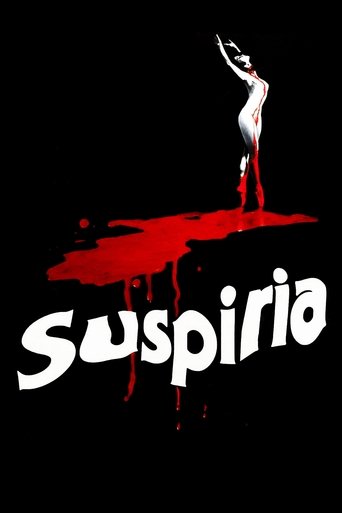
Suspiria
Dario Argento · 1977 · Film
Shares dream logic.
85% shared signal
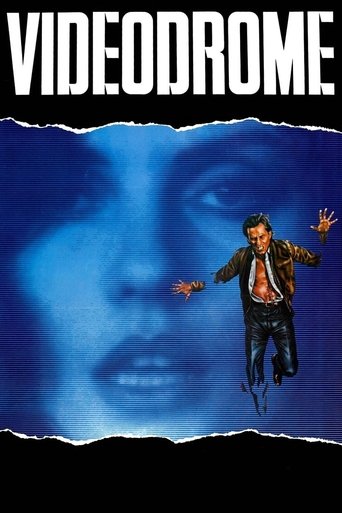
Videodrome
David Cronenberg · 1983 · Film
Shares analog-era texture.
83% shared signal
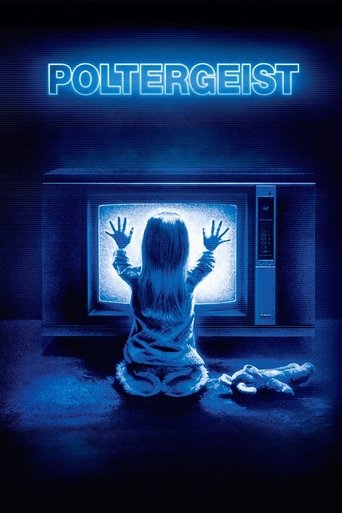
Poltergeist
Tobe Hooper · 1982 · Film
Shares a supernatural threat.
82% shared signal
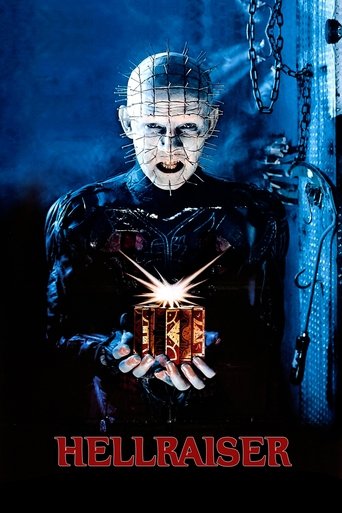
Hellraiser
Clive Barker · 1987 · Film
Shares dream logic.
80% shared signal

Books of Blood
Clive Barker · 1984 · Book
Shares a supernatural threat.
78% shared signal
Candyman
Bernard Rose · 1992 · Film
78% shared signal
Possession
Andrzej Zulawski · 1981 · Film
77% shared signal
Questions about Profondo Rosso
The things people actually ask about this record, answered.
How does the Profondo Rosso album end?
There is no canonical answer, because the reissues all sequence it differently. Every version circles back to the title theme rather than developing towards a conclusion, and most close on the theme or a reprise of it. The 1975 Cinevox original is the best-shaped sequence.
What is the lullaby in Profondo Rosso?
The title theme's central melody — a simple childlike figure on a music-box timbre over a rock rhythm section. In the film the killer plays a recording of a children's song before each murder, tied to the childhood event behind them, so the nursery tune is also the warning.
Who are Goblin?
A Roman progressive rock band, formerly Cherry Five, hired after Argento fell out with the jazz composer Giorgio Gaslini. Claudio Simonetti, Massimo Morante, Fabio Pignatelli and Walter Martino made this record, and the band went on to score Suspiria, Dawn of the Dead and Tenebrae.
Is Profondo Rosso the same film as Deep Red?
Yes — Profondo Rosso is the Italian title of Argento's 1975 film, released in English as Deep Red. The score is issued under both names depending on the pressing.
Where should I start with Goblin's soundtracks?
This one or Suspiria. Profondo Rosso is the better record as music, with actual compositions and a band playing live; Suspiria is the more frightening one. Both are short, and Dawn of the Dead is the interesting outlier afterwards.
Is Profondo Rosso frightening without the film?
The title theme is, which is unusual for a score. The clash between the nursery melody and the rock band produces unease with no image attached. The jazz-rock material is a different proposition and plays more as period pleasure.
These are ranked against Profondo Rosso, not against you.
Build your own tape →