Film · 1979
Phantasm
Don Coscarelli
A grieving boy, a very tall undertaker and a flying silver sphere. A dream with no exit.
55Strong to sit through, out of 100 — mostly how bleak it is
- PaceBuilds, then strikes58
- ThreatSomething not human14
- GoreShows some of it46
- ToneGrim, with air40
- RealityPure nightmare logic86
Era bias 10 · Analog to the bone. Texture rather than fear, so it is not part of the grade. All six scores →
The most supernatural horror movies ever made →
On VHSCREAM’s six-axis scale, Phantasm (1979) is most extreme on the threat axis: 14 out of 100, where 0 is a threat that is not human and 100 is human monsters. 9% of the 320 horror works we have scored come in lower on that axis. How we score →
Phantasm is a 1979 American supernatural horror film written and directed by Don Coscarelli. A thirteen-year-old boy grieving his parents notices that the tall mortician at the local cemetery can lift a full coffin alone, and follows him into a mausoleum full of things that should not exist. We score it 086 on reality anchor and 010 on era bias.
Scored and reviewed by VHSCREAM on · how we score
How scary is Phantasm, actually?
Scored against the published rubric, here is what the numbers mean.
The threat at 014 is on the supernatural end — 28 works score lower. The Tall Man looks like an undertaker, but he bleeds yellow, disguises himself as a woman, and runs a gateway to another world.
Viscera 046 is in the middle — 118 works score lower. The sphere's kill is graphic and memorable, and the severed fingers are lingered on, but most of the film is chases rather than wounds.
Tone 040 is on the bleak side of the middle — 242 works score lower. It is a film about a boy losing everyone, but Reggie's warmth and the film's own oddness give it real lightness.
Pace 058 is on the shock side of the middle, with 176 works slower. Long stretches of wandering and watching, broken by sudden attacks and chases.
Era bias 010 reads analog — 29 works score lower. Shot over weekends for $300,000, with practical spheres and a black 1971 Plymouth Barracuda.
Reality anchor 086 is surreal — 294 works score lower. Flying spheres, a dimensional gateway, a finger that becomes an insect, and an ending that may or may not be a dream.
On jump scares: a few, and the last one is famous. The Tall Man's hands through the mirror arrive after the film appears to have resolved.
Who should skip Phantasm
Skip it if you need a plot that adds up. Scenes start and stop without consequence, and the explanation the film offers at the end is immediately contradicted.
Skip it if amateur acting breaks the spell. It was made over a year of weekends, and several performances show it.
Skip it if you want a steady slow burn. The film lurches between wandering, chases and gore, and never settles into one mode.
Content notes: a stabbing during sex, a graphic killing by a flying sphere, severed fingers, a reanimated corpse, grief over dead parents and a dead brother, and a child repeatedly in danger.
Watch it if you like horror that plays as a dream, you want to see one of the genre's great villains in his first appearance, and you can enjoy a film that is strange on purpose.
Phantasm on six axes of fear
Every work in the index is scored on six continuous axes of fear. This is what Phantasm looks like as a vector — and what each ten-point band looks like across everything else we hold.
Where that puts it: joint #10 surreal · joint #14 analog era
Draft score — awaiting human review. About these scores
Disagree with a number? Say so on the axis itself. Nobody has confirmed this vector yet, and a score you challenge goes to the top of the queue to be re-scored by a human. Votes do not move the numbers — they decide what gets looked at first. How the scoring works →
Scored against the published rubric. This vector is a draft awaiting review — the method is public so you can argue with it.
Phantasm: the review
Phantasm plays like a nightmare written down the morning after, and it should be judged as one rather than as a story.
That is close to how it was made. Don Coscarelli built it out of a teenage nightmare about a chrome sphere, shot it over more than a year, mostly at weekends, in Chatsworth, California, and rewrote it while he went. He wrote, directed, photographed and edited it himself, for about $300,000; his father is credited as producer, and his mother helped with effects and costumes under other names. It made around $22 million worldwide and four sequels followed. Nothing in it suggests a plan, and that is precisely why it has lasted. It has the logic of a dream, where a boy can accept a flying silver ball and a severed finger turning into an insect and still be more frightened of being left behind by his brother.
A film about grief, wearing a monster's suit
Mike Pearson is thirteen. He is grieving his parents, he clings to his older brother Jody, and the film opens with the funeral of Jody's friend Tommy. Mike, spying on the burial, sees the mortician carry the heavy coffin back to the hearse on his own instead of putting it in the ground. From there the boy keeps watching the Morningside mortuary, and the mortuary keeps watching back.
Read cold, the plot is nonsense: dwarfish hooded figures, a woman in lavender who kills men in the graveyard, a white room of canisters, a gateway to a red, hot world where the dead are shrunk and put to work. Read as the inside of a grieving boy's head, it is precise. Every threat in it is about death being worse than a full stop, and about the adults who handle the dead being something other than they seem. The final scene says out loud what the whole film has been implying, and then takes it back.
The Tall Man and the sphere
Angus Scrimm is the reason anyone remembers it. Coscarelli cast him after being intimidated by him on an earlier set, and put him in lifts and an undersized suit to make him look taller and thinner. He is used sparingly, and his stillness is the horror; he does not need to run, because the film's geography bends towards him. The figure has been cited as an influence on Slender Man, which is about right: both are tall, formal, faceless in spirit and impossible to outrun.
The sphere is the other icon. It flies down the mausoleum's marble corridors at head height, and when it finds the cemetery caretaker the film shows exactly what it is for, in one gleeful, appalling shot. It was built by the metalworker Will Greene, who died before the film came out. It still looks unlike any other horror prop.
The rest of the film is shaggier. The music is by Fred Myrow and Malcolm Seagrave and it carries more of the mood than the dialogue does. Reggie Bannister, whose part was written for him and whose character drives an ice cream truck, is warm and funny, and the chemistry between the three men gives the film a sweetness it has no right to.
Made by a family, on weekends
It helps to know how homemade this is, because it explains both the strangeness and the charm. Coscarelli wrote Reggie's part for Reggie Bannister and Mike's for A. Michael Baldwin. Oakland's Dunsmuir House stood in for the mortuary, and the mausoleum interiors were a set in a warehouse. The script was loose from the start and kept changing during a shoot that ran for more than a year, and Coscarelli did his own camerawork and editing. The result has none of the polish of a studio film, and it does not want any.
What it has instead is commitment. The film never winks at its own absurdity. When Mike slams a door on the Tall Man's hand and takes one of the severed fingers home, and the finger later turns into a buzzing insect, the film treats it with the same seriousness as a funeral. That straight face is why the nightmare works. A grown-up film would have explained the dwarves, the gateway and the yellow blood; this one just shows them and trusts that a thirteen-year-old would believe it.
It found an audience that agreed. It won a Special Jury Award at the Avoriaz festival in 1979, was nominated for a Saturn Award for Best Horror Film, and has since become a cult classic, restored in 4K and given a new theatrical release in 2016. It belongs with the stranger corners of 1970s horror, where nobody yet knew what a horror franchise was supposed to look like.
Where it falls down
It is loose in a way that will lose some viewers in the first twenty minutes. Scenes begin and end without consequence. The fortune teller's box sequence, in which Mike is told not to be afraid, is weird for its own sake and leads almost nowhere. Several performances are amateur, the action is staged with more energy than coherence, and a viewer looking for the clean rules of a Halloween or the internal logic of A Nightmare on Elm Street will find neither. Coscarelli's first test screening went badly because the film was too long, and the cuts left holes that the dream logic covers only partly.
But the strangeness is the asset. For the same dream-against-reality uncertainty played as adult tragedy, Jacob's Ladder; for the film Coscarelli named as one of his influences, an even less rational nightmare in brighter colours, Suspiria.
The ending of Phantasm explained
The ending, in full. Open it when you have seen it.
The short answer: Jody traps the Tall Man at the bottom of a mine shaft and sets off an avalanche that buries him. Then Mike wakes in his bed. Reggie, alive, tells him that Jody died in a car wreck a week ago, and that everything Mike has been through was a nightmare brought on by grief. Reggie suggests they go on a road trip to take Mike's mind off it. While Mike packs in his room, the Tall Man's hands burst through the mirror and drag Mike in. Whatever the dream was, the Tall Man was not part of it.
What is the ending of Phantasm?
A double reversal. First the film reveals that the story may have been a grieving boy's nightmare: Jody is dead in a car crash, and Reggie, who seemed to die in the mausoleum, is fine. Then the Tall Man's hands come through Mike's bedroom mirror and pull him in. The film ends on that shock without explaining it, so the dream and the horror are both left standing.
Was Phantasm all a dream?
The film offers that answer and then refuses it. Reggie's explanation covers most of the plot, and it fits: a thirteen-year-old who has lost both parents and now his brother could dream a mortician who steals the dead. But the Tall Man's hands reaching through the mirror in the final scene, while Mike is awake and packing, contradicts it. The likeliest reading is that some of what Mike saw was real. Four sequels kept the Tall Man coming back.
Who is the Tall Man in Phantasm?
The undertaker at Morningside Cemetery, played by Angus Scrimm. He appears to be human, but his severed fingers keep moving and bleed yellow ichor, and he kills Tommy disguised as the Lady in Lavender. He steals the dead from their coffins, shrinks them into hooded dwarves, and sends them through a gateway to a red, hot world where they work as slaves. The first film never says where he comes from.
What does the silver sphere do in Phantasm?
It guards the mausoleum. The flying silver sphere kills the caretaker inside the building and then chases Mike, and that kill is the film's goriest moment. Jody later destroys it with a shotgun. It came from Don Coscarelli's teenage nightmare about a chrome sphere, and the props were made by the metalworker Will Greene.
If Phantasm is your kind of fear
The eight works closest to Phantasm in the index on the five axes that describe fear, the same medium first — not by genre label, and not by what other people watched.
Wes Craven's New Nightmare
Wes Craven · 1994 · Film
Shares a threat that is not human.
88% shared signal
A Nightmare on Elm Street 2: Freddy's Revenge
Jack Sholder · 1985 · Film
Shares dream logic.
88% shared signal
It Chapter Two
Andy Muschietti · 2019 · Film
Shares a threat that is not human.
86% shared signal
A Nightmare on Elm Street 3: Dream Warriors
Chuck Russell · 1987 · Film
Shares dream logic.
86% shared signal
A Nightmare on Elm Street 5: The Dream Child
Stephen Hopkins · 1989 · Film
85% shared signal
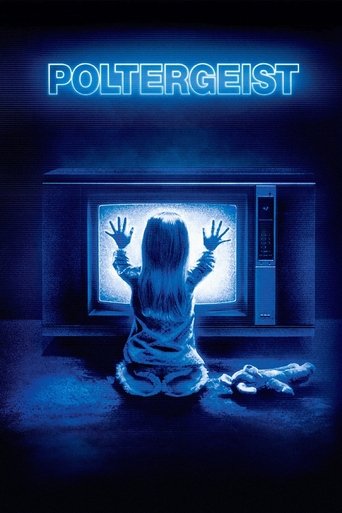
Poltergeist
Tobe Hooper · 1982 · Film
85% shared signal

Suspiria (OST)
Goblin · 1977 · Record
91% shared signal

Profondo Rosso
Goblin · 1975 · Record
88% shared signal
More lists like these: Movies like Poltergeist
Questions about Phantasm
The things people actually ask about this film, answered — including how it ends.
What happens at the end of Phantasm?
Jody buries the Tall Man in a mine shaft. Mike then wakes in bed, and Reggie tells him Jody died in a car wreck a week ago and that everything since was a grief-induced nightmare. As Mike packs for a road trip with Reggie, the Tall Man's hands burst through the bedroom mirror and pull Mike in.
Who plays the Tall Man in Phantasm?
Angus Scrimm. Don Coscarelli cast him after being intimidated by him on an earlier film set, and used lifts and an undersized suit to make him look even taller and thinner. Scrimm played the role through the franchise and was inducted into the Fangoria Chainsaw Awards Hall of Fame in 1994.
How many Phantasm movies are there?
Five. The original was followed by Phantasm II in 1988, Phantasm III: Lord of the Dead in 1994, Phantasm IV: Oblivion in 1998 and Phantasm: Ravager in 2016. One of the alternative endings shot for the first film was later reused in Phantasm IV.
Where did the idea for Phantasm come from?
From a nightmare Don Coscarelli had as a teenager about a chrome sphere. He also drew on Ray Bradbury's Something Wicked This Way Comes, the film Invaders from Mars and Suspiria. The script stayed loose and was rewritten during a shoot that lasted more than a year.
How gory is Phantasm?
Moderately. We score it 046 on viscera. The sphere's kill is the famous moment, graphic and brief, and the Tall Man's severed fingers ooze yellow ichor. A man is stabbed in the opening scene. Most of the rest is chases, shadows and strangeness rather than wounds.
Was Phantasm restored?
Yes. A 4K restoration supervised by Don Coscarelli and Bad Robot was completed in 2015, premiered at SXSW in 2016, and received a limited theatrical release before Blu-ray editions in the US and UK. The film is now widely regarded as a cult classic.
These are ranked against Phantasm, not against you.
Build your own tape →