Film · 1977
Suspiria
Dario Argento
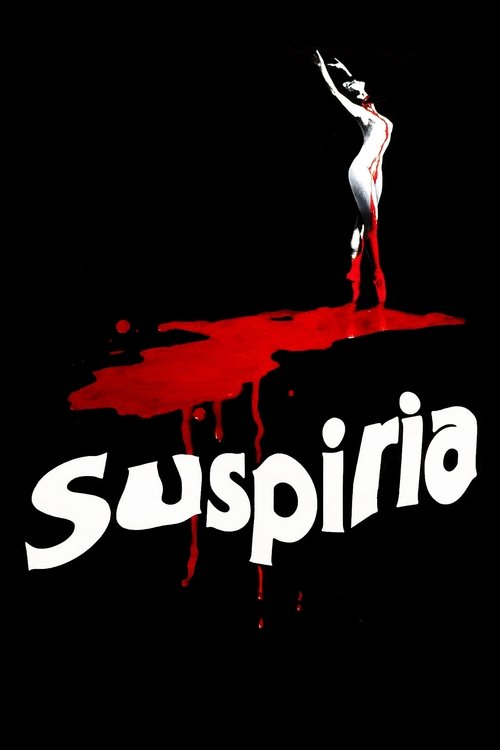
Colour used as violence. A ballet school run by witches, scored by Goblin.
Most extreme on THE THREAT — a supernatural threat at 012
On VHSCREAM’s six-axis scale, Suspiria (1977) is most extreme on the threat axis: 12 out of 100, where 0 is a supernatural threat and 100 is human monsters. 6% of the 105 horror works we have scored come in lower on that axis. How we score →
Suspiria is a 1977 Italian horror film directed by Dario Argento. An American ballet student arrives at a German dance academy and discovers it is run by a coven. We score it 012 on the threat axis — only 6 works in an index of 105 score lower, making this one of the most purely supernatural things we hold — and 088 on reality anchor.
Scored and reviewed by VHSCREAM on · how we score
Suspiria: the review
Suspiria is the strongest argument in cinema that a horror film does not need a functioning plot. The story is thin and told badly: Suzy arrives, girls die, an exposition scene in a square explains witches, Suzy finds a corridor, the end. Characters behave according to no psychology. Dialogue is dubbed into flatness. None of it matters, because Argento is not making a narrative. He is making a pressure system out of colour and sound.
The colour is the thing people remember and it is not an effect — it is a decision about stock and process. Argento shot on Eastmancolor and had it printed by the Technicolor imbibition process, one of the last films to use it, and lit interiors through coloured gels and stained glass so that reds and blues are not accents but the actual air of the room. There is no establishing shot in which the Tanz Akademie looks like a building where people live. It looks like a diagram of a nightmare.
And then there is Goblin. The score is credited to Argento and the band and was written before the shoot, played on set at volume, and mixed so high it competes with dialogue. Bells, a prepared piano, a whispered "witch", and a four-note progression that is functionally the film's monster. We score the soundtrack separately, and it is one of the few records in the index that frightens people without a film attached.
What it does better than anything since
Set-piece construction. The first murder — two deaths, a stained-glass ceiling, a drop — runs ten minutes and has the shape of a music video made in 1977 by somebody who had not seen one. The maggots, the room of razor wire, the blind man in the square: each arrives with no narrative justification and total formal confidence.
What it does badly
Everything else. The acting is a dub, the mystery is not a mystery, and the final confrontation lasts about ninety seconds and resolves by stabbing. If you need a film to hold together, this will read as an extremely beautiful mess — a fair description.
Luca Guadagnino's 2018 film is not a remake so much as an argument with it, and is worth seeing afterwards rather than instead.
The ending of Suspiria explained
Total spoilers from here. Everything above this line is spoiler-free.
The short answer: Suzy finds the academy's hidden rooms by following a half-remembered instruction, discovers the coven's founder Helena Markos — the Black Queen — alive and invisible in a bedroom, and kills her by driving a decorative glass feather through her throat. With Markos dead the coven collapses, the building begins to tear itself apart, and Suzy walks out into the rain, smiling, as it burns behind her.
Who is Helena Markos?
A Greek emigrant, exposed in the film's exposition scene as a witch who founded the academy in 1895 as a school of dance and occultism. By 1977 she is supposed to be long dead, and is in fact alive, ancient and able to make herself unseen. She is one of the Three Mothers — the Mother of Sighs — and the academy is her house.
What are the Three Mothers?
Argento's own invention, borrowed loosely from a Thomas De Quincey essay: three ancient witches, Mater Suspiriorum (Sighs), Mater Tenebrarum (Darkness) and Mater Lachrymarum (Tears), each presiding from a building in a different city. Suspiria is the first of a trilogy that continues in Inferno (1980) and concludes, badly, in The Mother of Tears (2007). You need none of that to watch this film.
Why does killing one witch destroy the building?
Because the film's logic is that the coven is sustained by Markos rather than by its members — a claim the exposition scene makes explicitly. The dependence is total, which is also why the academy's architecture starts failing as soon as she does. It is a fairy-tale rule rather than a thriller's, and the film has been operating on fairy-tale rules from the first frame.
Why is Suzy smiling at the end?
Partly relief, and partly the one moment the film grants her agency. She has been passive for ninety minutes — drugged, moved around, told what to do — and the smile is the first thing she chooses. There is no suggestion she has become anything. She simply got out, which in a film this hostile is a win.
How scary is Suspiria, actually?
Scored against the published rubric, here is what the numbers mean.
The threat at 012 is the signature and it is near the floor. Only 6 works in the index score lower, which makes this about as purely supernatural as horror gets. There is no human antagonist worth the name. The danger is witchcraft, operating by its own rules, and the film never gestures at a rational explanation.
Reality anchor 088 is near the ceiling — 95 works score lower. Nothing in the Tanz Akademie obeys ordinary space or ordinary behaviour, and the film does not present this as a twist.
Viscera 070 is high — 84 works score lower. The murders are extended, explicit and stylised, and the blood is famously the wrong colour, which does nothing to soften them.
Era bias 012 is deep analog, with only 21 works lower. Technicolor imbibition printing, gels, dubbing, and a score recorded to tape and played on set. Nothing about this film could be made now.
Tone 035 is less bleak than you would guess — 86 works score lower. It is a cruel film but not a despairing one, and it ends with a survivor walking away.
On jump scares: a few, and the score does the work. The music arrives before the threat does, consistently, which is the opposite of a sting.
Suspiria on six axes of fear
Every work in the index is scored on six continuous axes of fear. This is what Suspiria looks like as a vector.
Where that puts it: #3 surreal · #6 supernatural · #14 analog era · #15 goriest
Disagree with a number? Say so on the axis itself. Nobody has confirmed this vector yet, and a score you challenge goes to the top of the queue to be re-scored by a human. Votes do not move the numbers — they decide what gets looked at first. How the scoring works →
Scored against the published rubric. This vector is a draft awaiting review — the method is public so you can argue with it.
Who should skip Suspiria
Skip it if incoherent plotting ruins a film for you. The story does not work and the film is not trying to make it work. This is the single most common reason people dislike it, and it is a legitimate reason.
Skip it if dubbed performance is a barrier. The entire cast is post-synced, including the English speakers. It reads as artificial because it is.
Skip it if extended, stylised murder is a problem. At 070 on viscera the set pieces are long and explicit, and the stylisation does not make them easier — arguably the reverse.
Content notes: extended stabbing, a hanging, a fall through glass, maggots, animal attack, a death involving razor wire, and the killing of a guide dog.
Watch it if you want the most beautiful horror film ever made, you can accept a film that is pure form, and you want to understand where half of modern horror's colour grading comes from.
Where to find it
Streaming on Philo · Fandor · Screambox +1 ↗Physical copies on eBay ↗Availability from JustWatch via TMDB. We earn nothing from these links.
Nothing loads from YouTube until you press play.
If Suspiria is your kind of fear
The eight works closest to Suspiria in the index, ranked by distance across all six axes — not by genre label, and not by what other people watched.

Suspiria (OST)
Goblin · 1977 · Record
Shares analog-era texture.
89% shared signal

Profondo Rosso
Goblin · 1975 · Record
Shares dream logic.
85% shared signal
Videodrome
David Cronenberg · 1983 · Film
Shares explicit viscera.
79% shared signal

Books of Blood
Clive Barker · 1984 · Book
Shares a supernatural threat.
79% shared signal
Possession
Andrzej Zulawski · 1981 · Film
Shares dream logic.
79% shared signal
Alien
Ridley Scott · 1979 · Film
Shares analog-era texture.
77% shared signal
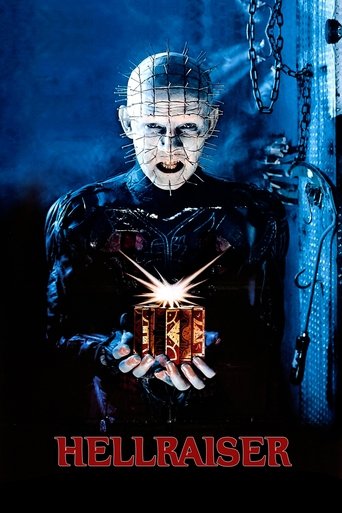
Hellraiser
Clive Barker · 1987 · Film
Shares explicit viscera.
76% shared signal
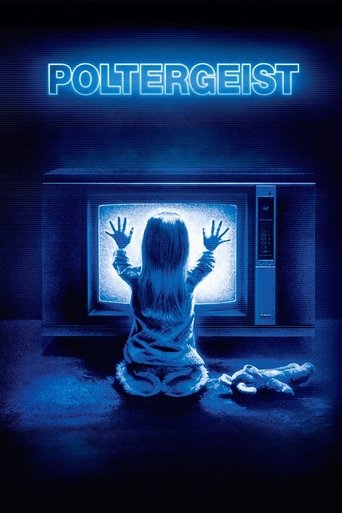
Poltergeist
Tobe Hooper · 1982 · Film
Shares a supernatural threat.
76% shared signal
Suspiria in another form
The index links works across media, so an adaptation sits beside its source and a score beside the film it haunts.
See the full list of movies like Suspiria →
Questions about Suspiria
The things people actually ask about this film, answered.
What happens at the end of Suspiria (1977)?
Suzy finds the academy's hidden rooms, discovers the coven's founder Helena Markos alive and invisible, and kills her with a glass feather through the throat. The coven collapses with her, the building begins to destroy itself, and Suzy walks out into the rain smiling as it burns.
Who are the Three Mothers in Suspiria?
Three ancient witches of Argento's own invention, loosely derived from a Thomas De Quincey essay — the Mothers of Sighs, Darkness and Tears — each ruling from a building in a different city. Suspiria is the first of a trilogy with Inferno (1980) and The Mother of Tears (2007), and stands entirely alone.
Why is the blood in Suspiria so red?
Because the film was printed using the Technicolor imbibition process, one of the last to be, and Argento lit through coloured gels and stained glass. The blood was mixed as a bright poster red on purpose. The film is not trying to look real at any point.
Is Suspiria (1977) scary?
It is overwhelming rather than frightening. There is very little tension in the conventional sense because the plot barely functions, but the colour, the Goblin score and the extended set pieces produce a kind of sensory dread that nothing else achieves. We score it 070 on viscera, so the murders are explicit.
Should I watch the 1977 or the 2018 Suspiria?
Both, in that order. Luca Guadagnino's 2018 film shares a premise and almost nothing else — it is longer, colder, explicitly political and far bleaker. It works as an argument with Argento rather than a replacement for him.
These are ranked against Suspiria, not against you.
Build your own tape →