
Film · 1990
Jacob's Ladder
Adrian Lyne
Grief refusing to resolve. Every corridor is the same corridor.
Most extreme on TONE — a bleak, unforgiving tone at 008
On VHSCREAM’s six-axis scale, Jacob's Ladder (1990) is most extreme on the tone axis: 8 out of 100, where 0 is a bleak, unforgiving tone and 100 is gleeful black comedy. 10% of the 105 horror works we have scored come in lower on that axis. How we score →
Jacob's Ladder is a 1990 horror film directed by Adrian Lyne and written by Bruce Joel Rubin. A Vietnam veteran working as a postman in Brooklyn is being pursued by figures nobody else can see, and cannot establish which parts of his own history are true. We score it 086 on reality anchor — joint-eleventh of 105 works — and 008 on tone.
Scored and reviewed by VHSCREAM on · how we score
Jacob's Ladder: the review
Jacob's Ladder is the most upsetting film about grief ever made in a major studio, and it spent thirty years being remembered mainly for its monsters.
Those monsters are extraordinary and almost none of them are creatures. Lyne's demons are made out of camera and body: a head that vibrates too fast to read, achieved by shooting an actor shaking at a low frame rate; a face with the features wiped off; something with no eyes at a party; a hand where a hand should not be. The most frightening thing in the film is a man in a hospital corridor who looks ordinary and then does not, and the second is a gurney ride through a basement ward in which the walls are made of parts.
But what the film is actually doing with them is the achievement. Jacob Singer has a dead child, a lost marriage, a job delivering other people's letters, and a war he cannot get a straight account of. Tim Robbins plays him with no self-pity at all, which is the only reason the film is bearable. Elizabeth Peña's Jezzie and Danny Aiello's Louis are the two people being kind to him and the film is deliberately unclear about whether either of them is there.
The structure is the horror
Scenes contradict each other. Jacob wakes from one life into another; his dead son is alive in the next shot; a doctor he visited has been dead for years; the men from his platoon agree about what happened and then do not. Rubin's script was written over a decade and passed around Hollywood as unfilmable, and Lyne shoots it with total conviction and no visual signals — no ripple, no dissolve, no change in grade. You are given no apparatus for telling which layer you are in, which is precisely Jacob's problem.
Louis's speech is the key to the film
Aiello's chiropractor delivers a paraphrase of Meister Eckhart: that the only hell is on earth, and that if you are frightened of dying and holding on, you see devils tearing your life away — but if you have made your peace, the devils are really angels, freeing you from the earth. It is said in the middle of the film, as a kindness, by a man rubbing somebody's back, and it is the complete explanation of everything the audience has been watching.
Where it is weaker
The conspiracy thread — the lawyers, the car bomb, the car in the alley — is the least interesting material and takes up the middle of the film. Jezzie is written as a function. And the final revelation, while devastating, retroactively flattens some genuinely strange sequences into exposition.
For the same marriage-shaped nervous collapse filmed without a safety net, Possession; for the same unreliable account of a man's own deterioration, Session 9 and Videodrome.
The ending of Jacob's Ladder explained
Total spoilers from here. Everything above this line is spoiler-free.
The short answer: Jacob goes back to the apartment he shared with Sarah and his sons before the war. The house is empty and quiet. He sits down, and then goes up the stairs — and Gabe, the son who died in a traffic accident before Vietnam, is sitting on the landing. Gabe takes his hand and the two of them walk up the staircase into a white light. The film cuts to a field hospital in Da Nang in 1971, where army surgeons stand over Jacob's body on an operating table and one of them says that he looks peaceful, and that he put up a fight. Jacob died of the bayonet wound in Vietnam. Everything after it — the postal job, Brooklyn, Jezzie, the demons, the conspiracy, the lawyers — happened inside the moment of his death.
Is Jacob dead the whole film?
Yes. The final scene establishes that he never left the field hospital: the wound he receives in the opening flashback is the wound he dies of, and the hour and fifty minutes in between are the duration of his dying. The film's title is the clue it gives you at the start — Jacob's ladder, in Genesis, is the ladder between earth and heaven with angels going up and down it — and the Eckhart speech is the instruction manual.
What was the Ladder in Jacob's Ladder?
An experimental drug. Michael Newman, a chemist, tells Jacob that his unit in Da Nang was dosed with a compound derived from BZ, designed to strip away inhibition and increase aggression, administered without their knowledge in a field test. The effect was that the platoon turned on each other, which is why Jacob's bayonet wound was not inflicted by the enemy. Whether this scene is true inside the film is exactly as uncertain as everything else, and it does not need to be true to work: it is the account Jacob's dying mind constructs to explain an injury that came from his own side.
What is the Meister Eckhart quote in Jacob's Ladder?
Louis, the chiropractor, paraphrases the medieval mystic: that there is no hell except the one here, and that the devils you see tearing at your life are only angels freeing you from the earth — if you are afraid of dying and clinging on, they look like demons, and if you have made your peace, they are what they are. Every apparition in the film is reframed by it. The things chasing Jacob are not punishing him. They are trying to get him to let go.
Who is Gabe?
Jacob's youngest son, killed by a car before Jacob was deployed to Vietnam, and the real wound the film is about. Macaulay Culkin plays him in flashback and in the final scene. The war, the drug, the conspiracy and the demons are all machinery; the thing Jacob cannot let go of, and the thing waiting at the top of the stairs, is a dead child. Rubin has said the film is about dying rather than about Vietnam, and Gabe is the proof.
Did the US Army really test BZ on soldiers?
The film's closing title card states that BZ was used experimentally on American troops in the 1960s and that the Pentagon has denied it. BZ — 3-quinuclidinyl benzilate — is a real incapacitating agent that the US weaponised and tested on volunteers at Edgewood Arsenal during that period, and the Edgewood programme is documented. The specific scenario in the film, a combat unit dosed in Vietnam to increase aggression, is not established and is the film's invention.
How scary is Jacob's Ladder, actually?
Scored against the published rubric, here is what the numbers mean.
Reality anchor 086 is near the ceiling — only 10 works score higher. Nothing in the film is reliably sequential and the entire running time turns out to be one moment.
Tone 008 is bleak — 11 works score lower. A child is dead before the film begins, the protagonist is dead before the film begins, and the kindest reading of the ending is that he stops resisting.
Viscera 052 is just above the median film — 59 works score lower. A bayonet wound, a car bomb, a body in an alley, and a hospital ward made of parts.
Era bias 028 reads analog — 41 works score lower. 1990 film stock, in-camera frame-rate tricks, practical prosthetics and optical compositing.
The threat at 060 leans human — 78 works score lower, which is the right reading for a film in which the demons are angels and the actual injury was inflicted by Jacob's own platoon.
Pace 030 is slow — 42 works are slower. It is a man walking around a city asking questions.
On jump scares: a handful, and the vibrating head is the one everybody remembers.
Jacob's Ladder on six axes of fear
Every work in the index is scored on six continuous axes of fear. This is what Jacob's Ladder looks like as a vector.
Where that puts it: #4 bleakest · #4 surreal
Disagree with a number? Say so on the axis itself. Nobody has confirmed this vector yet, and a score you challenge goes to the top of the queue to be re-scored by a human. Votes do not move the numbers — they decide what gets looked at first. How the scoring works →
Scored against the published rubric. This vector is a draft awaiting review — the method is public so you can argue with it.
Who should skip Jacob's Ladder
Skip it if the death of a child is a hard limit. Gabe's death is the emotional centre and the film returns to it repeatedly.
Skip it if you need a stable account of events. The film gives no signal about which scenes are real and a significant number of viewers find the last five minutes a cheat rather than a revelation.
Skip it if medical settings are difficult. Two extended sequences take place on gurneys in hospital basements, and both are designed to be intolerable.
Content notes: the death of a young child, a graphic battlefield stabbing, a car bombing, extended medical-horror imagery including restraint and involuntary treatment, chemical experimentation on soldiers, and the sustained depiction of a man's psychological collapse.
Watch it if you want the best studio horror film of 1990, you can take an ending that reframes everything, and you want to understand where every piece of video-game and film body horror of the last thirty years came from.
Where to find it
Streaming on fuboTV · MGM+ · Philo +2 ↗Physical copies on eBay ↗Availability from JustWatch via TMDB. We earn nothing from these links.
Nothing loads from YouTube until you press play.
If Jacob's Ladder is your kind of fear
The eight works closest to Jacob's Ladder in the index, ranked by distance across all six axes — not by genre label, and not by what other people watched.
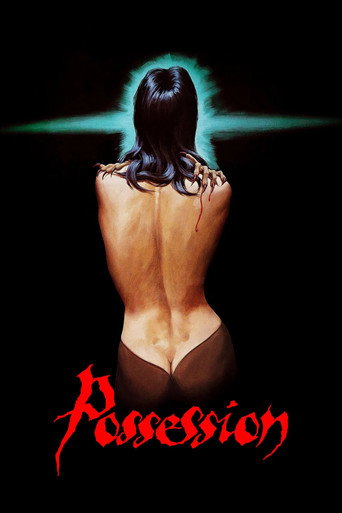
Possession
Andrzej Zulawski · 1981 · Film
Shares a bleak, unforgiving tone.
84% shared signal

The Cipher
Kathe Koja · 1991 · Book
Shares dream logic.
83% shared signal
The Shining
Stephen King · 1977 · Book
Shares analog-era texture.
83% shared signal
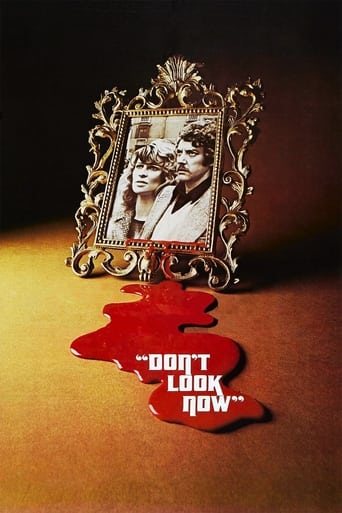
Don't Look Now
Nicolas Roeg · 1973 · Film
Shares slow-burn dread.
81% shared signal
Ghost Story
Peter Straub · 1979 · Book
Shares a bleak, unforgiving tone.
80% shared signal
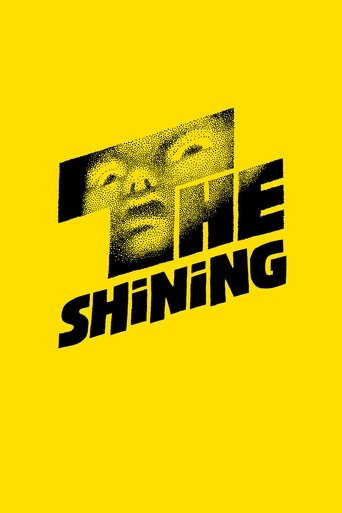
The Shining
Stanley Kubrick · 1980 · Film
Shares analog-era texture.
79% shared signal
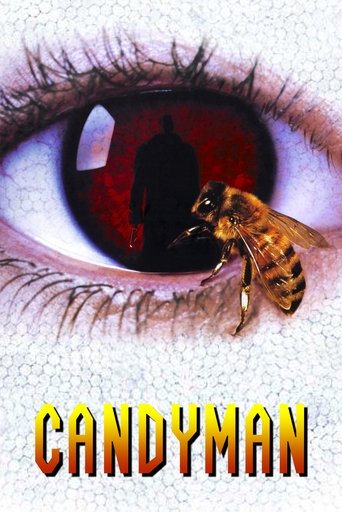
Candyman
Bernard Rose · 1992 · Film
79% shared signal
The Croning
Laird Barron · 2012 · Book
Shares dream logic.
79% shared signal
See the full list of movies like Jacob's Ladder →
Questions about Jacob's Ladder
The things people actually ask about this film, answered.
What happens at the end of Jacob's Ladder?
Jacob returns to his old apartment and walks up the stairs with Gabe, the son who died before Vietnam, into a white light. The film then cuts to a field hospital in Da Nang in 1971, where surgeons are standing over his body. He died there, and the whole film happened inside the moment of his death.
Is Jacob dead the entire film?
Yes. The bayonet wound in the opening flashback is the wound that kills him, and everything after it — Brooklyn, the postal job, Jezzie, the demons and the conspiracy — takes place during his dying. The title and the Meister Eckhart speech are both given as clues.
What is the Ladder drug in Jacob's Ladder?
A fictional compound derived from BZ, which a chemist tells Jacob was tested on his platoon in Da Nang to increase aggression without their knowledge, causing them to attack each other. It explains his wound, and like everything else in the film it may simply be the account his dying mind builds.
What is the Meister Eckhart quote in Jacob's Ladder?
Louis paraphrases it: there is no hell but the one here, and if you are frightened of dying and holding on to your life, the devils you see are tearing it away — but if you have made your peace, they are angels freeing you from the earth. It explains every apparition in the film.
Why does Jacob see demons?
Because he is dying and refusing to go. The film's own explanation, delivered by Louis halfway through, is that the figures are angels and that they look like demons only to someone clinging on. Once Jacob accepts Gabe's hand they stop entirely.
Did the army really test BZ on soldiers?
The film's closing card says BZ was used on American troops in the 1960s and that the Pentagon denies it. BZ is a real incapacitating agent and the Edgewood Arsenal human-testing programme is documented; the film's specific scenario of a Vietnam combat unit dosed for aggression is invented.
These are ranked against Jacob's Ladder, not against you.
Build your own tape →