
Record · 2013
Under the Skin (OST)
Mica Levi
Strings tuned to feel wrong. Alien in the literal sense.
Most extreme on TONE — a bleak, unforgiving tone at 008
The bleakest horror albums ever recorded →
On VHSCREAM’s six-axis scale, Under the Skin (OST) (2013) is most extreme on the tone axis: 8 out of 100, where 0 is a bleak, unforgiving tone and 100 is gleeful black comedy. 10% of the 105 horror works we have scored come in lower on that axis. How we score →
Under the Skin (OST) is Mica Levi's 2013 score for Jonathan Glazer's film, written for a small string ensemble played deliberately out of tune and recorded with the bowing noise left in. We score it 086 on reality anchor — joint-eleventh of 105 works — and 008 on tone.
Scored and reviewed by VHSCREAM on · how we score
Under the Skin (OST): the review
Under the Skin (OST) is the most influential film score of the last fifteen years and it was written by somebody who had never scored a film.
Levi came out of Micachu and the Shapes, a band whose instruments were frequently built out of hardware-shop materials, and Glazer hired them on the strength of that rather than any orchestral credential. The approach is consistent across the record: a small string group, instructed to slide rather than to arrive, to play in the gaps between the notes, and to press the bow hard enough that the friction is part of the sound. Nothing on the album is in tune in the conventional sense, and the central effect — a swarm of strings all moving towards a pitch from slightly different directions — is what a great deal of horror scoring has sounded like ever since.
The viola material is the record's signature. Long, sliding, vibrato-heavy figures that behave like something trying to imitate a human sound and not quite managing it, which is a precise description of what the film is about.
It is a score about a body being worn
Glazer's film follows something non-human operating a woman's body in Glasgow, and Levi's score is scored to that rather than to the plot. The recurring motif is attraction: the cue most people know is a repeated, almost rhythmic figure that plays over the predation sequences and sounds like a pulse that has been assembled rather than felt. Against it, the record has two or three passages of genuine, unprotected tenderness — and those are the ones that are hardest to listen to, because the film has established what the tenderness is for.
The percussion is not percussion
What reads as drums across much of the record is bowed and struck string material, close-miked, with the attack exaggerated. Levi has described wanting the score to sound as though it was being made by someone who had seen instruments but had not been told what they were for. That is the single best description of the record's effect and it is why it does not sound like an orchestra playing horror music.
Where it is difficult
It is short, deliberately repetitive and almost entirely without development, and divorced from the film several cues are simply unpleasant textures. The record is also mastered quietly and loses a great deal on laptop speakers. And its influence has now been so thoroughly absorbed that a listener coming to it in 2026 may find it familiar rather than startling, which is a problem of success.
For the vocabulary it inherits, Threnody for the Victims of Hiroshima; for the score that took the same approach to a different instrument, Hereditary (OST); for the other great modern horror score of its decade, It Follows (OST).
The ending of Under the Skin (OST) explained
Total spoilers from here. Everything above this line is spoiler-free.
The short answer: the record closes on its one unambiguous piece of beauty, and the film does the same thing to very different effect. Levi's score has two registers — the detuned, sliding, predatory string material and a small number of passages that are simply melodic — and the album's structure is to hold the melodic material back and then release it. In the film, the corresponding sequence is the ending: the woman is destroyed, snow falls, and Levi plays a cue that is warmer and more conventionally moving than anything in the preceding ninety minutes, which converts the whole thing retroactively into a tragedy rather than a predation. On record the running order varies slightly by release, so the exact final track depends on your edition, but every version of the album saves the melodic material for last. That is the resolution: the score only becomes beautiful once the thing it was describing is gone.
How were the strings recorded on Under the Skin?
By instructing the players against orthodoxy. The ensemble was asked to slide into and out of pitches rather than land on them, to play microtonally between notes, and to use enough bow pressure that the friction is audible as part of the tone. The recording leaves in the mechanical noise — bow on string, fingers on fingerboard — that a conventional score would remove, which is most of why it sounds organic rather than designed.
Who is Mica Levi?
A British composer and musician, previously of Micachu and the Shapes, who had no film-scoring experience when Glazer hired them for this. They have since scored Jackie, for which they received an Academy Award nomination, Monos, Zola and The Zone of Interest, and continue to work in a register almost nobody else in film music occupies.
What is the main theme of Under the Skin?
The cue that plays over the seduction and drowning sequences — a repeated, insistent, almost rhythmic figure built from sliding strings and exaggerated attack. It functions as a pulse and it is not quite one, and it is the piece that has been imitated most. Listeners generally know it as the predation music even without knowing the film.
Is Under the Skin (OST) listenable on its own?
Partly. Its best passages work as music and several of its cues are textures that mean considerably less without the image. It is also short and quietly mastered, so it rewards headphones and loses badly on a phone. The honest recommendation is to see the film first and then play the record, which is the opposite of how the Carpenter scores in this index work.
Why was this score so influential?
Because it demonstrated that a small ensemble playing badly on purpose could do what a large orchestra could not, and that a composer with no film background could produce the most distinctive score of a decade. The sliding, detuned, friction-heavy string sound that now signifies dread in trailers, prestige horror and television came through this record, which in turn came through Penderecki and Ligeti.
How scary is Under the Skin (OST), actually?
Scored against the published rubric, here is what the numbers mean.
Reality anchor 086 is high — only 10 works score higher. Almost nothing on the record holds a pitch, a metre or a key, and the ensemble is deliberately not in tune with itself.
Tone 008 is bleak — 11 works score lower. The score's warmth is withheld until its subject has been destroyed, which is a crueller structure than unrelieved coldness.
Era bias 084 reads modern — 81 works score lower. 2013, digital recording, close-miked acoustic sources and a contemporary mix that depends on fine detail being audible.
The threat at 045 is just under the midpoint, which is the right reading: the score's subject is something non-human wearing a human body, and the record sits exactly on that boundary.
Viscera 030 is low — 30 works score lower, though the bowing noise and the exaggerated attack make it more bodily than its score suggests.
Pace 024 is slow — 29 works are slower. Nothing on the record hurries and almost nothing develops.
On shocks: almost none. The record works by friction rather than by transients.
Under the Skin (OST) on six axes of fear
Every work in the index is scored on six continuous axes of fear. This is what Under the Skin (OST) looks like as a vector.
Where that puts it: #6 surreal · #8 bleakest · #8 slow burn
Disagree with a number? Say so on the axis itself. Nobody has confirmed this vector yet, and a score you challenge goes to the top of the queue to be re-scored by a human. Votes do not move the numbers — they decide what gets looked at first. How the scoring works →
Scored against the published rubric. This vector is a draft awaiting review — the method is public so you can argue with it.
Who should skip Under the Skin (OST)
Skip it if detuned strings are physically unpleasant for you. Nothing on this record is in tune and that is the entire method.
Skip it if you have not seen the film. More than most scores in this index, several cues are textures that need the image to mean anything.
Skip it if you need it loud. It is mastered quietly and full of fine detail; on laptop or phone speakers most of what matters is inaudible.
Content notes: instrumental, with no lyrics or depicted content. The record is attached to a film containing predation, drowning, nudity and a sexual assault.
Listen to it if you want the most influential score of its decade, you are curious how a string group playing deliberately wrong became the sound of dread, and you want to hear the record that made a generation of trailers possible.
If Under the Skin (OST) is your kind of fear
The eight works closest to Under the Skin (OST) in the index, ranked by distance across all six axes — not by genre label, and not by what other people watched.

Abyss
Chelsea Wolfe · 2015 · Record
Shares a bleak, unforgiving tone.
94% shared signal

Channel Zero: Candle Cove
Nick Antosca · 2016 · Television
Shares modern craft.
86% shared signal
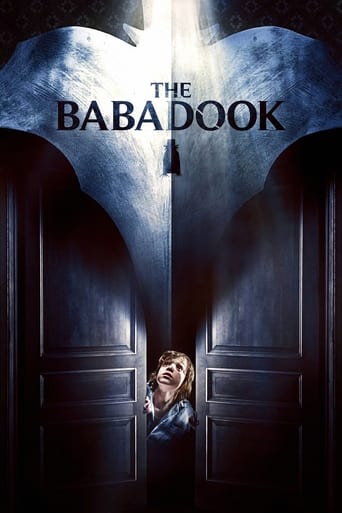
The Babadook
Jennifer Kent · 2014 · Film
Shares restraint over gore.
84% shared signal

House of Leaves
Mark Z. Danielewski · 2000 · Book
Shares dream logic.
84% shared signal
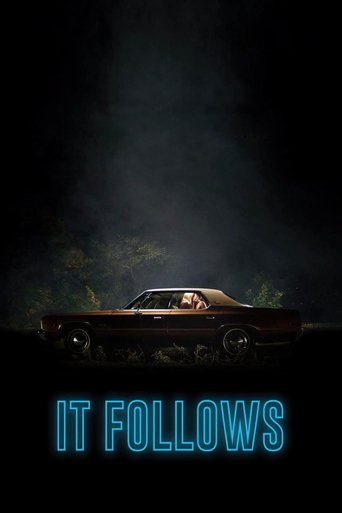
It Follows
David Robert Mitchell · 2014 · Film
Shares slow-burn dread.
82% shared signal

Everywhere at the End of Time
The Caretaker · 2016 · Record
Shares a bleak, unforgiving tone.
81% shared signal
The Ballad of Black Tom
Victor Lavalle · 2016 · Book
Shares modern craft.
80% shared signal
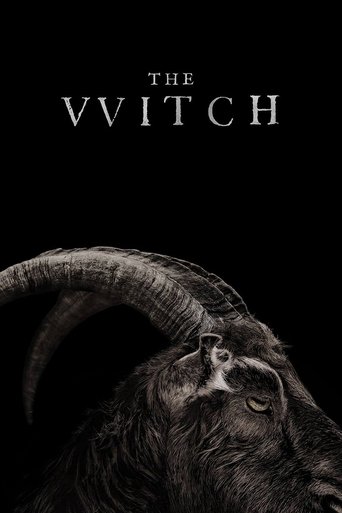
The Witch
Robert Eggers · 2015 · Film
Shares slow-burn dread.
80% shared signal
Questions about Under the Skin (OST)
The things people actually ask about this record, answered.
How does Under the Skin (OST) end?
On its only unambiguously beautiful material, which the album withholds until last. In the film the same cue plays over the protagonist's destruction in the snow, converting a predation story into a tragedy. The exact final track varies by release, but every edition saves the melodic writing for the end.
How were the strings recorded on Under the Skin?
Against orthodoxy — players were asked to slide into and out of pitches rather than land on them, to play between the notes, and to press hard enough that the bow friction is audible. The mechanical noise a conventional score removes is left in deliberately.
Who composed Under the Skin?
Mica Levi, previously of Micachu and the Shapes, who had never scored a film when Jonathan Glazer hired them. They have since scored Jackie, for which they were Oscar-nominated, as well as Monos, Zola and The Zone of Interest.
What is the main theme of Under the Skin?
The cue over the seduction and drowning sequences — a repeated, insistent figure of sliding strings with exaggerated attack that functions as a pulse without quite being one. It is the most imitated piece of film music of its decade.
Can I listen to Under the Skin (OST) without seeing the film?
Partly. The best passages stand alone and several cues are textures that mean much less without the image. It is also quietly mastered, so it needs headphones. Seeing the film first is the better order with this one.
Why is Under the Skin's score so influential?
Because it proved a small ensemble playing deliberately out of tune could outdo an orchestra, and that a composer with no film background could define a decade's sound. The sliding, friction-heavy string dread now standard in trailers and prestige horror came through this record.
These are ranked against Under the Skin (OST), not against you.
Build your own tape →