
Record · 2015
Abyss
Chelsea Wolfe
Doom-folk written around sleep paralysis. Sits heavy in the chest.
Most extreme on TONE — a bleak, unforgiving tone at 012
On VHSCREAM’s six-axis scale, Abyss (2015) is most extreme on the tone axis: 12 out of 100, where 0 is a bleak, unforgiving tone and 100 is gleeful black comedy. 21% of the 105 horror works we have scored come in lower on that axis. How we score →
Abyss is a 2015 album by Chelsea Wolfe, produced by John Congleton — her heaviest record, written substantially out of her own sleep paralysis. We score it 078 on reality anchor — 85 works score lower — and 012 on tone.
Scored and reviewed by VHSCREAM on · how we score
Abyss: the review
Abyss is the only record in this index that is about what happens to you in bed, and the production is the argument.
Wolfe had made folk records, drone records and a record with a black metal shadow over it, and Abyss is where she stopped choosing. Congleton's production puts doom-metal guitar, industrial percussion, viola and a singer-songwriter's vocal in the same space and refuses to balance them: the guitars are enormous and slightly blown out, the drums are mechanical and too loud, and Wolfe's voice spends most of the album underneath all of it — audible, melodic, and smothered. Then, two or three times across the record, everything drops away and she is simply there, in close, unaccompanied.
That alternation is the whole record and it is a direct transcription of its subject. Wolfe has spoken at length about living with sleep paralysis and with vivid lucid dreaming, about keeping a recorder by the bed, and about writing from the state where you are conscious, aware of the room, and unable to move or speak. Abyss sounds like that: weight on top of you, your own voice too far away to use, and then abrupt, total clarity.
The heavy material
"Carrion Flowers" opens the record with a mechanical loop that sounds like industrial plant and is the most aggressive thing she has recorded. "Iron Moon" and "Dragged Out" are the doom-facing tracks. "Maw" and "Color of Blood" are where the guitars and the viola — Ezra Buchla's playing is one of the record's best features — are most effective together.
The quiet material
"Crazy Love" is almost solo and is the best piece of songwriting on the album, and its placement in the middle of the heaviest stretch is the sequencing decision that makes the record work. "After the Fall" and "Grey Days" are the other breaths.
Where it is less successful
The middle sags and three or four tracks use the same dynamic shape. Congleton's low end is so compressed that on some systems the record simply sounds muddy. And Wolfe's lyrics, which are deliberately impressionistic, give a listener less to hold than her delivery promises.
For the record that does this to memory rather than to sleep, Everywhere at the End of Time; for the same voice-under-mass production, Deathconsciousness; for the same bodily acoustic dread, Hereditary (OST).
The ending of Abyss explained
Total spoilers from here. Everything above this line is spoiler-free.
The short answer: the album ends with its title track, and the title track is the quietest thing on it. After forty minutes of compressed guitar, mechanical percussion and a buried vocal, "The Abyss" strips almost all of it away — a slow, spare arrangement with Wolfe's voice fully forward for the first time since the opening seconds of the record. It does not resolve anything. It is not a release in the way the closer of Deathconsciousness is. What it does is remove the weight and leave the subject: the thing the record has been describing was always the person underneath the noise, and the last track is what she sounds like with the noise taken off. The album's shape is therefore an uncovering rather than an escalation, which is the opposite of how records in this register usually end.
What does sleep paralysis have to do with Abyss?
It is the record's subject and its structure. Wolfe has spoken about experiencing sleep paralysis and lucid dreaming, about the sensation of being awake, aware of the room, and unable to move or make a sound, and about keeping a recorder beside the bed to capture what she had in that state. The production's alternation — crushing weight with the vocal buried, then sudden unaccompanied clarity — is a direct transcription of that experience rather than a description of it.
Who produced Abyss?
John Congleton, who had worked with St Vincent, Swans, Explosions in the Sky and a long list of others. His contribution is the record's defining quality and its most divisive one: a deliberately unbalanced mix in which the guitars and drums are allowed to overwhelm the vocal, with very heavy compression on the low end. Listeners who find the record muddy are hearing the production doing exactly what it was asked to.
Is Abyss a metal album?
Not quite, and it is not quite anything else either. There is doom metal guitar, industrial percussion, gothic folk, drone and singer-songwriter writing on it, often in the same track. Wolfe's catalogue runs from acoustic folk to Hiss Spun's heavier register, and Abyss is the pivot point. It is usually filed as doom or gothic rock and neither is adequate.
Where should I start with Chelsea Wolfe?
With "Carrion Flowers" and "Crazy Love" from this record, which between them describe her whole range. Abyss is the best entry point to the heavy material; Apokalypsis is the earlier, rawer record; Pain Is Beauty is the most accessible; and Hiss Spun is where the metal side goes furthest. If you want the folk, the Unknown Rooms collection is the one.
Is Abyss frightening?
Oppressive rather than frightening, and specifically physical. We score it 078 on reality anchor and 012 on tone: there is nothing supernatural in it and nothing consoling either, and the dread is the sensation of weight and of not being able to make yourself heard. It is the most intimate record in this medium in our index.
How scary is Abyss, actually?
Scored against the published rubric, here is what the numbers mean.
Reality anchor 078 is high — only 18 works score higher. The record's subject is a state in which perception is unreliable, and the production never gives a listener a stable balance to orient against.
Tone 012 is bleak — 22 works score lower. There is no resolution anywhere on it, and the closest thing to relief is the weight being removed rather than anything arriving.
Era bias 086 reads modern — 87 works score lower. 2015, digital production, heavy compression and a mix that depends on modern control over level.
Viscera 030 is low — 30 works score lower. Nothing is described, though the record's imagery is bodily and the low end is physical.
The threat at 040 is on the supernatural side — 54 works score lower, which is a judgement call: nothing in the record is supernatural, and the thing it describes is not a person either.
Pace 022 is very slow — 25 works are slower. The tempos are doom tempos throughout and nothing on the album hurries.
On shocks: two or three, and all of them are the arrangement dropping out rather than arriving.
Abyss on six axes of fear
Every work in the index is scored on six continuous axes of fear. This is what Abyss looks like as a vector.
Where that puts it: #7 slow burn
Disagree with a number? Say so on the axis itself. Nobody has confirmed this vector yet, and a score you challenge goes to the top of the queue to be re-scored by a human. Votes do not move the numbers — they decide what gets looked at first. How the scoring works →
Scored against the published rubric. This vector is a draft awaiting review — the method is public so you can argue with it.
Who should skip Abyss
Skip it if the mix will bother you. The vocal is deliberately buried and the low end is heavily compressed; a great many listeners find the record muddy rather than oppressive.
Skip it if sleep paralysis is something you experience. The record is a close transcription of that state and listeners who know it report that it is extremely effective.
Skip it if you came for her folk records. This is the heaviest thing in her catalogue and bears very little relationship to the acoustic material.
Content notes: lyrical content referring to death, bodily dread, violence and sleep paralysis; no explicit depiction.
Listen to it if you want the most intimate record in this index, you can take forty minutes of weight before the weight comes off, and you want to hear what sleep paralysis sounds like when somebody has actually tried to record it.
If Abyss is your kind of fear
The eight works closest to Abyss in the index, ranked by distance across all six axes — not by genre label, and not by what other people watched.

Under the Skin (OST)
Mica Levi · 2013 · Record
Shares a bleak, unforgiving tone.
94% shared signal
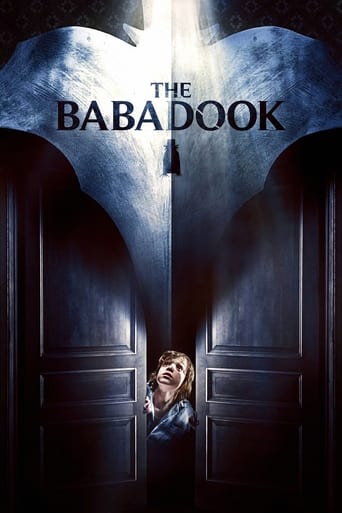
The Babadook
Jennifer Kent · 2014 · Film
Shares modern craft.
88% shared signal
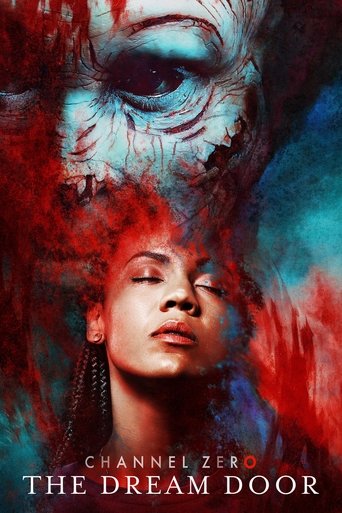
Channel Zero: Candle Cove
Nick Antosca · 2016 · Television
Shares dream logic.
88% shared signal
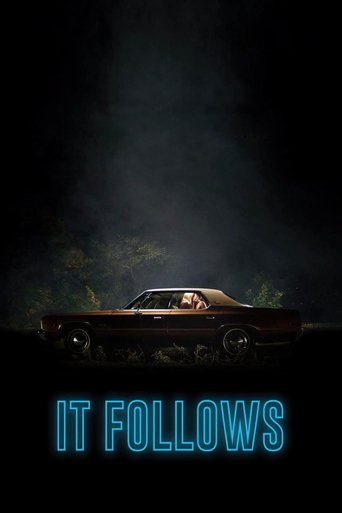
It Follows
David Robert Mitchell · 2014 · Film
Shares slow-burn dread.
85% shared signal
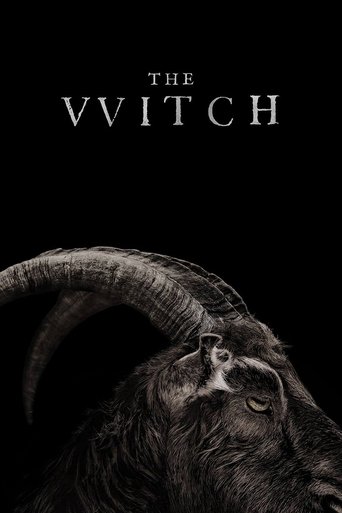
The Witch
Robert Eggers · 2015 · Film
Shares a bleak, unforgiving tone.
85% shared signal

House of Leaves
Mark Z. Danielewski · 2000 · Book
Shares restraint over gore.
84% shared signal
Les Revenants
Canal+ · 2012 · Television
Shares slow-burn dread.
84% shared signal

Hereditary (OST)
Colin Stetson · 2018 · Record
Shares modern craft.
83% shared signal
Questions about Abyss
The things people actually ask about this record, answered.
How does Abyss end?
With its title track, the quietest thing on the record. After forty minutes of compressed guitar, mechanical drums and a buried vocal, "The Abyss" removes almost all of it and puts Wolfe's voice fully forward. The album's shape is an uncovering rather than a build.
What is Abyss about?
Sleep paralysis and lucid dreaming, which Wolfe has discussed at length — being awake, aware of the room, and unable to move or speak. The production's alternation between crushing weight and sudden unaccompanied clarity transcribes the state rather than describing it.
Who produced Chelsea Wolfe's Abyss?
John Congleton, who has worked with St Vincent, Swans and Explosions in the Sky. The deliberately unbalanced mix — guitars and drums over the vocal, with very heavy low-end compression — is his contribution and the record's most divisive feature.
Is Abyss a metal album?
Not exactly. There is doom guitar, industrial percussion, gothic folk, drone and singer-songwriter writing, frequently in the same song. It is usually filed as doom or gothic rock and it sits at the pivot point of Wolfe's catalogue between the folk records and the heavier ones.
Where should I start with Chelsea Wolfe?
"Carrion Flowers" and "Crazy Love" from this record cover her whole range. Abyss is the best way into the heavy material, Pain Is Beauty is the most accessible, Hiss Spun goes furthest into metal, and Unknown Rooms is the folk collection.
Is Abyss scary?
Oppressive rather than startling. We score it 012 on tone and 078 on reality anchor: nothing supernatural, nothing consoling, and a dread that is specifically about weight and about being unable to make yourself heard.
These are ranked against Abyss, not against you.
Build your own tape →