
Record · 2016
Everywhere at the End of Time
The Caretaker
Six hours of dementia rendered as decaying ballroom loops.
Most extreme on TONE — a bleak, unforgiving tone at 004
On VHSCREAM’s six-axis scale, Everywhere at the End of Time (2016) is most extreme on the tone axis: 4 out of 100, where 0 is a bleak, unforgiving tone and 100 is gleeful black comedy. 3% of the 105 horror works we have scored come in lower on that axis. How we score →
Everywhere at the End of Time is a six-part work released between 2016 and 2019 by The Caretaker — the British musician James Leyland Kirby — running around six and a half hours, which uses progressively degraded 1930s ballroom recordings to represent the course of dementia. We score it 004 on tone — the joint-fourth-bleakest work we hold — and 006 on pace.
Scored and reviewed by VHSCREAM on · how we score
Everywhere at the End of Time: the review
Everywhere at the End of Time is the most upsetting work of art in this index and almost nothing in it was composed.
Kirby had been recording as The Caretaker since 1999, working from a single idea taken from the ballroom scene in The Shining: old 78s, looped, drowned in reverb and crackle, as the sound of a haunted memory. In 2011 he made An Empty Bliss Beyond This World, prompted by research suggesting that people with Alzheimer's could still recognise music from their youth when they could no longer recognise their families. Everywhere at the End of Time is what happens when that idea is given a timeline.
The six stages were released at roughly six-month intervals. Stage 1 is beautiful: recognisable, nostalgic ballroom loops, warm, slightly worn, the sound of a good memory. Stage 2 is the same material with something wrong with it — loops that do not resolve, pieces that start again before they finish, a sense of the room being further away. Stage 3 contains the last coherent memories and is the saddest part of the work, because the music is still trying. Stage 4 is where it breaks: titles become clinical, the loops collapse into enormous reverberant masses, and recognisable melody disappears for the first time. Stage 5 is confusion and noise. Stage 6 is almost nothing at all.
It works because the degradation is structural rather than described
Nothing in the piece tells you what is happening. There are no lyrics, no narration and no programme notes doing the emotional work — just the same source material, handled worse and worse, across six and a half hours. The result is that the listener experiences the loss rather than being informed of it, and the specific cruelty is that you remember Stage 1 while you are listening to Stage 5, which is exactly the thing the person inside the work cannot do.
The TikTok thing
In 2020 the whole piece went viral as a listening challenge, with large numbers of young people posting their reactions to finishing it. This was easy to be snobbish about and was in fact the best thing that happened to it: a six-and-a-half-hour conceptual work about dementia reached an audience of millions, most of whom took it extremely seriously, and a great many of whom were describing a grandparent.
Where it is a difficult recommendation
It is six and a half hours long and most of the back half is deliberately unpleasant. Stages 4 and 5 are a genuine endurance test and there is no version of this work that can be meaningfully sampled — a ten-minute excerpt of Stage 5 is noise without the three hours that make it devastating. It also asks something of listeners with direct experience of dementia that it is reasonable to decline.
For the same enormous reverberant emptiness, Heresy and Selected Ambient Works Volume II; for the same stillness used as a tool on the listener, Time Machines.
The ending of Everywhere at the End of Time explained
Total spoilers from here. Everything above this line is spoiler-free.
The short answer: Stage 6 is a vast, almost featureless emptiness — the longest and least musical part of the work, in which the source material is gone and what remains is reverberation, hum and occasional unidentifiable fragments. And then, at the very end, something arrives. The final piece, "Place in the World Fades Away", resolves out of the noise into a passage of calm, warm, recognisably choral sound, held for several minutes, and then ends. It is the only unambiguously beautiful thing in the last three hours and it is not a recovery: nothing is restored, nothing is remembered, and the material it is made of is not the ballroom music the work began with. Kirby has described the ending as a release rather than a resolution, and that is the correct reading — the piece stops struggling. Finishing all six stages in order and arriving at that passage is the single most affecting experience available in this index, and it does not work if you skip to it.
What are the six stages of Everywhere at the End of Time?
Stage 1: recognisable, nostalgic ballroom loops — the first signs of loss, with the memories still largely intact. Stage 2: the same material failing, loops not resolving, a growing sense of distance. Stage 3: the last coherent memories, and the saddest stage, because the music is still trying to be music. Stage 4: post-awareness — the loops collapse, melody disappears and the titles turn clinical. Stage 5: confusion and noise, the hardest listening in the work. Stage 6: an almost empty expanse, ending in the choral passage.
How long is Everywhere at the End of Time?
About six and a half hours in total, across six stages of roughly an hour each, released between 2016 and 2019 at approximately six-month intervals. There is no official abridgement, and the piece's effect depends entirely on duration — which is why the many shorter edits circulating do not work.
Who is The Caretaker?
James Leyland Kirby, a British musician who also records as V/Vm and under his own name. The Caretaker project began in 1999 with Selected Memories from the Haunted Ballroom, built from the ballroom scene in The Shining, and ran through Theoretically Pure Anterograde Amnesia, Persistent Repetition of Phrases and An Empty Bliss Beyond This World before this. Kirby retired the alias after Stage 6, which was the plan from the start.
What music is Everywhere at the End of Time made from?
Pre-war ballroom and dance-band 78s — the same vein of material Kirby had used throughout The Caretaker project — looped, pitched, drowned in reverberation and progressively destroyed. The sources are mostly obscure and uncredited, and by Stage 4 they are unidentifiable. The crackle and surface noise are part of the instrument rather than an artefact.
How should I listen to Everywhere at the End of Time?
In order, in full, and not in one sitting unless you have a specific reason to. Kirby released the stages six months apart and the work is arguably better experienced with gaps. If you only want to understand it, Stage 1, Stage 3 and the last twenty minutes of Stage 6 will give you the shape — but the devastation is a function of having sat through Stages 4 and 5, and there is no shortcut to it.
Is it exploitative of dementia?
The question is worth asking and the answer is no, on the evidence of the work itself. There is no narration, no case study and no claim to clinical accuracy; what there is is a formal structure that reproduces an experience of loss and refuses to editorialise about it. The response from listeners with direct family experience has been overwhelmingly that it is accurate and that being made to feel it was valuable. It is still entirely reasonable to decline on those grounds.
How scary is Everywhere at the End of Time, actually?
Scored against the published rubric, here is what the numbers mean.
Tone 004 is the joint-fourth-bleakest score in our index — only 3 works score lower. There is no reprieve across six and a half hours, and the ending is a cessation rather than a consolation.
Pace 006 is near the floor — only 4 works are slower. Nothing in the work develops at the speed of a piece of music; the unit of change is the hour.
The threat at 070 leans human — 85 works score lower, which is the right reading for the only work in this index whose antagonist is a disease.
Reality anchor 084 is high — only 13 works score higher. By the back half there is no pitch, no metre, no identifiable source and no orientation of any kind.
Viscera 014 is near the floor — only 9 works score lower. There is nothing bodily in it anywhere.
Era bias 080 reads modern — 72 works score lower, which is a statement about method: the sources are pre-war 78s and the processing, the release strategy and the audience are entirely of the 2010s.
On shocks: none. Nothing in six and a half hours is designed to startle, and the work would be far less effective if anything were.
Everywhere at the End of Time on six axes of fear
Every work in the index is scored on six continuous axes of fear. This is what Everywhere at the End of Time looks like as a vector.
Where that puts it: #2 bleakest · #4 slow burn · #7 surreal
Disagree with a number? Say so on the axis itself. Nobody has confirmed this vector yet, and a score you challenge goes to the top of the queue to be re-scored by a human. Votes do not move the numbers — they decide what gets looked at first. How the scoring works →
Scored against the published rubric. This vector is a draft awaiting review — the method is public so you can argue with it.
Who should skip Everywhere at the End of Time
Skip it if you are living with dementia in your family. This is the most important warning on this page. The work is an accurate transcription of a progression and listeners with direct experience frequently find it unbearable rather than cathartic.
Skip it if six and a half hours is not available to you. Excerpts do not work. The piece is made of duration and a sample of Stage 5 is just noise.
Skip it if you want music in the back half. Stages 4 to 6 are deliberately not music and are intended to be difficult.
Content notes: the work represents the progression of dementia through sonic degradation across six and a half hours. There is no depicted content, no lyrics and no narration, and the distress it produces is the intended effect.
Listen to it if you want the most affecting work in this index, you can give it the time it needs in the order it was made, and you want to arrive at the last twenty minutes of Stage 6 having earned them.
If Everywhere at the End of Time is your kind of fear
The eight works closest to Everywhere at the End of Time in the index, ranked by distance across all six axes — not by genre label, and not by what other people watched.

Deathconsciousness
Have a Nice Life · 2008 · Record
Shares a bleak, unforgiving tone.
86% shared signal

Under the Skin (OST)
Mica Levi · 2013 · Record
Shares dream logic.
81% shared signal

Abyss
Chelsea Wolfe · 2015 · Record
Shares modern craft.
79% shared signal
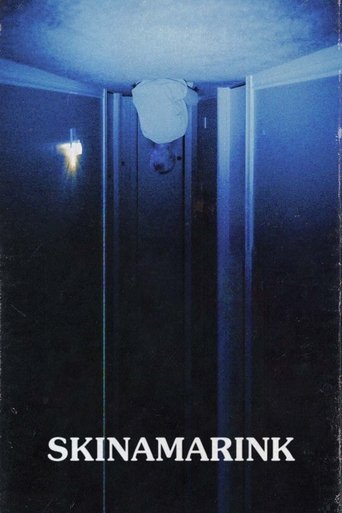
Skinamarink
Kyle Edward Ball · 2022 · Film
Shares slow-burn dread.
76% shared signal
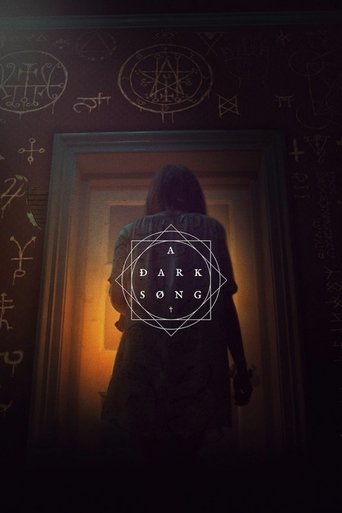
A Dark Song
Liam Gavin · 2016 · Film
Shares a bleak, unforgiving tone.
76% shared signal

House of Leaves
Mark Z. Danielewski · 2000 · Book
Shares restraint over gore.
75% shared signal
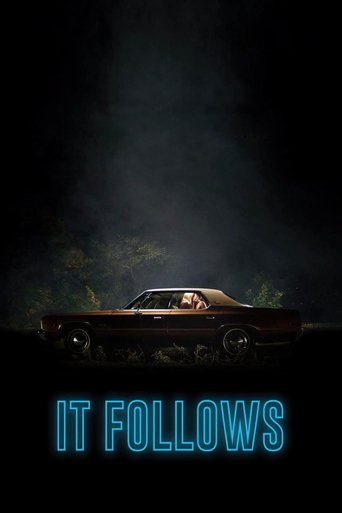
It Follows
David Robert Mitchell · 2014 · Film
Shares slow-burn dread.
74% shared signal
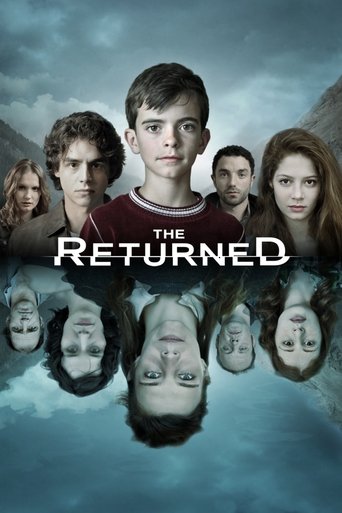
Les Revenants
Canal+ · 2012 · Television
Shares restraint over gore.
73% shared signal
Questions about Everywhere at the End of Time
The things people actually ask about this record, answered.
How does Everywhere at the End of Time end?
Stage 6 is an almost empty expanse with the source material gone, and at the very end "Place in the World Fades Away" resolves out of the noise into several minutes of calm, warm choral sound. Nothing is restored — Kirby has called it a release rather than a resolution, and the piece simply stops struggling.
What are the six stages of Everywhere at the End of Time?
Stage 1, recognisable nostalgic loops; Stage 2, the same material failing; Stage 3, the last coherent memories; Stage 4, post-awareness, where melody disappears; Stage 5, confusion and noise; Stage 6, near-emptiness ending in the choral passage.
How long is Everywhere at the End of Time?
Around six and a half hours, in six stages of roughly an hour, released between 2016 and 2019 at about six-month intervals. There is no official shorter version, and the effect depends entirely on duration.
Who is The Caretaker?
James Leyland Kirby, a British musician who has also recorded as V/Vm. The Caretaker project started in 1999 with material built from the ballroom scene in The Shining, and Kirby retired the alias after Stage 6, which was always the plan.
What is Everywhere at the End of Time made from?
Pre-war ballroom and dance-band 78s, looped, pitched, soaked in reverberation and progressively destroyed. By Stage 4 the sources are unidentifiable, and the crackle and surface noise are part of the instrument rather than a flaw.
Should I listen to Everywhere at the End of Time if dementia is in my family?
Consider carefully. Listeners with direct experience frequently find it accurate to the point of being unbearable, and many also find it valuable. It is the one work in this index we would specifically tell you it is reasonable to decline.
These are ranked against Everywhere at the End of Time, not against you.
Build your own tape →