
Record · 1994
Selected Ambient Works Volume II
Aphex Twin
Not horror by intent. Track four has frightened people for thirty years.
Most extreme on PACE OF FEAR — slow-burn dread at 006
On VHSCREAM’s six-axis scale, Selected Ambient Works Volume II (1994) is most extreme on the pace-of-fear axis: 6 out of 100, where 0 is slow-burn dread and 100 is relentless shock. 4% of the 105 horror works we have scored come in lower on that axis. How we score →
Selected Ambient Works Volume II is a 1994 double album by Aphex Twin — Richard D. James — released on Warp, consisting of mostly beatless, heavily reverberant pieces with no titles. We score it 092 on reality anchor — joint-fourth of 105 works — and 006 on pace.
Scored and reviewed by VHSCREAM on · how we score
Selected Ambient Works Volume II: the review
Selected Ambient Works Volume II is not a horror record and it is one of the most frightening things in this index, which is a distinction worth holding onto.
It arrived in 1994 as the follow-up to an album of melodic, danceable, broadly beloved ambient techno, and it is nothing like it. Across more than two and a half hours there are almost no drums, almost no melodies that resolve, and no track titles at all — the pieces are identified on the release by small circular photographs in the artwork, which is why everybody refers to them by invented names derived from those images. James's own description of what he was after, that it sounded like standing in a power station on acid, is the most accurate single sentence anyone has produced about it.
What makes it belong here is the specific quality of its space. The record is drenched in reverb of a kind that sounds wrong — too long, too metallic, applied to sources that are already decaying — and most pieces consist of two or three detuned elements circling each other without ever lining up. There is a piece that is a bell in an empty hall. There is one that is a choir heard through a wall. There is one that is just breathing and a tone. Nothing on it is hostile, and almost nothing on it is comfortable.
The fear is architectural rather than intentional
James was twenty-two and making this out of dreams — he has said repeatedly that much of it came from lucid dreaming and that he was trying to reproduce sounds he had heard asleep. That origin is audible. The record's pieces behave like places rather than compositions: you are put somewhere, nothing happens, and the somewhere is slightly wrong. That is a horror mechanism arrived at by accident, and it is more effective than most things arrived at on purpose.
The two pieces everybody knows
The one usually called "Rhubarb" is the most beautiful thing on it — a slow, sad, four-chord pad figure that has since scored a hundred documentaries about grief. The one usually called "Blue Calx" is the only piece with a credited title on the release, and it is the coldest. Between them they describe the record's whole range: unbearable tenderness and unbearable emptiness, produced with the same reverb.
Where it is a difficult recommendation
It is very long. Two and a half hours with no beats, no titles and no arc, and the sequencing on the CD differs from the vinyl — most notably the piece known as "Stone in Focus", which was on the vinyl and left off the original CD entirely, and which is one of the best things James has ever recorded. There is also no version of this album that will hold a casual listener's attention, and it is not trying to.
For the same vast cold reverberation made on purpose, Heresy; for the same sustained unease in a single tone, Time Machines; for the record that does this to memory itself, Everywhere at the End of Time.
The ending of Selected Ambient Works Volume II explained
Total spoilers from here. Everything above this line is spoiler-free.
The short answer: it does not end so much as run out, and which piece it runs out on depends on the format. The original CD release closes the second disc on a short, quiet, almost formless piece and simply stops; the vinyl has a different configuration and includes "Stone in Focus", which the CD omits altogether and which is the record's most expansive track. There is no arc across the two and a half hours — no build, no climax, no return of earlier material — so the final piece is not a resolution of anything. The album's structure is a set of rooms, and the last one is simply the last one you are shown. If you want the ending that feels like an ending, seek out "Stone in Focus" and put it last yourself, which is what a good many listeners do.
Why do the tracks on Selected Ambient Works Volume II have no names?
Because James did not give them any. The release identifies each piece with a small circular photograph in the artwork — a plant, a radiator, a stone, a handkerchief, some rhubarb — and the names in universal use are listener-invented descriptions of those images. The practical consequence is that the record's track names are a folk taxonomy rather than a credited one, and streaming services now carry them anyway.
Is this a horror record?
No, and we score it in this index because the effect is independent of the intention. There is nothing malign, violent or frightening in James's aims: this is an ambient record made partly out of remembered dreams. But the combination of unnatural reverberation, detuning, absolute stillness and complete absence of human presence produces dread as reliably as anything written to. We score it 092 on reality anchor, among the very highest in our index, for exactly that reason.
What is "Stone in Focus"?
A long, slow, extraordinarily spacious piece that appeared on the vinyl edition and was left off the original CD. It is widely considered the best thing on the album and its absence from the most common format is the single strangest fact about this release. It has since appeared on reissues and streaming, and it is the track to play first if you want to know whether this record is for you.
How long is Selected Ambient Works Volume II?
Around two and a half hours, across two CDs or three LPs, with the exact contents and running order varying between them. There is no abridged official version. Listening to it in one sitting is the intended experience and almost nobody does it more than once.
Is this the same as Selected Ambient Works 85-92?
No, and the difference is the point. Selected Ambient Works 85-92 is melodic, rhythmic and warm, and is one of the best-loved electronic records ever made. Volume II is its opposite in almost every respect: beatless, nameless, enormously long and cold. Listeners who arrive at the second expecting the first are routinely alarmed, which is the correct response.
How scary is Selected Ambient Works Volume II, actually?
Scored against the published rubric, here is what the numbers mean.
Reality anchor 092 is near the ceiling — only 3 works score higher. The reverberation is impossible, the elements are detuned against each other, and there is no metre or key to hold across most of the record.
Pace 006 is near the floor — only 4 works are slower. There are almost no drums across two and a half hours and most pieces do not develop at all.
Viscera 008 is near the floor — only 4 works score lower. There is nothing bodily anywhere on the record; it is the least physical thing we hold.
Tone 016 is bleak — 40 works score lower, though this is the one axis where the record argues with its score: two or three pieces on it are among the most tender in electronic music.
Era bias 040 is just under the midpoint. 1994 hardware samplers and tape, which now reads as a specific historical moment rather than as either analog or modern.
The threat at 035 is on the supernatural side — 47 works score lower. There is no agency in it of any kind, which is most of why it unsettles.
On shocks: none. There is not a single transient on the record designed to startle.
Selected Ambient Works Volume II on six axes of fear
Every work in the index is scored on six continuous axes of fear. This is what Selected Ambient Works Volume II looks like as a vector.
Where that puts it: #3 surreal · #5 slow burn · #8 supernatural
Disagree with a number? Say so on the axis itself. Nobody has confirmed this vector yet, and a score you challenge goes to the top of the queue to be re-scored by a human. Votes do not move the numbers — they decide what gets looked at first. How the scoring works →
Scored against the published rubric. This vector is a draft awaiting review — the method is public so you can argue with it.
Who should skip Selected Ambient Works Volume II
Skip it if length is the problem. Two and a half hours, no beats, no titles, no arc, and no official shorter version.
Skip it if you came for Aphex Twin's melodies. This is the opposite record to the one most people mean, and arriving here from Selected Ambient Works 85-92 is a shock.
Skip it if you need to know what you are listening to. The pieces are untitled and the names in use were invented by listeners from pictures.
Content notes: instrumental, with no lyrics or depicted content.
Listen to it if you want the most effective accidental horror record ever made, you can give two and a half hours to a set of rooms rather than a set of songs, and you want to hear what a power station sounds like from inside a dream.
If Selected Ambient Works Volume II is your kind of fear
The eight works closest to Selected Ambient Works Volume II in the index, ranked by distance across all six axes — not by genre label, and not by what other people watched.
Time Machines
Coil · 1998 · Record
Shares slow-burn dread.
92% shared signal

Heresy
Lustmord · 1990 · Record
Shares dream logic.
88% shared signal
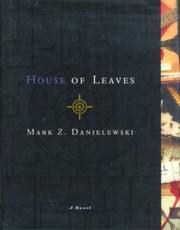
House of Leaves
Mark Z. Danielewski · 2000 · Book
Shares a bleak, unforgiving tone.
86% shared signal
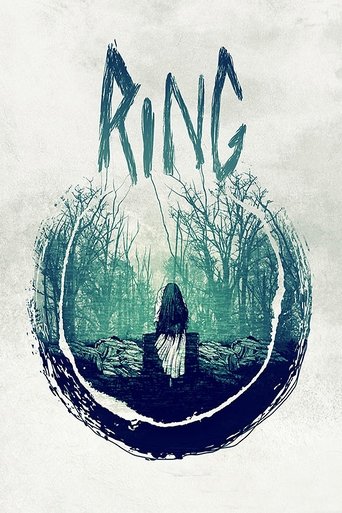
Ringu
Hideo Nakata · 1998 · Film
Shares restraint over gore.
78% shared signal
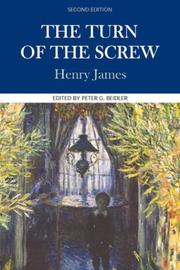
The Turn of the Screw
Henry James · 1898 · Book
Shares slow-burn dread.
75% shared signal
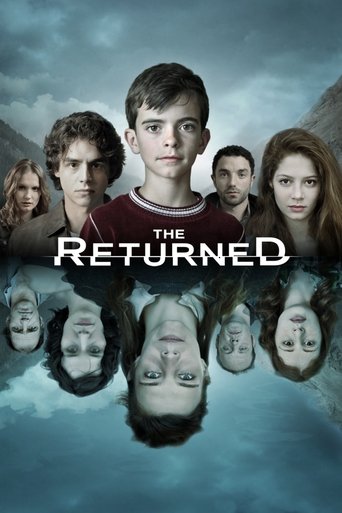
Les Revenants
Canal+ · 2012 · Television
Shares a bleak, unforgiving tone.
75% shared signal
Ring
Koji Suzuki · 1991 · Book
Shares restraint over gore.
73% shared signal

The Haunting of Hill House
Shirley Jackson · 1959 · Book
73% shared signal
Questions about Selected Ambient Works Volume II
The things people actually ask about this record, answered.
How does Selected Ambient Works Volume II end?
It runs out rather than resolving, and on which piece depends on the format — the CD and vinyl have different contents and order. There is no arc across the record, so the last track is not a conclusion. Many listeners place "Stone in Focus" last themselves.
Why are the tracks on Selected Ambient Works Volume II untitled?
Because Richard D. James never named them. Each piece is identified in the artwork by a small circular photograph, and the names everybody uses — Rhubarb, Blue Calx, Radiator, Stone in Focus — are listener descriptions of those images that have since been adopted by streaming services.
What is "Stone in Focus"?
A long, extremely spacious piece that appeared on the vinyl and was omitted from the original CD. It is widely held to be the best thing on the album, and its absence from the most common edition is the oddest fact about the release. Start there.
Is Selected Ambient Works Volume II a horror album?
Not by intention — James has described it as coming largely from lucid dreams. We hold it here because the effect is independent of the intent: impossible reverberation, detuning, total stillness and no human presence produce dread as reliably as anything written for it.
How long is Selected Ambient Works Volume II?
About two and a half hours, across two CDs or three LPs, with contents and sequencing differing between formats. There is no official shorter edit, and hearing it in one sitting is the intended experience.
Is this the same as Selected Ambient Works 85-92?
No, and it is close to the opposite. The first is melodic, rhythmic and warm; Volume II is beatless, nameless, very long and cold. Listeners who come to it expecting the earlier record are usually alarmed.
These are ranked against Selected Ambient Works Volume II, not against you.
Build your own tape →