Film · 2022
Skinamarink
Kyle Edward Ball
Ninety minutes of a dark house and a child’s logic. Divisive entirely on purpose.
Most extreme on PACE OF FEAR — slow-burn dread at 002
On VHSCREAM’s six-axis scale, Skinamarink (2022) is most extreme on the pace-of-fear axis: 2 out of 100, where 0 is slow-burn dread and 100 is relentless shock. 0% of the 105 horror works we have scored come in lower on that axis. How we score →
Skinamarink is a 2022 Canadian experimental horror film written and directed by Kyle Edward Ball, made for around fifteen thousand dollars. Two small children wake at night to find their father gone and the doors and windows of the house missing. We score it 002 on pace — ranking joint-first of 105 works, with nothing below it — and 096 on era bias, the highest in the index.
Scored and reviewed by VHSCREAM on · how we score
Skinamarink: the review
Skinamarink is the most divisive film we have scored and both sides are right.
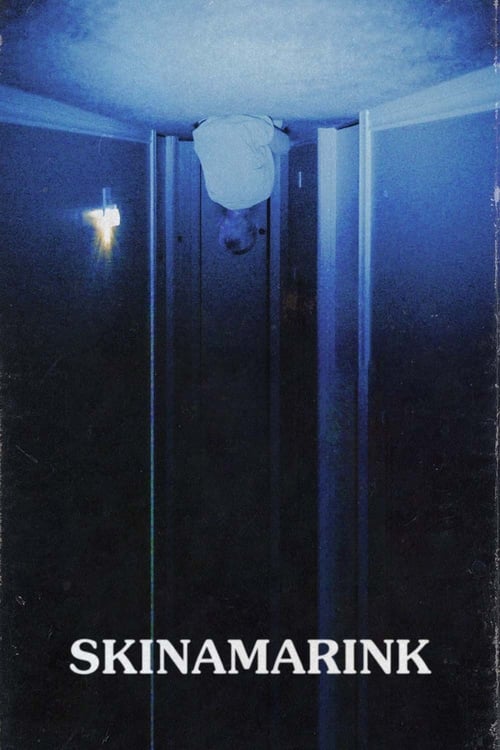
Here is what it is. A hundred minutes shot almost entirely in near-darkness, lit by a television and a few lamps, composed almost exclusively of ceilings, carpets, door frames and the corners of rooms. The children are barely seen — a foot, the back of a head, a shape. Their dialogue is whispered to the point of inaudibility and subtitled. Adults are heard and not shown. There is no plot in any ordinary sense and no sequence that could be described as a scene.
Here is why it works, when it works. Ball built it out of a YouTube channel where he recreated strangers' recurring childhood nightmares, and the film is engineered against one extremely specific memory: being four years old, awake at night, in a house you know completely, and finding it has become somewhere else. The grain is heavy, the frame is often out of focus, and the compositions are at a child's eye level looking up. It is the closest cinema has come to filming the inside of a four-year-old's three a.m.
And the sound design is genuinely remarkable. Almost everything frightening in the film arrives as audio: a voice that is nearly a parent's, instructions given gently, a tone that will not resolve.
Why so many people hate it
Because the film asks for a hundred minutes of sustained attention to almost nothing, and gives no narrative reward for providing it. Walkouts were a story at its festival run. The complaint — that it is a twenty-minute idea stretched to feature length — is accurate as a description; the disagreement is about whether duration is the point.
I think it is, and I also think it is about twenty minutes too long. The film's best effects are front-loaded, and the stretch from roughly the sixty-minute mark is testing patience rather than building dread.
Who it is for
If Lake Mungo was too slow for you, do not go near this. If you have ever lain awake as a child convinced the hallway was longer than it should be, it may be the most frightening film you ever see. There is no middle position and no amount of good faith produces one.
The ending of Skinamarink explained
Total spoilers from here. Everything above this line is spoiler-free.
The short answer: there is no conventional ending and the film resists summary by design. Time passes in title cards — days, then hundreds of days. Kevin is left alone with the entity that has been speaking to him, in a house that has stopped having an outside. The final sequence brings a face, barely lit, and a last exchange. Nothing is explained and nothing is resolved.
What is actually happening in the house?
The film never says. What it establishes is that something has removed the exits, that it can take or alter the adults, that it speaks to the children in a voice that imitates a parent, and that it gives instructions. The readings people reach for are a haunting, an abduction, a dying child's dream, and a sustained metaphor for a household coming apart. None is confirmed and the film actively blocks the attempt — it withholds the establishing shot that any of them would require.
Is it about divorce?
That is the most popular interpretation and the film does feed it. The father is absent, the mother appears unreliably and speaks in a register that does not fit, there is dialogue about one parent being gone, and the children are left to manage a house whose rules have changed. Ball has been careful not to endorse it. The film is coherent either way, which is unusual for a work this abstract.
Why does the film jump forward in time?
The title cards — marking 572 days and beyond — are the film's only concession to structure, and they do something specific. They convert the situation from an event into a condition. Whatever this is, it is not being survived and it is not ending; the children are simply living in it, which is far worse than a climax.
What does the ending mean?
The most consistent reading is that the entity has what it wanted and keeps it. There is no rescue, no explanation and no exit, and the last image — a face, almost invisible — is the first time the film offers a thing to look at rather than a space. That it arrives as the final shot rather than as a reveal is the whole design: you have spent a hundred minutes staring into corners, and the one time something looks back, the film ends.
How scary is Skinamarink, actually?
Scored against the published rubric, here is what the numbers mean. This film holds two extremes of the index at once.
Pace 002 ranks joint-first on that axis of everything we score. Nothing in 105 works is slower and 103 score higher; only Coil's Time Machines ties it, which is a seventy-minute drone record rather than a narrative film. There is no act structure, no escalation you could point to, and no sequence that moves.
Era bias 096 is the highest score we have. Nothing scores higher. That is the film's central irony: it is built to feel like a degraded home video from 1995, and the degradation is a 2022 digital construction. It is the most modern-feeling work in the index precisely because of how hard it is working to look old.
Viscera 006 is almost the floor — only 1 work scores lower. There is essentially no blood and one brief implied injury. The film is terrifying with nothing.
Tone 010 is near the bottom — 17 works score lower. There is no comfort anywhere in it.
Reality anchor 078 is deep into dream logic, with 85 works lower. Space does not work, time does not work, and the film declines to treat either as remarkable.
On jump scares: two or three, and they are extremely effective because the film has spent so long refusing to provide any.
Skinamarink on six axes of fear
Every work in the index is scored on six continuous axes of fear. This is what Skinamarink looks like as a vector.
Where that puts it: #1 slow burn · #1 modern · #2 without gore · #6 surreal · #9 bleakest
Disagree with a number? Say so on the axis itself. Nobody has confirmed this vector yet, and a score you challenge goes to the top of the queue to be re-scored by a human. Votes do not move the numbers — they decide what gets looked at first. How the scoring works →
Scored against the published rubric. This vector is a draft awaiting review — the method is public so you can argue with it.
Who should skip Skinamarink
Skip it if you found any slow horror film tedious. This is the slowest work in our index by measurement, not by reputation. There is no scene where that changes.
Skip it if you need to be able to see. Large portions are nearly black, and on a bright screen or in a lit room the film does not work at all. It is also close to unwatchable on a phone.
Skip it if children in danger is a hard limit. Two very small children are alone and frightened for the entire runtime, and the film's cruelty is in how patiently it stays with that.
Content notes: young children in sustained distress, an implied self-inflicted eye injury, a parent figure used as a lure, and one hundred minutes of near-total darkness.
Watch it if you want the most committed formal experiment in modern horror, you can take a film with no plot, and you remember being small and awake and certain the house was wrong. Watch it at night, in the dark, loud.
Where to find it
Streaming on Philo · AMC Plus · AMC+ +2 ↗Physical copies on eBay ↗Availability from JustWatch via TMDB. We earn nothing from these links.
Nothing loads from YouTube until you press play.
If Skinamarink is your kind of fear
The eight works closest to Skinamarink in the index, ranked by distance across all six axes — not by genre label, and not by what other people watched.
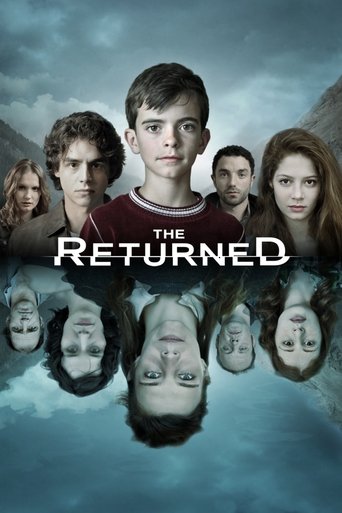
Les Revenants
Canal+ · 2012 · Television
Shares slow-burn dread.
82% shared signal

Abyss
Chelsea Wolfe · 2015 · Record
Shares a bleak, unforgiving tone.
81% shared signal
House of Leaves
Mark Z. Danielewski · 2000 · Book
Shares restraint over gore.
79% shared signal

Under the Skin (OST)
Mica Levi · 2013 · Record
Shares modern craft.
79% shared signal

Everywhere at the End of Time
The Caretaker · 2016 · Record
Shares dream logic.
76% shared signal
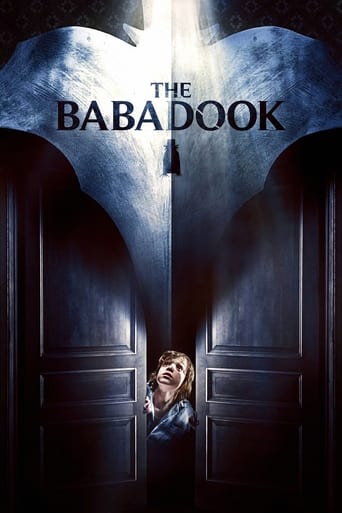
The Babadook
Jennifer Kent · 2014 · Film
Shares a bleak, unforgiving tone.
76% shared signal
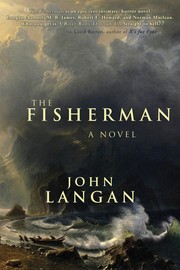
The Fisherman
John Langan · 2016 · Book
Shares a supernatural threat.
76% shared signal
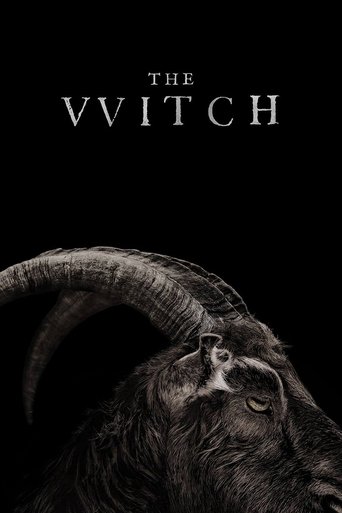
The Witch
Robert Eggers · 2015 · Film
Shares slow-burn dread.
75% shared signal
See the full list of movies like Skinamarink →
Questions about Skinamarink
The things people actually ask about this film, answered.
What happens at the end of Skinamarink?
Title cards carry time forward hundreds of days. Kevin is left alone in a house with no exits, with the entity that has been imitating a parent's voice, and the final sequence shows a barely lit face and a last exchange. Nothing is explained and nobody is rescued.
What is happening in Skinamarink?
The film never says. Something has removed the doors and windows, altered or taken the parents, and speaks to the children in a voice like a parent's. The common readings are a haunting, an abduction, a dying child's dream and a metaphor for a family breaking up. The film blocks confirmation of all of them.
Is Skinamarink about divorce?
It is the most popular reading and the film supports it — an absent father, a mother who appears unreliably, dialogue about a parent being gone, children left to manage a house whose rules have changed. Kyle Edward Ball has declined to confirm it, and the film works either way.
Why is Skinamarink so slow?
Because duration is the mechanism. We score it 002 on pace, the slowest of the 105 works in our index with nothing below it. The film is recreating the experience of a small child awake at night, and that experience is mostly waiting in the dark.
Why is Skinamarink so dark?
Deliberately. It is lit almost entirely by a television and a few lamps, with heavy grain and frequent soft focus, to imitate a degraded home recording. It needs to be watched in a dark room, and it does not survive a phone screen or daylight.
Is Skinamarink actually scary?
For a specific audience it is among the most frightening films ever made, and for everyone else it is tedious. There is no middle ground and the festival walkouts were real. If slow horror has never worked for you, this will not be the exception.
These are ranked against Skinamarink, not against you.
Build your own tape →