Book · 1895
The King in Yellow
Robert W. Chambers
Four stories about a play nobody should finish, and six about painters in Paris.
51Strong to sit through, out of 100 — mostly how bleak it is
- PacePure slow burn14
- ThreatMostly supernatural30
- GoreHolds back20
- ToneBleak16
- RealityPure nightmare logic88
Era bias 2 · Analog to the bone. Texture rather than fear, so it is not part of the grade. All six scores →
On VHSCREAM’s six-axis scale, The King in Yellow (1895) is most extreme on the era-bias axis: 2 out of 100, where 0 is analog-era texture and 100 is modern craft. 0% of the 320 horror works we have scored come in lower on that axis. How we score →
The King in Yellow is an 1895 collection by Robert W. Chambers, and only its first four stories are horror. They share a fictional play of the same name: a text in two acts that is harmless in the first and destroys whoever finishes the second. We score it 088 on reality anchor, which puts it among the most dream-logic works we hold, and 002 on era bias.
Scored and reviewed by VHSCREAM on · how we score
How scary is The King in Yellow, actually?
Scored against the published rubric, here is what the numbers mean for a reader.
Reality anchor 088 is the signature. Only 11 works score higher. Nothing in the four stories is reliably real: a throne, a plate in a skull, a city with black stars, a sign nobody describes. The book operates by refusing to confirm its own contents.
Era bias 002 is as analog as this index goes. 314 works score higher, and nothing is further down the axis — Frankenstein and The Turn of the Screw tie it at 002. Gas lamps, calling cards, Paris studios and 1890s prose rhythms. Nothing here has been modernised and the book is better for it.
Viscera 020 shows almost nothing. 280 works score higher. There is one corpse described with real revulsion and otherwise the collection works entirely by suggestion.
Threat 030 is the supernatural end, with a caveat. 186 works score higher. The danger is a book, a symbol and something that may be a king, none of which can be reasoned with — but the harm in "The Repairer of Reputations" is done by a man with a knife and a delusion.
Tone 016 is bleak. 103 works score lower. The characters who read the play do not recover. There is no story in the four where anybody is helped.
Pace 014 is deep in dread. 294 works are faster. These are short stories that spend most of their length on atmosphere and produce their horror in a final paragraph.
On jump scares: none, and the form does not allow them.
Who should skip The King in Yellow
Skip it if you want a horror collection. Six of the ten stories are Parisian romance. This is the most common complaint about the book and it is entirely justified.
Skip it if 1890s prose is a barrier. Chambers writes long, decorated sentences, and the four horror stories are the densest in the volume.
Skip it if suicide as institution will trouble you. "The Repairer of Reputations" opens with a government-built Lethal Chamber and treats state-provided suicide as civic furniture.
Content notes: suicide presented as a public amenity, a graphic description of a decomposing body, a stabbing, delusional violence against a family member, and period antisemitic and racial language in the non-horror stories.
Read it if you want the book that invented the forbidden text, you are content to read four stories and abandon the rest, and a play that cannot be quoted at length sounds more frightening than one that can.
The King in Yellow on six axes of fear
Every work in the index is scored on six continuous axes of fear. This is what The King in Yellow looks like as a vector — and what each ten-point band looks like across everything else we hold.
Where that puts it: #2 surreal · joint #6 without gore · joint #6 slow burn
Draft score — awaiting human review. About these scores
Disagree with a number? Say so on the axis itself. Nobody has confirmed this vector yet, and a score you challenge goes to the top of the queue to be re-scored by a human. Votes do not move the numbers — they decide what gets looked at first. How the scoring works →
Scored against the published rubric. This vector is a draft awaiting review — the method is public so you can argue with it.
Where to start with horror books →
Where to find it
Buy from an indie bookshop ↗Out-of-print copies on eBay ↗We earn nothing from these links.
The King in Yellow: the review
The first four stories, and then a different book
It has to be said first because nobody tells you: The King in Yellow is not a horror collection. It is ten pieces, of which "The Repairer of Reputations", "The Mask", "In the Court of the Dragon" and "The Yellow Sign" are among the strangest things written in English, and the rest are competent romances about American art students in Paris. Buy it for the first forty per cent. The rest is why the book was out of print for decades.
What those four do is invent a method. Chambers never describes the play. He quotes a stage direction, a fragment of dialogue, a character list — Cassilda, Camilla, the Stranger — and lets you assemble something worse than anything he could have written. "Along the shore the cloud waves break, / The twin suns sink behind the lake" is doing nothing except being beautiful and wrong, and it has been doing it for a hundred and thirty years.
"The Repairer of Reputations" is the one
A man with a head injury and a silver plate in his skull believes he is heir to an American imperial throne, keeps company with a disfigured archivist who maintains files on everyone's secrets, and narrates the story. The horror is that the prose is lucid. Hildred Castaigne tells you about the Lethal Chamber the government has erected in Washington Square for the convenience of suicides, and about his cousin's engagement, and about his crown in its safe, in exactly the same reasonable voice, and the reader has to do all the work of deciding which parts happened. It predates The Turn of the Screw by three years and does the unreliable narrator harder.
"The Yellow Sign" is the most conventional of the four and the most frightening — a painter, a model, a churchyard watchman with a face like a grub, and an object nobody should accept. "The Mask" is barely horror at all, being about a solution that turns living things to marble, and is the most beautiful piece in the book.
What Chambers started
Lovecraft read this and took the method: the forbidden text, the name you should not know, the hint that the cosmology is indifferent rather than evil. Hastur, Carcosa and the Lake of Hali pass from here into At the Mountains of Madness and then into most of the twentieth century. Chambers did not build a mythos and had no interest in one; he wrote four stories that shared furniture, and other people made it a system.
The modern revival came from television — the first season of True Detective quotes it repeatedly — and sent a great many readers to a book that is a quarter of what they were promised.
Where it is thin
Chambers cannot sustain an ending. Two of the four stories stop rather than conclude, and "In the Court of the Dragon" is a mood with a chase in it. The Paris stories are not merely weaker; they are a different writer's work, sentimental and slack, and their presence in the same volume is the single oddest fact about the book. And the prose is 1895 prose: ornate, comma-spliced, fond of the word languid.
None of which matters next to what it achieved. This is the book that worked out that the most frightening document is the one you quote from and never show.
The ending of The King in Yellow explained
The ending, in full. Open it when you have seen it.
The short answer: there is no single ending, because this is a collection. "The Repairer of Reputations" ends with Hildred's delusion collapsing and a hospital note telling you, flatly, that he died insane and that the crown in his safe was brass. "The Yellow Sign" ends with the narrator having read the play, the watchman having come for what he was owed, and the model dead.
Here is what the connecting material actually says.
What is the play The King in Yellow?
A drama in two acts, author unknown, suppressed wherever it is found and impossible to stop reading once begun. Act One is described as blameless. Act Two reveals something — the text never says what — after which the reader's mind does not recover. Chambers gives us a few lines, the cast, and the reactions of people who finished it.
What is the Yellow Sign?
An object and a symbol, never drawn. In the story of that name it arrives as a small ornament of black stone, and possessing it means being known to the King. It is what draws the churchyard watchman. Like the play, its power is entirely in the fact that everybody in the story recognises it and nobody describes it.
Where is Carcosa?
A city by the Lake of Hali, with black stars over it and cloud waves on the shore. The name comes from Ambrose Bierce's "An Inhabitant of Carcosa"; Chambers took it, along with Hastur and Hali, and put them in the play. Whether Carcosa is a place, a condition or a line of verse is not a question the book considers answerable.
Is Hildred Castaigne mad?
The hospital note at the end says so, and the note is the only outside voice in the story. That is also the one piece of evidence in a narrative otherwise entirely controlled by him, and it arrives after we have spent thirty pages inside a worldview that was internally consistent. Chambers lets the official verdict stand and gives you no way to feel it was adequate.
Which stories should I read?
The first four, in order. Then stop, or carry on knowing that you are now reading a different book about painters in Montmartre.
If The King in Yellow is your kind of fear
The eight works closest to The King in Yellow in the index on the five axes that describe fear, the same medium first — not by genre label, and not by what other people watched.
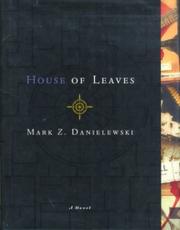
House of Leaves
Mark Z. Danielewski · 2000 · Book
Shares dream logic.
99% shared signal

Annihilation
Jeff Vandermeer · 2014 · Book
Shares a bleak, unforgiving tone.
87% shared signal

Selected Ambient Works Volume II
Aphex Twin · 1994 · Record
Shares slow-burn dread.
90% shared signal

Heresy
Lustmord · 1990 · Record
Shares restraint over gore.
90% shared signal

Abyss
Chelsea Wolfe · 2015 · Record
Shares a bleak, unforgiving tone.
89% shared signal
I Saw the TV Glow
Jane Schoenbrun · 2024 · Film
Shares slow-burn dread.
88% shared signal

Time Machines
Coil · 1998 · Record
Shares a threat that is not human.
88% shared signal
Marble Hornets
Troy Wagner & Joseph Delage · 2009 · Web series
Shares restraint over gore.
87% shared signal
More lists like these: Books like House of Leaves
Questions about The King in Yellow
The things people actually ask about this book, answered — including how it ends.
What is the play in The King in Yellow?
A two-act drama by an unknown author. The first act is harmless; the second reveals something the book never specifies, after which readers do not recover. Chambers quotes only fragments — a stage direction, a few lines of verse, the cast list — and the effect depends entirely on his refusal to show more.
What is the Yellow Sign?
A symbol and a small object of black stone. Holding it means being known to the King in Yellow, and in the story of that name it brings the churchyard watchman to the door. It is never described or drawn, and every character recognises it on sight.
Which stories in The King in Yellow are horror?
Four: "The Repairer of Reputations", "The Mask", "In the Court of the Dragon" and "The Yellow Sign". The remaining six are romances set among American artists in Paris and share nothing with them but a publisher.
Did Lovecraft take ideas from The King in Yellow?
Yes, and said so. Hastur, Carcosa and the Lake of Hali pass from Chambers into his work, along with the method — a forbidden text, a name best not spoken, a universe indifferent rather than hostile. What cosmic horror is traces that line, and At the Mountains of Madness is where it arrives.
Is The King in Yellow connected to True Detective?
The first season quotes it — Carcosa, the Yellow King — and sent a great many readers to the book. There is no story connection; the series borrows the names and the atmosphere.
What should I read after The King in Yellow?
At the Mountains of Madness for the method systematised, The Fisherman for the modern version done at length, and The Turn of the Screw for the other 1890s narrator you cannot trust.
These are ranked against The King in Yellow, not against you.
Build your own tape →