
Book · 2016
The Fisherman
John Langan
Two widowers, a black creek, and cosmic grief. Slow, and then enormous.
Most extreme on PACE OF FEAR — slow-burn dread at 012
On VHSCREAM’s six-axis scale, The Fisherman (2016) is most extreme on the pace-of-fear axis: 12 out of 100, where 0 is slow-burn dread and 100 is relentless shock. 9% of the 105 horror works we have scored come in lower on that axis. How we score →
The Fisherman is a 2016 novel by John Langan. Two widowers who fish together on weekends in the Catskills go looking for a creek that is said to give people their dead back. We score it 012 on pace — only 9 works are slower — and 014 on tone.
Scored and reviewed by VHSCREAM on · how we score
The Fisherman: the review
The Fisherman is the best American horror novel of the last fifteen years and it is, structurally, a very long story told by a man in a diner.
Abe lost his wife Marie to cancer within a few years of marrying her, and he found that fishing was the only activity that let him put a day down. Dan Drescher, a younger colleague, loses his wife and two small children in a car accident, and Abe takes him fishing because it is the only thing he has to offer. Langan writes the first hundred pages as a quiet, precise, utterly unglamorous account of two men in waders not talking about anything, and the grief in it is the most carefully observed thing in modern horror. Nothing supernatural has happened yet and the book is already excellent.
Then Dan suggests Dutchman's Creek, which is not on the maps, and the diner they stop at on the way has an owner called Howard who tells them not to go, and then tells them why. That story takes up the entire middle of the novel.
The embedded novella is the achievement
Howard's account goes back to the building of the Ashokan Reservoir in the early twentieth century — a real project, which drowned a dozen Catskills villages and displaced their inhabitants — and follows a German immigrant named Rainer, a minister's son called Jacob, and the labour camps on the construction. A man they call Der Fischer is already there, has been there a very long time, and is fishing in something that is not water. The sequence involving Angelo, the storm, the wall of water and the hooks is the best set piece Langan has written, and the novella would stand as a major work on its own.
What makes the structure work rather than feel like a digression is that the two narratives are the same story at different scales: a man who will not accept a death, and the thing that is willing to trade on it.
Langan's cosmology is unusually well-judged
Dutchman's Creek runs into somewhere else — a black ocean, a drowned city, a leviathan called by several names, and a fisherman who has been working that water for centuries in order to catch the one thing that would let him undo his own loss. The novel's governing idea is that the universe contains something enormous and indifferent and that a sufficiently determined grief can get its attention. That is a better engine than most cosmic horror manages, because it makes the horror reachable by ordinary sorrow.
Where it is difficult
It is slow — at 012 on pace it is among the slowest things we hold — and the frame-and-embedded structure means the reader spends two hundred pages away from the characters they started with. Langan's prose is plain to the point of flatness in places, deliberately, and Abe's narrating voice occasionally over-explains. Readers who want the supernatural early will wait a long time.
For the same cosmic indifference under a domestic surface, The Croning; for the same embedded-document structure, Ghost Story and House of Leaves; for the same grief that will not accept an outcome, Pet Sematary.
The ending of The Fisherman explained
Total spoilers from here. Everything above this line is spoiler-free.
The short answer: in the embedded historical narrative, Rainer and his companions confront Der Fischer at the water; Angelo is killed; the Fisherman is dragged down by the hooks set in his own skin, cursing them in words borrowed from Moby-Dick as a wall of water comes down, and Jacob last sees him taken by a mass of pale arms. He is driven off rather than destroyed. In the present day, Abe and Dan reach Dutchman's Creek anyway, and Dan — who has known what the place does and has come for exactly that — gets what he wanted. Something that looks like his wife and children arrives for him, and he chooses it over the obvious truth about what it is. He turns on Abe when Abe tries to leave, telling him the Fisherman needs their strength, and attacks him; Abe cuts him with a scaling knife and runs, and what is wearing Dan's family devours him. Abe gets out alive, which in this novel is a result rather than a victory. The final movement is years later: flooding brings the creek's influence back, a gold-eyed thing in Dan's shape comes into Abe's house to accuse him of leaving, and Abe burns it. Abe survives, and the book's last note is that surviving is what he has instead of his wife.
Who is Der Fischer?
A man who has been fishing the black water for centuries, originally one of a group of occultists, and who is pursuing a single catch: the leviathan whose death or capture would let him recover what he lost. He is not a monster in his own account — he is the most extreme version of the novel's central figure, a widower who refuses the outcome, and every other character in the book is a smaller instance of him. The Rainer narrative establishes that he can be beaten off the field and not killed.
What does Dutchman's Creek do?
It runs between here and somewhere else. Reached by the right path at the right time, the creek lets a person fish in a black ocean under a drowned city, and what can be pulled out of that water includes the dead. The novel is careful that what comes back is not the person: it wears them, it knows what they knew, and it wants something. The creek does not appear on maps, the route to it changes, and the local history — Howard's story, the reservoir, the drowned villages — is the record of everyone who has tried.
What happens to Dan at the end?
He is killed by the things wearing his wife and children, after choosing them over the truth. Langan makes it a decision rather than a trap: Dan knows what Dutchman's Creek does, has researched it, has brought Abe there under false pretences, and when his family arrives he accepts them with full knowledge of what they are. He attacks Abe to keep him there, Abe cuts him with a scaling knife and escapes, and Dan is eaten. He appears once more, years later, as a gold-eyed thing in his own shape, and Abe sets it on fire.
What is the Ashokan Reservoir material?
Historically real and doing serious work. The Ashokan Reservoir was built in the Catskills in the early twentieth century to supply New York City, drowning a string of villages and displacing around two thousand people, with a vast immigrant labour force living in camps on the site. Langan puts his occultists and his Fisherman into that documented displacement, which is why the middle novella feels like a history rather than a legend: the real event was already about a valley full of water where people used to live.
Is The Fisherman a Lovecraftian novel?
In its cosmology and not in its manner. There is a leviathan, a drowned city, a black ocean and an indifferent vastness, and the book's reading list is visible. But Langan's interest is entirely in bereaved, ordinary, specific people, his narrator is a working man with a plain voice, and the novel's emotional register — patient, sad, kind about its characters — is the opposite of Lovecraft's. It uses the furniture to write about widowers.
How scary is The Fisherman, actually?
Scored against the published rubric, here is what the numbers mean.
Pace 012 is extremely slow — only 9 works are slower. The first hundred pages are two men fishing and the middle two hundred are a story told in a diner.
Tone 014 is bleak — 30 works score lower. Everybody in the novel has already lost the person who mattered, the one man who tries to undo it is eaten for it, and the survivor's reward is more survival.
Reality anchor 060 leans towards dream logic — 66 works score lower. The creek's geography does not hold, the embedded narrative's reliability is openly in question, and the black ocean obeys nothing.
Viscera 040 is just under the median — 45 works score lower. Hooks through skin, a man devoured, a body burned, and the Angelo sequence.
Era bias 084 reads modern — 81 works score lower, which is about the writing rather than the content: a 2016 novel whose middle section is set around 1907.
The threat at 015 is deep into the supernatural — only 11 works score lower. Dan's betrayal is the only human violence in the book, and it is driven by something else.
On shocks: two or three. The novel's method is patience, and its worst moment is a family arriving on a riverbank.
The Fisherman on six axes of fear
Every work in the index is scored on six continuous axes of fear. This is what The Fisherman looks like as a vector.
Where that puts it: #2 supernatural · #3 slow burn · #8 bleakest · #8 surreal · #9 without gore
Disagree with a number? Say so on the axis itself. Nobody has confirmed this vector yet, and a score you challenge goes to the top of the queue to be re-scored by a human. Votes do not move the numbers — they decide what gets looked at first. How the scoring works →
Scored against the published rubric. This vector is a draft awaiting review — the method is public so you can argue with it.
Who should skip The Fisherman
Skip it if slowness is the problem. At 012 on pace this is among the slowest books we hold and it withholds its supernatural content for a long time.
Skip it if a story-within-a-story will lose you. The middle half of the novel leaves its protagonists entirely and does not return to them for two hundred pages.
Skip it if child death is a hard limit. Dan's children die before the book begins and what comes back wearing them is central to the ending.
Content notes: the deaths of a spouse and of two young children before the novel opens, cancer described in detail, a man devoured on the page, hooks set through human skin, a corpse burned, a sexual encounter with something wearing a dead wife's body, and sustained depictions of bereavement.
Read it if you want the best American horror novel since the turn of the century, you can give a hundred pages to two men fishing before anything happens, and you want cosmic horror written by somebody whose actual subject is widowers.
Where to start with horror books →
Where to find it
Buy from an indie bookshop ↗Out-of-print copies on eBay ↗We earn nothing from these links.
If The Fisherman is your kind of fear
The eight works closest to The Fisherman in the index, ranked by distance across all six axes — not by genre label, and not by what other people watched.
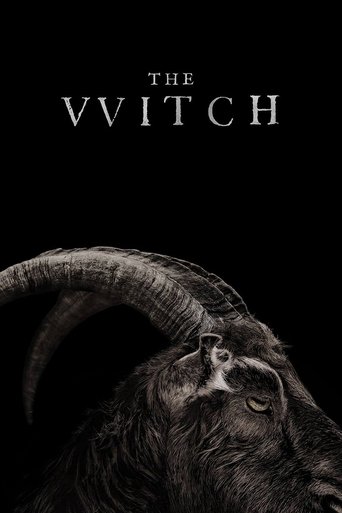
The Witch
Robert Eggers · 2015 · Film
Shares a bleak, unforgiving tone.
90% shared signal

Channel Zero: Candle Cove
Nick Antosca · 2016 · Television
Shares modern craft.
85% shared signal
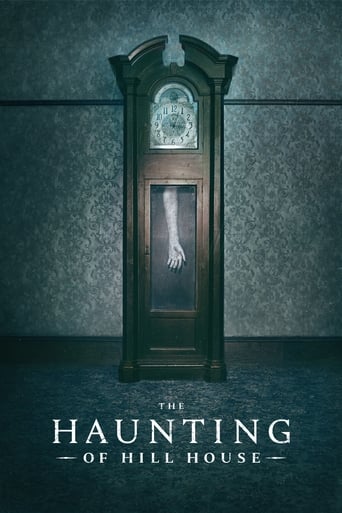
The Haunting of Hill House
Mike Flanagan · 2018 · Television
Shares a supernatural threat.
85% shared signal
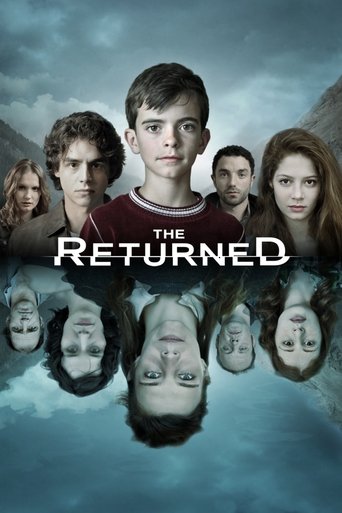
Les Revenants
Canal+ · 2012 · Television
Shares slow-burn dread.
84% shared signal
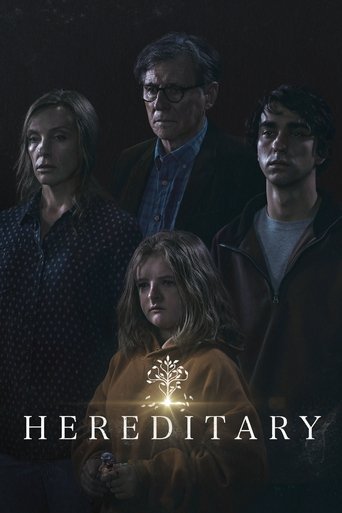
Hereditary
Ari Aster · 2018 · Film
Shares a bleak, unforgiving tone.
83% shared signal

Hereditary (OST)
Colin Stetson · 2018 · Record
Shares modern craft.
83% shared signal

Abyss
Chelsea Wolfe · 2015 · Record
Shares slow-burn dread.
82% shared signal
The Babadook
Jennifer Kent · 2014 · Film
81% shared signal
Questions about The Fisherman
The things people actually ask about this book, answered.
What happens at the end of The Fisherman?
Dan gets what he came to Dutchman's Creek for — things wearing his dead wife and children — and chooses them knowingly. He attacks Abe to keep him there, Abe cuts him with a scaling knife and escapes, and Dan is devoured. Years later a gold-eyed thing in Dan's shape comes to Abe's house and Abe burns it.
Who is Der Fischer in The Fisherman?
A man who has fished the black water for centuries, chasing the one catch that would undo his own loss. He is the extreme version of the novel's central figure — a widower who refuses the outcome — and in the embedded narrative he is driven off rather than killed.
What is Dutchman's Creek?
A creek that is not on any map and that, reached the right way, opens onto a black ocean beneath a drowned city. Things can be pulled out of that water, including the dead — though what comes back is not the person, only something wearing them and wanting something.
What happens to Dan in The Fisherman?
He is eaten by the things that come back as his family, having brought Abe to the creek under false pretences and chosen the delusion with full knowledge of what it was. He appears once more years later as a gold-eyed corpse, and Abe sets it alight.
Is the Ashokan Reservoir in The Fisherman real?
Yes. It was built in the Catskills in the early twentieth century to supply New York City, drowning a string of villages and displacing around two thousand people, with immigrant labour camps on the site. Langan sets his middle novella inside that documented history.
Is The Fisherman scary?
Slowly and deeply. We score it 012 on pace and 014 on tone — among the slowest and bleakest things we hold. There are two or three frightening set pieces and the rest is accumulated grief, which is what the book is actually about.
These are ranked against The Fisherman, not against you.
Build your own tape →