Web series · 2015
Local 58
Kris Straub
A rural television station keeps broadcasting instructions nobody at the station wrote.
55Strong to sit through, out of 100 — mostly how bleak it is
- PaceSlow burn16
- ThreatSomething not human12
- GoreHolds back22
- ToneNo relief at all10
- RealityTilts unreal64
Era bias 86 · Thoroughly modern. Texture rather than fear, so it is not part of the grade. All six scores →
On VHSCREAM’s six-axis scale, Local 58 (2015) is most extreme on the tone axis: 10 out of 100, where 0 is a bleak, unforgiving tone and 100 is gleeful black comedy. 12% of the 320 horror works we have scored come in lower on that axis. How we score →
Local 58 is a web series by Kris Straub, begun in 2015 and still unfinished, presented as recovered footage from the archive of WCLV-TV 58, a small-market television station in Mason County, West Virginia. Each entry is a broadcast that something has interrupted. We score it 010 on tone and 012 on the threat axis, which is the supernatural floor of this index. There is no ending yet.
Scored and reviewed by VHSCREAM on · how we score
How scary is Local 58, actually?
Scored against the published rubric, here is what the numbers mean for a viewer.
Tone 010 is the signature and it is near the floor of this index. 40 works score lower. There is no relief anywhere in it: no character to root for, no survival, no joke, and no scene after the worst one.
Threat 012 is the supernatural floor. 20 works score lower. Whatever is using the station has no stated motive, no form, no name and no interest in any person. The nearest thing to a human antagonist is a station engineer who does not know what is happening.
Pace 016 is deep in dread. Only 27 works are slower. Several entries are a static caption card and a tone. The series' most frightening minute contains no movement at all.
Era bias 086 is the modern end, and this is the number worth arguing about. 240 works score lower. Every frame of Local 58 imitates broadcast tape from the 1960s to the 1990s, and all of it was made digitally after 2015 by somebody choosing exactly how much dropout to add. We score the texture a work actually has rather than the one it is imitating, so a simulated tape artefact is a modern craft decision — the same reading we apply to Archive 81. Analog horror is the genre that makes this rule necessary: the whole form is new work wearing old grain.
Reality anchor 064 is a shade surreal. A county, a station, a transmitter and a moon. The geography is ordinary and one object in the sky is not.
Viscera 022 is restrained. 272 works score higher. An implied mass suicide, a hanging glimpsed in a frame, and almost nothing else shown.
On jump scares: two or three, and the famous moments are not among them — they are text.
Who should skip Local 58
Skip it if an unfinished work will frustrate you. There is no conclusion and no sign of one. The series has been arriving in instalments for a decade.
Skip it if the suicide material is too close. Contingency is an instruction to a population to kill itself, delivered in the format of an official emergency broadcast, and it is the most-watched thing in the series.
Skip it if you need characters. There are none. The series has no protagonist, no recurring person and no point of view other than the transmitter's.
Content notes: an instruction to mass suicide presented as an official broadcast, a hanging, implied harm to children through a children's programme, and footage designed to be distressing to look at directly.
Watch it if you want the founding document of analog horror, the best use of broadcast authority anybody has managed, and twenty-five minutes that have been imitated more than almost anything made this century.
Local 58 on six axes of fear
Every work in the index is scored on six continuous axes of fear. This is what Local 58 looks like as a vector — and what each ten-point band looks like across everything else we hold.
Draft score — awaiting human review. About these scores
Disagree with a number? Say so on the axis itself. Nobody has confirmed this vector yet, and a score you challenge goes to the top of the queue to be re-scored by a human. Votes do not move the numbers — they decide what gets looked at first. How the scoring works →
Scored against the published rubric. This vector is a draft awaiting review — the method is public so you can argue with it.
Local 58: the review
The best idea in analog horror, and the first one
The premise is one sentence and it does everything: a television station keeps transmitting material nobody at the station made. Not a haunted tape, not a cursed film — a broadcast, which means it was aimed at a population rather than at a viewer, and which means by the time you are watching it the thing has already been said to everybody.
Straub understood something about the medium that almost nobody who copied him has. A broadcast carries institutional authority. The emergency tone, the colour bars, the station ident, the flat announcer's voice reading a civil-defence script — these are formats we are trained to obey, and the horror in Local 58 is almost entirely the sound of that authority being borrowed by something with no interest in us. The scariest thing in the series is a caption card.
Contingency
The entry everybody has seen, and the reason the series exists in cultural memory. A 1960s-style emergency broadcast announces that the United States has lost, that no help is coming, and instructs the population to make peace with their God and take their own life — and then a real announcement cuts in to say that the transmission was unauthorised and false. Which is worse, because it means somebody got into the chain. Straub plays it almost entirely in white text on black with a tone, and the restraint is total.
What makes it work beyond the shock is the second interruption. A single broadcast could be a prank. A broadcast and then a frantic official denial is an institution discovering it has been used.
Skywatching, and the moon
The series' through-line, assembled across years rather than stated. An amateur astronomy programme instructs viewers on how to observe the moon, and then the instruction changes: do not look at the moon, do not look, and the footage of the lunar surface shows something that is not surface. The moon, in Local 58, is the source and the audience at once, and Straub never explains it.
This is cosmic horror in the strict sense the guide uses, and it is where the web shelf's cosmic strand begins — Gemini Home Entertainment and The Backrooms are both working in the same mode and both arrived later. Nothing in Local 58 wants anything from the people in Mason County. They are simply inside the broadcast radius.
Where it strains
It is unfinished and has been for most of a decade, with years between entries, and a few of them are considerably weaker than the famous ones — "You Are On The Fastest Available Route" is a good premise played at one note, and the station-ident material works better as texture than as episode. The series is also so widely imitated that newcomers can arrive at the original and find it slight, which is the usual fate of a founding document.
And the brevity cuts both ways. The whole run is under half an hour. Watched in one sitting it is a set of superb short films rather than a story, and the moon arc rewards rewatching more than it rewards watching.
The ending of Local 58 explained
The ending, in full. Open it when you have seen it.
The short answer: there is no ending — the series is unfinished and has been since 2015, with entries arriving years apart. What it has instead is a through-line that resolves into an argument: the broadcasts are not being made by a ghost, a cult or a government, but by something associated with the moon, which is interested in being looked at and in having its instructions followed. The station is a transmitter it is using. Nobody in the series ever learns this, and nothing in it is addressed to any individual.
Here is what each of the major entries is doing.
What is Contingency?
An emergency broadcast, formatted as a 1960s civil-defence transmission, telling the population that the country has fallen, that no help is coming, and to kill themselves. It is followed by an official interruption stating the message was unauthorised and false. Both halves matter: the instruction, and the discovery that something put it on the air.
What does Skywatching show?
An astronomy segment that turns into an instruction not to look at the moon, and then footage of a lunar surface doing something a surface cannot. It is the clearest statement of what the series is about, and it is also where the series stops being a collection of broadcast pranks and becomes one story.
Is the moon the villain?
Not a villain, which is the distinction the series is built on. Nothing in Local 58 threatens anybody in particular, bargains, or responds. The moon is the direction the harm comes from. Treating it as a character is the mistake the later imitations of this series almost all make.
What is Show For Children?
A children's cartoon, Cadavre the skeleton, interrupted by frames that do not belong in it and by instructions addressed to the child watching. It is the series' most direct use of its central trick: a format whose authority a viewer has been trained not to question since before they could read.
Is Local 58 connected to Candle Cove?
By author, not by story. Kris Straub wrote the Candle Cove creepypasta as well, which Channel Zero adapted into six hours of television. The two share a preoccupation — broadcast as the delivery mechanism for harm — and no continuity.
Will there be more?
Straub has continued to add entries at long intervals and has not declared the series complete. Treat it as an open work. Nothing in it is structured to resolve, and the gaps between transmissions are arguably part of how it behaves.
If Local 58 is your kind of fear
The eight works closest to Local 58 in the index on the five axes that describe fear, the same medium first — not by genre label, and not by what other people watched.
Marble Hornets
Troy Wagner & Joseph Delage · 2009 · Web series
Shares a bleak, unforgiving tone.
89% shared signal
Ringu
Hideo Nakata · 1998 · Film
Shares a threat that is not human.
94% shared signal
At the Mountains of Madness
H. P. Lovecraft · 1936 · Book
Shares slow-burn dread.
91% shared signal
Les Revenants
Canal+ · 2012 · Television
Shares restraint over gore.
88% shared signal
The Fisherman
John Langan · 2016 · Book
Shares modern craft.
88% shared signal
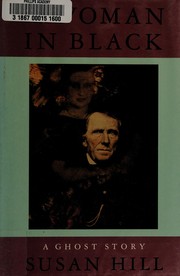
The Woman in Black
Susan Hill · 1983 · Book
Shares a bleak, unforgiving tone.
88% shared signal
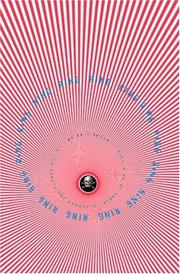
Ring
Koji Suzuki · 1991 · Book
Shares slow-burn dread.
88% shared signal

The Thing (OST)
Ennio Morricone · 1982 · Record
Shares restraint over gore.
88% shared signal
Questions about Local 58
The things people actually ask about this series, answered — including how it ends.
What is Local 58 about?
A small West Virginia television station whose broadcasts keep being interrupted by material nobody at the station made. Across the series the interruptions resolve into one subject: something associated with the moon, which wants to be looked at and wants its instructions followed. Nobody in the series ever finds this out.
What is the Contingency broadcast in Local 58?
A transmission formatted as a 1960s civil-defence emergency, announcing that the country has fallen and instructing the population to take their own lives — followed by a real announcement saying the message was unauthorised. The second half is the frightening one: something got into the broadcast chain.
What does the moon have to do with Local 58?
It is the source. The Skywatching entry turns an amateur astronomy segment into an instruction not to look at the moon, and shows lunar footage that does not behave like a surface. The series never explains it, which is the point and the reason we score it at the supernatural floor.
Is Local 58 finished?
No. It began in 2015 and entries have arrived years apart since, with no declared conclusion. The whole run is under half an hour. Anybody starting it should know they are starting an open work rather than a story with an end.
Why does Local 58 score high on era bias if it looks like old tape?
Because we score the texture a work has rather than the one it imitates. Every frame was made digitally after 2015 by somebody deciding exactly how much tracking error to add, which is a modern craft decision. Analog horror is the genre that forced us to state that rule.
Is Local 58 the first analog horror?
It is the one everything after it is measured against, and the series that fixed the form's grammar — the station ident, the emergency tone, the caption card, the interruption. Kris Straub also wrote Candle Cove, which Channel Zero adapted.
What should I watch after Local 58?
Gemini Home Entertainment for the same cosmic register at length, The Mandela Catalogue for the loud opposite of this series' restraint, and what analog horror is for the genre it started.
These are ranked against Local 58, not against you.
Build your own tape →