Web series · 2021
The Mandela Catalogue
Alex Kister
Something wears your face, tells you the truth about yourself, and waits for you to agree.
77Hard going to sit through, out of 100 — mostly how bleak it is
- PaceBuilds, then strikes62
- ThreatMostly supernatural18
- GoreShows some of it58
- ToneNo relief at all6
- RealityDream logic72
Era bias 90 · Thoroughly modern. Texture rather than fear, so it is not part of the grade. All six scores →
On VHSCREAM’s six-axis scale, The Mandela Catalogue (2021) is most extreme on the tone axis: 6 out of 100, where 0 is a bleak, unforgiving tone and 100 is gleeful black comedy. 3% of the 320 horror works we have scored come in lower on that axis. How we score →
The Mandela Catalogue is a web series begun in 2021 by Alex Kister, set in Mandela County and assembled from public-service announcements, home video, church material and government broadcasts. Something is impersonating people, and what it does when it reaches them is talk. We score it 006 on tone, the floor of this shelf, and 090 on era bias, the modern ceiling of it.
Scored and reviewed by VHSCREAM on · how we score
How scary is The Mandela Catalogue, actually?
Scored against the published rubric, here is what the numbers mean for a viewer.
Tone 006 is the floor of this shelf. 9 works score lower and 12 tie it. Almost everybody who appears is destroyed, the mechanism of destruction is being told the truth, and the institutions that know about it can only issue advice.
Era bias 090 is the modern ceiling of this shelf. 291 works score lower. Every frame simulates 1990s tape and government video, and all of it was made digitally after 2021 with the artefacts chosen deliberately. We score the texture a work has, not the one it performs.
Threat 018 is the supernatural end. 52 works score lower. The Alternates have an origin and no negotiable interest, and nobody human in the series is the danger — the county's authorities are overwhelmed rather than complicit.
Pace 062 is on the shock side, which for this genre is extreme. 206 works are slower. The series' primary device is a sudden loud image, and it uses it often enough that the number is the most honest description of it available.
Viscera 058 is moderate and front-loaded. 147 works score higher. Suicide, blood, and faces distorted past the human — most of it brief and loud rather than dwelt on.
Reality anchor 072 is surreal. 256 works score lower. A county, houses, a church and a television station — with doppelgangers and an angelic order behind them.
On jump scares: constant, and that is the main thing people hold against it.
Who should skip The Mandela Catalogue
Skip it if sudden loud images are a problem. The premise requires none of it and the series uses it constantly, at full volume, in the middle of its best material.
Skip it if the suicide material is too close. It is the mechanism of almost every death in the series, repeatedly and directly.
Skip it if you want a finished object. It is unfinished, its volumes revise each other, and it has been restructured since its creator stepped back in 2023.
Content notes: suicide as the series' central mechanism, impersonation of family members, home invasion, religious abuse, child endangerment, and sustained loud distorted imagery.
Watch it if you want the best premise analog horror has produced, a horror story whose weapon is a true sentence, and the one series in the genre with a theology.
The Mandela Catalogue on six axes of fear
Every work in the index is scored on six continuous axes of fear. This is what The Mandela Catalogue looks like as a vector — and what each ten-point band looks like across everything else we hold.
Draft score — awaiting human review. About these scores
Disagree with a number? Say so on the axis itself. Nobody has confirmed this vector yet, and a score you challenge goes to the top of the queue to be re-scored by a human. Votes do not move the numbers — they decide what gets looked at first. How the scoring works →
Scored against the published rubric. This vector is a draft awaiting review — the method is public so you can argue with it.
The Mandela Catalogue: the review
The best premise in the genre and the loudest execution of it
The Alternates are a genuinely excellent invention. They are not monsters that kill you: they wear somebody's face, come to your door or your bedside, and tell you a true thing about yourself that you cannot survive knowing. The deaths in this series are overwhelmingly self-inflicted, which makes the entity a kind of weapon with no edge — and the public-service format Kister uses to warn the county about them is perfect, because what do you tell people? Do not open the door to your brother.
At its best — a PSA explaining the protocol, a home video of a conversation that has gone wrong by one degree — this is the most frightening thing on the web shelf. The series understands that impersonation is worse than pursuit, and that a doorbell is worse than a scream.
Then it screams
And here is the argument about The Mandela Catalogue, which is not a matter of taste so much as a matter of discipline. Kister interrupts his own best material with sudden, loud, maximally distorted faces at full volume, repeatedly, and the series is as famous for that as for its premise. Two or three of them are genuinely effective. The rest train you to brace, and a braced viewer is not a frightened one.
Set against Local 58, which achieves more with a caption card than this does with a screaming face, the comparison is not flattering. The ideas here are better. The nerve is not.
The theology
The series' other distinguishing feature is that it has a cosmology and that the cosmology is Christian. The Alternates are tied to Gabriel — the annunciation, a rebellion, an angelic order that went wrong — and the county's churches are inside the story rather than beside it. This is unusual and mostly to the series' credit: it gives the impersonation a reason that is not a laboratory, and it lets the PSAs carry a second register, since a population being warned about something biblical cannot be warned in ordinary language.
It is also where the series gets tangled. The volumes arrive out of order, revise each other, and accumulate names faster than they resolve them.
Where it strains
Beyond the volume: the series went on an extended hiatus after Kister stepped back from it in 2023 and has been restructured since, which means the published run is now a revised object rather than a finished one. The lore requires external reading. Several entries are a single idea stretched. And the animation and compositing are rougher than The Backrooms by a wide margin, which matters in a form whose contract is that the footage is real.
The ending of The Mandela Catalogue explained
The ending, in full. Open it when you have seen it.
The short answer: there is no ending. The series is unfinished, its volumes revise one another, and it has been restructured since its creator stepped back from it in 2023. What it establishes is the mechanism and the origin: the Alternates are entities that take a person's appearance, approach their victim, and destroy them by telling them something true — most victims die by their own hand — and the series traces them to Gabriel and an angelic rebellion rather than to anything scientific. Mandela County's institutions know, and their response is to issue advice.
Here is what the series establishes.
What are the Alternates?
Entities that assume the appearance of people the victim knows, approach them directly, and attack by speaking. The series is consistent that the harm is not physical: an Alternate tells its victim something about themselves, and the victim does the rest. That is why the county's warnings are about doors and voices rather than about weapons.
How do you tell an Alternate from a person?
Imperfectly, which is the point. The series' PSAs offer protocols — verify, do not admit, do not engage — and the home-video material shows how little any of that helps when the thing at the door has your brother's face and knows what your brother knows.
What does Gabriel have to do with it?
The series ties the Alternates' origin to the archangel and to a rebellion within an angelic order, with the annunciation as the model for what an Alternate does: arrive, announce, and change a life by speaking. It is an unusual choice and it gives the series a reason for the impersonation that is theological rather than experimental.
Who are Mark, Adam and Cesar?
The recurring human figures across the early volumes — a man whose double appears to him, and two others whose material carries the county's story forward. The series is not structured around a single protagonist, and following it means following a county rather than a person.
Why do the volumes contradict each other?
Because they were made over years, out of order, and revised. The series is a catalogue rather than a serial, it has been restructured since 2023, and a viewer arriving now is reading a revised body of work rather than a completed one.
Is it finished?
No. It is unfinished, it has been reorganised, and no conclusion has been published.
If The Mandela Catalogue is your kind of fear
The eight works closest to The Mandela Catalogue in the index on the five axes that describe fear, the same medium first — not by genre label, and not by what other people watched.
A Nightmare on Elm Street
Samuel Bayer · 2010 · Film
Shares a bleak, unforgiving tone.
89% shared signal
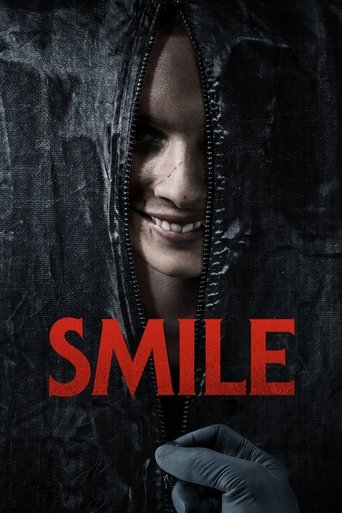
Smile
Parker Finn · 2022 · Film
Shares a threat that is not human.
86% shared signal
1408
Mikael Hafstrom · 2007 · Film
Shares dream logic.
86% shared signal
Incantation
Kevin Ko · 2022 · Film
Shares a bleak, unforgiving tone.
85% shared signal
Annabelle: Creation
David F. Sandberg · 2017 · Film
Shares a threat that is not human.
84% shared signal
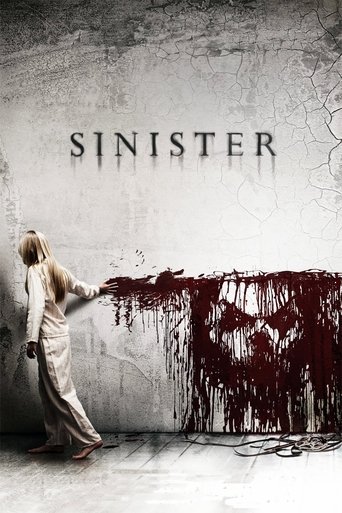
Sinister
Scott Derrickson · 2012 · Film
84% shared signal
Wes Craven's New Nightmare
Wes Craven · 1994 · Film
Shares dream logic.
84% shared signal
Prometheus
Ridley Scott · 2012 · Film
83% shared signal
More lists like these: Movies like Smile · Movies like Sinister
Questions about The Mandela Catalogue
The things people actually ask about this series, answered — including how it ends.
What are the Alternates in The Mandela Catalogue?
Entities that take the appearance of someone the victim knows, approach them, and attack by speaking — telling them something true about themselves that they cannot survive knowing. Most deaths in the series are self-inflicted, which is why the county's warnings are about doors and voices rather than weapons.
What does Gabriel have to do with The Mandela Catalogue?
The series traces the Alternates to the archangel and to a rebellion within an angelic order, using the annunciation as the model for what an Alternate does: arrive, announce, and change a life by speaking. It gives the impersonation a theological origin rather than a scientific one.
How does The Mandela Catalogue end?
It does not. The series is unfinished, its volumes revise one another, and it has been restructured since Alex Kister stepped back from it in 2023. The mechanism and the origin are established; no conclusion has been published.
Why is The Mandela Catalogue so loud?
Because its primary device is a sudden distorted face at full volume, used often. We score it 062 on pace, well above the rest of this shelf. The premise needs none of it, and Local 58 achieves more with a caption card than this does with a scream.
Do I need to watch the volumes in order?
There is no order that resolves it. They were made across years, out of sequence, and revised, and the series is a catalogue rather than a serial. Most viewers rely on external summaries to hold the names together.
Is The Mandela Catalogue the scariest analog horror?
It has the best premise in the genre and the least disciplined execution of it. On our numbers it is the bleakest thing on this shelf at 006 on tone and the loudest in the whole index, and whether that makes it the scariest depends entirely on whether sudden noise frightens you or only startles you.
What should I watch after it?
Local 58 for the same ideas held quietly, The Walten Files for the other loud one, and what analog horror is for the genre both belong to.
These are ranked against The Mandela Catalogue, not against you.
Build your own tape →