Film · 2017
Annabelle: Creation
Grieving parents, six orphans, one locked bedroom. Where the doll learned its trade.
68Hard going to sit through, out of 100 — mostly how bleak it is
- PaceBuilds, then strikes64
- ThreatSomething not human12
- GoreShows some of it44
- ToneBleak16
- RealityTilts unreal52
Era bias 84 · Modern. Texture rather than fear, so it is not part of the grade. All six scores →
The most supernatural horror movies ever made →
Part of a series: The Conjuring universe movies in order →
On VHSCREAM’s six-axis scale, Annabelle: Creation (2017) is most extreme on the threat axis: 12 out of 100, where 0 is a threat that is not human and 100 is human monsters. 6% of the 320 horror works we have scored come in lower on that axis. How we score →
Annabelle: Creation is a 2017 American supernatural horror film directed by David F. Sandberg. A grieving dollmaker and his wife take in a nun and six orphaned girls, and one of them, Janice, opens the locked room where their dead daughter's doll is kept. We score it 012 on the threat axis and 064 on pace.
Scored and reviewed by VHSCREAM on · how we score
How scary is Annabelle: Creation, actually?
Scored against the published rubric, here is what the numbers mean.
The threat at 012 is near the supernatural end — 20 works score lower. A demon in a doll does all the harm; the possessed girl is its instrument.
Viscera 044 is moderate — 103 works score lower. Broken fingers, a girl thrown down a staircase, a disfigured face and two killings, more than the Warren films show.
Tone 016 is bleak — 103 works score lower. A dead child, a family destroyed by grief, a disabled girl who is possessed and never saved, and an ending that is a double murder.
Pace 064 is on the shock side, with 228 works slower. Patient for an hour, then a long final act of attacks.
Era bias 084 reads modern — 218 works score lower. A period house shot with Steadicam polish and a clean digital grade.
Reality anchor 052 is in the middle — 164 works score lower. One house, consistent rules for its demon, and a few manifestations that bend physical space.
On jump scares: many, despite a director who said he wanted tension first, and the last act is mostly made of them.
Who should skip Annabelle: Creation
Skip it if harm to children is a hard limit. The victims and the possessed are young girls, and one is maimed.
Skip it if you want a happy ending. The girl at the centre of it is never saved.
Skip it if a demonic doll strikes you as silly. The film is sincere about it from the first scene to the last.
Content notes: the death of a child in a road accident, a disabled girl thrown down a staircase, possession of a child, a man's fingers broken before he is killed, a disfigured woman, the murder of two adoptive parents, and occult worship.
Watch it if you want one of the strongest spin-offs, you like a haunted house laid out room by room, and you want to know where the doll came from.
Annabelle: Creation on six axes of fear
Every work in the index is scored on six continuous axes of fear. This is what Annabelle: Creation looks like as a vector — and what each ten-point band looks like across everything else we hold.
Draft score — awaiting human review. About these scores
Disagree with a number? Say so on the axis itself. Nobody has confirmed this vector yet, and a score you challenge goes to the top of the queue to be re-scored by a human. Votes do not move the numbers — they decide what gets looked at first. How the scoring works →
Scored against the published rubric. This vector is a draft awaiting review — the method is public so you can argue with it.
Annabelle: Creation: the review
Annabelle: Creation is a prequel to a weak film that turns out to be one of the strongest things in its shared universe, and it gets there by taking its time.
The first Annabelle was a cash-in. This one was handed to David F. Sandberg, who had just made Lights Out, after James Wan and New Line approached him during its post-production, and he treats it as a chance to make an old-fashioned haunted-house film. A dollmaker, Samuel Mullins, and his wife Esther lose their seven-year-old daughter Bee when she runs into the path of a car. Twelve years later they open their home to Sister Charlotte and six girls whose orphanage has closed. Janice, who was disabled by polio, is told to keep out of Bee's room. She does not.
Sandberg builds the house before he uses it
The best thing in the film is its geography. Sandberg has said he drew on the look of The Haunting (1963) and on The Shining's score, and the house is laid out so that you know every room before anything happens in it: the locked bedroom, the stairlift, the barn, the well. He works with Steadicam and tracking shots for what he called an old-school feel, and he chose, by his own account, tension over the jump scare. The stairlift sequence is the clearest example. Janice, already frightened, tries to escape the upper floor on a slow mechanical chair, and the film just lets the chair be slow.
The doll itself was redesigned to look more like a child's toy, with fuller cheeks and a corrected overbite, and because a doll cannot move Sandberg moves things around it instead, such as a sheet, a door or a chair. It is a smarter answer to the franchise's central problem than the first film found.
The children carry it
Talitha Bateman as Janice and Lulu Wilson as her best friend Linda are the film's real leads, and the friendship between them is what gives the second half its weight. Janice is the target because she is the most vulnerable person in the house: disabled, then badly injured, then confined to a wheelchair on the ground floor. Linda is the one who notices that something has gone wrong with her, and nobody believes her. Anthony LaPaglia kept his distance from the young actresses on set to make Samuel colder towards them, and it shows. Miranda Otto, as an Esther confined to her room and barely glimpsed until the last act, is the film's best reveal.
A grief story with a demon in it
Underneath the machinery, Creation is about two parents who could not let go. Samuel and Esther's daughter Bee dies in the opening minutes, and everything that follows comes from the choice they made afterwards: to pray to anything that would let them see her again. The film is careful to make that choice understandable before it makes it monstrous. The Mullinses are not villains; they are people who invited something into their house because they were in pain, and then spent twelve years trying to atone by opening their door to children who had nowhere else to go. That penance is what gives the demon its chance, and the irony is the film's sharpest idea.
It also gives the house a moral shape. Bee's room is a shrine, kept locked, and Janice's trespass into it is a child's curiosity rather than a sin, which makes what happens to her harder to watch. Benjamin Wallfisch's score leans on that sadness as much as on the shocks, and Maxime Alexandre's photography keeps the farmhouse warm and dusty in daylight so that the dark has somewhere to come from. Stephanie Sigman's Sister Charlotte is a quiet, decent presence, and she asked for the set to be blessed by a priest, as had been done on The Conjuring 2; the film itself had an exorcism expert, Father Robert, consulting.
Sandberg was not the first director on the project. John R. Leonetti was originally attached and was replaced by Sandberg in March 2016. Set this film beside the first Annabelle and the difference is close to a demonstration of what a director is for: the same doll, the same studio and the same shared universe, and a completely different level of control over where the audience is looking and when.
Where it falls down
The final half-hour throws away much of the restraint. Once the demon is loose, the film becomes a sequence of girls running through corridors, and the scares get louder and more generic. Esther's explanation, delivered as one long piece of exposition about praying to an entity that offered to return their daughter, is clumsy, and it settles a mystery the film had been doing well to leave alone. Four of the six orphans are barely distinguished. And the ending's last stretch exists mainly to connect the film to the opening of the first Annabelle, which ties a knot that only matters if you saw that film.
It cost $15 million and grossed about $307 million worldwide, which is why the doll came back. Critics were kinder to it than to its predecessor too, and it deserves that: it is a prequel that works as a film in its own right, with a beginning, a middle and a deeply unhappy end, and it does not need you to care about the franchise to frighten you.
For the film Sandberg made just before this one, Lights Out; for the film this one leads into, Annabelle; and for where it fits in the full sequence, the Conjuring movies in order.
The ending of Annabelle: Creation explained
The ending, in full. Open it when you have seen it.
The short answer: the demon, now possessing Janice, kills Esther and attacks Sister Charlotte, who manages to lock the possessed Janice in the closet with the doll and escape with the other girls. When the police arrive they find only the doll and take it as evidence. Janice has escaped through a hole in the closet wall. She turns up at an orphanage in Santa Monica, calls herself Annabelle, and is adopted by Pete and Sharon Higgins. Years later the grown Annabelle, who has become involved in devil worship, comes home and murders the Higginses one night; their neighbour Mia Form hears the screams and alerts her husband John. That is the opening of the first Annabelle.
What happens at the end of Annabelle: Creation?
Sister Charlotte locks the possessed Janice and the doll in a closet. The police recover only the doll; Janice has escaped through the wall. She is adopted from a Santa Monica orphanage by the Higgins family under the name Annabelle, and years later murders her adoptive parents, which is the event that begins the first Annabelle film.
How does Annabelle: Creation connect to Annabelle (2014)?
Janice grows up as Annabelle Higgins. When she murders the Higginses, their neighbours, Mia and John Form, hear it, and that night is the start of Annabelle (2014). Creation shows how the demon came to be attached to a doll and how the girl who carried it became the woman who brought it to the Forms' street.
Who dies in Annabelle: Creation?
Bee Mullins dies before the main story, hit by a car. Samuel Mullins is killed by the possessed Janice, who breaks his fingers to make him drop his crucifix. Esther is killed by the demon. Years later, Pete and Sharon Higgins are murdered by the grown Annabelle. Sister Charlotte and the other girls survive.
What is the demon in Annabelle: Creation?
Esther explains that after Bee died, she and Samuel prayed to any power that would let them see their daughter again. An entity answered and transferred its essence into one of Samuel's dolls, and they soon realised they had invited in a demon. It attacked Esther and took her eye. They had the house blessed, locked the doll in a closet, and took in orphans as penance, which gave the demon a new host.
If Annabelle: Creation is your kind of fear
The eight works closest to Annabelle: Creation in the index on the five axes that describe fear, the same medium first — not by genre label, and not by what other people watched.
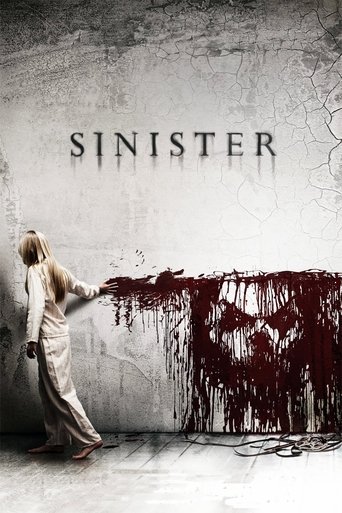
Sinister
Scott Derrickson · 2012 · Film
Shares a bleak, unforgiving tone.
94% shared signal
1408
Mikael Hafstrom · 2007 · Film
Shares a threat that is not human.
90% shared signal
Paranormal Activity: The Ghost Dimension
Gregory Plotkin · 2015 · Film
Shares a threat that is not human.
89% shared signal
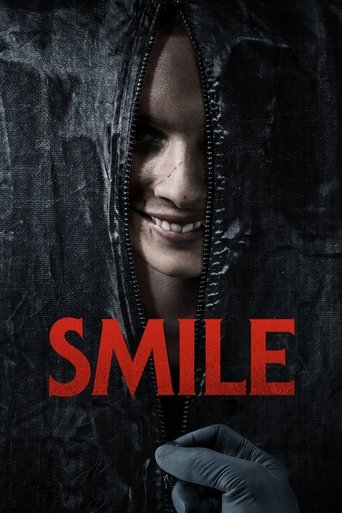
Smile
Parker Finn · 2022 · Film
Shares a bleak, unforgiving tone.
87% shared signal
Paranormal Activity: Next of Kin
William Eubank · 2021 · Film
86% shared signal
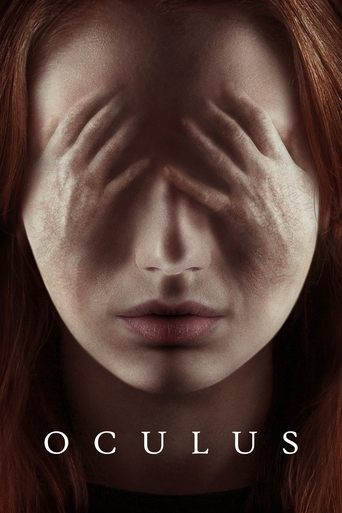
Oculus
Mike Flanagan · 2013 · Film
85% shared signal
The Nun II
Michael Chaves · 2023 · Film
85% shared signal
The Conjuring: The Devil Made Me Do It
Michael Chaves · 2021 · Film
85% shared signal
More lists like these: Movies like Sinister · Movies like Smile
Questions about Annabelle: Creation
The things people actually ask about this film, answered — including how it ends.
What happens at the end of Annabelle: Creation?
Sister Charlotte locks the possessed Janice and the doll in a closet. Police find only the doll; Janice has escaped through the wall. She is adopted from a Santa Monica orphanage by the Higgins family under the name Annabelle, and years later murders her adoptive parents, which is how the first Annabelle film begins.
Is Annabelle: Creation a prequel?
Yes. It is set before Annabelle (2014) and shows how the demon became attached to the doll. Its final scenes lead directly into the opening of that film, when the grown Annabelle Higgins murders her adoptive parents and the neighbours, Mia and John Form, hear the screams.
Who is Janice in Annabelle: Creation?
An orphan disabled by polio, played by Talitha Bateman. She opens the doll's closet, is targeted by the demon, injured on the stairs, and possessed. After escaping, she takes the name Annabelle and is adopted by the Higginses. Tree O'Toole plays her as an adult.
Who dies in Annabelle: Creation?
Bee Mullins, before the main story, in a road accident. Samuel Mullins, killed by the possessed Janice. Esther Mullins, killed by the demon. And, years later, Pete and Sharon Higgins, murdered by the grown Annabelle. Sister Charlotte and the other orphans survive.
Is Annabelle: Creation better than Annabelle?
Critics thought so, calling it an improvement on the first film. It holds 71 per cent on Rotten Tomatoes. Director David F. Sandberg, who made Lights Out, built it around tension, a carefully laid-out house and two strong child performances rather than a series of stings.
How scary is Annabelle: Creation?
Very jumpy and nastier than the Warren films. We score it 064 on pace and 044 on viscera. Its first hour builds slowly in one house, and its last act is a long run of attacks, including a girl thrown down a staircase and two killings.
These are ranked against Annabelle: Creation, not against you.
Build your own tape →