Film · 2016
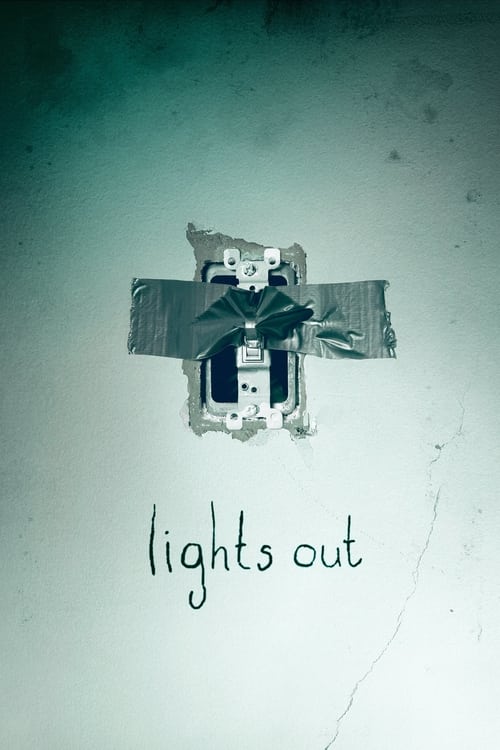
Lights Out
David F. Sandberg
One idea, executed relentlessly. On and off, on and off.
Most extreme on ERA BIAS — modern craft at 082
On VHSCREAM’s six-axis scale, Lights Out (2016) is most extreme on the era-bias axis: 82 out of 100, where 0 is analog-era texture and 100 is modern craft. 72% of the 105 horror works we have scored come in lower on that axis. How we score →
Lights Out is a 2016 horror film directed by David F. Sandberg, expanded from his own three-minute short. Something exists only in darkness and is attached to a woman whose children are now living with it. We score it 020 on viscera — only 16 works score lower, which makes it the ninth-least-explicit film we have scored — and 074 on pace.
Scored and reviewed by VHSCREAM on · how we score
Lights Out: the review
Lights Out is a very good eighty-minute delivery system for one mechanic, and the mechanic is so good that the film did not need anything else.
Sandberg's 2013 short — a woman, a hallway, a light switch, and a figure that is there in the dark and gone in the light — went viral because it is a perfect piece of engineering. The feature keeps it and finds genuine variations: a flickering fluorescent, a neon sign cycling on and off, a car's headlights, a mobile phone torch running down, a candle, and a basement with a generator. The best sequence in the film is Rebecca using a cigarette lighter and the audience counting the seconds of fuel with her, and the second best is a gun with muzzle flash as a light source, which is a genuinely clever idea.
Teresa Palmer and Gabriel Bateman are better than the material and Maria Bello is doing the real work: Sophie is a woman with a long psychiatric history whose medication determines whether her children are in danger, and the film is more interested in that than its marketing suggested.
It is a film about a parent's illness and it nearly earns it
The architecture is that Diana is attached to Sophie, gets stronger when Sophie is unwell, and is encouraged by Sophie's isolation — which maps onto Martin not sleeping, Rebecca having left home at sixteen, and a social worker asking reasonable questions. For about an hour the film holds two readings at once and lets the family's history do the frightening. Sandberg is better at this than he is given credit for.
Where it falls apart
The last fifteen minutes. The film explains Diana — a psychiatric patient from Sophie's childhood, a skin condition, an experimental light treatment, a death — and the explanation is both thin and unnecessary, because an entity that lives in the dark does not need a biography. Then it resolves the plot by having Sophie shoot herself, on the reasoning that Diana cannot exist without her.
That ending is the film's real problem and it is not a squeamishness objection. The film spends an hour establishing a mother with mental illness as a person worth saving and then has her suicide be the solution, delivered as a triumphant sacrifice with the children present. Sandberg has said he shot an alternative. The one he used undoes a great deal of what the preceding hour built.
For the same mechanic held much longer, Skinamarink; for the same studio-haunting craft done with more patience, The Conjuring and Insidious.
The ending of Lights Out explained
Total spoilers from here. Everything above this line is spoiler-free.
The short answer: Rebecca and Martin work out from Sophie's childhood records that Diana was a patient at the same psychiatric hospital where Sophie was treated as a girl — a girl with a severe skin condition that made light unbearable, who became attached to Sophie, and who died when the staff attempted an experimental light therapy on her. Diana has been with Sophie ever since, worse when Sophie is unwell, and she has been systematically removing everyone else in Sophie's life, including Rebecca's father and Paul in the film's opening. In the basement, with the lights failing, Sophie understands the terms: Diana is bound to her and cannot exist without her. She tells her children she loves them, takes the gun and shoots herself. Diana disintegrates in front of them. The police arrive, Rebecca and Martin survive, and the final scene is the two of them together in the back of an ambulance with the lights on.
Who is Diana in Lights Out?
A former psychiatric patient from Sophie's childhood, presented in the hospital records Rebecca finds as a girl with a condition that made her intolerant of light and that the staff were treating experimentally. She befriended Sophie during Sophie's own admission, was regarded by the doctors as a malign influence on her, and died during a light-based procedure. What comes back is attached to Sophie rather than to a place, exists only where there is no light, and is strongest when Sophie is unmedicated and alone.
What are the rules for Diana?
Strict and consistently applied, which is the film's main virtue. She exists only in darkness: in light she is not merely repelled but absent, and she cannot be photographed, touched or injured there. Any light source works, including a brief one — a lighter, a phone, a muzzle flash, a neon sign at the bottom of its cycle. She can manipulate objects and switches in the dark, she can move through shadow faster than a person can walk, and she scratches rather than strikes.
How is Diana finally stopped?
By Sophie's suicide. The film establishes that Diana is bound to Sophie and has no independent existence, so Sophie shoots herself in the basement with her children watching, and Diana comes apart. There is no other solution offered and no attempt in the film to find one, which is why the ending is the most criticised thing about it.
Why is the ending of Lights Out controversial?
Because it resolves a film about a mother's mental illness by making her death the happy outcome. For an hour the film treats Sophie as a person whose treatment and isolation are the problem, with her children fighting to get her back; the last five minutes convert her into an obstacle and remove her, and stage it as heroism in front of her son. Sandberg shot an alternate ending in which Sophie lives. The theatrical one is the reason the film's reputation is lower than its craft deserves.
Is Lights Out based on a short film?
Yes — Sandberg's own, made in 2013 for almost nothing, starring his wife Lotta Losten, who also appears in the feature's opening sequence. It runs about three minutes: a woman turns off a hall light, sees a figure, turns the light on, and it is gone. It went viral, got him the feature, and the feature's best scenes are all direct extensions of its single idea.
How scary is Lights Out, actually?
Scored against the published rubric, here is what the numbers mean.
Viscera 020 is near the floor — only 16 works score lower. Scratches, one shooting, and a death in the opening. Nothing is dwelt on and there is very little blood.
Pace 074 is fast — 98 works are slower. It runs eighty-one minutes and delivers a set piece roughly every five.
The threat at 022 is well into the supernatural — only 23 works score lower. No human being in the film harms anybody, and Sophie's illness is a condition rather than a motive.
Era bias 082 reads modern — 76 works score lower. Digital capture, a phone torch as a plot device, and a sound mix built on sub-bass.
Tone 028 is bleaker than the ending's framing suggests — 76 works score lower. Two parental figures die, and the resolution is a mother's suicide performed in front of her child.
Reality anchor 056 leans slightly towards dream logic — 56 works score lower, because Diana's movement through darkness does not obey the geography the rest of the film does.
On jump scares: many, and the good ones are all switches.
Lights Out on six axes of fear
Every work in the index is scored on six continuous axes of fear. This is what Lights Out looks like as a vector.
Where that puts it: #5 relentless · #9 without gore · #14 modern
Disagree with a number? Say so on the axis itself. Nobody has confirmed this vector yet, and a score you challenge goes to the top of the queue to be re-scored by a human. Votes do not move the numbers — they decide what gets looked at first. How the scoring works →
Scored against the published rubric. This vector is a draft awaiting review — the method is public so you can argue with it.
Who should skip Lights Out
Skip it if suicide is a hard limit. The film's resolution is a suicide, performed on screen in front of a child and framed as a heroic sacrifice.
Skip it if depictions of mental illness as dangerous will anger you. The film holds two readings for an hour and then lands on the worse one.
Skip it if jump scares without dread are the problem. This is an engineered scare delivery system and it does not pretend otherwise.
Content notes: a suicide shown on screen in front of a child, mental illness presented as the vector for a supernatural threat, involuntary psychiatric treatment of a child described in records, two violent deaths, a child in sustained danger, and a historical death caused by medical experimentation.
Watch it if you want the best single horror mechanic of the last decade used properly for an hour, you like a film that respects its own rules, and you can accept a last act that undoes some of what came before.
Where to find it
Rent or buy from Amazon Video · Apple TV Store · Google Play Movies +3 ↗Physical copies on eBay ↗Availability from JustWatch via TMDB. We earn nothing from these links.
Nothing loads from YouTube until you press play.
If Lights Out is your kind of fear
The eight works closest to Lights Out in the index, ranked by distance across all six axes — not by genre label, and not by what other people watched.
Annabelle
John R. Leonetti · 2014 · Film
Shares modern craft.
93% shared signal
The Conjuring
James Wan · 2013 · Film
Shares restraint over gore.
92% shared signal
The Nun
Corin Hardy · 2018 · Film
Shares a supernatural threat.
91% shared signal
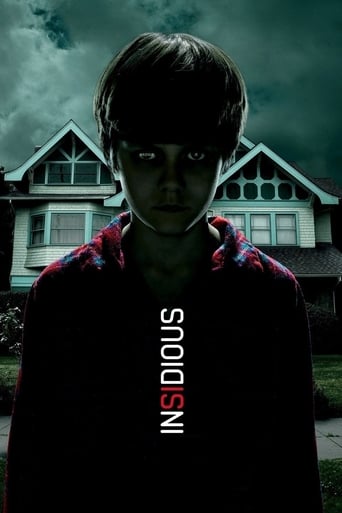
Insidious
James Wan · 2010 · Film
Shares a bleak, unforgiving tone.
89% shared signal
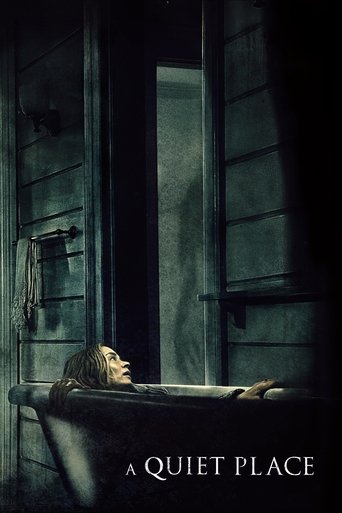
A Quiet Place
John Krasinski · 2018 · Film
Shares modern craft.
84% shared signal
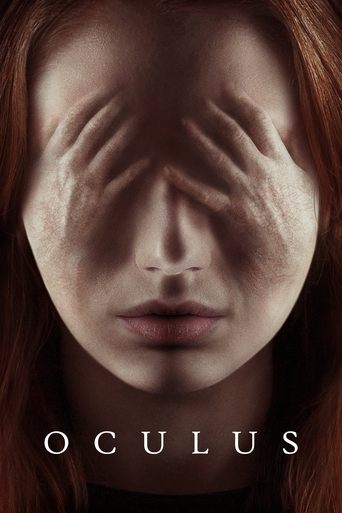
Oculus
Mike Flanagan · 2013 · Film
Shares a supernatural threat.
83% shared signal
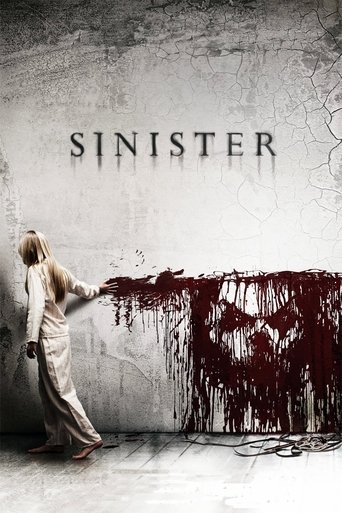
Sinister
Scott Derrickson · 2012 · Film
Shares a bleak, unforgiving tone.
83% shared signal
Smile
Parker Finn · 2022 · Film
Shares relentless shock.
79% shared signal
Questions about Lights Out
The things people actually ask about this film, answered.
What happens at the end of Lights Out?
Rebecca and Martin learn Diana is bound to their mother and cannot exist without her. In the basement, Sophie tells her children she loves them and shoots herself, and Diana disintegrates. The children survive, and the film closes with the two of them safe and the lights on.
Who is Diana in Lights Out?
A girl from the psychiatric hospital where Sophie was treated as a child, with a skin condition that made light unbearable, who died during an experimental light therapy. She attached herself to Sophie rather than to a place, and she is strongest when Sophie is unwell and isolated.
What are the rules for the entity in Lights Out?
She exists only in darkness and is wholly absent in light — any light, however brief. She can work switches and move objects in the dark, travels through shadow faster than a person can walk, and cannot be touched or injured while illuminated. A lighter, a phone or a muzzle flash all work.
How do they defeat Diana?
They do not; Sophie does, by killing herself. The film establishes that Diana has no existence independent of her, and offers no alternative solution. It is the most criticised decision in the film and Sandberg shot an alternate ending in which Sophie survives.
Is Lights Out gory?
Barely. We score it 020 on viscera, among the lowest in our index. There are scratches, one shooting and a death in the opening sequence, and the film works almost entirely through a light switch.
Is Lights Out based on a short film?
Yes, David F. Sandberg's own 2013 short of the same name — about three minutes long, made for almost nothing, starring Lotta Losten, who also opens the feature. Its single idea is the whole mechanic the film is built on.
These are ranked against Lights Out, not against you.
Build your own tape →