Film · 2015
Insidious: Chapter 3
Leigh Whannell
A grieving girl calls her mother and something else answers. Elise's film.
55Strong to sit through, out of 100 — mostly how bleak it is
- PaceJolts you often72
- ThreatSomething not human10
- GoreHolds back24
- ToneBleak34
- RealityTilts unreal62
Era bias 82 · Modern. Texture rather than fear, so it is not part of the grade. All six scores →
The most supernatural horror movies ever made →
Part of a series: Insidious movies in order →
On VHSCREAM’s six-axis scale, Insidious: Chapter 3 (2015) is most extreme on the threat axis: 10 out of 100, where 0 is a threat that is not human and 100 is human monsters. 2% of the 320 horror works we have scored come in lower on that axis. How we score →
Insidious: Chapter 3 is a 2015 American-Canadian-British supernatural horror film directed by Leigh Whannell. A prequel set before the Lambert haunting, it follows a teenager, Quinn Brenner, who tries to contact her dead mother and draws something else out of the Further. We score it 010 on the threat axis and 082 on era bias: a wholly supernatural threat in a crisp modern finish.
Scored and reviewed by VHSCREAM on · how we score
How scary is Insidious: Chapter 3, actually?
Scored against the published rubric, here is what the numbers mean.
The threat at 010 is on the supernatural end — 8 works score lower. A demon, a Bride in Black and a red-faced watcher. Even the car accident is arranged by a spirit.
Viscera 024 is restrained — 48 works score lower. A car impact and two broken legs, some possessed violence, and a creature defined by breathing rather than blood.
Tone 034 is bleak with relief — 222 works score lower. Grief runs through it, but the dead mother's help, Specs and Tucker's comedy and a team forming at the end let the light in.
Pace 072 is on the shock side, with 280 works slower. Silences broken by sudden appearances, and a car crash that arrives with no warning at all.
Era bias 082 reads modern — 207 works score lower. A clean, digital 2015 finish on a story set in 2007, with online ghost-hunters in the plot.
Reality anchor 062 leans surreal — 217 works score lower. The Further is a dream world, but the Brenners' flat stays solid and most of the film happens in it.
On jump scares: many, and the car accident is the one people remember because it is the one nobody is braced for.
Who should skip Insidious: Chapter 3
Skip it if you dislike jump scares. The film is built on silence, then a sudden figure, then a loud score.
Skip it if a dead parent used as a horror device will be too close to home. The film is about a daughter trying to reach her mother, and the thing that answers is not her mother.
Skip it if you want the Lambert story. The Lamberts barely figure; this is Elise's film.
Content notes: a teenager hit by a car, broken legs and long immobility, possession of a teenager, a demon impersonating a dead spouse and urging suicide, grief over a dead mother, and sustained haunting of a bedridden girl.
Watch it if you want a warmer entry than the Lambert films, you like Lin Shaye, and you want a supernatural horror film about grief that still delivers a few strong shocks.
Insidious: Chapter 3 on six axes of fear
Every work in the index is scored on six continuous axes of fear. This is what Insidious: Chapter 3 looks like as a vector — and what each ten-point band looks like across everything else we hold.
Where that puts it: joint #7 supernatural
Draft score — awaiting human review. About these scores
Disagree with a number? Say so on the axis itself. Nobody has confirmed this vector yet, and a score you challenge goes to the top of the queue to be re-scored by a human. Votes do not move the numbers — they decide what gets looked at first. How the scoring works →
Scored against the published rubric. This vector is a draft awaiting review — the method is public so you can argue with it.
Insidious: Chapter 3: the review
Insidious: Chapter 3 is the film where the series stops being about the Lamberts and starts being about Elise Rainier, and it is the better for it.
Patrick Wilson had said Josh Lambert's story was finished, so Leigh Whannell, who had written every film in the series and plays the ghost-hunter Specs in them, went backwards. His directorial debut is a prequel set in 2007, before the haunting of the first film. It has a new family, a new demon and a retired medium who does not want to go back to work, and it shares only its world and its supporting cast with the films before it.
Quinn's story is a grief story, and it works
Quinn Brenner, played by Stefanie Scott, is a teenager whose mother, Lily, died a year earlier. She wants to get into a performing-arts school and she wants to talk to her mother, and she goes to Elise for the second thing. Elise, played again by Lin Shaye, senses something malevolent around her and tells her to stop trying. Quinn does not stop.
The film's best sequence is its most ordinary. After an audition for a performing-arts school, Quinn sees a figure waving at her from across the street, is distracted, and is hit by a car. She breaks both legs. Everything that follows happens to a girl who cannot get out of bed, in a flat with a father, Sean, played by Dermot Mulroney, who is barely coping, and her brother, Alex. A haunting is frightening in proportion to how stuck you are, and Whannell has made his heroine physically unable to leave.
The figure is the Man Who Can't Breathe, a dark spirit in an oxygen mask, and he is a good monster: a wheezing, half-glimpsed thing that wants Quinn's life force and has been waiting for an invitation. An elderly neighbour with dementia, Grace, warns Quinn in fragments that nobody understands until too late.
Elise is the hero now
The bolder decision is to make Lin Shaye the lead. Elise is grieving her husband, Jack, and has stopped working, because her trips into the Further have left a Bride in Black hunting her. Her friend Carl talks her back into it. When she finally enters the Further, the film finds its emotional centre: she meets what looks like Jack's spirit, inviting her to die and join him, and has to recognise that it is the same demon wearing her husband's face.
That is the series' recurring idea, grief as the door the dead come through, done as well as the franchise ever manages it. Elise is a woman of retirement age doing the physical and emotional work of a horror lead, and Shaye plays her with enough stubbornness that it never feels like a stunt. Specs and Tucker also arrive here, as hapless internet ghost-hunters whom Sean quickly sees are frauds, and the film becomes their origin story too.
A smaller, more personal production
Whannell made it in Los Angeles between July and August 2014, under the working title "Into The Further", with the Brenners' apartment built as a set at Delfino Studios in Sylmar. That set is the film's real location. Almost everything important happens in a few rooms, and Brian Pearson's photography keeps them dim and close, a long way from the big Lambert houses of the earlier films. James Wan, who directed those, produced this one and turns up in a cameo as a theatre director.
Dermot Mulroney is good as Sean, a widower who is trying very hard and failing, and whose scepticism is the right kind: not a refusal to believe, but a refusal to be taken advantage of. Stefanie Scott makes Quinn more than a victim. She is ambitious, lonely and angry with her father in the ordinary way of teenagers, and the film lets her be all three before it starts hurting her.
The critics who liked it liked it for the grief. The Telegraph praised its emotional core and The A.V. Club its themes. They are right that the film's strength is not its demon but what the demon is feeding on: a family that has not finished mourning, and a medium who has not either. For a series that had become known for its jump scares, that was a real change of emphasis, and it is the part that holds up.
It opened third in North America with $23 million, and it was enough to keep Elise at the centre of the series.
Where it falls down
It is a prequel, and it cannot escape knowing that everyone important survives. The scares follow the template: long silences, then a figure in the background, then the score. The Man Who Can't Breathe is effective in glimpses and less so once the film shows him fully. Whannell's direction is competent rather than distinctive, and the last act, in which the dead mother turns up to help her daughter win, is more comforting than frightening. Reviews were split, from IGN calling it the series' most focused and creepy entry to Variety calling it dull, and both have a point.
It made about $120.5 million on a budget of roughly $10 million, and it is an easy entry to recommend to somebody who has seen none of the others, because it asks for no homework. The scares are familiar, but the people they happen to are worth the time. Watch Insidious first for the world, and see where this sits in the timeline at the Insidious movies in order. For a better film about grief opening a door to something hungry, Talk to Me.
The ending of Insidious: Chapter 3 explained
The ending, in full. Open it when you have seen it.
The short answer: the Man Who Can't Breathe is a demon that lures people into the Further to feed on their life force, and it has been after Quinn since she tried to contact her mother. Elise enters the Further, fights off the Bride in Black, and realises that the spirit appearing to her as her late husband, Jack, is really the same demon in disguise. She cannot free Quinn alone. Grace's spirit tells her about a letter Quinn's mother left for her, which Quinn never found, and Elise calls on Lily's spirit, who appears in the Further and helps Quinn stand up to the creature. Quinn pulls off its mask and it suffocates. Afterwards Elise agrees to work with Specs and Tucker. In the final scene, her dog barks at nothing, and a red-faced demon is watching her from behind.
Who is the Man Who Can't Breathe?
A demonic spirit in an oxygen mask, played by Michael Reid MacKay, that preys on the vulnerable and draws them into the Further so it can feed on their life force. It caused Quinn's accident by waving to her from across the street. The film does not give it a further backstory.
How is the demon defeated in Insidious: Chapter 3?
By Quinn, with help. Elise works out that she cannot win the fight for her. Lily, Quinn's dead mother, appears in the Further and encourages her daughter to stand up to it. Quinn tears off its oxygen mask, and the creature apparently suffocates and is destroyed. Quinn returns to her body.
Who is watching Elise at the end of Insidious: Chapter 3?
A red-faced demon, which the cast list credits to Joseph Bishara as the Lipstick-Face Demon, the same creature that haunts the Lambert family in the first film. The scene sets up Elise's future: she has just agreed to work with Specs and Tucker, and the demon that will one day come for Dalton has noticed her.
When is Insidious: Chapter 3 set?
In 2007, three years before the Lambert haunting of the first film. That makes it a prequel to both Insidious and Chapter 2. Insidious: The Last Key later picks up after it and before the first film.
If Insidious: Chapter 3 is your kind of fear
The eight works closest to Insidious: Chapter 3 in the index on the five axes that describe fear, the same medium first — not by genre label, and not by what other people watched.
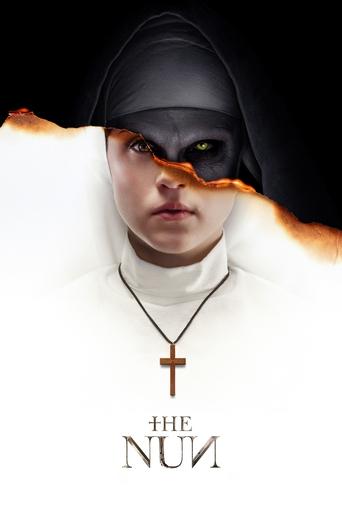
The Nun
Corin Hardy · 2018 · Film
Shares a threat that is not human.
98% shared signal
The Nun II
Michael Chaves · 2023 · Film
Shares relentless shock.
96% shared signal
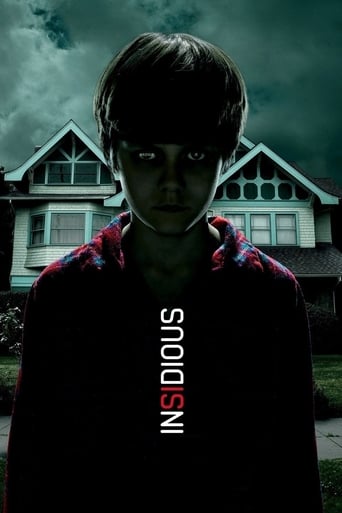
Insidious
James Wan · 2010 · Film
Shares restraint over gore.
93% shared signal
Insidious: Chapter 2
James Wan · 2013 · Film
Shares a threat that is not human.
92% shared signal

Annabelle
John R. Leonetti · 2014 · Film
Shares restraint over gore.
91% shared signal

Lights Out
David F. Sandberg · 2016 · Film
Shares relentless shock.
91% shared signal
Insidious: The Red Door
Patrick Wilson · 2023 · Film
90% shared signal
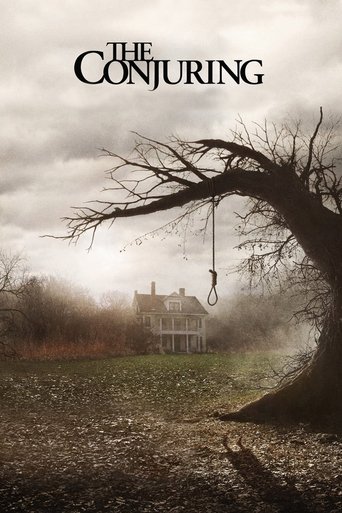
The Conjuring
James Wan · 2013 · Film
89% shared signal
More lists like these: Movies like The Nun · Movies like Insidious
Questions about Insidious: Chapter 3
The things people actually ask about this film, answered — including how it ends.
What happens at the end of Insidious: Chapter 3?
With help from the spirit of her dead mother, Lily, Quinn stands up to the Man Who Can't Breathe in the Further and pulls off its oxygen mask, and it suffocates. Elise, who has fought the Bride in Black and a demon disguised as her husband, then teams up with Specs and Tucker. A red-faced demon watches her in the last shot.
Is Insidious: Chapter 3 a prequel?
Yes. It is set in 2007, three years before the Lambert haunting of the first Insidious, and follows a new family, the Brenners. Lin Shaye's Elise Rainier is the main recurring character, and it shows how she came to work with Specs and Tucker.
Who is the Man Who Can't Breathe in Insidious: Chapter 3?
A demonic spirit in an oxygen mask, played by Michael Reid MacKay, that lures people into the Further to feed on their life force. It targets Quinn Brenner after she tries to contact her dead mother, and it causes the car accident that breaks both her legs.
Who directed Insidious: Chapter 3?
Leigh Whannell, in his directorial debut. He wrote the film, as he wrote the earlier Insidious films, and plays the ghost-hunter Specs. James Wan, who directed the first two, produced it with Jason Blum and Oren Peli, and makes a cameo as a theatre director.
Do you need to see the other Insidious films before Chapter 3?
No. It is a prequel with a new family and works on its own. Knowing Elise, Specs and Tucker from the first two films adds weight, and the final shot is a nod to the first film's demon, but the story is self-contained.
Who is Grace in Insidious: Chapter 3?
An elderly neighbour of the Brenners who has dementia and says cryptic things to Quinn about an unseen spirit. She dies during the film, and later her spirit sends Elise the message that leads to Quinn's rescue: Lily left Quinn a letter that Quinn never found.
These are ranked against Insidious: Chapter 3, not against you.
Build your own tape →