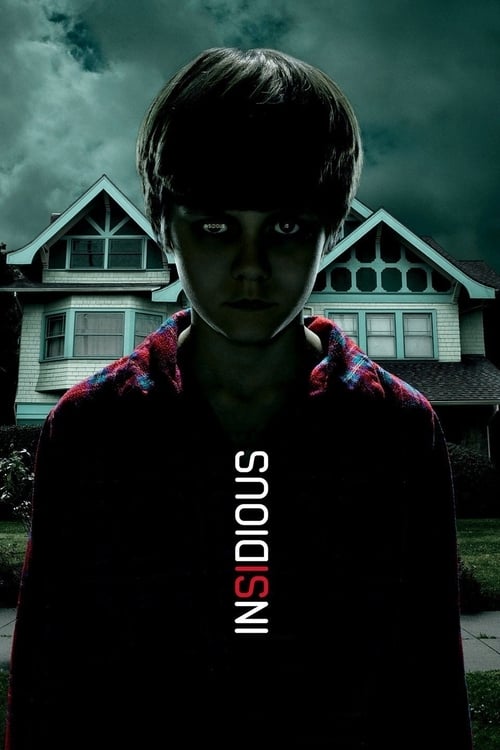
Film · 2010
Insidious
Barely a drop of blood in it. The Further is where the restraint goes strange.
Most extreme on THE THREAT — a supernatural threat at 010
On VHSCREAM’s six-axis scale, Insidious (2010) is most extreme on the threat axis: 10 out of 100, where 0 is a supernatural threat and 100 is human monsters. 3% of the 105 horror works we have scored come in lower on that axis. How we score →
Insidious is a 2010 supernatural horror film directed by James Wan and written by Leigh Whannell. A boy falls into an unexplained coma and his family discovers he is not ill but absent. We score it 010 on the threat axis — only 3 works score lower, the supernatural end of the scale — and 018 on viscera, the joint-sixth-least-explicit film we have scored.
Scored and reviewed by VHSCREAM on · how we score
Insidious: the review
Insidious is two films, and the first one is excellent.
For fifty minutes it is a haunted-house picture with a deliberately cheap-looking palette, a family that behaves sensibly, and the best first-act scare of the decade: a child who will not wake up, a baby monitor, and a figure standing in the corner of a room that the camera found before anybody looked. The Lamberts move house a third of the way in, which is the move every haunted-house film refuses to make, and the haunting follows them. That single decision does more than any set piece — it establishes that the problem is a person, not an address.
The sound design is the engine. Joseph Bishara's score is built out of scraped strings and tape hiss, the title card lands like an accident, and the film will give you a full ten seconds of nothing before a noise. Wan was still working in the mode he invented on Saw — aggressive cutting, absolute confidence about where to put the camera — but with the gore removed entirely.
Then it goes into The Further and becomes something else
At the hour mark the film stops being a haunting and becomes a rescue mission into a fog-filled soundstage. Lanterns, red doors, a demon sharpening its nails to a record of "Tiptoe Through the Tulips". Opinions divide hard here and both are defensible: the imagery is genuinely strange and nothing else in studio horror looks like it, and it is also a considerable drop in tension, because a place you can walk around in is less frightening than a thing in the corner of your bedroom.
Elise Rainier is the reason the second half holds
Lin Shaye is sixty-seven in this film and plays a medium who is frightened, competent and used to being disbelieved. She explains the rules clearly and then dies for them. Whannell and Angus Sampson as the two-man ghost-hunting outfit are the comic relief and are better than comic relief usually is, because their equipment never works properly.
Where it is weak
Rose Byrne spends the middle of the film being told what is happening. The demon's design is strong in glimpses and silly in full light. And the film's internal mythology is explained in a single long monologue that reads like a sequel setting itself up, which it was.
For Wan doing the same thing with restraint instead of assault, The Conjuring; for the same demon-wants-the-child architecture in 1982, Poltergeist; for the same found-footage-adjacent domestic dread, Sinister.
The ending of Insidious explained
Total spoilers from here. Everything above this line is spoiler-free.
The short answer: Dalton is not in a coma. He is an astral projector whose consciousness has wandered too far into The Further and been trapped there by a demon that wants his body. Josh, his father, was the same as a child, and was hypnotised into forgetting by Elise at his mother's request. Josh goes into The Further, finds Dalton, and brings him back — but something else comes back in Josh. The Old Woman who stalked Josh as a boy is now wearing him. She strangles Elise. Renai photographs Josh's body and the picture shows the Old Woman; Josh, behind her, says "I told you it wasn't the house", and the film ends.
What is The Further in Insidious?
A dark astral plane the film describes as a place of tormented souls, kept apart from the living world and reachable by people who project in their sleep. It is not purgatory and not hell; the film is careful to leave it undefined. Time inside it is unstable, and the dead and the never-living are both present. Bodies left behind on earth read as comatose.
Who is the Old Woman in Insidious?
A figure in black — credited as the Bride in Black — who pursued Josh through his childhood and appeared in every photograph taken of him, closer in each one. She is not the Lipstick-Face Demon; she is the one who finally takes him. Her goal across the whole film is Josh's body rather than Dalton's, and Dalton is the bait that brings him back into The Further where she can reach him.
Who is the Lipstick-Face Demon?
The red-and-black figure with the goat's legs who has claimed Dalton and wants to use him to walk in the world. It is the film's most-shown antagonist and the least important: it is a jailer, not the villain. The Tiny Tim record and the nail-sharpening are its signature, and Bishara, the film's composer, plays it.
Why can't the family just move house?
They do, and it does not help. This is the film's structural argument. The Lamberts leave the first house at the end of the first act and the activity resumes immediately, which is what forces the correct diagnosis: the attachment is to Dalton, and before him to Josh. The haunting is hereditary rather than geographic.
What does the last shot of Insidious mean?
That the rescue succeeded and the family lost anyway. Dalton is awake and safe; Josh is gone, and the thing in his body has already killed the one person who could identify it. Renai is holding the proof in her hand when he speaks behind her. The sequel follows directly from this, but the shot works on its own as the bleakest possible reading of a happy ending.
How scary is Insidious, actually?
Scored against the published rubric, here is what the numbers mean.
The threat at 010 is at the supernatural floor — only 3 works score lower. There is no human antagonist and nothing in the film admits a mundane explanation.
Viscera 018 is very low — 11 works score lower. One strangling and some blood on a face. No injury is shown in detail.
Reality anchor 072 is on the dream-logic side — 80 works score lower, entirely because of The Further: a space with no geography, inconsistent time and a lantern as the only rule.
Pace 070 is fast — 91 works are slower. The film averages a set piece every six or seven minutes and the gaps are loaded with sound.
Era bias 080 reads modern — 72 works score lower. Digital capture, a modern grade and a sound mix that depends on sub-bass.
Tone 030 is bleaker than its rating suggests — 77 works score lower. The child is saved and the father is lost, permanently, and the film's last line is a taunt.
On jump scares: many, and the first forty minutes are world-class at them.
Insidious on six axes of fear
Every work in the index is scored on six continuous axes of fear. This is what Insidious looks like as a vector.
Where that puts it: #4 supernatural · #6 without gore · #9 surreal · #11 relentless · #15 modern
Disagree with a number? Say so on the axis itself. Nobody has confirmed this vector yet, and a score you challenge goes to the top of the queue to be re-scored by a human. Votes do not move the numbers — they decide what gets looked at first. How the scoring works →
Scored against the published rubric. This vector is a draft awaiting review — the method is public so you can argue with it.
Who should skip Insidious
Skip it if jump scares are the problem. This is a film built around them, with roughly fifteen in an hour and three quarters.
Skip it if a child in a coma is a hard limit. Dalton is unresponsive for most of the running time and the film uses his body as a site of threat.
Skip it if the last act will lose you. The Further is a fog-bound soundstage and a large minority of viewers find the switch from haunting to fantasy fatal.
Content notes: a child in a coma, a child abducted in spirit, a strangling shown on screen, a sustained stalking of a child, a hypnosis performed on a minor, and a possession presented as permanent.
Watch it if you want the best opening hour in modern studio horror, you can take an ending that trades the fright for mythology, and you want to see Lin Shaye given something worth playing.
Where to find it
Streaming on Peacock Premium · YouTube TV · MGM Plus +1 ↗Physical copies on eBay ↗Availability from JustWatch via TMDB. We earn nothing from these links.
Nothing loads from YouTube until you press play.
If Insidious is your kind of fear
The eight works closest to Insidious in the index, ranked by distance across all six axes — not by genre label, and not by what other people watched.
The Nun
Corin Hardy · 2018 · Film
Shares a supernatural threat.
91% shared signal

Lights Out
David F. Sandberg · 2016 · Film
Shares restraint over gore.
89% shared signal
Annabelle
John R. Leonetti · 2014 · Film
Shares modern craft.
87% shared signal
The Conjuring
James Wan · 2013 · Film
Shares a bleak, unforgiving tone.
86% shared signal
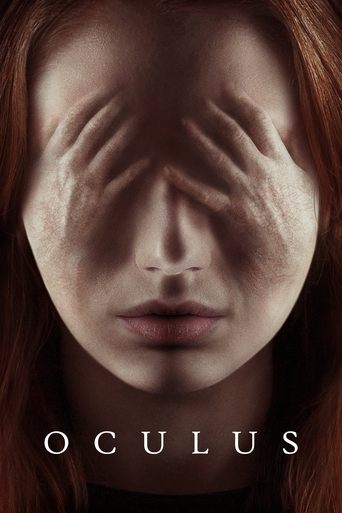
Oculus
Mike Flanagan · 2013 · Film
Shares dream logic.
83% shared signal
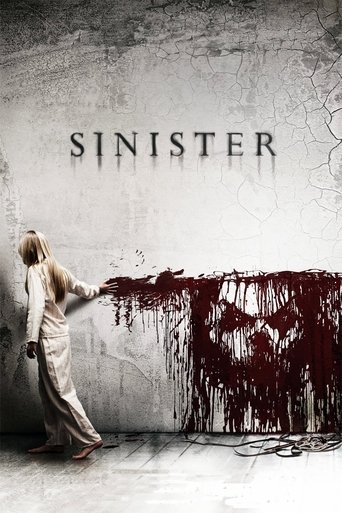
Sinister
Scott Derrickson · 2012 · Film
Shares a supernatural threat.
79% shared signal
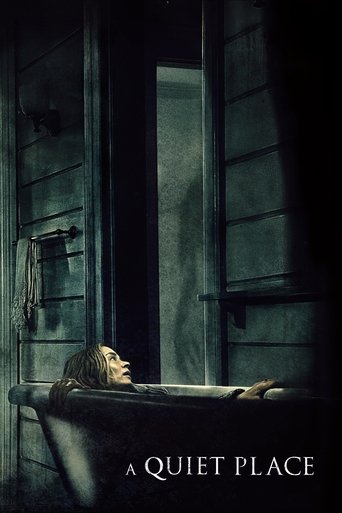
A Quiet Place
John Krasinski · 2018 · Film
Shares modern craft.
76% shared signal
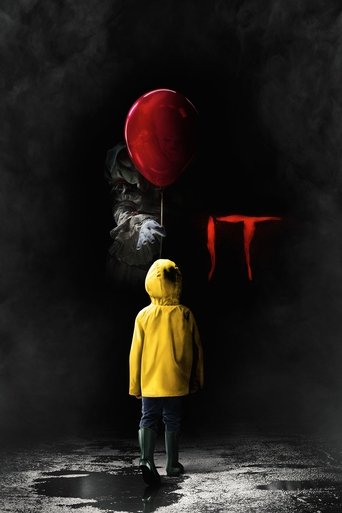
It
Andy Muschietti · 2017 · Film
75% shared signal
See the full list of movies like Insidious →
Questions about Insidious
The things people actually ask about this film, answered.
What happens at the end of Insidious?
Josh enters The Further and brings Dalton back, but the Old Woman returns in Josh's body and strangles Elise. Renai photographs Josh and sees the Old Woman in the picture; Josh speaks behind her and the film ends. Dalton is saved and his father is gone.
What is The Further in Insidious?
A dark astral plane the film leaves deliberately undefined — not purgatory, not hell — populated by the dead and by things that were never alive. People who project in their sleep can wander into it, and their bodies on earth look comatose. Time inside it does not run straight.
Who is the Old Woman in Insidious?
The figure in black, credited as the Bride in Black, who stalked Josh through childhood and grew closer in every photograph taken of him. She is not the red demon. Her target is Josh's body, and trapping Dalton is how she gets Josh back into The Further.
Who is the red demon in Insidious?
The Lipstick-Face Demon, who has claimed Dalton and intends to use his body. It sharpens its nails to a Tiny Tim record and is played by the film's composer, Joseph Bishara. It is the most-seen antagonist and not the one that wins.
Is Insidious gory?
No. We score it 018 on viscera, among the lowest in our index. There is one strangling and very little blood; the film works entirely through sound, staging and figures standing where you did not expect them.
Is Insidious connected to The Conjuring?
Only by crew. James Wan directed both and Leigh Whannell wrote this one, but the Insidious films follow the Lamberts and Elise Rainier while the Conjuring films follow the Warrens. The two series share no characters and no continuity.
These are ranked against Insidious, not against you.
Build your own tape →