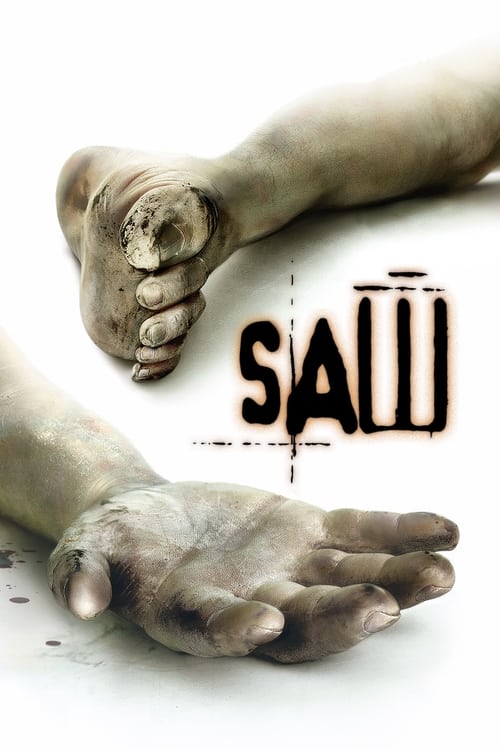
Film · 2004
Saw
A bathroom, two men and a hacksaw. The franchise it spawned shows everything.
Most extreme on THE THREAT — human monsters at 092
On VHSCREAM’s six-axis scale, Saw (2004) is most extreme on the threat axis: 92 out of 100, where 0 is a supernatural threat and 100 is human monsters. 94% of the 105 horror works we have scored come in lower on that axis. How we score →
Saw is a 2004 horror film directed by James Wan and written by Leigh Whannell, who also co-stars. Two men wake chained in a derelict bathroom with a corpse between them and a tape recorder explaining the rules. We score it 092 on the threat axis — joint-fifth of 105 works, the human end of the scale — and 082 on viscera.
Scored and reviewed by VHSCREAM on · how we score
Saw: the review
Saw is a much better film than the franchise it started, and almost nothing people remember about it is in it.
It was made for about a million dollars in eighteen days and it looks it, which turns out to be the point. The bathroom is a real tiled room, lit green, and the two men in it are played by Cary Elwes and Whannell as people who are frightened rather than resourceful. Most of the running time is two strangers in one location arguing about which of them is lying. That is the film. The traps everyone quotes are flashbacks and police-procedural inserts around the edge of a stage play.
What makes it work is that the rules are legible. Adam is chained to a pipe. Gordon is chained to a pipe. There are two hacksaws that will not cut chain. There is a revolver with one bullet, a corpse holding a tape, and a deadline of six o'clock, after which Gordon's wife and daughter die. Everything that follows is deducible from that list, and the film plays fair with it.
James Wan's first feature is already a style
The whiplash cutting, the colour-timed grime, the ratcheting sound design and the puppet on a tricycle all arrive fully formed here. Wan would spend the next decade building the other half of his career — Insidious and The Conjuring are the same director doing almost the exact opposite, restraint instead of assault — and the two halves are worth watching against each other.
The traps are a moral argument, not a highlight reel
John Kramer is dying and has decided that people who waste their lives should be made to choose. Each device is engineered so that survival is technically possible and requires self-mutilation. The reverse bear trap, the razor-wire maze, the needle pit: all of them are survivable, and that is what makes them obscene rather than merely cruel. The film is clear that Kramer is a monster who believes he is a therapist, and it does not endorse him.
Where it falls down
Elwes's American accent wanders badly and his performance in the final act is pitched several sizes too large. The police subplot with Danny Glover's Detective Tapp is overwritten and exists mainly to withhold information. And the score-and-cut assault in the last two minutes is the one place the film sells its own twist too hard.
For the same engineered-death logic without the moralising, Final Destination; for the same self-mutilation-as-test premise taken to its limit, Martyrs.
The ending of Saw explained
Total spoilers from here. Everything above this line is spoiler-free.
The short answer: the corpse on the bathroom floor is not a corpse. Gordon saws off his own foot, shoots Adam with the single bullet, and crawls out to find help. Zep Hindle — the orderly who had been holding Gordon's family — bursts in and is beaten to death by Adam, who finds a tape on his body revealing Zep was a test subject too. Then the body in the middle of the room stands up. It is John Kramer, who has been lying there all day, says "game over", and shuts the door on Adam, leaving him alive and sealed in.
Who is Jigsaw in Saw?
John Kramer, a civil engineer with an inoperable brain tumour, played by Tobin Bell. He is never named in the first film's dialogue as Jigsaw by himself — the nickname comes from the police, after the jigsaw-shaped piece of flesh he removes from those who fail. His stated position is that he has never murdered anybody: he constructs situations and the subject chooses. The film does not let that stand unchallenged, but it does let him say it.
What is the twist at the end of Saw?
That the third body in the room was the killer. Kramer has lain on the bathroom floor since before Adam and Gordon woke, dosed to slow his pulse, holding the tape recorder, able to hear every word they said about him. The twist is purely spatial, which is why it still works: nothing is withheld from the audience except the fact that a man is breathing.
Why does Gordon saw off his own foot?
Because the rule was to kill Adam by six o'clock or his family dies, and he cannot reach Adam. The chain cannot be cut, so he cuts the ankle. The film shows almost none of it. What it shows is Elwes's face and the sound, and then a man dragging himself across tile leaving a long smear.
What happens to Adam at the end of Saw?
He is left alive in the bathroom with the door sealed, chained to the pipe, with the key to his shackle in the drain he has already emptied. Gordon promises to send help and crawls away. Within the first film Adam's fate is a closed door and a scream; the sequels later confirm that no help arrived.
Who is Zep Hindle?
A hospital orderly who appears to be Jigsaw's accomplice, menacing Gordon's wife and daughter and watching the bathroom on a monitor. He is in fact another subject: slow-acting poison in his system, told that the antidote is behind killing Gordon's family by six. The film reveals this in the last two minutes, which retrospectively makes him the most pitiable person in it.
How scary is Saw, actually?
Scored against the published rubric, here is what the numbers mean.
The threat at 092 is near the human ceiling — only 4 works score higher. Nothing supernatural happens. A dying man with an engineering degree built everything in the film.
Viscera 082 is high — 94 works score lower. An amputation, a razor-wire maze, a needle pit, a skull trap and a bludgeoning, though the camera is more coy than the reputation suggests.
Tone 018 is bleak — 47 works score lower. One subject survives her trap. The protagonist is sealed in a room to die. The killer wins and is not caught.
Pace 068 is on the shock side, with 89 works slower. The cutting is aggressive and the film never sits still for long, even inside one room.
Era bias 074 reads modern — 66 works score lower. Digital grading, 2004 whip-pans, surveillance monitors and a sound mix built in a laptop era.
Reality anchor 028 is grounded — 16 works score lower. Everything in it is buildable.
On jump scares: several, and most of them are edits rather than events.
Saw on six axes of fear
Every work in the index is scored on six continuous axes of fear. This is what Saw looks like as a vector.
Where that puts it: #3 human monsters · #9 goriest · #14 relentless · #14 grounded
Disagree with a number? Say so on the axis itself. Nobody has confirmed this vector yet, and a score you challenge goes to the top of the queue to be re-scored by a human. Votes do not move the numbers — they decide what gets looked at first. How the scoring works →
Scored against the published rubric. This vector is a draft awaiting review — the method is public so you can argue with it.
Who should skip Saw
Skip it if self-mutilation is a hard limit. The film's entire moral mechanism is that survival requires injuring yourself, and it stages two of those choices at length.
Skip it if you need the villain punished. Kramer walks out of the first film unharmed and uninvestigated.
Skip it if torture framed as moral instruction will anger you. The script gives Jigsaw a philosophy and lets him articulate it at length, and plenty of viewers find that unforgivable.
Content notes: graphic self-amputation, a reverse bear trap, impalement on razor wire, a bludgeoning death, a man shot at close range, a child and mother held hostage, suicide by broken glass, and sustained psychological coercion.
Watch it if you want the one-room thriller that launched the decade's dominant horror franchise, you can take the viscera, and you want a twist that is built entirely out of staging rather than information.
Where to find it
Streaming on MovieSphere+ · Howdy ↗Physical copies on eBay ↗Availability from JustWatch via TMDB. We earn nothing from these links.
Nothing loads from YouTube until you press play.
If Saw is your kind of fear
The eight works closest to Saw in the index, ranked by distance across all six axes — not by genre label, and not by what other people watched.

Martyrs
Pascal Laugier · 2008 · Film
Shares explicit viscera.
86% shared signal

Terrifier 2
Damien Leone · 2022 · Film
Shares human monsters.
82% shared signal
28 Days Later
Danny Boyle · 2002 · Film
Shares a bleak, unforgiving tone.
82% shared signal
Kill List
Ben Wheatley · 2011 · Film
Shares a bleak, unforgiving tone.
77% shared signal

Tender Is the Flesh
Agustina Bazterrica · 2017 · Book
Shares modern craft.
75% shared signal
Audition
Takashi Miike · 1999 · Film
Shares human monsters.
72% shared signal
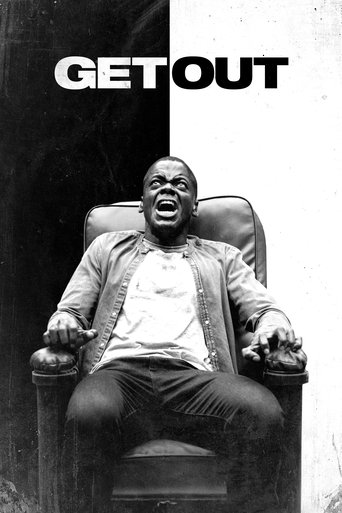
Get Out
Jordan Peele · 2017 · Film
Shares modern craft.
69% shared signal
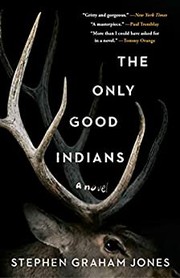
The Only Good Indians
Stephen Graham Jones · 2020 · Book
Shares explicit viscera.
67% shared signal
See the full list of movies like Saw →
Questions about Saw
The things people actually ask about this film, answered.
What happens at the end of Saw?
Gordon saws off his own foot, shoots Adam and crawls out for help. Adam kills Zep Hindle and finds a tape proving Zep was also a victim. Then the corpse in the middle of the room stands up — it is John Kramer, who says "game over" and seals Adam inside.
Who is Jigsaw in the first Saw film?
John Kramer, a civil engineer with an inoperable brain tumour, played by Tobin Bell. The police name him Jigsaw for the piece of flesh he cuts from those who fail. He insists he has never killed anyone — he builds the situation and the subject chooses.
Why does Dr Gordon cut off his foot in Saw?
Because the rule is to kill Adam before six o'clock or his wife and daughter die, and the chain will not let him reach Adam. The hacksaw cannot cut the chain, so he uses it on his ankle. The film shows his face and the sound more than the act.
Does Adam survive Saw?
No. He is left chained in the bathroom with the door sealed and the key already lost down the drain. Gordon promises to send help and never does; the sequels confirm Adam dies there. The first film ends on the door closing.
How gory is the first Saw film?
Less than its reputation. We score it 082 on viscera, which is high for our index, but the worst injuries are mostly implied or glimpsed — the amputation is largely off-camera, and the elaborate traps appear in brief flashback rather than in real time.
Is Saw based on a true story?
No. Leigh Whannell wrote it with James Wan as a low-budget showcase, drawing on a short film they made in 2003 with the reverse bear trap. The brain-tumour motive and the engineering are invented, and no real case resembles it.
These are ranked against Saw, not against you.
Build your own tape →